
This article is general information, not veterinary advice. If your pet seems unwell, is in pain or may have eaten something harmful, contact your vet or an animal poison control line right away. Read our vet disclaimer.
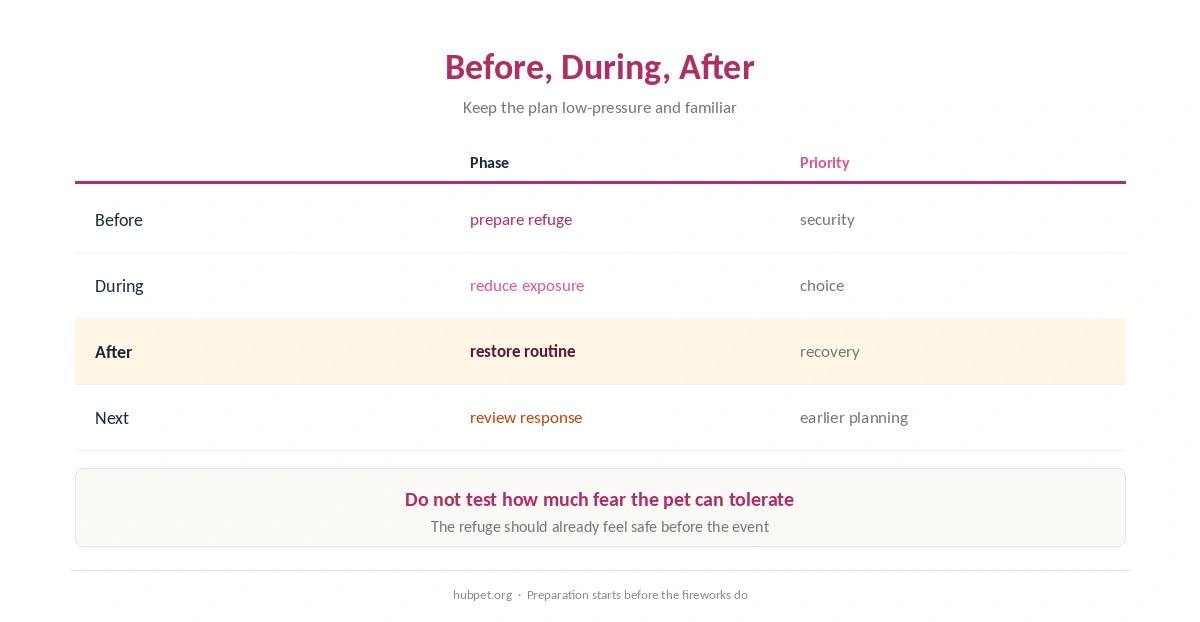
How to help pets cope with fireworks starts before the first bang. Build a secure indoor refuge, reduce light and sound where practical, keep exits secure, and talk with your veterinarian in advance if your pet has a history of severe fear. The AAHA noise-aversion guide, updated December 2025 says noise fear can worsen over time and recommends preparation before predictable events.
During fireworks, let the pet use the coping strategy that feels safest. Some animals hide, some pace, and some seek contact. Do not punish fear or force a pet out of a hiding place. The RSPCA fireworks guidance, accessed 2026 advises secure spaces, reduced outside noise and flashes, and allowing animals to hide or move as needed.
How to Help Pets Cope with Fireworks: Short Answer
How to help pets cope with fireworks is mostly preparation plus low-pressure support. Use the storm and fireworks preparation checklist before the event, and make sure identification and doors are secure. Then move the pet indoors before predictable fireworks begin.
Choose a safe area the pet already uses willingly. A dog may prefer a familiar room or trained mat; a cat may choose a box, closet, or high hide. The guides to safe crate use and supporting a shy cat explain why a refuge should be voluntary, familiar, and never used as punishment.
| Before fireworks | During fireworks | After fireworks |
|---|---|---|
| Set up a familiar refuge | Keep exits secure | Return to normal routine |
| Exercise or play earlier as appropriate | Reduce flashes and outside noise | Let the pet recover at its pace |
| Check ID and household barriers | Offer contact only if wanted | Note severe or lasting reactions |
| Discuss severe fear with a veterinarian early | Do not punish or force exposure | Plan earlier help before the next event |
How to Help Pets Cope with Fireworks Before the Event
Prepare the refuge on an ordinary day. Add familiar bedding and access to water, and make sure the pet can enter and leave when safe. A dog that knows settle-on-a-mat training may use that skill as part of a larger safe-space plan.
Also review the home for escape routes. Use balcony and window pet-proofing and the home-alone safety checklist to catch weak screens, open gates, and other points a frightened animal could exploit.
If your pet has panicked during previous fireworks, contact your veterinarian before the season or event. AAHA 2025 notes that some pets may need a treatment plan in addition to environmental management. Any medication should come from the veterinarian for that individual animal; do not give human medication or choose a dose yourself.
For dogs, gradual sound practice may help when it stays below the fear threshold. The Merck Veterinary Manual behavior review, accessed 2026 recommends controlled exposure at an intensity that does not provoke fear and warns against flooding. Use the same reward-based logic as fearful-dog confidence work.
What to Do While Fireworks Are Going Off
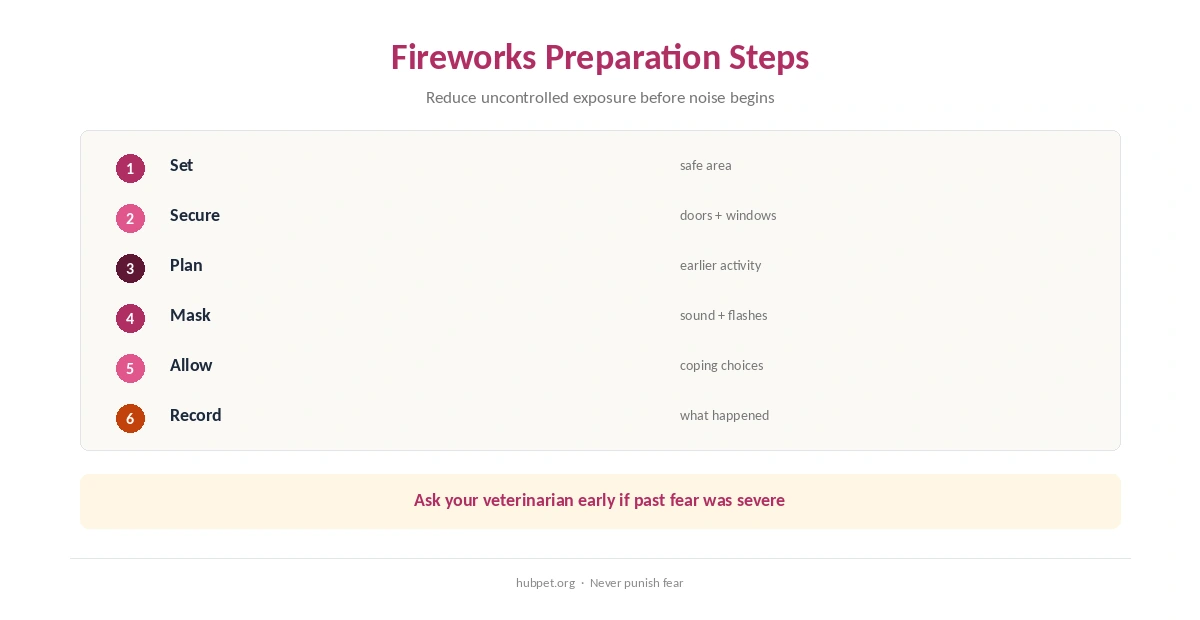
Bring pets inside before the loudest period when possible. Close windows and curtains, and use steady household sound if it helps mask outside noise. Keep the environment predictable with familiar routines rather than adding new handling or training challenges during the event.
Let the pet choose whether to hide, rest near you, or move around the safe area. Calm reassurance is fine if the pet seeks it. However, avoid pulling a cat from a hiding place or holding a struggling dog in place simply to provide comfort.
Use familiar, safe enrichment only if the pet wants it. A food toy is not a test that proves the pet is calm. If the animal ignores food, protect the refuge and reduce demands. The broader play-and-rest guide helps avoid turning coping time into another arousing activity.
After the Noise Stops
Return to the normal routine gradually. Some pets recover quickly; others need a quieter period. The article on schedule changes can help restore anchor events after a disrupted evening. Afterward, how to help pets cope with fireworks also includes noting what reduced fear and what made recovery harder.
Write down what happened while the details are fresh: the trigger time, where the pet went, whether escape attempts occurred, and how long recovery took. This record can help your veterinarian plan for the next event. Keep the pet first-aid checklist accessible in case fear leads to injury.
When to Call Your Vet
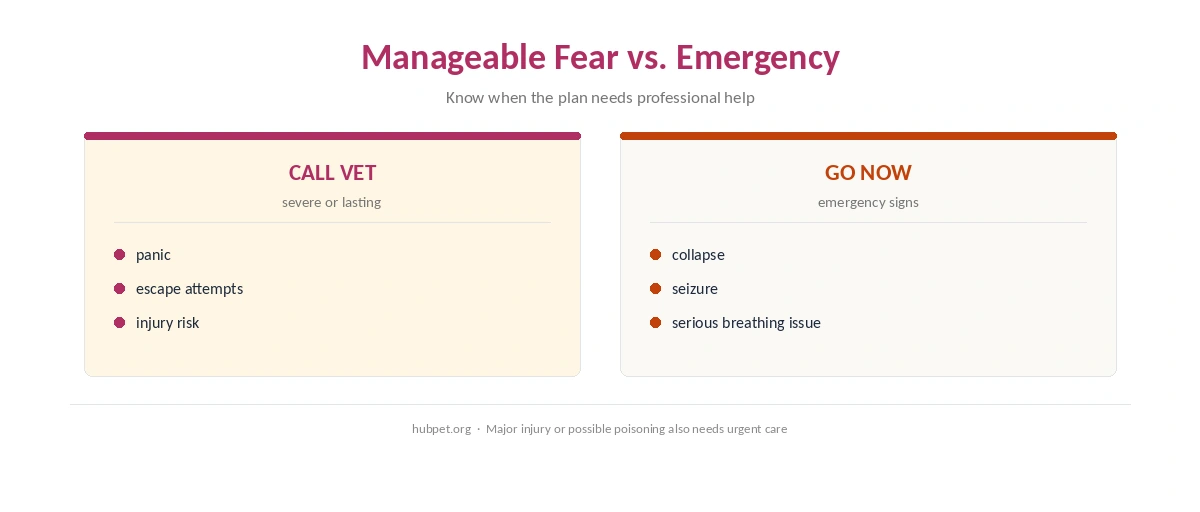
Call your veterinarian before the next event if your pet shows severe panic, repeated escape attempts, destructive behavior that risks injury, or fear that remains intense after the noise stops. AAHA 2025 recommends veterinary discussion for abnormal behavior around loud sounds because significant noise aversion may need a broader treatment plan.
Go now for serious breathing difficulty, collapse, unresponsiveness, a seizure, major injury, or suspected poisoning. The AAHA pet-emergency guide, 2024 treats these as emergency signs. Use HubPet’s emergency-sign guide while arranging immediate care.
If a pet injures a paw, mouth, or body while trying to escape, do not delay care because the trigger was “only fear.” Likewise, do not start sedatives, supplements, essential oils, or other home treatments on your own. The veterinarian should decide whether any medical support is appropriate.
How We Research
HubPet reviewed these sources on October 11, 2026: the AAHA noise-aversion guide, updated 2025, the AAHA July 4 pet-safety guide, updated June 2026, the Merck Veterinary Manual behavior review, and current RSPCA fireworks guidance. Read more about our research process.
Use a familiar secure refuge, reduce outside noise and flashes, allow the dog to choose where to settle, and avoid punishment or forced exposure.
Yes, if the pet seeks contact. Calm reassurance does not require forcing handling or pulling the pet from a hiding place.
Only use gradual, controlled recordings at an intensity that does not trigger fear. Stop and lower the intensity if the dog reacts.
Discuss severe fear with your veterinarian in advance. Do not give human medication or choose a dose yourself.
Serious breathing difficulty, collapse, unresponsiveness, seizures, major injury, or suspected poisoning require immediate veterinary care.
The Bottom Line on How to Help Pets Cope with Fireworks
How to help pets cope with fireworks is not about forcing them to ignore the noise. Prepare a secure familiar refuge, reduce uncontrolled exposure, keep escape routes closed, and let the pet choose safe coping behavior. Severe or worsening fear deserves a veterinary plan, while collapse, seizures, serious breathing problems, major injury, or suspected poisoning need emergency care.