
A weekly pet enrichment checklist can help you notice whether your dog or cat has choices for movement, thinking, sniffing or exploring, social interaction, and quiet retreat. The AAHA 2026 enrichment guide groups enrichment into several categories rather than one activity. For cats, the FelineVMA environmental-needs guidance also emphasizes safe places, separated resources, play, predatory behavior, and predictable positive interaction.
This weekly pet enrichment checklist is a review tool, not a rule that every item must happen on a fixed day. Individual preferences, age, mobility, household setup, and prior experience change what useful enrichment looks like. Therefore, use the list to spot gaps and stale routines, then choose a few changes that fit the pet in front of you. The setup in the enrichment-corner guide can keep those options organized.
Weekly Pet Enrichment Checklist: 12 Things to Review
- Offer at least one activity that uses the pet’s strongest natural behavior, such as sniffing, chasing, scratching, climbing, chewing, or foraging.
- Check whether the pet still chooses the current toys; rotate or repurpose stale options instead of adding novelty by default.
- Create one easy problem-solving opportunity, such as a simple search game, food puzzle, or reward-based training task.
- Protect a quiet resting or hiding place where the pet can disengage without being followed or handled.
- Review vertical and horizontal space for cats, including stable climbing, scratching, observation, and retreat options.
- Give dogs time to investigate scent at their own pace during a safe walk, yard session, or indoor search game.
- Include calm social time that the pet can choose, not only high-energy play or training.
- Practice one short reward-based skill the pet already understands, then stop while the session is still easy.
- Look for worn, broken, swallowable, sharp, tangled, or otherwise unsafe enrichment materials and retire them.
- Make sure food-based enrichment fits the pet’s normal feeding plan rather than becoming unlimited extra food.
- Change the location or presentation of a familiar activity if interest has faded, while keeping valued favorites available.
- Notice what the pet avoids, abandons, or finds frustrating, and make next week easier or different instead of insisting.
The point is coverage, not perfection. A weekly pet enrichment checklist works best when it reveals missing categories rather than creating a score. AAHA describes physical, cognitive, sensory, social, and food-based enrichment. Meanwhile, ASPCA enrichment pages for dogs and cats emphasize species-appropriate behavior and active supervision around DIY materials. Therefore, a useful week includes more than one category and keeps safety visible.
How to Use the Weekly Pet Enrichment Checklist for Dogs
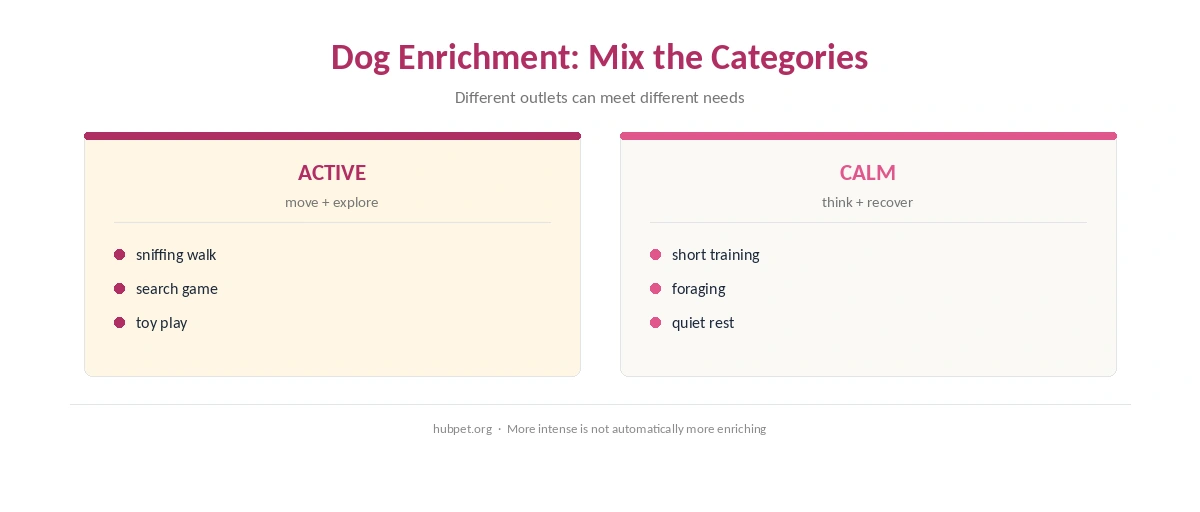
Dogs often benefit from a mix of sniffing, movement, play, training, chewing, foraging, and recovery. However, the best mix depends on the individual dog. Use indoor energy outlets for controlled activity and settle training for an off-switch skill. Rotate familiar items selectively when they stop attracting interest.
Also let the dog use the nose. The ASPCA canine enrichment page highlights scent games, and Dogs Trust enrichment guidance includes sniffing activities. A simple “find it” game can use a familiar reward in easy hiding places. In addition, basic reward-based training can supply cognitive work without turning every session into a high-arousal game.
Finally, supervise items that can tear, splinter, tangle, or become swallowable. Management from the pet-proofing guide and the home-alone checklist matters because enrichment stops being useful when the activity creates a preventable hazard.
How to Use the Weekly Pet Enrichment Checklist for Cats
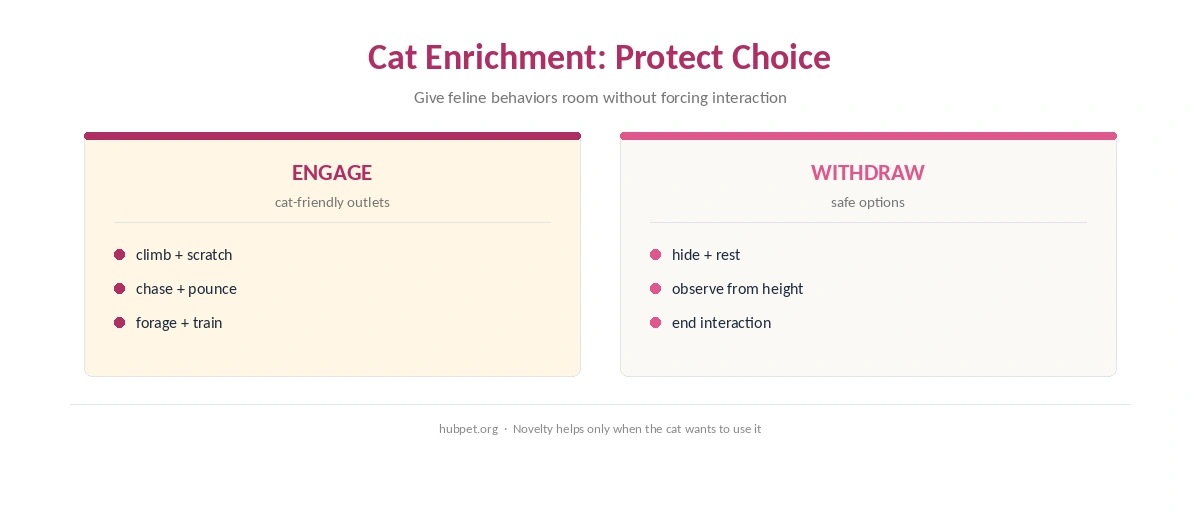
Cats need opportunities to perform feline behavior while keeping control over distance and retreat. The FelineVMA environmental-needs framework includes safe places, separated resources, play and predatory behavior, positive predictable interaction, and respect for sensory needs. Therefore, combine indoor cat stimulation with safe vertical space and a reliable scratching option from scratching-post training.
For novelty, change one variable rather than rebuilding the whole environment. Move a box, alter a search game, or bring back a toy that has been out of sight. Research summarized in the toy-rotation guide shows habituation to repeated toys, but it does not establish a universal weekly rotation schedule. Therefore, this checklist asks you to review interest each week, not to remove every toy each week.
Cats also need permission to opt out. Keep hiding and resting choices available with ideas from the boxes guide and the calm-space guide. If play becomes rough with human hands or feet, redirect to appropriate toys and review the feet-under-blankets guide rather than making body parts part of the game.
Keep the Checklist Flexible Instead of Chasing Novelty
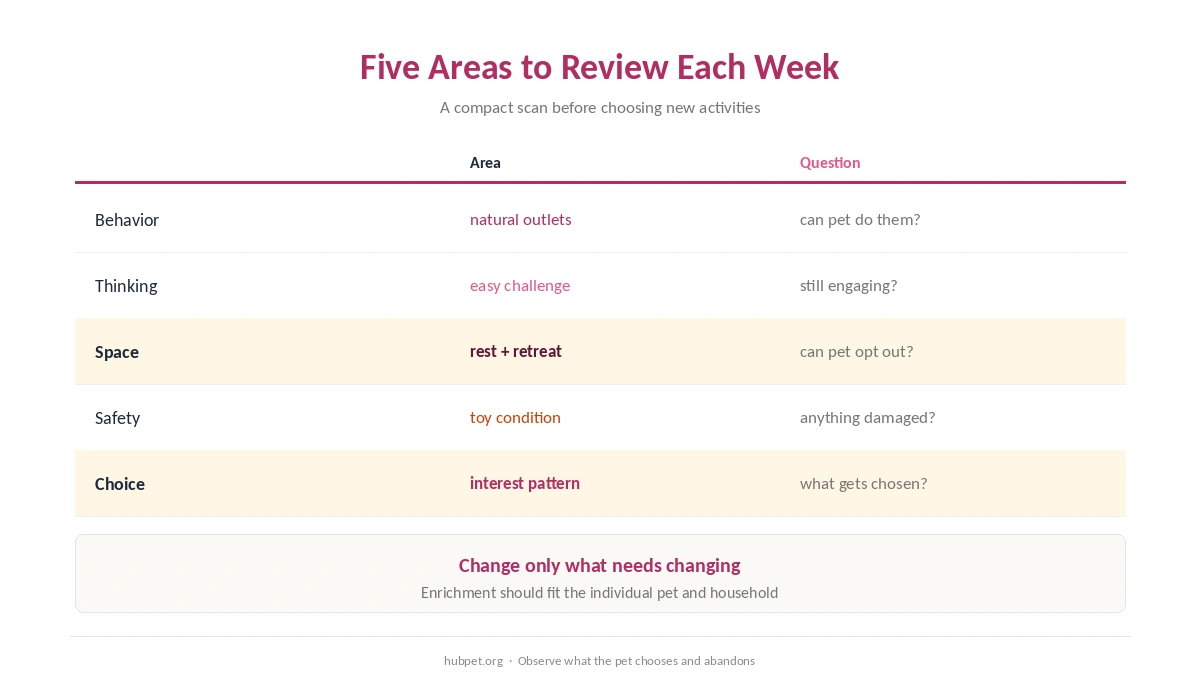
Enrichment should solve a need, not create a household performance target. Therefore, a weekly pet enrichment checklist should stay flexible when the pet already has a routine that works. Some pets repeat the same preferred activity happily, while another pet loses interest quickly. Likewise, the indoor-cat boredom guide explains why variety can matter without implying that every quiet period is boredom.
Use the weekly review to ask three questions: What did my pet choose? What did they ignore? What created calm engagement rather than frustration? Then adjust one or two things. The broader weekly care checklist can handle routine care tasks, while this page stays focused on behavior and environment.
How We Research
HubPet reviewed enrichment sources on October 11, 2026. We used the AAHA 2026 enrichment guide, the FelineVMA environmental-needs handout, and ASPCA enrichment guidance for dogs and cats. Our research process avoids inventing a universal toy count, session length, or rotation interval when the sources do not provide one.
Review natural behavior outlets, problem-solving, movement, sensory opportunities, social choice, safe rest, toy condition, and whether current activities still interest the pet.
No. Familiar activities can stay valuable. Change something when interest fades or when the current setup does not meet the pet’s needs.
No universal weekly interval is established. Review interest and safety, then rotate selectively while keeping useful favorites available.
Yes. Short reward-based training can provide cognitive and social enrichment when the task stays achievable and the pet can take breaks.
The pet may abandon it, become frustrated, escalate arousal, or stop engaging. Make the task easier, change the activity, or offer a break.
The Bottom Line on the Weekly Pet Enrichment Checklist
A weekly pet enrichment checklist should help you notice patterns, not force a rigid program. Review the pet’s choices, cover several kinds of enrichment, protect rest and safety, and change activities when interest or circumstances change.