
This article is general information, not veterinary advice. If your pet seems unwell, is in pain or may have eaten something harmful, contact your vet or an animal poison control line right away. Read our vet disclaimer.
How to help a pet with dry skin starts with careful observation, not a guessed diagnosis. Merck Veterinary Manual reviewed its seborrhea guidance in 2024 and updated it in 2025. It says excessive scaling is often secondary to allergies, endocrine disease, parasites, infection, or another problem. Cornell feline guidance updated in 2023 also lists flaky or scaly skin among signs that can have several causes.
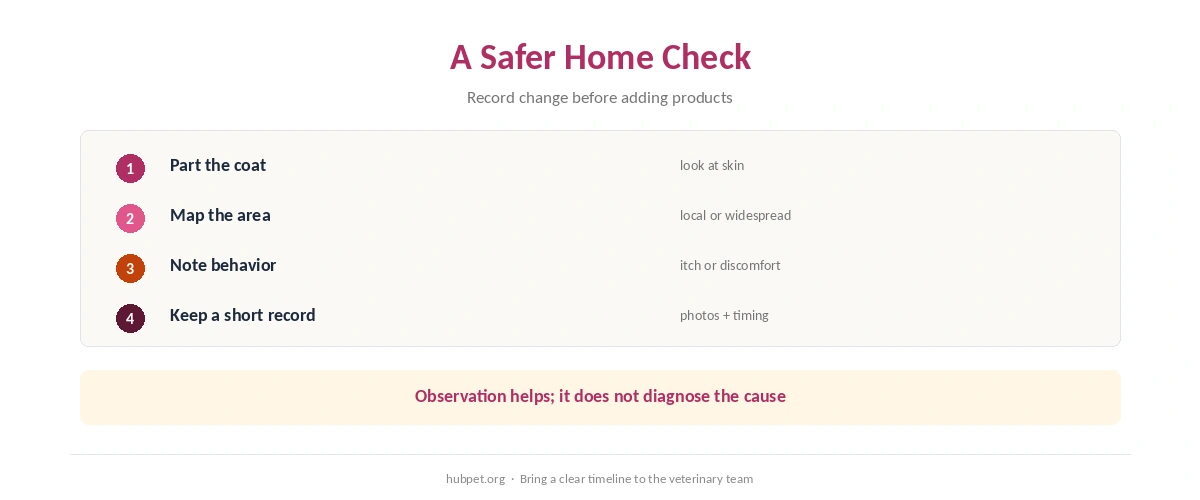
Therefore, the safest home goal is comfort, gentle grooming, and a clear record of what changed. Use the pet skin-check guide to note where the dryness appears and whether the pet is itchy. Also record hair loss, redness, bumps, odor, or sores. That information helps the veterinary team decide what needs an exam or testing.
How to Help a Pet with Dry Skin Safely at Home
In practice, how to help a pet with dry skin means reducing avoidable irritation first. Merck Veterinary Manual guidance updated in 2025 notes that overly frequent bathing can contribute to mild scaling in some animals. It also says the choice of any medicated skin product should match the individual condition. For that reason, do not start medicated shampoo, oils, supplements, or homemade treatments just because the skin looks dry.
Instead, keep routine grooming gentle. The healthy-coat guide explains how brushing can remove loose hair while giving you a chance to inspect the skin. For dogs, the at-home grooming guide keeps the session short and controlled. For cats that dislike handling, use the low-stress approach in brushing a cat without stress.
- Part the coat and look at the skin in several areas rather than judging only the fur surface.
- Use gentle grooming and stop if the skin looks sore or the pet pulls away from discomfort.
- Write down when the flakes started and whether they are spreading or staying in one area.
- Note itching, licking, chewing, odor, hair loss, redness, crusts, bumps, or discharge.
- Keep normal food and care routines stable unless your veterinarian recommends a change.
- Ask your veterinary team before using medicated products, supplements, or diet changes for the skin.
How to Help a Pet with Dry Skin Without Over-Treating It
A dry-looking coat does not automatically mean the pet needs a dietary supplement. VCA guidance last updated in 2024 says skin and coat appearance can change with nutritional or medical problems. It advises talking with the veterinary team before changing the diet or adding nutrients. Unnecessary supplementation can unbalance a complete diet.
Bathing also needs context. The dog bathing-frequency guide explains why one schedule does not fit every coat and skin condition. Merck Veterinary Manual guidance updated in 2024 tells dog owners not to use human shampoo without veterinary approval. If the pet already has irritated skin, ask which pet-safe product and bathing plan fit that individual case.
When loose hair is the main problem rather than flakes or soreness, the shedding guide can help you separate normal coat maintenance from skin changes. For debris after walks, use the gentle cleanup ideas in the paw-cleaning guide rather than scrubbing the entire coat repeatedly.
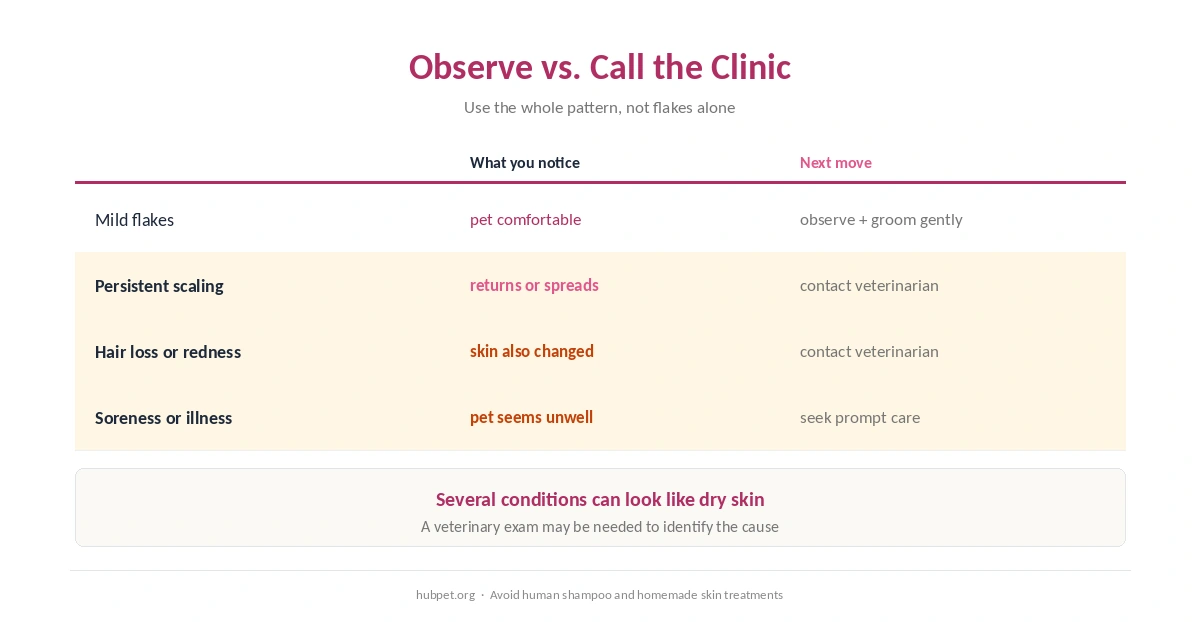
| What you notice | What it can mean | Best next step |
|---|---|---|
| A few new flakes | Needs observation; cause is not clear from appearance alone | Record location and monitor gently |
| Itching or repeated licking | Skin irritation may be present | Arrange veterinary advice if it persists |
| Redness, odor, crusts, or discharge | Inflammation or infection can be possible | Contact your veterinary clinic |
| Hair loss or spreading change | Several skin disorders can look similar | Book an examination rather than guessing treatment |
When to Call Your Vet About Dry Skin
Knowing how to help a pet with dry skin also means knowing when home observation is finished. Call your veterinarian when scaling persists, spreads, or returns repeatedly. Cornell’s 2023 feline skin guidance lists excessive scratching or licking, redness, swelling, hair loss, scabby or flaky skin, and bumps among signs of skin disease. Merck Veterinary Manual guidance updated in 2025 similarly emphasizes that secondary scaling often reflects an underlying condition that needs identification.
Also call if grooming suddenly becomes uncomfortable or the pet resists touch in an area that was previously easy to handle. Use signs a pet may be in pain to record behavior changes without trying to diagnose the cause. The vet visit checklist can help you bring dates, photos, and product names. Add notes about itching or grooming too.
If the pet becomes acutely unwell or develops another urgent problem, use the pet emergency signs page rather than waiting on a skin-care experiment. Dry-looking skin by itself is not enough to identify the cause, so urgent decisions should be based on the whole pet and the veterinary team’s assessment.

How We Research
HubPet reviewed veterinary skin guidance on October 11, 2026. We used Merck Veterinary Manual guidance on seborrhea, updated in 2025. We also reviewed Cornell Feline Health Center guidance updated in 2023 and VCA skin-and-coat guidance last updated in 2024. Our research process explains how we choose and date sources.
Yes. Merck Veterinary Manual guidance updated in 2025 lists allergies among possible causes of secondary scaling, but appearance alone cannot confirm an allergy.
Do not start oils or homemade skin treatments on guesswork. Ask your veterinary team what is safe for the pet and what problem they are trying to treat.
Merck Veterinary Manual dog-owner guidance updated in 2024 advises against using human shampoo without veterinary consent.
Not necessarily. VCA guidance last updated in 2024 recommends veterinary input before diet changes or nutrient supplements because skin changes can have several causes.
Arrange veterinary advice when scaling persists or comes with itching, redness, odor, sores, swelling, hair loss, or other changes.
A Simple Rule for Dry Skin
How to help a pet with dry skin is mostly about avoiding the wrong shortcut. Observe carefully, keep grooming gentle, and do not stack new products or supplements onto an unexplained skin change. Persistent or uncomfortable changes deserve a veterinary exam because several different problems can look like “dry skin” at home. For a separate evidence-focused question, see is a Dry Nose a Sign of Illness in Dogs?.