
A convenient storage basket can make a stroller easier to use, but loose groceries and bags tied to a handle can also shift the balance of a wheeled frame. The basket is not spare passenger space, and its capacity may be much smaller than the pet cabin’s rating. The safest approach starts with the exact load instructions for your model, a low secure compartment, and a few lightweight essentials. This guide explains what to measure, what to pack, and what to leave at home. This is equipment guidance, not veterinary diagnosis or treatment; for pain, breathing problems, or persistent stress, consult your veterinarian and read our veterinary disclaimer.
Separate pet capacity from basket capacity
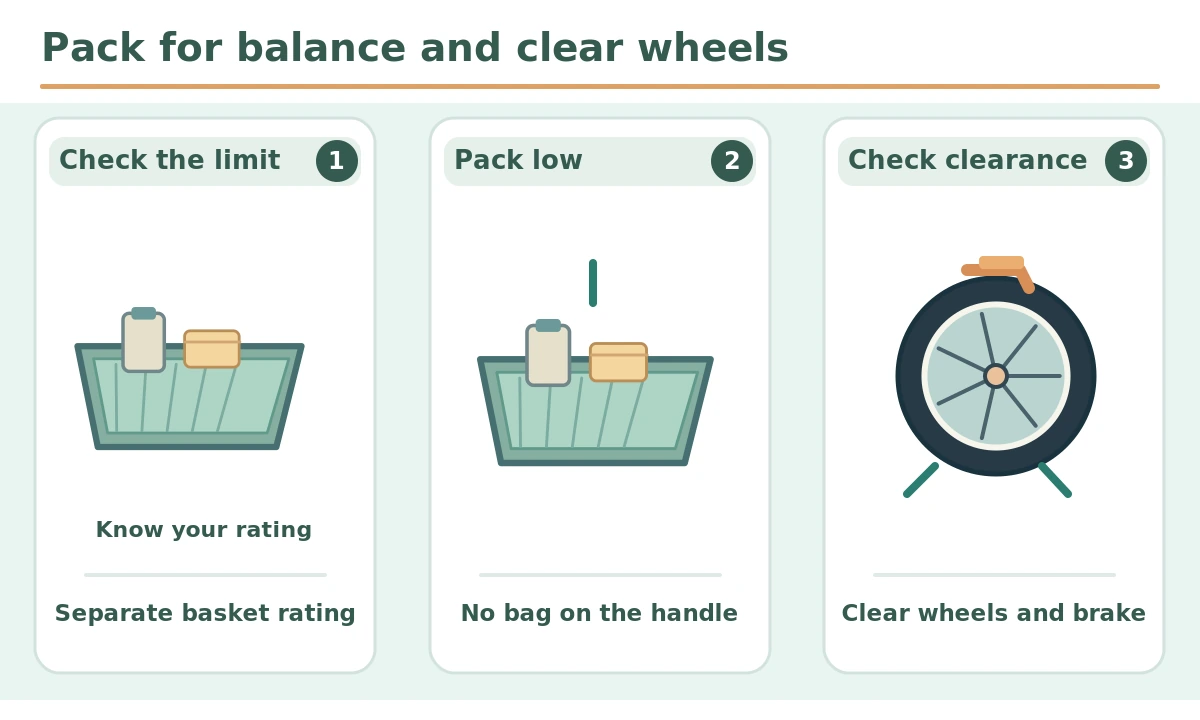
Read all load ratings in the manufacturer’s instructions. The pet cabin, storage basket, cup holder, and accessory attachments may have different restrictions. Never assume a stroller rated for a heavy dog can also carry the same weight in supplies. Pet Gear’s Happy Trails manual, for example, sets a separate small basket limit for that specific model; the figure does not transfer to other strollers. Make sure your pet and any permitted accessories meet their own limits. If the basket has no stated capacity, contact the manufacturer instead of guessing from its size.
Put small essentials low and centered
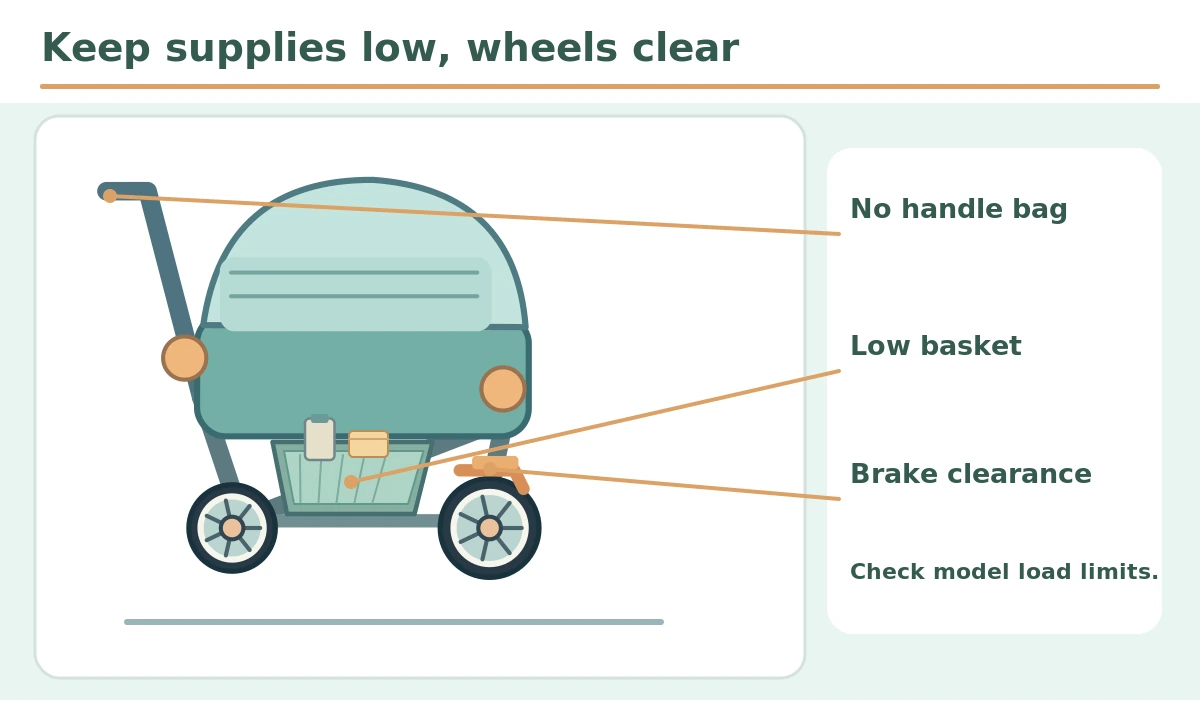
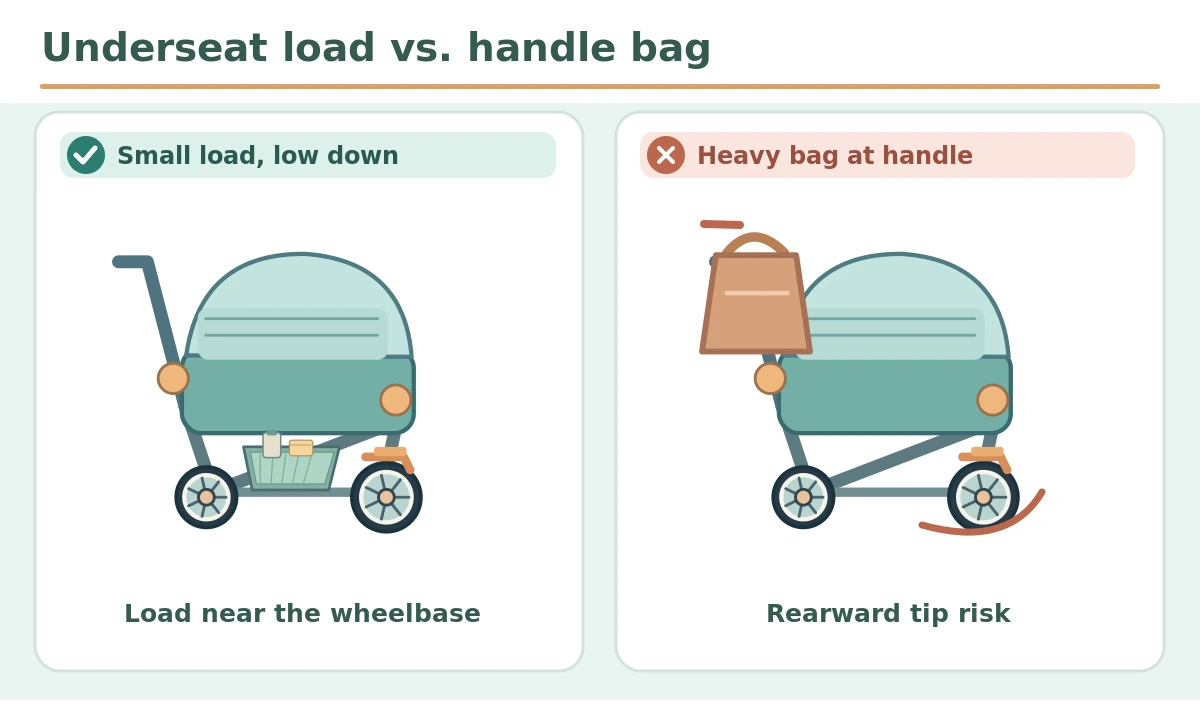
A basket mounted beneath the cabin generally keeps modest supplies closer to the wheelbase than a bag hanging behind the handle. Place light, stable items near the center of the approved storage area and avoid stacking them high. A compact pouch with waste bags, wipes, and a small cloth is more manageable than a grocery haul. Keep water in a leak-resistant container and check the basket lining can support it. Do not wedge rigid objects into suspension, moving axles, or the brake cable route. Lower placement can improve handling but never overrides the load limit.
Avoid bags hanging from the handle
A heavy handbag, shopping bag, or full organizer mounted high behind the stroller can change the balance, especially when the pet gets out. Some manuals explicitly warn against hanging bags from handles because they can destabilize the frame. Do not rely on a stroller that only feels stable when a pet is inside to counterweight the bag. If the handle has an approved cup holder or small accessory, check its stated rating and positioning. A hook sold for baby strollers is not automatically suitable for pet-stroller use.
Keep brakes and wheels visible
After packing, walk around the empty stroller and look from below. A drooping basket, hanging leash, or loose strap must not reach tires, swivel joints, braking levers, or the ground. Nothing should rub as you turn the steering wheels through their normal travel. Check that you can operate the brake without stepping on a storage pouch. A low basket that obstructs the rear wheels is worse than no basket. Never secure loose items with cord around an axle. Remove anything that threatens the mechanism before loading the pet.
Check access to the pet cabin
Stored supplies should not block the door, ventilation panel, interior harness connection, or a safe unloading route. You may need the pet out quickly after an uncomfortable ride, and digging through a shopping bag should not be part of that procedure. Avoid tall containers that push upward against the floor or distort a soft cabin. Place frequently used human items where you can reach them without shifting the stroller or opening the pet compartment outdoors. A basket can be convenient, but its first requirement is not to interfere with the animal’s escape-resistant space.
Think about the empty stroller too
A stroller can handle differently when the dog steps out. The center of mass changes, so a heavy handle bag may make the frame pitch backward even if it seemed balanced during the ride. Test the unloaded setup first on level ground using gentle, controlled handling, without trying to tip it. Engage the brake before adjusting supplies or removing a pet. If a wheel lifts, the stroller rocks, or the handle wants to fall, unload the accessory and review the manual. Never experiment with a pet inside an unstable stroller.
Choose basket attachment points carefully
A replacement basket must match the stroller frame and be compatible with its folding action. Look for intended attachment points, durable seams, and a supported base. Do not wrap straps around a brake rod, hinge, or moving joint just because the fabric reaches. After installation, open and close the empty stroller exactly as the manufacturer instructs, watching for snags. If the basket needs to be removed to fold the frame safely, incorporate that into your routine. A mismatched accessory can pull loose during a turn or trap fingers when folding.
Protect supplies from weather and dirt
Under-seat baskets sit closer to splash, grit, and road dust than a high bag. Use wipeable containers and keep medication, pet food, and sensitive items in appropriate protected storage rather than trusting open mesh. Store waste bags sealed, and never let used waste touch drinking supplies. After a wet outing, empty the basket and dry the lining and frame; trapped moisture can encourage odors or corrosion. An open basket is for everyday convenience, not secure storage of valuables or protection against extreme temperatures.
Build a light-packing checklist
Before each short outing, ask what you actually need: a waste-bag roll, a few tissues or wipes, a small water supply suited to the weather and trip, and identification or contact details. Include any pet-specific essentials that your veterinarian recommends. Keep a small bag for soiled materials separate from clean supplies. Leave glass bottles, bulky shopping, and nonessential electronics at home if they challenge the basket limit. Compare the packed basket with the maker’s rating; weighing supplies at home can help when the limit is modest.
Inspect the loaded stroller before rolling
With the parking brake on and the pet secure, check closures, wheel clearance, basket seams, load placement, and the route ahead. Move slowly on level ground for the first few feet and watch the frame for unusual swaying. Stop if the basket shifts or hits the tires. Uneven slopes and curbs raise handling demands, so choose a safer path instead of compensating by pulling harder. At the destination, park on level ground, apply the brake, and unload the pet safely before adjusting or removing a heavy accessory. Stable handling matters more than carrying extra items.
How We Research
We compared veterinary and animal-welfare advice about temperature, stress, and secure pet handling with the features and limitations documented by stroller manufacturers. Brand-specific instructions are examples, not universal guarantees; the manual for your exact model controls load ratings, approved accessories, operating steps, and care. We favor practical inspection, secure closure, comfortable fit, and stop conditions over advertising claims. We do not claim to have laboratory-tested individual products. Read more about HubPet and our editorial approach.
Sources
Pet Gear — Stroller Safety and Separate Storage Limit (model-specific).
AKC — Selecting a Dog Stroller for Intended Use.
InnoPet — Stroller Maintenance and Storage.
AVMA — Pet Outing and Warm Weather Safety.
Avoid it. Extra handle weight can destabilize the stroller, and many makers warn against hanging bags there.
No. Check separate limits for the animal compartment, basket, and accessories in your model’s instructions.
Use a light, leak-resistant bottle in an approved low storage location that clears the wheels and brake; obey the accessory limit.
Do not wait for instability. Read the stated maximum, weigh the packed contents if needed, and reject bags that sag or affect steering.
Only if it is compatible with the exact frame, fastening method, fold, wheel clearance, and permitted load. Ask the maker when uncertain.