
A two-pet stroller is not simply a larger stroller. The animals may need separate doors, sight lines, rest space, and room to turn, while the frame must support the combined load without making steering unpredictable. A divided cabin can prevent accidental crowding, but it cannot make incompatible pets comfortable sharing a ride. Start with the exact occupancy and load rules for the stroller, assess both pets separately, and plan a quiet introduction with each animal’s needs respected. This is equipment guidance, not veterinary diagnosis or treatment; for pain, breathing problems, or persistent stress, consult your veterinarian and read our veterinary disclaimer.
Choose between one large space and divided cabins
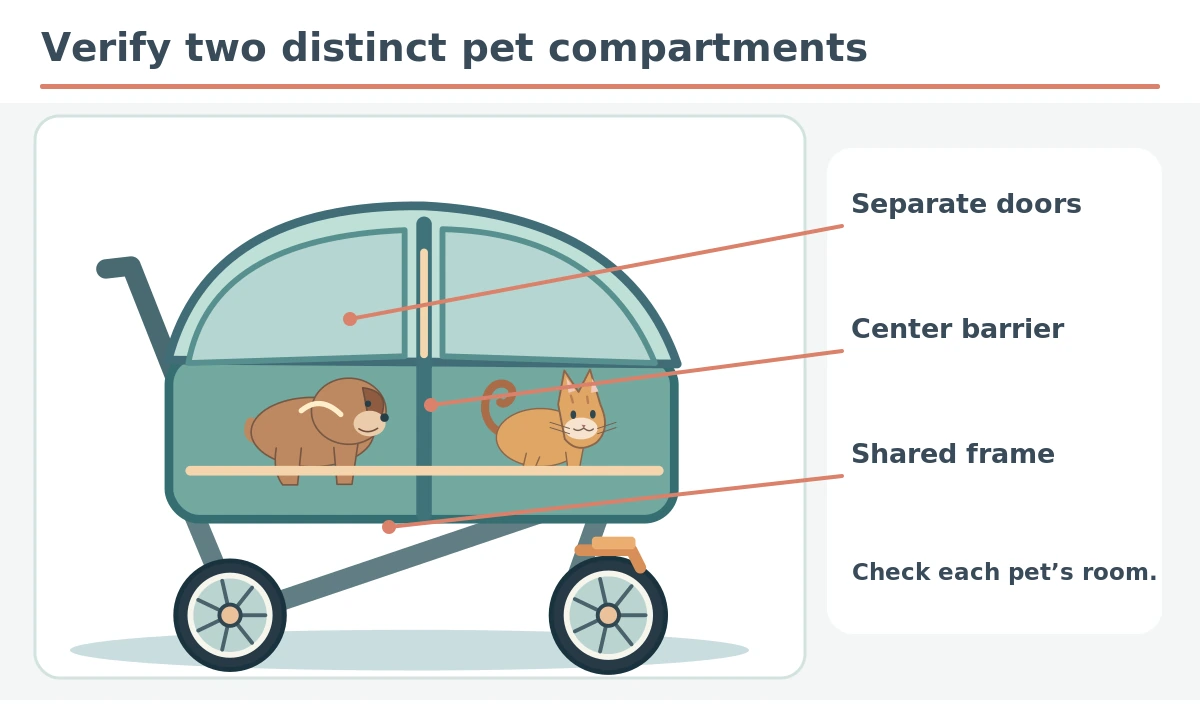
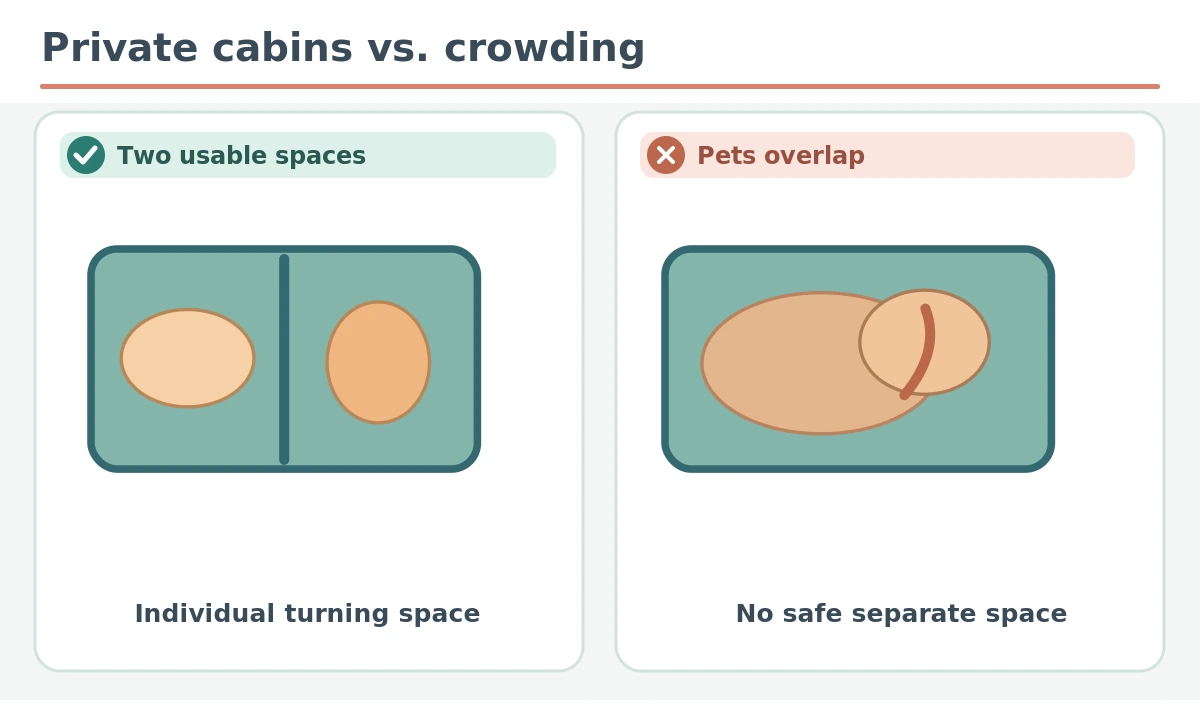
Some double strollers place two side-by-side compartments within one frame. Others stack one cabin over another or provide a large shared bay. These designs are not interchangeable. A physical partition can reduce direct body contact and provide separate doors, but only if each side has adequate ventilation and usable space. A shared bay needs explicit manufacturer approval for two occupants and enough floor space for both to change posture. For pets who guard food, jostle one another, or need different temperatures, separate transport is usually kinder than forcing closeness.
Check each pet’s usable cabin dimensions
Measure both animals independently in natural standing and resting positions. Then measure each assigned compartment at floor level, including headroom beneath the fully closed canopy. Do not split the advertised total interior width in half unless the real partition falls precisely at the midpoint. Side-by-side designs often lose usable width to internal ribs. Top-and-bottom designs can have different entrance heights. Each pet should sit, lie, and reposition comfortably without leaning against the other animal or zipper. If either pet cannot turn comfortably, choose another arrangement.
Respect separate and combined load limits
Identify the exact permitted pet weight for each compartment and the whole stroller. A product might permit a total load but restrict what the upper bay, side basket, or single seat can carry. Add the actual weights of the animals and check whether attached accessories count toward any stated limit. Do not assume a heavy dog plus a light cat is safe in any configuration. Never place more occupants than the manual allows. If the manufacturer’s instructions only support one pet, calling the unit “roomy” does not authorize a second passenger.
Watch balance while turning and braking
Two moving animals can shift weight unexpectedly. On a level empty floor, check brakes and steering, then perform gradual introductions with secure closures and direct supervision. A side-by-side frame may feel wider at doorways; a stacked design may have a higher center of mass. Keep all wheels on the ground while turning. Avoid curbs, stairs, steep slopes, and quick corners. If the stroller tilts, wheels lose contact, or the handle feels light or unstable, stop rather than compensating with a hanging bag. Never let one pet’s movement determine the safety of the other.
Select independent doors and reliable barriers
Two secure openings let you manage one pet without fully exposing the other. Check whether opening one door loosens the center partition or gives the second animal access to the same gap. Zippers should run without snagging, and all mesh seams must resist ordinary pawing. Use the manufacturer’s permitted tether arrangement only with a correctly fitted harness where directed, not a neck collar. Keep interior lines short enough to avoid tangles and never use them instead of fully closed doors. Test each closure indoors with one pet at a time.
Think about how the pair actually behaves
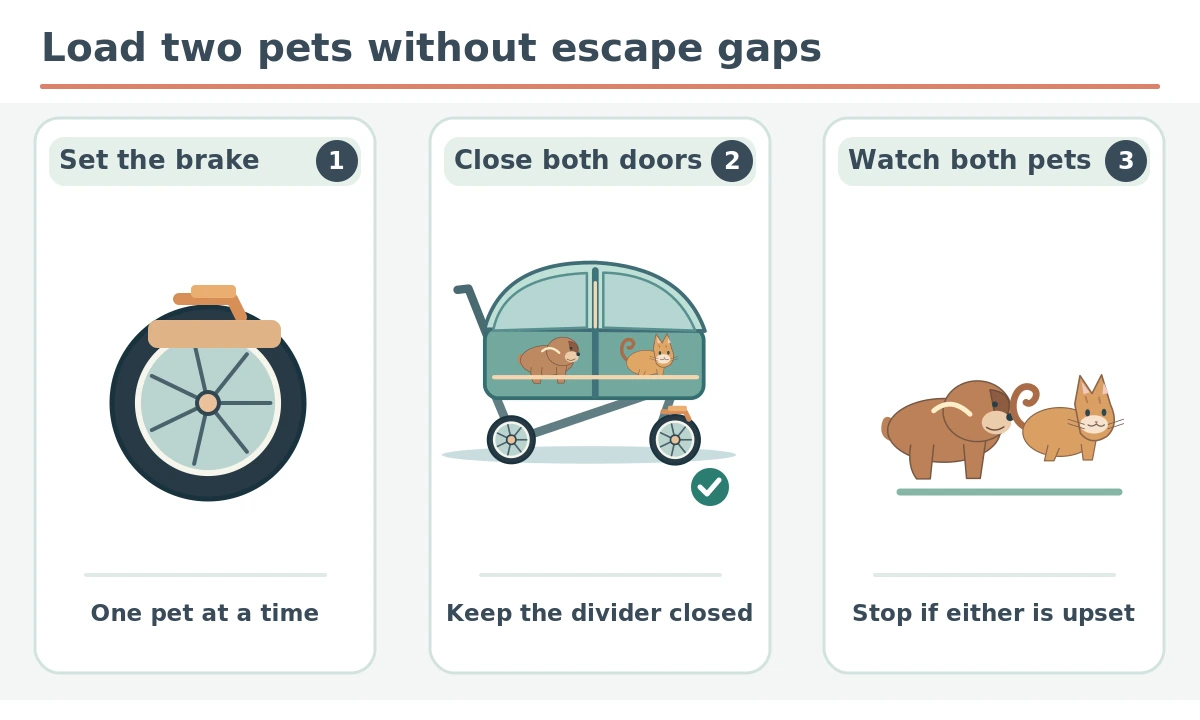
Pets who relax together at home may react differently to bouncing wheels, passing dogs, crowd noise, and a restricted exit. Observe both animals independently for stiffness, vocalizing, avoidance, panting, or attempts to cross the divider. A calm pet may also freeze; stillness alone is not consent. Do not make stroller outings the first close introduction for unfamiliar animals. Gradual, positive encounters and genuinely separate resting areas come first. If either pet shows persistent distress, take separate walks or choose another activity.
Practice loading one pet at a time
Set the brake on level ground and control the surroundings before opening either cabin. Make sure the first pet cannot push through an unlatched door while you load the second. Avoid lifting an animal high when a low entrance or separate carrier is more appropriate; support the body securely if lifting is necessary. Finish and inspect the first closure before opening the second. Keep human hands away from moving wheels. At the end, unload in a secure area and close the open door before moving to the next pet.
Account for weather in both compartments
A split cabin may receive sun on one side while the other remains shaded. Compare mesh openings and airflow for each pet, not just the stroller as a whole. Never use a shared cover that closes all ventilation. Short-nosed dogs and pets with mobility limitations may need greater caution about warm conditions. The AVMA recommends preventing heat exposure and watching for stress signs. If one animal is uncomfortable, stop the outing even if the other seems fine. Two passengers increase the need for close observation, not the safe duration of an outing.
Measure doors, elevators, and trunk space
Side-by-side double strollers may not fit the narrow entrance you use every day. Measure overall width at the wheels and frame, not just the two cabins. Check door swing and corner clearance in your home, elevator, sidewalk route, and vehicle. Folded dimensions and total lifting weight matter too. Before buying, map the actual route from the front door to the outdoor surface and identify places where a crowded curb would force an unsafe maneuver. A narrower stroller is not automatically better if each compartment becomes cramped.
Recheck the pair after every outing
After a short trial, observe whether both pets return to normal eating, resting, and movement. Look for scratched mesh, loosened divider fasteners, wet bedding, or tangled lines. Clean the cabins separately, inspect latches, and keep a record of any stress triggers. A stroller may be useful for one calm pair but unsuitable for another. If the animals consistently compete for space or one cannot settle while the other moves, do not push exposure. Comfort and individual choice should decide whether future shared outings make sense.
How We Research
We compared veterinary and animal-welfare advice about temperature, stress, and secure pet handling with the features and limitations documented by stroller manufacturers. Brand-specific instructions are examples, not universal guarantees; the manual for your exact model controls load ratings, approved accessories, operating steps, and care. We favor practical inspection, secure closure, comfortable fit, and stop conditions over advertising claims. We do not claim to have laboratory-tested individual products. Read more about HubPet and our editorial approach.
Sources
AKC — Factors in Choosing a Dog Stroller.
AVMA — Warm Weather Pet Safety.
Pet Gear — Stroller Model Occupancy and Safety Instructions.
Cats Protection — Secure Carrier and Travel Guidance.
No. Follow the model’s stated occupancy limit. A large-looking cabin does not override instructions that specify one passenger.
No. It may preserve space, but it cannot correct fear, tension, or guarding. Use separate transport if either pet feels stressed.
Some do, and limits vary. Check the exact manufacturer instructions for each compartment and for the complete stroller.
Neither suits every home. Compare each pet’s headroom, entry height, turning space, frame stability, and your doorway width.
Only as the maker directs with appropriate fitted harnesses. Keep all doors secured; tethers never replace an escape-resistant enclosure.