
A compact stroller can still be awkward to fold, lift, and store. Product listings often show a neat collapsed shape without the handle, wheel projections, or secondary safety latch that matters in a real trunk. First test how the frame opens and locks. Next measure the actual folded object, including parts that protrude. Most importantly, fold only with the animal completely out and clear of the mechanism. A frame that cannot be unfolded and checked reliably is not worth a small storage saving. This is equipment guidance, not veterinary diagnosis or treatment; for pain, breathing problems, or persistent stress, consult your veterinarian and read our veterinary disclaimer.
Identify the exact folding mechanism
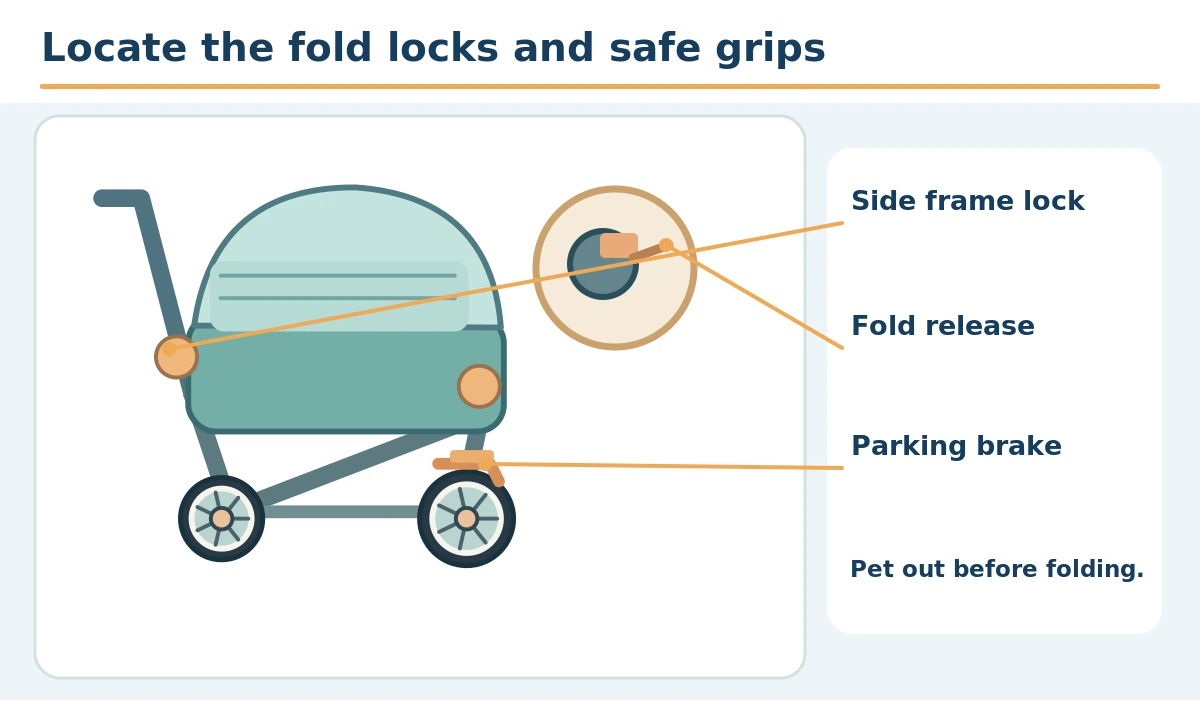
Read the manual for your model before pulling any release. Some strollers require two side levers; others use a sliding safety switch and a central button. A one-hand claim describes a control, not permission to hold the pet while collapsing the frame. Locate the primary release, secondary lock, and carry latch on an empty assembled stroller. Rehearse with the wheels parked. Do not force a lever that resists: it may indicate an engaged lock, trapped fabric, bent hinge, or wrong sequence. Never replace a broken lock with a cable tie.
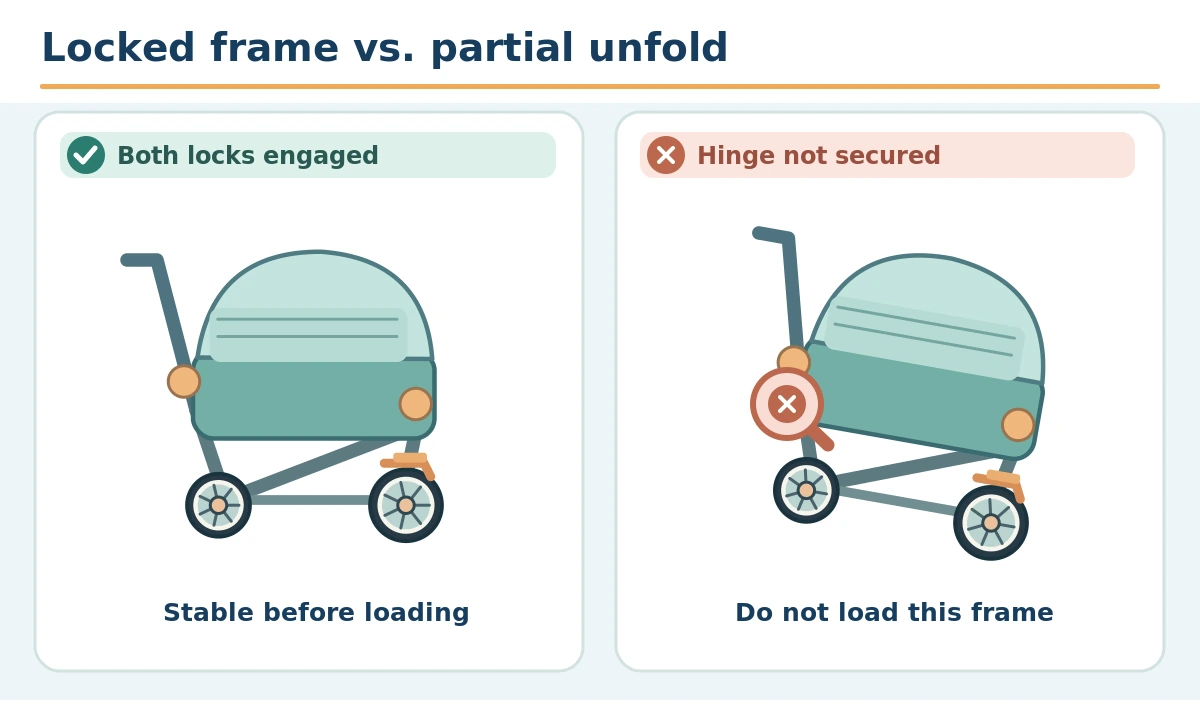
Verify the open-frame lock before loading
Unfold the stroller in a clear area and listen or feel for the lock engagement exactly as the manufacturer specifies. Then inspect both sides rather than assuming one click means the entire chassis is secure. The handle should not begin to fold under a light, controlled check. Look for symmetric joints, straight braces, and properly seated wheel axles. Engage the parking brake before allowing the pet to enter. A partially extended frame may appear upright yet collapse under an ordinary turn. If either lock fails to seat, keep the stroller out of use until repaired.
Keep hands, fur, and paws out of pinch zones
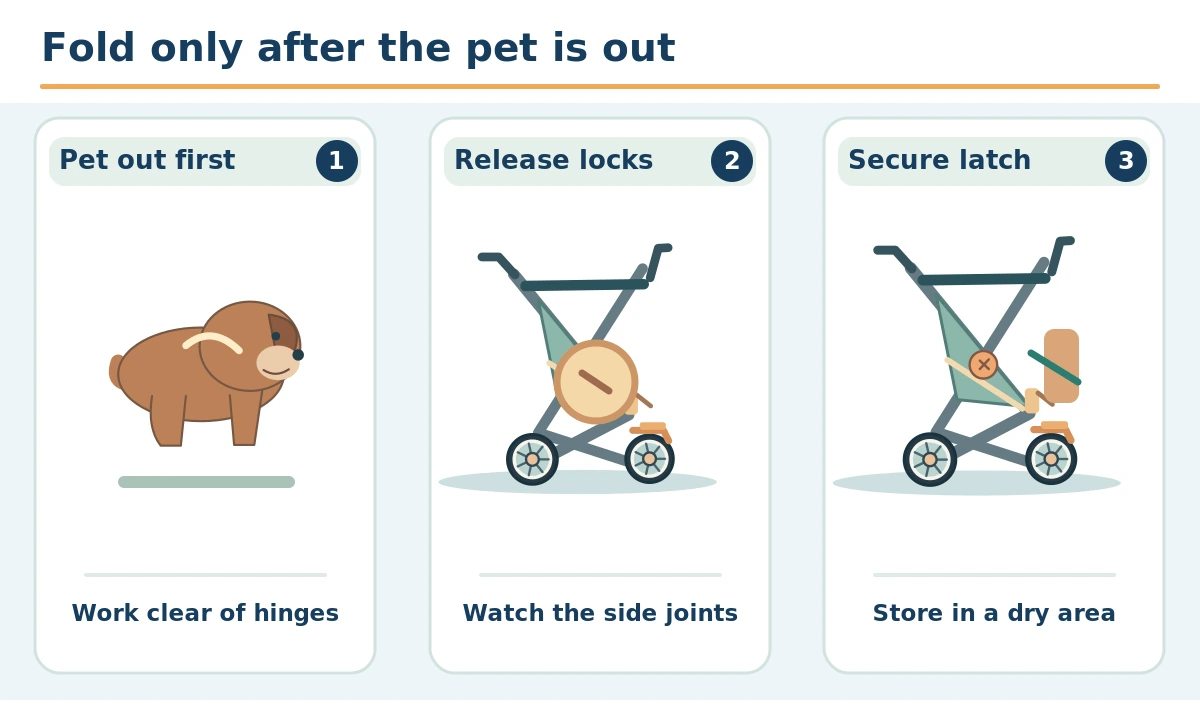
Hinges, crossover braces, and the canopy pivot all move through tight gaps. Establish a simple sequence: take the pet out to a secure room or supervised safe area, close and empty the cabin, apply the brake, then operate the releases with both hands where required. Keep children away during folding. Fingers can catch between metal tubes or in a rotating joint, so use the indicated grip points. Do not hold the stroller by a moving linkage. If a tether, blanket, or strap lies across the frame, move it before folding.
Measure the folded stroller in three dimensions
Measure total folded height, width, and depth at the widest projections, including wheel hubs, handle grip, canopy ribs, and latch. Compare these figures with the actual trunk opening, not just the trunk floor. A long folded stroller may fit diagonally but still catch the door seal or block the rear view. Confirm the frame fits without hard pressure against a latch or upholstery. If removable wheels are part of the official design, account for their separate space and any grease or grit. Some product sites list folded dimensions; verify the precise version you are buying.
Look for a secure carry latch
Once the frame is folded, a transport hook or strap should keep it from suddenly springing open. Check the latch’s alignment and retention using the maker’s procedure before lifting. Hold the stroller at its designated carry point, not a loose canopy edge or wheel. If the weight feels unmanageable, a lighter model or a two-person lift may be safer. Do not drag a folded frame by a cord. Keep the folded object out of pet and child reach because exposed pinch points and a falling stroller remain hazards after the ride.
Choose a dry storage position
Standing a folded stroller upright in a narrow hallway may create a tip or trip hazard. Choose a stable place away from heat, damp floors, pet bedding, and emergency exits. Make sure it cannot fall across a doorway when bumped. If a closet works, check the door can close without compressing tires, mesh, or brake cables. InnoPet advises a dry storage place and notes that prolonged folding can leave creases in fabric. For longer storage, consult the specific manufacturer about wheel removal and whether occasional unfolding is appropriate.
Check brake and wheels after unfolding
A compact fold can press components together, so look at wheel position before each use. Confirm that both wheel assemblies sit securely on their mounts, tires rotate freely, and the parking brake engages as designed. Test the brake on level ground while the stroller is empty. Inspect for bent axles, pinched brake cords, or wheels rubbing against the canopy or frame. Pet Gear’s instructions explicitly include brake application and lock checks, illustrating why unfolding is a safety procedure rather than a quick cosmetic step. Never assume a folding stroller is ready because it stood upright.
Protect fabric, zippers, and hinges
Before storing, empty the basket, remove damp items, and brush grit from the wheel arches. Clean the liner and cover using their labels and let all parts dry. A trapped zipper pull or twisted canopy can permanently distort fabric when squeezed into a compact bundle. Do not spray lubricant onto textile, pet bedding, or braking surfaces. If the maker specifies joint lubrication, apply only the approved product in the approved location. Rust, loose fasteners, or sudden stiffness need investigation before the next ride.
Practice one complete dry run
Treat the first home test as a rehearsal: open the folded stroller, lock both sides, brake, check closures, then fold it again with nobody inside. Repeat the exact steps without rushing. Note whether the stroller rolls away, whether a wheel hits your shoe, and where hands naturally approach a hinge. Ask a helper to observe if the mechanism is hard to see. Measure the whole exercise against your actual home, car, and doorway rather than a showroom floor. Choose a model you can confidently handle when tired or carrying other supplies.
Know when to stop using the frame
Retire the stroller from service if a lock will not engage, a joint visibly bends, or the frame opens unpredictably. Do not transport a pet with an improvised repair or a missing fastener. Contact the manufacturer for compatible replacement parts and service instructions. A damaged wheel or cracked hinge also compromises steering and braking, even if the cabin fabric looks intact. For frequent travel, reassess whether the product still meets your load, space, and handling needs. Compactness is only valuable when the open stroller is stable and the folded one is safe to move.
How We Research
We compared veterinary and animal-welfare advice about temperature, stress, and secure pet handling with the features and limitations documented by stroller manufacturers. Brand-specific instructions are examples, not universal guarantees; the manual for your exact model controls load ratings, approved accessories, operating steps, and care. We favor practical inspection, secure closure, comfortable fit, and stop conditions over advertising claims. We do not claim to have laboratory-tested individual products. Read more about HubPet and our editorial approach.
Sources
Pet Gear — Happy Trails Stroller Instructions (model-specific example).
InnoPet — How to Store a Dog Stroller.
InnoPet — Proper Stroller Maintenance.
AKC — Choosing a Dog Stroller.
No. Remove and secure your pet before touching any folding release; moving joints can trap limbs or destabilize the cabin.
No. Release arrangements vary by model. Follow the exact written sequence and do not assume a similar-looking handle works the same way.
Use the folded height, depth, and width including wheel projections, then compare with the trunk opening and usable interior.
Only when the folded unit is stable and secured according to its instructions, away from pets, children, doors, and walkways.
Keep pets out. Check the model’s manual and contact the manufacturer if both locks cannot engage and remain secure.