
This article provides general pet product and home-care information, not a veterinary diagnosis or a safety certification. Check flooring and product instructions, and contact your veterinarian if your dog has pain, sudden mobility changes, unusual behavior, or symptoms of illness. Read our veterinary disclaimer.
A bedside dog bed lets a pet rest near its people without climbing onto a human mattress. The challenge is often the room layout, not the cushion itself: a bed near a nightstand may obstruct a walkway, catch a door, or leave the dog stepping directly onto a slippery floor. Build a sleep spot that offers enough lying space and a safe path for everyone who moves through the bedroom at night. The dog should also be free to choose another quiet spot.
Draw the real night route before measuring
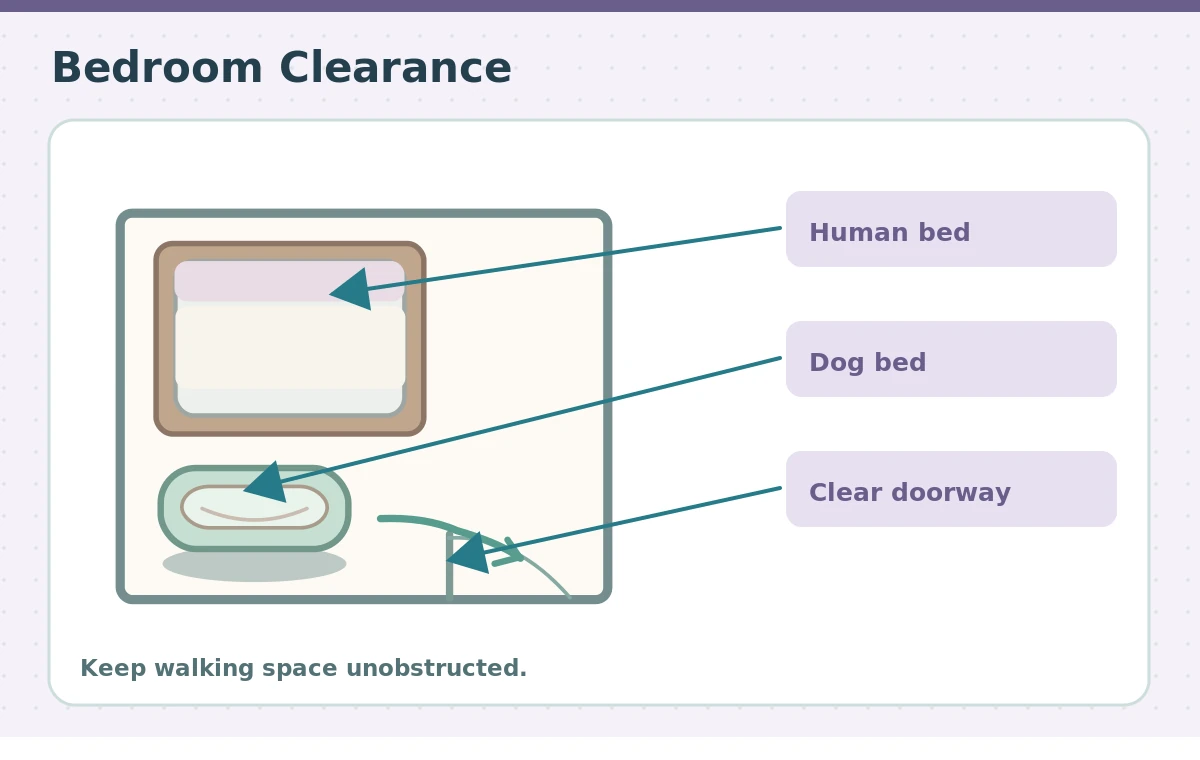
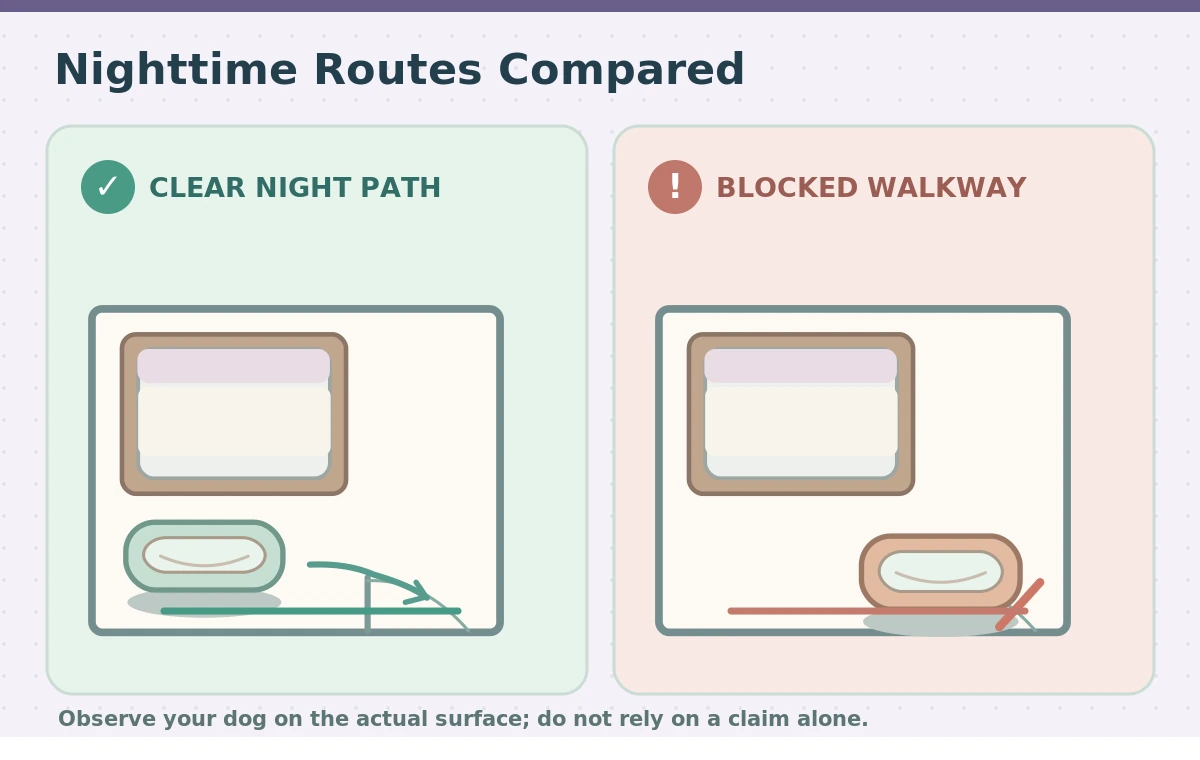
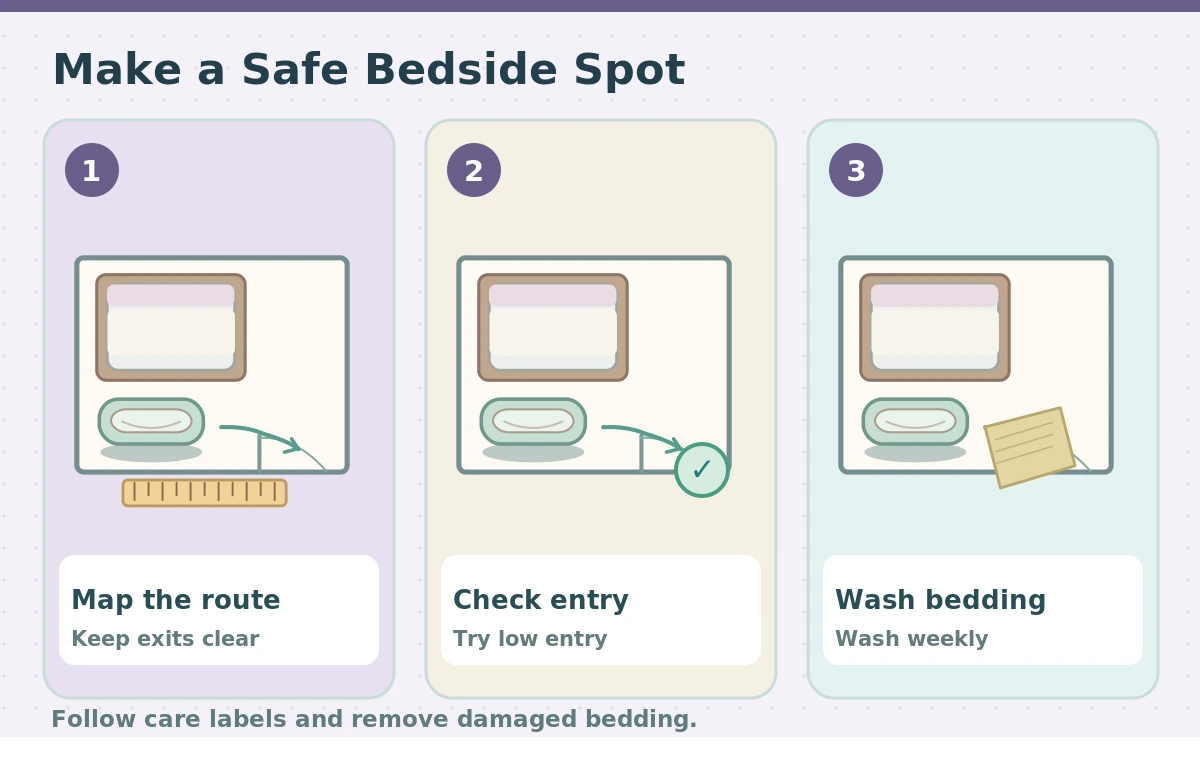
Walk the route from your bed to the bathroom with the lights at their usual nighttime level. Mark the path around furniture, door swings, bedside tables, and cords. A plush dog bed can be easy to miss in darkness, especially when its color matches the floor. Keep the cushion fully outside the main walking line, not just outside the door opening. Check where bedding, slippers, and phone cables fall during normal use. No sleeping arrangement is worth creating a trip hazard for people or a sudden step onto the dog.
Measure the dog lying down, not the corner
A corner may fit a product’s outer label dimensions but not allow a dog to stretch or turn. Measure the available rectangle after leaving a clear route. Then compare it to the dog’s actual resting footprint, including the head and extended rear legs. Consider whether a raised bolster restricts usable interior space. Avoid wedging a too-large bed under a nightstand. If the room lacks enough floor area, choose another location nearby rather than squeezing the dog into an awkward gap.
Choose entry height for normal nighttime movement
Dogs can be sleepy or less coordinated when rising in the dark. A low stable edge may be easier than a tall puffed cushion or a high bolster with one narrow opening. Watch a natural entry and exit in daylight before settling on placement. For older dogs or pets with mobility concerns, VCA recommends easy-to-access comfortable resting areas and improving traction where needed. If your dog starts struggling to stand or changes gait, ask your veterinarian rather than assuming a different bed will treat the problem.
Keep breathing space and temperatures comfortable
Do not put a bed directly against a heater, blocked vent, or active electric cord. Some dogs like cooler flooring and may move away from warm bedding. Let them choose. Avoid tucking a bed into a poorly ventilated cavity simply to save space. A nearby radiator, heated blanket, or curtain can change the microclimate around the resting area. If a household must use a space heater, follow its clearance instructions and keep it away from bedding. The goal is a safe bedroom environment, and fabric alone cannot control its temperature.
Think about doors, drawers, and rolling chairs
Open each bedroom door and furniture drawer fully while the empty dog bed rests in its proposed spot. Look for corners that would catch an opening panel and for feet that would strike the mattress during normal use. A bed should not block a dog’s easy route out of the room. Avoid placing the resting spot where someone will step backward without seeing it. If the household has an adjustable bed or powered furniture, keep the dog and its cushion outside moving parts and pinch points.
Set a predictable but voluntary bedtime routine
Invite the dog to the bed with a reward and allow it to leave. Pair the location with calm activities, not repeated commands or punishment. A familiar washable blanket can help a new sleeping area smell ordinary, provided it is safe for that dog’s chewing habits. Keep the room quiet enough for rest. If the dog chooses another safe place, do not force it back. When nighttime pacing or vocalizing begins suddenly, consider discomfort or other concerns and contact a veterinarian if needed.
Include a cleaning and hair-control plan
Bedrooms collect dust, fur, and moisture around furniture edges. Choose a cover you can remove and wash without dragging the whole bed over sleeping people. CDC guidance recommends regular cleaning of pet bedding, typically weekly and whenever it becomes soiled. Vacuum or sweep under the cushion and dry the floor before replacing it. Avoid scented treatments that irritate a sensitive pet. Place a laundry basket or spare cover away from the path so bedding can dry thoroughly between uses.
Recheck the setup after household changes
A moved dresser, new baby monitor cord, different nightlight, or recovery from injury can make yesterday’s safe layout awkward. Rewalk the nighttime route after rearranging furniture. Look for a dog who avoids the bed, slips at its edge, or startles when people pass. Consider a quieter corner if children or other pets repeatedly approach while the dog rests. Bedside access should support undisturbed sleep, not require a dog to tolerate frequent contact during the night.
How We Research
HubPet reviewed CDC guidance on washing pet bedding, ASPCA general dog-care recommendations for a quiet clean resting place, AKC guidance on bed size and care, and VCA advice on accessible beds and floor traction. We applied those principles to the specific product construction and room layouts in this guide. We did not test brands, certify safety or materials, conduct temperature studies, or replace a veterinarian’s individual recommendations. Product and flooring manuals take priority for compatibility.
Sources
CDC: Cleaning and Disinfecting Pet Supplies — guidance on routine cleaning, resting environments, fit, or floor traction.
ASPCA: General Dog Care — guidance on routine cleaning, resting environments, fit, or floor traction.
AKC: Choosing the Right Dog Bed — guidance on routine cleaning, resting environments, fit, or floor traction.
VCA: Creating a Comfortable Home for Your Mobility Compromised Dog — guidance on routine cleaning, resting environments, fit, or floor traction.
Close enough for your dog to feel comfortable but outside door swings and human walking paths. There is no universal distance.
Only if the dog has enough usable lying area and an easy entry. Tall or narrow bolsters can restrict access.
No. Keep door movement, exits, and routine nighttime traffic clear to reduce injury risk.
Allow another safe resting location. Reward calm voluntary use instead of forcing the dog into the bedside spot.
The CDC suggests washing pet bedding weekly as a general routine, and sooner whenever it becomes dirty or damp.