
Two-Handle Dog Leashes should make everyday walks easier without adding pressure or confusion. Start with the real dog and the route, not a store claim. Check every strap, seam, and connection before use. This guide explains observable fit and handling tests you can repeat at home. It does not endorse a model, and it cannot replace individual advice for pain, limited mobility, or difficult behavior. See the HubPet veterinary disclaimer for health-related limits.

Understand the two separate grip positions
A two-handle leash usually has a regular loop at the far end and a shorter loop closer to the dog. Use the regular grip for relaxed walking with suitable slack. The near grip helps you shorten the working distance briefly at a doorway or tight sidewalk. It is not a training shortcut and should not be used to jerk the dog. A short grip brings the handler closer to the dog, so plan your position before reaching down.
Measure handle placement on the actual leash
Lay the leash straight on the floor. Identify the clip end, the near handle, and the main loop. Measure how far the near grip sits from the clip and imagine reaching it with your normal arm posture. A handle that hangs at the dog’s shoulder may be awkward or unsafe for a short handler. One near the main loop may offer little difference. Manufacturer length descriptions can be unclear, so check the physical spacing, not just a listing headline.
Inspect stitching and webbing folds
Every extra loop adds load-bearing stitches and folds. Look for dense, even stitching where the handle returns into the main webbing. Feel the inside of both loops for hard cut ends and abrasive edges. A padded grip should not conceal loose fibers or fraying. Test the clip closure and swivel separately. If the near handle is sewn only onto a fragile decorative layer, choose a more robust construction. Do not rely on a damaged loop for sudden restraint.
Practice switching grips while standing still
Start without distractions. Hold the far handle, then transfer one hand toward the near loop while keeping safe slack. Do not wrap the leash around fingers, a wrist, or a waist. With a calm dog, practice moving back to the normal handle before changing pace. Avoid abrupt pulls, especially on a neck collar. If the dog lunges, adding a short handle does not solve the underlying behavior and can increase force on both bodies.
Use the near grip only where space requires it
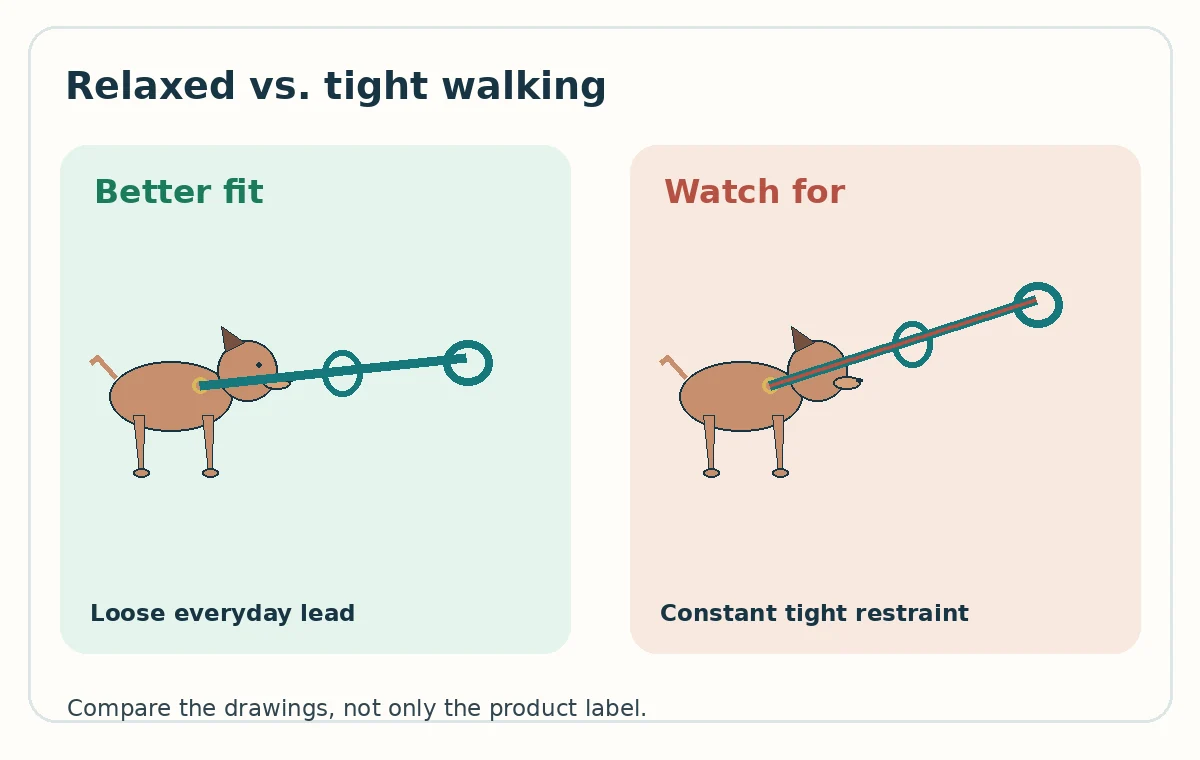
A narrow passage, crowded doorway, or curb may call for a short period of closer walking. Ask for a calm position and reward it before entering the area. Release back to ordinary leash length when the path opens. Do not use the traffic loop for a whole long walk; constant tightness can frustrate the dog and make sniffing difficult. A dog that struggles to stay close may need reward-based loose-leash practice in easier surroundings.
Compare padded and plain secondary grips
A soft handle may be comfortable for occasional gripping, but bulky foam can make a loop slow to find. Thin flat webbing may fold tightly and pinch a hand under load. Check whether the grip opens far enough for your fingers without requiring a clenched fist. Consider gloves in cold or wet conditions. A sliding handle is different from a fixed sewn loop; make sure you understand which design you own before trusting its position.
Avoid risky leverage and hand injuries
Keep leash tension low whenever possible. Never brace the traffic handle against a fixed post or attach it to a moving vehicle. A sudden lunge can strain a person’s shoulder or a dog’s neck and body. For dogs with a history of strong pulling, consult an appropriate positive-reinforcement trainer. Use a correctly fitted harness if recommended by your veterinarian or trainer. Traffic control should be a planned, momentary adjustment rather than sustained force.
Choose a leash that matches the walking location
An uncluttered neighborhood sidewalk calls for different handling from a busy station entrance. Check local leash rules and the dog’s comfort before moving closer to traffic. A reflective section helps after dark but does not replace watching vehicles and cyclists. Look for a convenient regular grip, a clearly reachable short grip, and adequate webbing strength. If the second loop catches on brush or furniture, a simpler leash may be a better fit.

Clean and retire worn loops
Remove mud from the handle fold and let the leash air dry. Check hidden stitches by bending each handle back gently. Discard a leash with torn webbing, a bent clip, or a compromised sewn return. Small chew marks can weaken the fabric before obvious tearing occurs. Keep gear off the floor when not in use so the dog does not become tangled or chew handles. Inspect the secondary loop as often as the main handle.
Quick decision checklist
Before buying or reusing two-handle dog leashes, confirm that the product matches the dog and the setting. Check the hardware, fabric, and fit while the dog is standing naturally. Repeat the check during a calm walk rather than pulling hard to test strength. Look for rubbing, changed movement, or a twisted connection after a few minutes. If you cannot get a secure and comfortable fit, choose a different construction. Do not modify structural stitching, shorten straps by cutting them, or leave walking equipment on an unattended dog. An ordinary, well-fitted setup beats a dramatic marketing promise.
How We Research
We compared published veterinary and animal-welfare guidance with practical equipment features that owners can check without laboratory tools. The distinctions above are observational buying and handling criteria, not results of a product trial. VCA emphasizes shoulder movement and avoiding chafing in harness selection. AKC explains how leash styles and grips match different walks. We did not independently certify strength, reflection, breathability, or any model claim. For site standards and scope, read the HubPet editorial information. Ask your veterinarian about persistent discomfort or unusual gait changes.
Sources
American Kennel Club — Choosing the Right Dog Leash. Consulted for equipment fit, practical walking limits, and safety principles. This source does not evaluate the individual items pictured here.
VCA Animal Hospitals — Controlling Pulling on Walks. Consulted for equipment fit, practical walking limits, and safety principles. This source does not evaluate the individual items pictured here.
VCA Animal Hospitals — Collar and Harness Options for Dogs. Consulted for equipment fit, practical walking limits, and safety principles. This source does not evaluate the individual items pictured here.
It is a temporary close-control grip for short crowded passages. Return to the regular handle when more room is available.
Usually no. Continuous short tension can limit relaxed movement and sniffing. Use it only when the setting requires closer proximity.
An extra handle is not a treatment for pulling. Reward-based training and suitable fitting matter more than tighter restraint.
Avoid wrapping or knotting a leash around hands or wrists. Sudden movement can cause sprains or rope burns.
Inspect the return stitching, webbing, padding, clip, and any fraying before every walk. Replace damaged equipment.