
This guide provides general behavior and safety information, not individual veterinary advice. Seek a veterinarian or credentialed reward-based trainer for persistent fear or possible pain; read our veterinary disclaimer. The television may show a dog running, a horse whinnying, a ringing bell, or a quick cut from one scene to another. Your dog can react to sound, movement, or both. VCA notes that dogs may attend to screen motion and familiar animal sounds without understanding the program as people do. The goal is not to force your dog to watch every show quietly. It is to make the living room comfortable and give them an easy alternative when a clip becomes exciting or worrying. Start with a low-volume test and a safe, clear route away from the screen. If the dog startles or cannot disengage, turn the content off rather than making the scene more intense.

Identify whether motion or sound leads the response
Observe a brief familiar clip while the dog is at a comfortable distance. Does barking begin when a dog crosses the screen, at the first bark from the speakers, or when the volume increases? Note what occurs just before the body tenses. To separate sound from motion, test a muted, low-action scene or a low-volume audio clip, but never deliberately overwhelm the dog. A reaction that disappears when the sound is muted suggests an audio component, not proof of a single cause. If any test produces sustained distress, stop. Your observations should guide a gentler setup, not become repeated challenges.
Move the rest area out of the direct viewing path
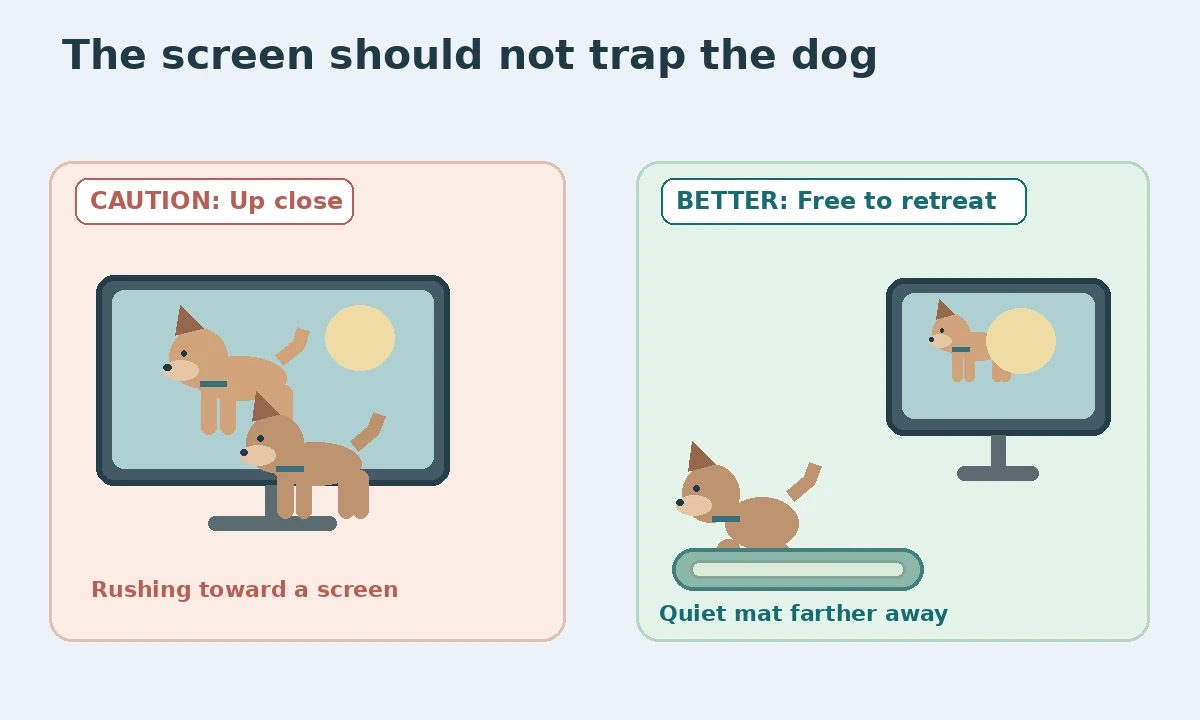
Put a familiar mat behind or beside the main seating area rather than straight in front of the television. The dog should be free to lie down, drink water, and leave the room. Do not place cords, remote batteries, or small objects beside the bed. Check that the screen is stable and cannot topple if the dog jumps. If the dog keeps rushing the screen, use a suitable room barrier or switch off the program during initial training. Covering the image with a blanket is not safe for a device that needs airflow. Rearranging the room can be more effective than repeatedly saying “quiet.”
Start with low-intensity, short clips
Choose a program segment without barking dogs or sudden loud effects. Play only a short portion at a low, comfortable volume while the dog rests on a familiar mat. Quietly reward turning toward you, sniffing, settling, or choosing to leave the screen area. Increase only one variable at a time: a little more sound or a little more motion, not both. If the dog remains tense, return to the easier level. Avoid long sessions, and do not keep a frightening program on as a form of exposure therapy. Comfortable voluntary behavior is the measure of progress.
Teach a calm alternative away from the screen
Practice a simple mat cue before turning on the television. Reward the dog for approaching the mat and settling naturally, then release them to move around. Later, start a predictable low-intensity clip and offer the cue before the animal appears. The food reward comes for the comfortable alternative, not as a bribe to endure fear. If your dog is barking continuously, first turn down or stop the show and allow recovery. Do not hold the dog down, block their escape, or drag them toward the screen. A dog who chooses a quiet spot is learning useful control.
Use a plan for surprising live broadcasts
Sports broadcasts, advertisements, and live shows can contain unplanned animals, whistles, or sharp sounds. Keep the remote within reach and mute promptly if you see your dog stiffen. Invite the dog away to a familiar activity or resting place instead of shouting at the screen. A predictable family plan avoids one person laughing and another punishing the same reaction. Do not allow children to chase a dog who retreats from the room. It is reasonable to watch a different show or use headphones when a dog is especially sensitive; the animal does not need to accommodate every program.
Watch the body, not just the bark
A loose dog might watch for a moment and then rest, while a worried one may freeze, pant, pace, or repeatedly jump at the screen. The absence of barking does not always indicate calm. Stop the program if the dog cannot disengage, refuses familiar food, or appears frightened. Sudden changes in response to routine sounds can justify a veterinary conversation, especially alongside changes in hearing, vision, pain, or sleep. A behavior professional can help with significant fear. Avoid collars or devices that punish barking; they may create a new negative association with the room.
Reduce access to the most provoking scenes
If wildlife programs reliably trigger lunging, choose other content while training is underway. Use low-volume shows and close captions for human viewers if that works for the household. Consider the sound coming from a nearby soundbar or surround speaker, not just the main screen. A dog may react to speaker placement behind the sofa. Leave access to a quieter room and make sure doors do not swing into the pet’s resting route. Provide ordinary enrichment before long viewing sessions rather than hoping the dog will tire of an upsetting scene. Management is not a training failure.
Practice a simple three-step viewing routine
First check that the dog has an unobstructed resting route and the volume is low. Next play a manageable short clip and reward a voluntary check-in or settled posture. Finally switch the show off, let the dog stretch or sniff, and record what content was easy. On the next day, repeat the easy level instead of automatically turning up the volume. Measure success by the dog’s ability to disengage, not by minutes spent facing the screen. If the television causes repeated distress, a quiet separate room is a perfectly valid long-term accommodation.

How We Research
We compare practical advice from veterinary schools, veterinary hospitals, and established animal welfare groups. The specific recommendations focus on the described trigger, safe management, humane reward-based learning, and signs that require individualized help. We do not treat barking as a diagnosis or promise that any device will silence a dog. For our site approach, visit About HubPet.
Sources
VCA — Can Dogs See Movement on TV? — guidance on safe barking management, behavior, or related travel considerations.
ASPCA — Barking and Triggers — guidance on safe barking management, behavior, or related travel considerations.
UC Davis — Barking in Dogs — guidance on safe barking management, behavior, or related travel considerations.
Some dogs respond to visual movement and animal sounds on screens, though their experience differs from how people understand a program.
No. Start quietly, change one aspect at a time, and stop if the dog appears tense or cannot settle comfortably.
Yes. Keep a clear route to a quieter area; voluntary retreat is a useful coping choice, not a training failure.
Turn off the triggering program, secure the screen from tipping, and prevent access while you work on calm behavior at a distance.
Seek advice if the response is sudden, intense, accompanied by sensory changes, or part of broader distress at ordinary sounds.