
This article provides general pet-care information, not individual veterinary advice. For painful mats, skin changes or sudden grooming intolerance, consult your veterinarian. See our veterinary information disclaimer. A dematting comb can look like an ordinary wide comb, a curved row of cutting teeth or a rake with sharpened edges. Those tools do not all work the same way. A loose tangle near the ends of the hair may respond to patient fingers and a gentle comb. A tight mat near the skin can hide folds of tissue and cause substantial pain. Do not treat a sharp dematting tool as a quick fix for every knot. This guide explains what to inspect on the tool, which coat situations are lower risk and when to choose a qualified groomer or veterinarian instead.
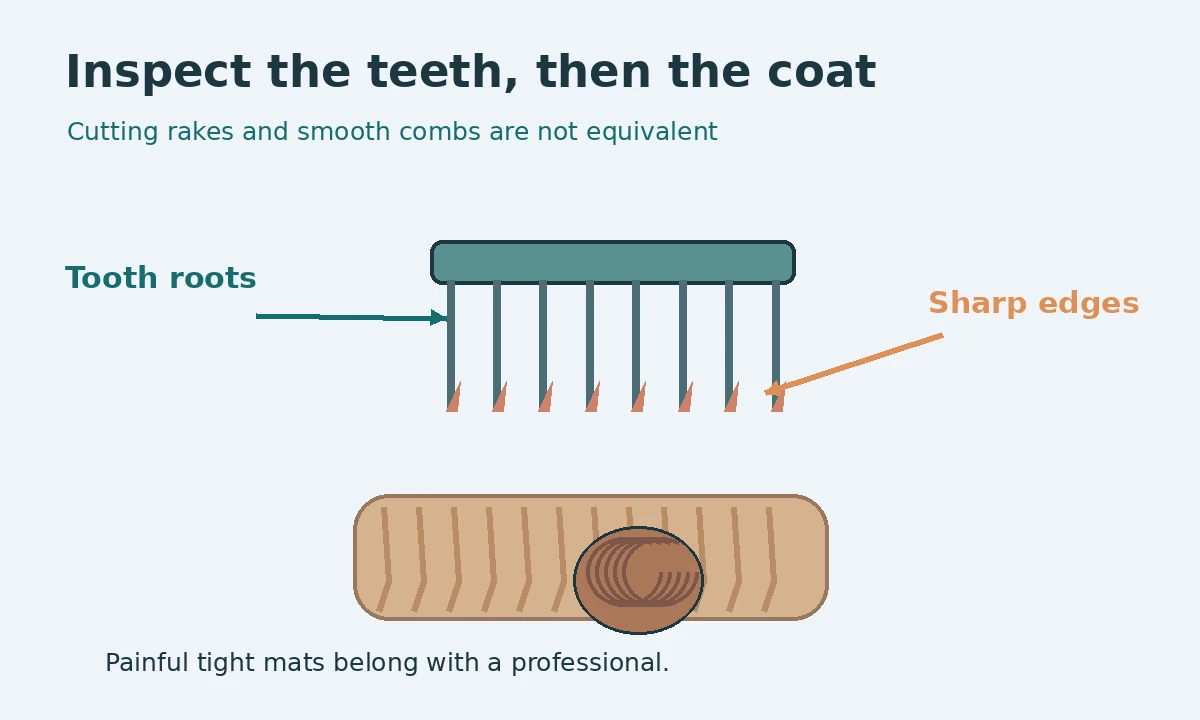
Recognize the type of teeth
Place the tool on a table where you can see the full tooth row. Some products use smooth widely spaced teeth; others have hooked blades inside each curve. Do not run a hand across an unknown edge. Check whether a safety cover protects the teeth during storage. A blade-like rake can slice through coat rather than separating strands, which may change the finish or tug the skin. Identify the intended coat type in the manufacturer’s instructions. Avoid using a cutting tool on sensitive areas or guessing from product photos alone.
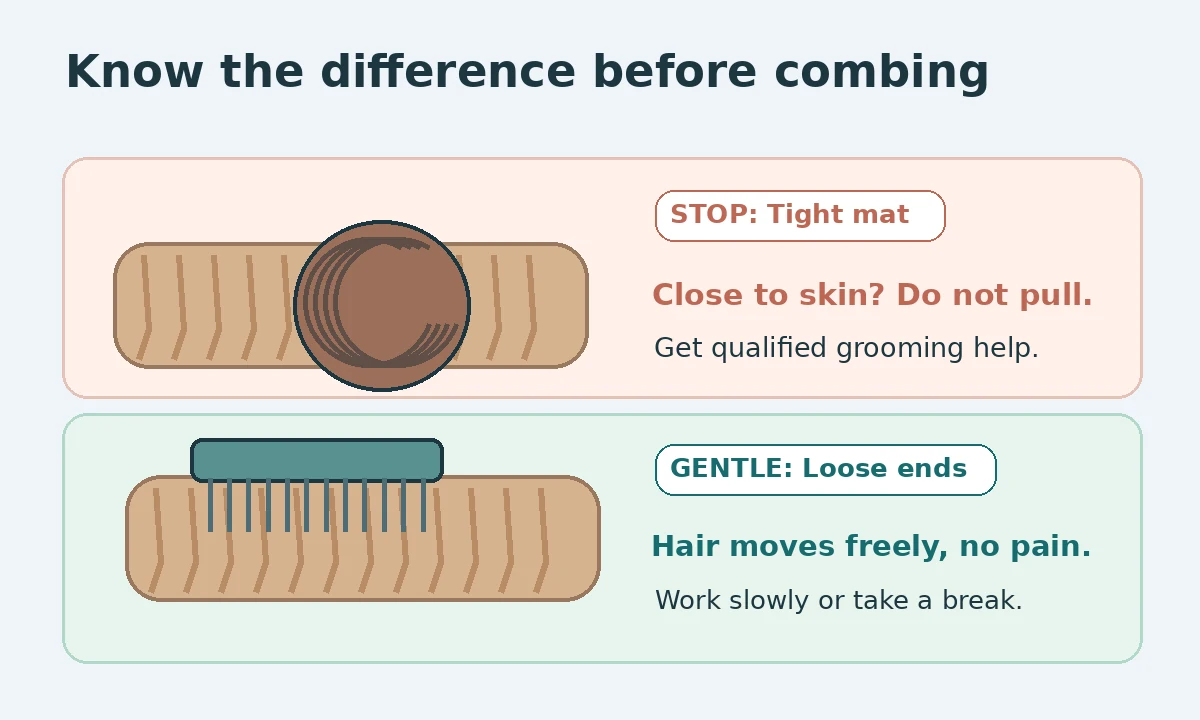
Check whether the knot is truly loose
Part the coat carefully with your fingers and find the outer edge of the tangle. A small loose knot away from the skin is different from a tight felted mat. If you cannot see or gently move individual strands, do not attempt to rake through the mass. Pulling can tighten the knot against the skin. Note any redness, dampness, odor or discomfort and seek veterinary evaluation where appropriate. If the dog flinches when you touch the area, stop before selecting a more aggressive tool. Comfort must determine the plan.
Prevent skin tension while handling hair
For a minor tangle, support the hair gently near its base without gripping or pinching the dog’s skin. Work only on a small section and stop if the dog appears uncomfortable. Smoothly separating loose ends is often safer than forcing a curved cutter through resistance. Avoid repeated strokes across the same patch and keep sharp tooth edges away from folded skin. If you cannot control tension and see where the comb will move, a professional groomer should handle the knot. Do not assume the dog is fine simply because it stays still.
Compare gentle combing with forced cutting
An ordinary wide-tooth comb may reveal whether a small patch moves comfortably. A sharp dematting rake can catch and slice fibers, but it may also pull or damage coat when used without training. Do not increase force to overcome a tight snag. Turn back to visual inspection or stop altogether. Your goal is a comfortable coat, not saving every hair at any cost. Some mats require professional clipping after assessment. Never attempt to cut a skin-level mat with household scissors, because the skin can rise into the knot.
Respect sensitive body regions
Under the legs, around the ears, the neck beneath a collar, the groin and near the tail are common friction areas. They also include thin or folded skin. Do not practice a cutting dematting tool in these regions. Watch for a dog who sits, twists, guards the area or tries to bite when a knot is touched. Seek a qualified groomer, and involve a veterinarian for irritated, painful or injured skin. The presence of a guard on a product does not make an unfamiliar blade suitable for every body area.
Use preparation to prevent new mats
Brush with a tool matched to the coat and check high-friction areas before knots tighten. Ask a professional to show you where to part the coat and how to confirm the comb reaches loose underlayers without scraping skin. When the dog is damp after a bath, make sure the coat dries thoroughly according to the breed and product guidance. A matted area can become harder to manage when washed without preparation. Keep grooming sessions short and comfortable. Prevention usually offers more value than repeatedly attacking the same tight knot.
Know when a groomer needs to take over
Arrange professional help if a mat sits close to the skin, covers a large region, pulls painfully or does not move under gentle handling. The dog may need a tailored clipping plan rather than forceful home brushing. Tell the groomer about previous discomfort and any skin symptoms. A veterinarian should assess sores, wet inflamed patches, significant pain or other possible medical concerns. Do not conceal a failed tool attempt; this information helps the professional plan safer care. Progress may mean removing the mat professionally and starting prevention afterward.
Inspect the tool after each use
Remove loose hair and inspect the teeth for damage. A chipped plastic guard, exposed blade or bent cutting edge can change how the tool contacts coat. Clean and dry the permitted parts according to the manufacturer’s instructions. Put the protective cap on before storage and keep the device away from children and pets. Never throw an open sharp rake into a mixed grooming bag. Replace damaged tools instead of improvising a cover. Maintaining the equipment matters, but it does not expand the safe use range for tight mats.

Create an informed decision checklist
Before touching a knot, ask four questions: Can I see healthy skin or freely moving hair? Does the dog stay comfortable with a light touch? Do I know whether the teeth are sharp? Is the area away from thin folds and sensitive structures? If any answer is uncertain, stop and seek guidance. Keep a note of where mats recur so you can adjust brushing frequency, harness contact and professional appointments. You do not need to remove every tangle yourself to give good coat care. A safe boundary protects the animal.
How We Research
We compare veterinary grooming and animal welfare guidance with manufacturer instructions where equipment compatibility matters. We distinguish routine coat maintenance from painful matting and medical problems. Our practical checks focus on the actual tool, coat contact, the dog’s comfort signals and safe stopping points. Learn about our editorial process. These illustrations explain general principles rather than certify any specific product or replace a professional examination.
Sources
VCA — Grooming and Coat Care for Your Dog — Guidance on coat care, comfort, tool use and safe limits.
ASPCA — Preventing Coat Matting — Guidance on coat care, comfort, tool use and safe limits.
PetMD — How to Handle Matting in Dogs and Cats — Guidance on coat care, comfort, tool use and safe limits.
No. Tooth designs vary, and sharp curved tools can pull or damage coats. Ask a qualified groomer whether the design suits your dog.
Avoid sharp dematting tools near thin skin and sensitive areas. Seek professional grooming help when knots occur close to the ears or face.
No. Pulling harder can hurt the dog and draw skin into the knot. Stop and arrange appropriate professional removal.
Do not cut tight mats with household scissors. The skin may be hidden or pulled up into the hair, creating a serious injury risk.
Seek veterinary advice for pain, open skin, redness, discharge, odor or extensive matting with a dog that cannot tolerate handling.