
This article offers general pet-care information, not a diagnosis or treatment plan. For urgent ingestion concerns, pain, or sudden behavior changes, consult a veterinarian. See our veterinary information disclaimer. Fresh soil, compost scents, and soft mulch can turn a garden bed into a dog’s favorite digging place. Scolding the dog after discovering uprooted seedlings does not explain which area is off-limits. A better plan protects plants now and offers a clear place where the dog can dig safely. Dogs dig for different reasons, including exploration, cooling, or retrieving interesting smells. Check the yard for hazards before training. Fertilizers, pesticides, cocoa mulch, sharp edging, and toxic plants require attention even if the dog stops digging. Use supervision, humane barriers, and a designated digging area.
Find what draws the dog to that bed
Observe the dog during supervised yard time. Some animals return to the same corner after you water or add compost. Others dig wherever soil is loose, or beside a shrub that provides shade. Smell, temperature, wildlife, and learned rewards can all influence the location. Record the time and conditions rather than assuming stubbornness. If the dog is digging to escape from the yard, treat boundary security as the first priority. Persistent digging paired with distress, pacing, or other changes deserves help from a veterinarian or qualified behavior professional.
Make the planted area inaccessible
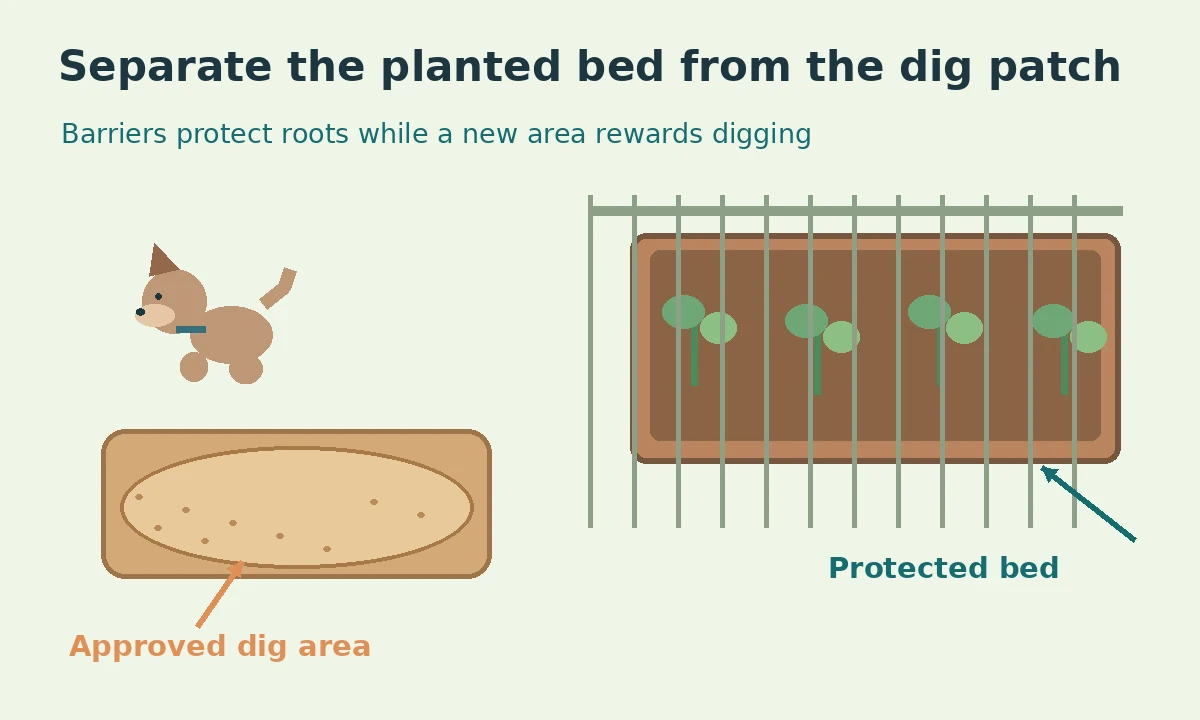
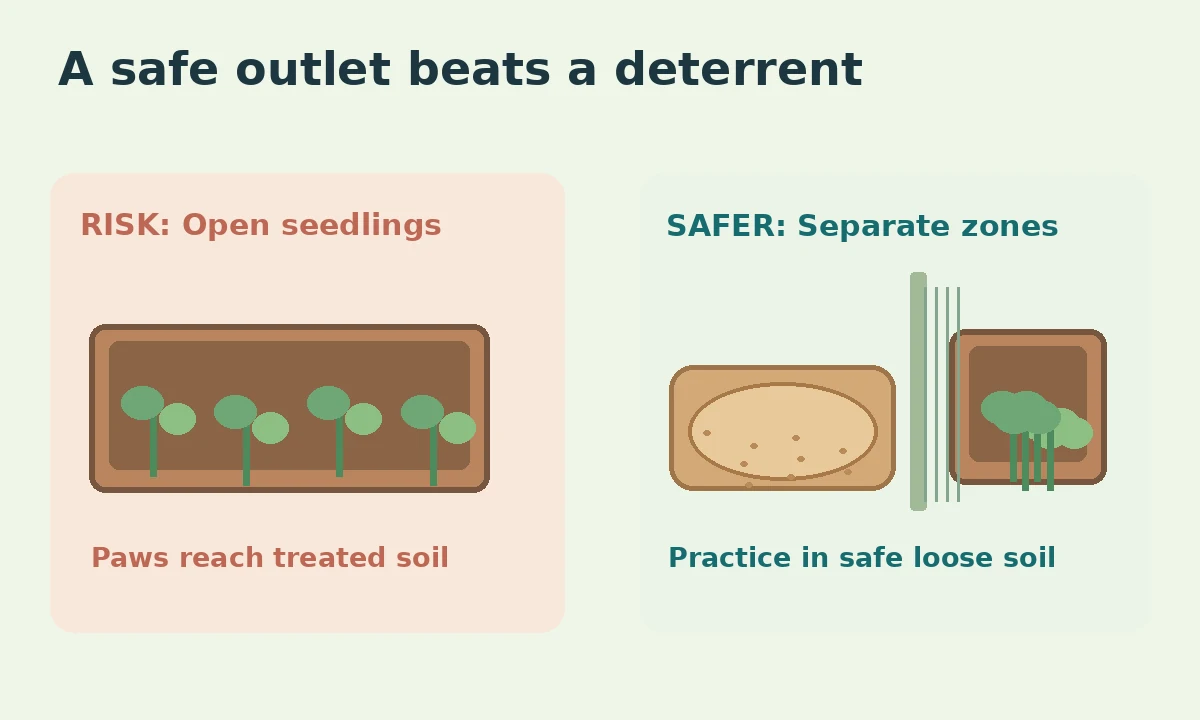
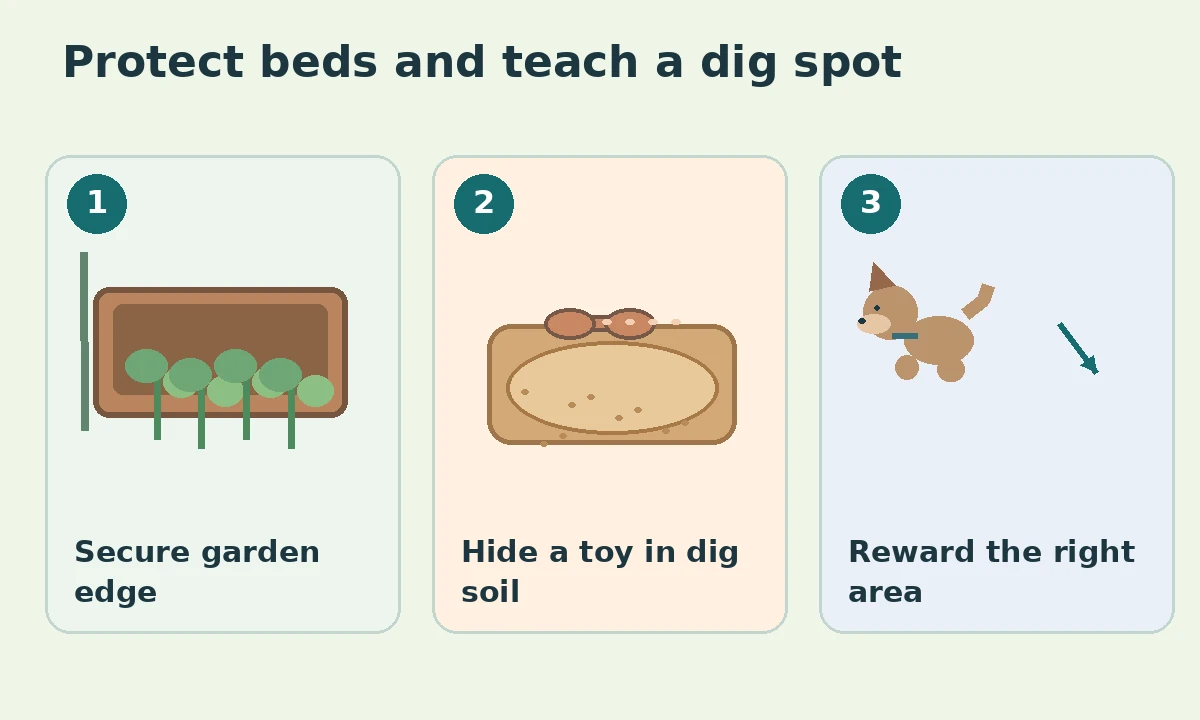
A low decorative border often fails when a dog can step across it. Use a stable fence or appropriate garden barrier that the dog cannot push over, squeeze through, chew apart, or catch a paw in. Keep sharp wire ends and loose mesh out of reach. Place the barrier far enough from plants to protect stems and roots. Avoid leaving open trenches that create trip hazards. Check the barrier after wind, rain, and yard maintenance. The goal is to prevent practice at the unwanted spot while the dog learns where digging is allowed.
Check every material the dog could reach
Fertilizer packages, pest treatments, compost piles, plant labels, and mulch are not automatically safe around pets. Store products securely and follow label warnings. Some garden products and plants can be toxic if eaten. If you suspect ingestion, contact your veterinarian or animal poison service promptly; do not guess at treatment. Do not use pepper, mothballs, or harsh chemicals to drive a dog away from soil. These create avoidable exposure risks. Also remove broken stakes, string, sharp edging, and plastic seedling trays before allowing the dog back into the area.
Create an approved digging patch
Choose a shaded, clearly defined part of the yard with safe loose soil or a suitable sandbox. Keep it separate from plants, pathways, and potential contamination. Half-bury a familiar durable toy near the surface for a supervised first game. Praise the dog for finding it in that spot. Start with an easy win rather than expecting the dog to discover the new area alone. Refresh the patch as needed and remove damaged objects. A digging zone should offer an enjoyable behavior, not serve as punishment or isolation.
Teach a clear route to the dig zone
Walk with your dog toward the new patch before it approaches the garden bed. Use a consistent friendly cue, reward the turn, then encourage a quick search in the approved soil. Practice during ordinary calm yard visits. If the dog heads toward seedlings, call it away early instead of waiting for paws to hit the dirt. Keep repetitions short. Praise the dog for choosing the new area, but do not reward digging into an unsafe spot. The learning goal is a different destination for the same natural activity.
Reduce tempting soil cues
Fresh compost and recently planted bulbs may attract investigation. Close compost bins, clean up food waste, and use safe protective covers on soil where appropriate. Avoid planting a dog-accessible vegetable bed with exposed fertilizers or treatment granules. Watering may change the smell and softness of the soil; watch the dog afterward. A dog may still explore even when the bed is tidy, so scent control is not a replacement for access management. Your dig zone should remain inviting while the flower beds stay consistently unavailable.
Provide shade and safe outdoor rest
A dog may dig a cooling hollow during hot weather. Supply an accessible shaded resting area, clean drinking water, and a chance to go indoors when conditions are uncomfortable. Never assume a shady hole makes hot conditions safe. Watch for excessive panting, weakness, or distress, and seek urgent veterinary help if overheating is suspected. Avoid forcing exercise in high heat to reduce digging. Comfortable rest and appropriate environmental choices address one possible reason for digging while protecting the dog’s welfare.
Protect young plants during training
Seedlings and bulbs are especially vulnerable before they establish roots. Use temporary fencing, raised planters with secure edges, or supervised garden time until the dog has reliable alternative habits. Check that planters cannot tip and spill soil or sharp supports. Do not use unstable boards, exposed nails, or wire traps to defend flowers. If the dog jumps against the barrier, move it back and improve supervision rather than increasing hazards. Successful garden management should keep both the plants and the dog safer.
Measure the right kind of progress
Track whether your dog chooses the approved patch, not only whether holes disappear. Look for fewer attempts to enter planted beds, smoother responses to a friendly cue, and relaxed yard time. If the dog returns to digging whenever left alone, revisit exercise, enrichment, shade, and social needs. Dogs may continue to enjoy digging throughout life; the aim is a safe outlet in the right place. Repair damaged barriers promptly and supervise near newly treated soil. Protecting the bed and meeting the dog’s needs can work together.
How We Research
We compare veterinary behavior guidance and humane animal welfare advice with real household setup decisions. Our practical checks address access, chewing or digging opportunities, equipment wear, and warning signs that require professional help. We favor management and reward-based teaching over aversive techniques. Learn about our editorial approach. This is an educational guide, not a product test or a promise that one solution fits every dog.
Sources
ASPCA — Destructive Chewing — Guidance on normal behavior, welfare and safer household or outdoor management.
UC Davis School of Veterinary Medicine — Digging in Dogs — Guidance on normal behavior, welfare and safer household or outdoor management.
Dogs Trust — Keeping Your Garden Dog Friendly — Guidance on normal behavior, welfare and safer household or outdoor management.
Loose soil and new smells may invite exploration. Watch when digging occurs, protect the planting area, and offer a separate approved digging patch.
Not always. Choose a stable pet-safe barrier that your dog cannot tip or squeeze through, and inspect it after yard maintenance.
Avoid harsh or potentially toxic deterrents. Manage access and reward digging in a designated area instead.
It can be. Use safe substrate, supervise early sessions, and reward exploration of the designated patch with suitable toys.
Provide shade, water, and indoor access. Avoid exercising in dangerous heat and seek veterinary help if the dog shows signs of overheating.