
A playpen mat should help a puppy move confidently and make accidents easier to clean. A pretty pad can cause problems if it bunches under small paws, hides moisture, or offers tempting foam edges to chew. The safest material depends on your puppy’s habits and the floor beneath the pen. Before selecting a mat, define the exact play space, whether the puppy mouths fabric, and how the surface will dry after cleaning. A floor covering cannot replace bathroom breaks or supervision.
Measure the usable inside footprint
Measure the floor area inside the assembled pen, not just the advertised outer dimensions. Connector rods, corner feet, and the gate opening can change the usable shape. A pad that is too large may fold into ridges, while small loose squares can move apart. Trace the base on paper if the enclosure is hexagonal or irregular. Keep the edge of the mat clear of the gate swing, hinges, and footings. Do not tuck thick foam underneath connectors to fill gaps; the pen may lose stability.
Prioritize traction over cushioning
A puppy learning to turn, sit, and play needs a surface that does not skid. Smooth plastic can be easy to wipe but slippery when damp. Very soft fleece may bunch and catch claws. Look for a flat textured surface that stays put beneath light paw pressure without an aggressive adhesive. Test the empty setup with your hand and shoes before letting the puppy explore. Watch several normal turns: sliding legs or hesitation mean the arrangement needs change. Extreme thickness is not necessary for comfortable, safe movement.
Understand waterproof versus water-resistant
A water-resistant top may slow a small splash while allowing liquid through seams or around the edges. A waterproof base layer can protect the floor better, but it may trap water underneath after cleanup. Read what a manufacturer actually claims, including whether stitched seams are sealed. Avoid pouring water across the whole pad as a test while it sits on a valuable floor. Test a sample separately, then clean and dry both sides. Even a waterproof mat needs regular lifting and inspection.
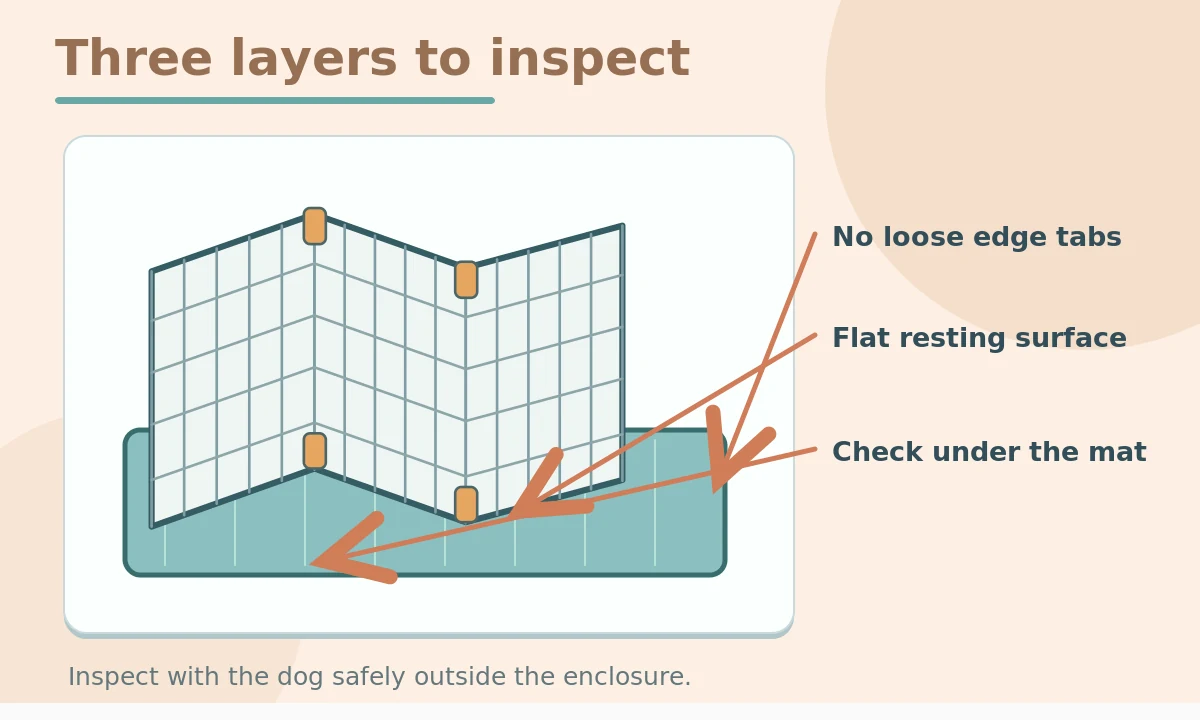
Remove loose edges and tempting tabs
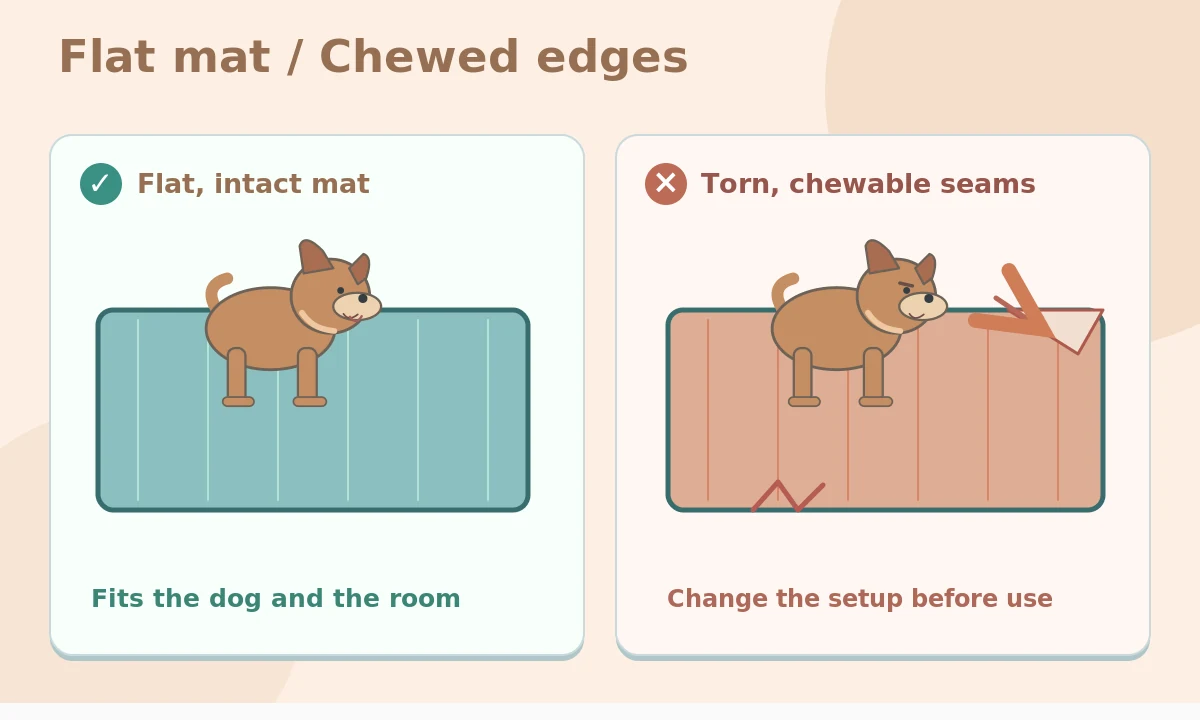
Puppies investigate labels, piping, puzzle-piece seams, and curled mat corners with their mouths. If one starts chewing or pulling off pieces, remove the mat and use a safer supervised surface. Swallowing foam or fabric fragments can require urgent veterinary advice. Do not secure corners with loose tape that the puppy can peel away. A fitted single-piece mat may have fewer tempting seams than interlocking tiles, but no material is automatically chew-proof. Supervise initial use and modify the setup when behavior changes.
Separate resting space from toilet management
A soft bed and a washable floor barrier have different jobs. Create a comfortable resting area away from the spot where accidents are most likely, while maintaining age-appropriate bathroom opportunities. Do not expect a water-resistant mat to teach house training on its own. Clean accidents promptly with products suitable for the surface, rinse when directed, and dry everything before reuse. If a puppy suddenly has frequent accidents or appears uncomfortable when urinating, ask your veterinarian for help rather than blaming the mat.
Compare one-piece and interlocking surfaces
A one-piece washable liner is quick to lift but must fit the pen without creases. Interlocking floor tiles adapt to irregular rooms yet introduce many seams and detachable edges. A hard floor with no mat is easy to inspect, but may be too slick or cold for some puppies. A thin non-slip underlay might help, provided its materials are compatible with the existing floor. Choose based on observable traction, chew behavior, cleaning access, and how well the pen stays level. There is no universal winner.
Build a spill-to-dry workflow
Move the puppy to a separate safe supervised area before major cleaning. Remove solid debris first, wash the pad according to its label, and check the underlying floor. Let the mat and surface dry fully before resetting the pen. Avoid strong fragrances or unapproved disinfectant combinations. For fabrics, inspect the stitching after washing and replace anything that begins to fray. A predictable cleanup station nearby helps prevent dirty pads from being reused too soon. Keep cleaning chemicals out of the puppy’s reach at all times.
Use the mat during short positive sessions
Let the puppy explore the new floor covering while the pen door remains open and a person is nearby. Scatter a few appropriate treats on the mat and observe the puppy’s stance. Avoid pushing the puppy into the enclosure or using it as punishment. If the puppy paws frantically at the edge, bites seams, or refuses to move, remove the item and simplify. You can practice settling elsewhere while the pen is adjusted. Comfortable behavior matters more than making a new accessory work at any cost.
Watch the floor underneath for damage
Even a clean-looking mat can hold moisture against wood, laminate, or grout. Lift and inspect after accidents and during routine cleaning. Look for discoloration, swelling, odor, or residue from rubber backing. Follow the flooring manufacturer’s guidance on approved materials and drying methods. Use a pad that lets you clean all the way to the wall and baseboards. Avoid placing a wet mat back under a pen because the puppy may slip and the floor may be harmed.

Reassess as teething and mobility change
A mat that works for a sleepy young puppy may become unsuitable during vigorous chewing or jumping. Check edge wear, seams, and floor grip each week, especially after the pen changes shape. Puppies also grow rapidly; a resting and play area must remain roomy enough to move naturally. If your puppy repeatedly chews pieces, starts using a different safe surface, or needs a veterinary assessment for discomfort, adapt rather than insisting on the same gear. Keep sessions humane, brief, and supervised until safety is reliable.
How We Research
We compared current dog-crate and playpen guidance from veterinary teams and animal welfare organizations, then translated the handling and environment principles into practical home-equipment checks. The diagrams illustrate decision points, not manufacturer-approved assembly instructions or crash testing. Follow your own product manual, and stop if the dog appears distressed. Read our about page and veterinary disclaimer. Seek veterinary advice for injuries, pain, sudden mobility changes, or severe confinement distress.
Sources
Cornell University College of Veterinary Medicine: Dog Crates — reference guidance on humane crate or pen use, stable setup, and pet comfort.
RSPCA: How to Crate Train a Puppy — reference guidance on humane crate or pen use, stable setup, and pet comfort.
VCA Animal Hospitals: How to Crate Train Your Dog — reference guidance on humane crate or pen use, stable setup, and pet comfort.
They can have loose seams and detachable pieces that attract chewing. Avoid them for puppies that mouth or swallow material and supervise any initial use.
Not automatically. Liquid can travel around edges or stay trapped underneath. Lift and dry the mat and floor after accidents.
Keep it flat and out of the door swing so no curled edge can catch a paw or stop the latch from closing.
Watch the puppy turn and stand. Scrambling, sliding limbs, or hesitation are reasons to switch to a better-gripping surface.
Remove the damaged mat and contact a veterinarian promptly for advice. Do not wait for symptoms or attempt home treatments.