
A dog crate with two doors is not automatically more convenient. The best entrance is the one the dog can approach naturally without squeezing between furniture or bumping a swinging panel. A front-facing door may suit a narrow wall space, while a side door can give a wider approach in a different room. Look beyond the advertised dimensions: measure the door itself, the swing arc, and the walking path on the floor. This guide compares access and room layout, not crate size or training duration.
Measure the path before choosing the door
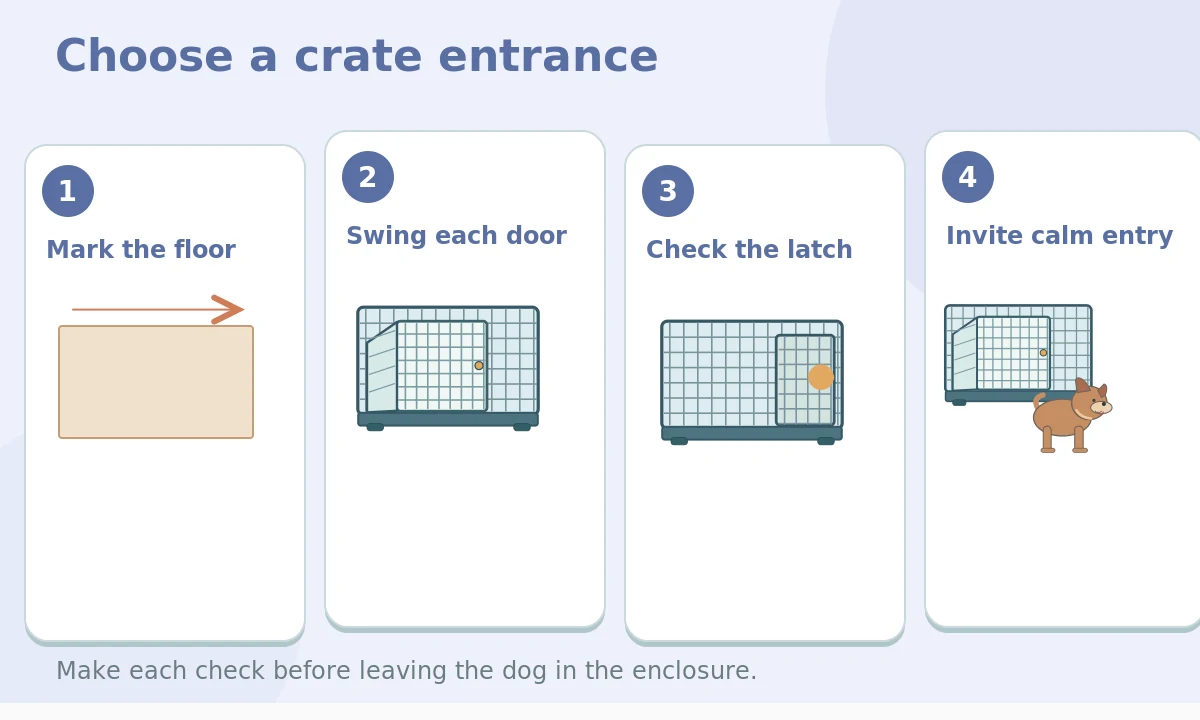
Mark the outline of the proposed crate on the floor with removable painter’s tape, away from pets. Add the door swing using the actual product measurements if available. A hinged door may need substantial clear space to swing fully open. Consider where a person will kneel to open the latch and where the dog will turn toward the opening. Keep electrical cords, side tables, draperies, and trip hazards away. Do not buy from a footprint diagram alone: a tight room can block an otherwise well-sized entrance.
Front doors favor a straight approach
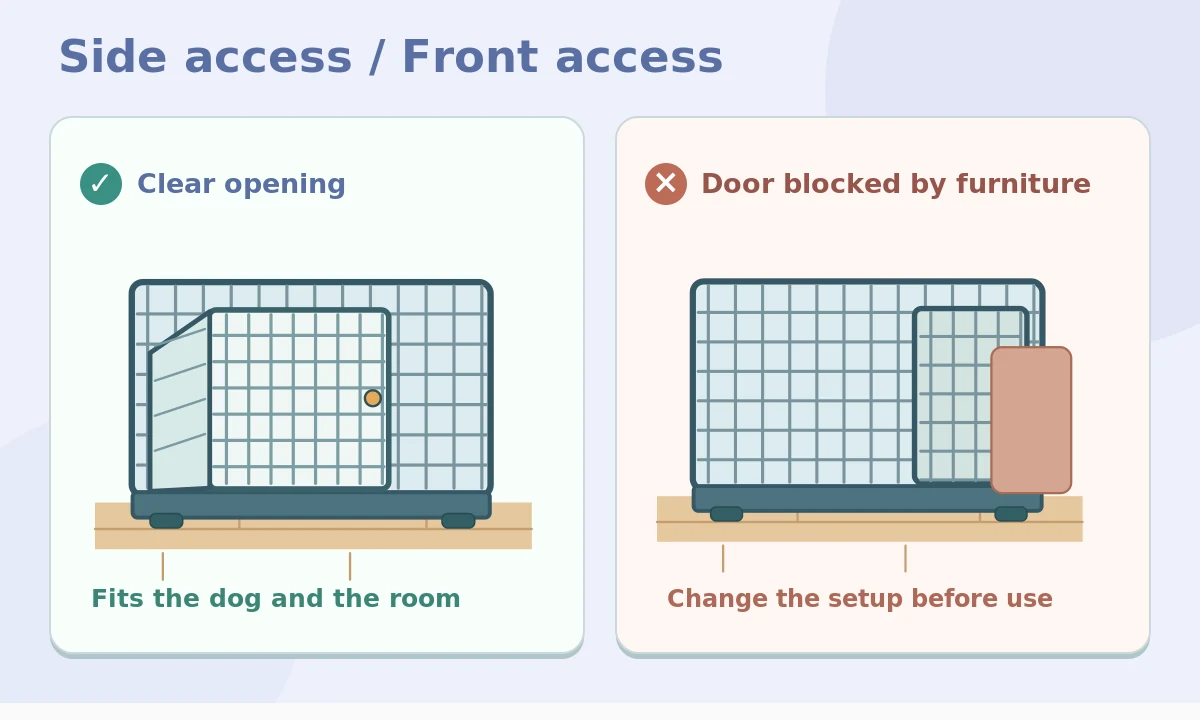
A front-door crate can align with a hallway or open floor in front of a wall. It may be easier for a dog to see the entrance from the room and walk straight in. Yet placing the end of the crate near a corner can leave the door pressed against furniture. Watch whether the dog’s shoulders can pass without brushing hard metal or plastic. A clipped-open door must not create a sharp projection at human ankle height. Test the position using the empty crate before practicing entry.
Side doors change the walking route
A side entrance may work when a crate sits along a long wall, especially if there is room beside the longer panel. The dog can approach from a different angle, while the shorter end remains close to furniture. A side door is not safer simply because it is wider. Check its actual clear opening, threshold height, and latch orientation. Ensure the dog will not have to turn sharply inside a confined doorway. Keep enough space for a person to operate and inspect the latch without leaning over the dog.
Inspect the hinge and latch from both sides
With no dog inside, open each door through its full range. Check that hinge rods are seated, the door does not sag, and latch bolts engage fully. A door can appear shut while one latch misses its receiver. Avoid forcing a warped panel into alignment; repair or replace the unit. Make sure the unused door is secured according to the manual. On two-door crates, an unused opening is still a potential exit and needs regular inspection, not just the doorway used for daily training.

Avoid blocking ventilation with furniture
Pushing a crate flush between a sofa and bookcase can restrict airflow or create inaccessible spaces for cleaning. Follow the manufacturer guidelines for clearance around ventilation surfaces. Keep crates away from direct sun, heat sources, and drafts that make resting uncomfortable. If a cover is used, avoid draping it across the only open side. Measure at the dog’s resting height, not just across the top of the furniture. The dog needs comfort, adequate room, and an entry route that can remain open during initial training.
Compare common real-room layouts
In a narrow living-room aisle, a front-opening crate may point directly into foot traffic, while a side door could face a quieter open area. In a bedroom corner, the opposite may be true. There is no universal best direction. Draw both options on paper, including a door arc and two feet of human working space where possible. That working space is an illustrative planning allowance, not a product clearance rule. Confirm the actual requirements with the manufacturer and choose whichever avoids blocked doors and hurried handling.
Introduce the preferred entrance with the door secured open
Secure the selected door fully open so it cannot swing into the dog. Scatter a few rewards near the threshold and let the dog investigate voluntarily. Avoid pulling on the collar or pushing from behind. Gradually reward relaxed steps farther inside, allowing the dog to leave at any moment. Do not latch a door until the dog is comfortable with the movement and sound. If one door creates a cramped approach, switch to the other when the hardware permits, or reposition the whole crate.
Plan an unobstructed emergency route
A crate should not block a hallway, bedroom exit, or access to a door in an emergency. Make sure an adult can reach the active latch quickly without shifting heavy furniture. If a second doorway is against a wall, do not count on it as an escape route. Check that any mat under the crate stays flat and does not interfere with the door. Avoid stacking objects on the crate top. Keeping the space clear protects both dog and handler during everyday care and urgent situations.
Review the setup after furniture changes
A new chair, baby gate, or storage box can interfere with a door that originally swung freely. Recheck clearance after rearranging the room or installing a cover. Keep a simple sketch of the layout so all family members know which door to use. If the dog begins hesitating or scraping the shoulder on entry, look for a new obstruction before assuming a training problem. Also inspect the threshold for roughness and the latch for looseness whenever the crate is folded and rebuilt.
Choose the dog’s comfort over door count
A two-door crate may be useful in a small space, but the dog still needs enough room to stand, turn, and lie down naturally. If the dog panics, scratches desperately, or injures itself when confined, neither door layout is appropriate without further help. Consult a veterinarian or qualified behavior professional and consider a secure room or another form of management. A door should allow a calm, voluntary entry, not make it easier to force a struggling dog into an enclosure. Design the space around safe access and comfort first.
How We Research
We compared current dog-crate and playpen guidance from veterinary teams and animal welfare organizations, then translated the handling and environment principles into practical home-equipment checks. The diagrams illustrate decision points, not manufacturer-approved assembly instructions or crash testing. Follow your own product manual, and stop if the dog appears distressed. Read our about page and veterinary disclaimer. Seek veterinary advice for injuries, pain, sudden mobility changes, or severe confinement distress.
Sources
Cornell University College of Veterinary Medicine: Dog Crates — reference guidance on humane crate or pen use, stable setup, and pet comfort.
ASPCA: Separation Anxiety — reference guidance on humane crate or pen use, stable setup, and pet comfort.
PDSA: Crate Training — reference guidance on humane crate or pen use, stable setup, and pet comfort.
Sometimes, but only if its swing opens into clear space. Measure both the access path and the full door arc before choosing.
No. Secure all unused doors using their intended hardware and inspect the latches periodically.
No, the latch and door should open freely, and people need room to help the dog enter and exit without trapping a panel.
The clearer and quieter entry route is usually easier. Secure the door open and let the dog investigate voluntarily with rewards.
No. The dog still needs enough usable interior space to stand, turn around, lie down, and stretch comfortably.