
This article provides general pet behavior and household safety information, not medical diagnosis or treatment. For suspected swallowing of nonfood material, injury, or abrupt behavior change, contact a veterinarian promptly. See our veterinary disclaimer.
Frozen puppy teething toys are often recommended as a quick way to relieve gum discomfort, but temperature changes how a chew behaves. A soft toy may become stiff after a long spell in the freezer, while a filled item may leak or shed pieces. This guide helps you separate cooling comfort from unsafe hardness. You will compare a chilled flexible chew with a rock-hard frozen item, inspect the item before and after use, and keep teething sessions short and supervised. The aim is to redirect normal puppy chewing, not to numb a mouth or treat a dental condition at home.
Start with a flexible, correctly sized object
Check the toy manufacturer’s age, size and temperature instructions first. Choose something that your puppy cannot fit entirely into the mouth or swallow, with a material that still yields under light pressure. VCA advises that extremely hard chews can fracture teeth; that includes many hard nylon items, antlers and bones. Avoid assuming that every object labeled “teething” is suitable for freezing. Look for seams, caps, beads, squeakers or small removable components, especially on fillable designs. When in doubt, ask your veterinary team about an appropriate chew material for your puppy’s current dental development and chewing strength.
Chilled is not identical to frozen solid
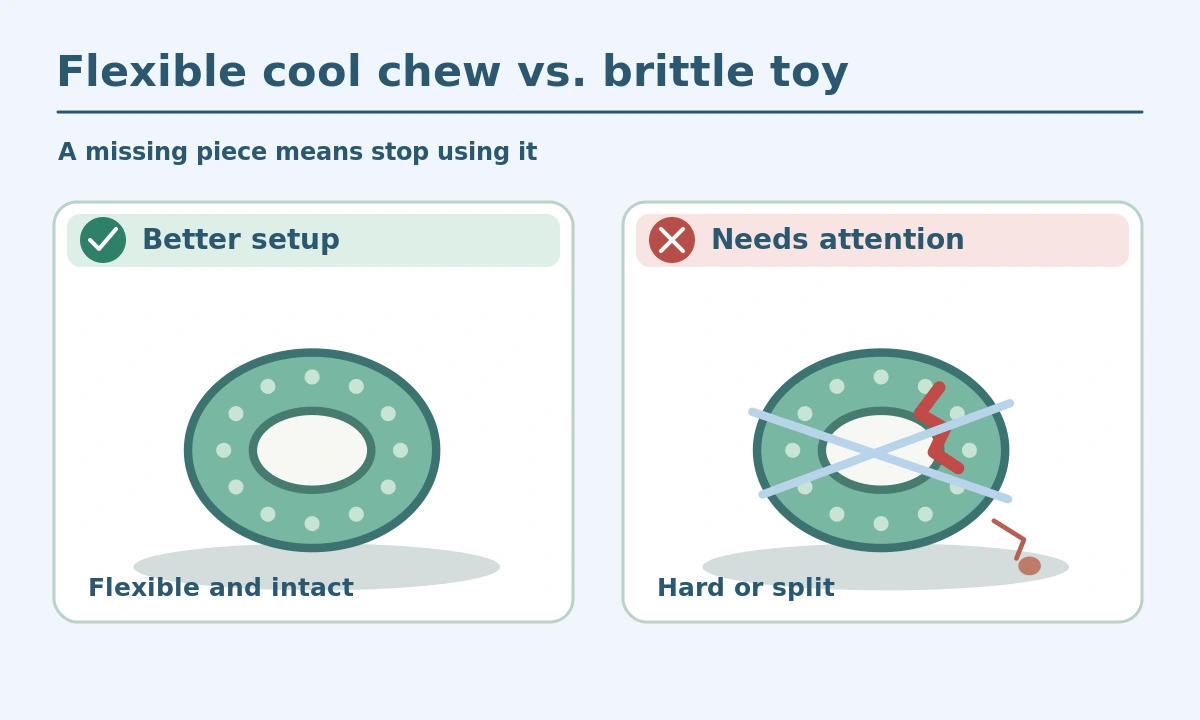
A refrigerator-chilled toy offers a cool surface while often retaining more flexibility than an item left to freeze hard. If the manufacturer permits freezer use, follow the stated preparation and duration rather than inventing a colder or longer regimen. Let a chilled or frozen item warm briefly if it feels unusually rigid or causes the puppy to hesitate. Never press an icy object against the gums or restrain the puppy to keep it in the mouth. Watch whether the puppy gently mouths the object or tries to crush it forcefully. Comfort should look voluntary: the dog can pick it up, set it down and move away at any moment.

Inspect seams and fillings before every session
Look over the entire toy for cracks, punctures, lifted seams, exposed stuffing or a missing cap. Discard damaged items instead of repairing them with glue or tape. For fillable products, use only ingredients appropriate for your puppy and approved by your veterinarian when relevant; account for any food in the daily ration. Avoid xylitol-containing spreads and ingredients toxic to dogs. Keep filling inside the approved toy rather than freezing a loose blob that the puppy could swallow whole. Follow the maker’s cleaning instructions for the cavity and valves. A toy that traps residue can be difficult to sanitize even when the exterior looks clean.
Supervise the first few minutes closely
Offer the toy on a nonslip floor in a quiet spot. Stay close enough to notice if the puppy gnaws off a fragment, guards the object or becomes frantic. Let the puppy choose how long to engage rather than enforcing a fixed session. Remove the toy when it begins to soften, shed parts or become brittle, and inspect it before storing. VCA states that no chew toy is completely safe and recommends supervision because swallowed pieces may obstruct the airway or intestinal tract. If anything breaks off and may have been swallowed, call your veterinarian for guidance instead of assuming a small piece will pass harmlessly.
Rotate ordinary chews and cooling options
Cold does not have to be the default for every chewing opportunity. Keep a few flexible, clean, appropriately sized non-frozen chews and short food-enrichment games available, and rotate them to maintain novelty. Use gentle play and rest to manage overtired chewing bursts. If a puppy is more interested in your hands, calmly redirect to a toy and reward appropriate play; avoid teasing with fingers as chew targets. Always monitor chewing strength because growing puppies can outgrow a once-appropriate toy quickly. A selection of suitable choices is more useful than leaving a pile of damaged toys on the floor for unsupervised chewing.
Clean and store cooling toys carefully
Wash an item according to the product directions after use, paying attention to interior chambers and ridges where food can remain. Dry components as recommended before refrigerating or freezing; do not trap damp residue in a sealed space that cannot be cleaned. Use a clean food-safe container to separate pet items from human food. Inspect the toy once more after it warms to room temperature, when small splits may become easier to spot. Replace any item that smells off or cannot be thoroughly cleaned. Do not place an unknown fabric, rubber compound or battery-operated toy in the freezer just because it happens to fit.
Keep the teething routine gentle and flexible
Offer an appropriate chew at predictable times, such as after a calm training game or before a rest period. Reward the puppy for choosing it rather than chewing shoes or a chair. If the puppy loses interest, take it away without a struggle and try a different safe activity later. Watch for bleeding gums beyond mild normal teething changes, unusual breath, reluctance to eat or broken teeth; contact a veterinarian rather than using cold items to hide signs of a mouth problem. Avoid raw bones, hard ice blocks and household frozen objects with seams or handles that can break. Cooling is an option within a wider humane teething plan.

Know the limits and urgent warning signs
Teething discomfort does not explain every chewing change. A puppy that repeatedly attempts to eat nonfood items, drools excessively, cries while chewing or refuses food needs veterinary assessment. Choking, difficulty breathing, repeated retching or sudden collapse requires emergency care. If your puppy swallows part of a toy, do not induce vomiting or give home remedies without professional direction. Keep a record of the product and the missing piece to share with the veterinary team. The safest cooling toy is the one that is still appropriately sized, slightly flexible, intact and voluntarily enjoyed under supervision—not the coldest item in the freezer.
How We Research
We reviewed original veterinary and animal welfare guidance from VCA Animal Hospitals, ASPCA. We compared recommendations for preventing access to hazardous materials, using gentle replacement behaviors and recognizing when to seek professional attention. The artwork illustrates generic household objects and safer practical setups; it is not a product test, controlled study, or guarantee that a chew object cannot break. Individual puppies and dogs differ in strength, health and behavior. The guidance prioritizes injury prevention and reward-based training. Read our About HubPet information for more on our approach.
Sources
VCA Animal Hospitals, Dos and Don’ts of Puppy Teething Toys. Read the original guidance.
VCA Animal Hospitals, Teeth, Teething and Chewing in Puppies. Read the original guidance.
ASPCA, Destructive Chewing. Read the original guidance.
Safety note: Never use sharp barriers, irritating chemicals, punishment or forced restraint to stop chewing or digging. Seek veterinary advice promptly for possible swallowing of fabric, wood, toy parts or poisonous plants. Trouble breathing, collapse, repeated retching or severe pain requires urgent veterinary attention. If chewing or digging occurs with intense distress, request individual behavior assessment.
Chilling often preserves flexibility, but safety depends on the exact material and puppy. Follow the product directions and check that the item does not become too hard.
Avoid hard ice blocks as chew toys because of tooth injury and choking concerns. Ask your veterinarian about safer flexible cooling options.
There is no universal duration. Supervise a short voluntary session and stop if the toy becomes brittle, sheds pieces or seems uncomfortable.
No. Some materials, seams and fillings are not designed for freezing. Use the manufacturer’s guidance and avoid damaged or brittle items.
Call your veterinarian promptly, noting the material and missing piece. Difficulty breathing, repeated retching or collapse requires emergency attention.