
This guide provides general information about pet products, not veterinary advice. For suspected ingestion, pain, illness, or unusual behavior, contact your veterinarian and read the veterinary disclaimer.
Cooling mats for large dogs are supplementary resting surfaces, not treatment for overheating and not a substitute for a cool room, ventilation, and fresh water. Their advertised dimensions may include borders that a dog cannot comfortably lie on. Material also matters: some consumer gel or hydrogel products pose serious ingestion concerns if punctured or chewed. An ASPCA Poison Control warning issued in October 2026 makes that distinction especially important. The safest shopping process starts with your dog’s size and chewing habits, then checks the pad’s construction, manufacturer instructions, and realistic limits in warm weather.
Put temperature safety ahead of the product
Before selecting a mat, make sure your dog already has fresh drinking water and access to a comfortable indoor temperature or reliably shaded, ventilated resting area. The AVMA emphasizes water, shade, and the ability to move between temperature zones. A mat should remain optional so the dog can step off it. Never leave a dog in a parked vehicle or assume that one thin surface can prevent heatstroke. Heavy panting, disorientation, weakness, or collapse require immediate veterinary assessment rather than a new pet product. Dogs with respiratory problems or other vulnerabilities may need a tailored plan from their veterinarian.
Measure the area the dog can actually occupy
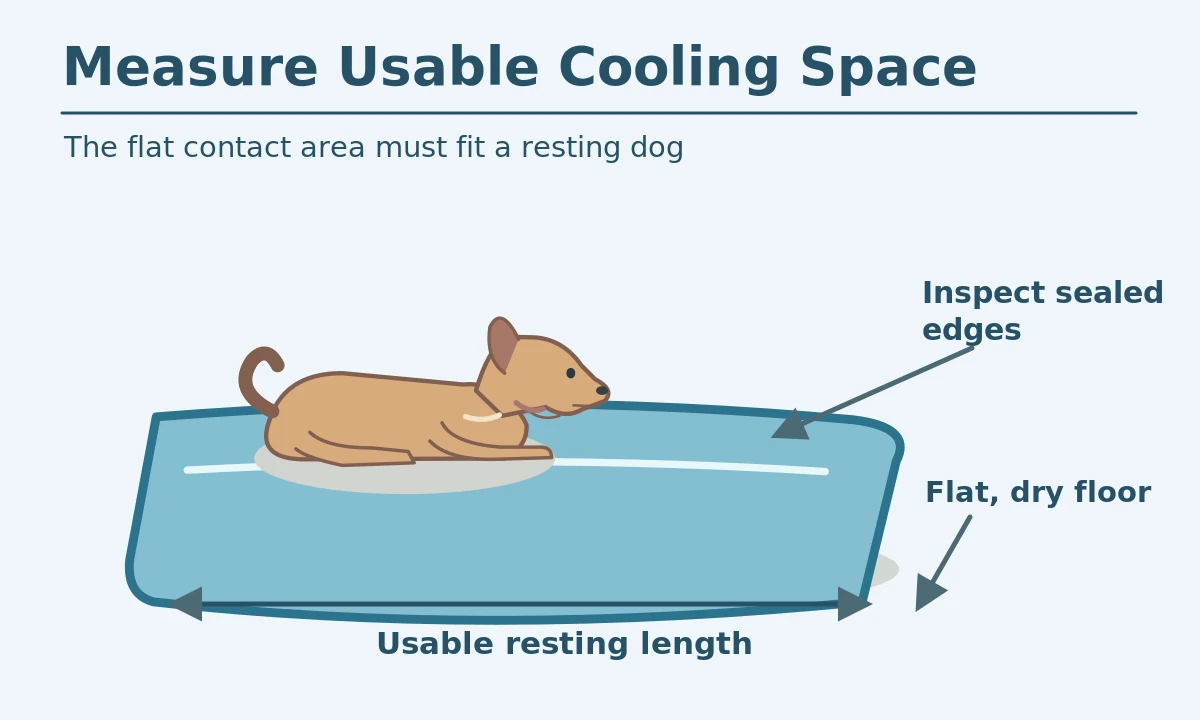
Have your dog lie in a natural resting posture and note the space between outstretched paws, hips, and head. Compare that span to the product’s usable cooled area, excluding thick borders, valve housings, and raised seams. Large dogs may need space for a side-lying posture rather than a small pad under the chest. Check the mat against the floor footprint where you intend to use it; an oversized mat that blocks a doorway creates a trip hazard. If the package provides only external dimensions, ask for the flat interior area before purchasing. Do not rely on a generic breed-size badge.
Understand the different cooling claims
Breathable fabric mats, water-filled pads, and gel-filled mats use different construction methods. Some rely on contact with a cooler surface, some on evaporation, and some on materials advertised as temperature-responsive. Marketing terms alone do not establish the duration or degree of cooling for your room. Check whether you must fill the mat, chill it, or keep it out of sunlight. Follow the exact model instructions. A washable thin fabric surface may be easier to inspect than a sealed compartment. Do not freeze or refrigerate a product unless the manufacturer permits it, and never place a painfully cold surface against a dog.
Treat gel and hydrogel contents as an ingestion risk
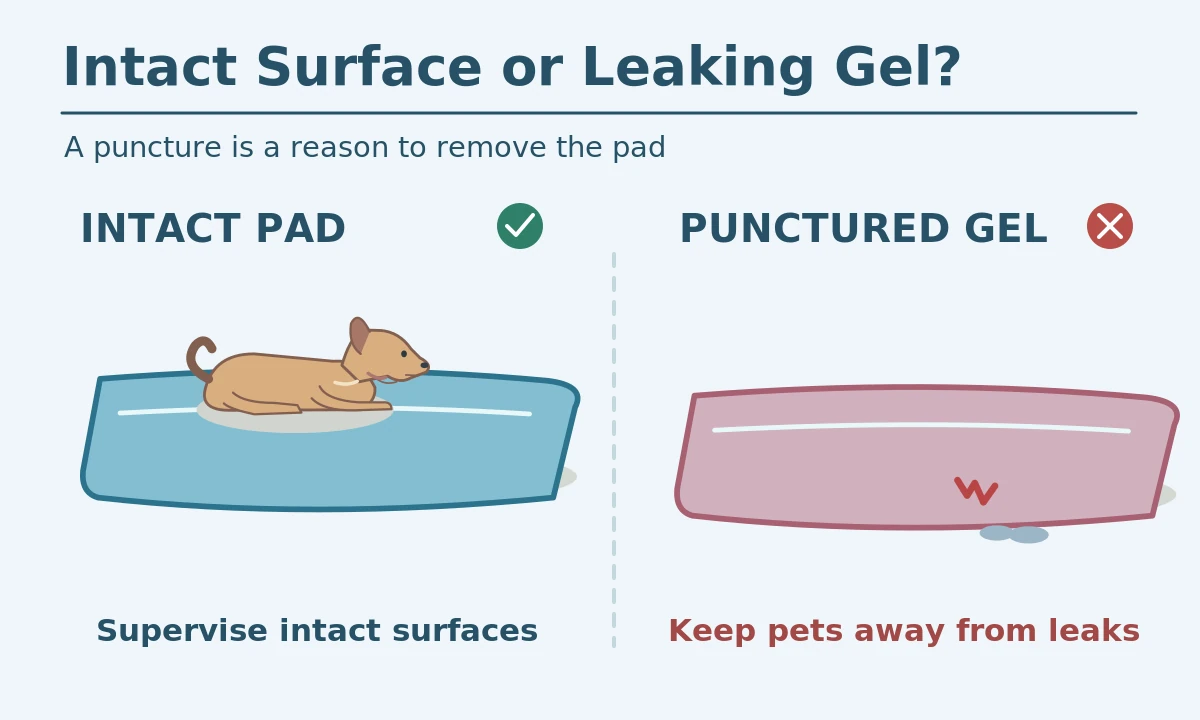
ASPCA Poison Control warned on October 5, 2026 about serious illness in dogs after exposure to some hydrogel cooling products, including dog beds. Reported signs have included vomiting, tremors, unsteadiness, seizures, and deaths. A “nontoxic” or “medical grade” marketing phrase does not prove that a swallowed filling is harmless. If your dog chews, tears, or swallows bedding, avoid gel-filled mats that your dog might puncture. Keep packaging and ingredient information. If you notice leaking gel, prevent contact and follow the ASPCA’s cleanup guidance; suspected ingestion warrants prompt professional help.
Inspect edges, seams, and movement on the floor
Check both sides before every use for punctures, new soft spots, bubbling, splitting, or seams that can catch claws. A water-filled pad may leak and make a smooth floor slippery; a fabric pad can wrinkle or slide when a large dog steps on it. Choose a mat that lies flat and resists shifting without exposed adhesive or loose straps. Place it away from stairs, electrical cords, radiators, and direct intense sunlight. If the dog rolls or digs at the pad, supervise and remove it when damage begins. No advertised durability rating replaces a simple daily visual inspection.
Give the dog a free choice
Introduce the mat on a normal, comfortable day, not during heat stress. Lay it beside the dog’s usual bed and reward voluntary investigation without pulling or pushing the animal onto it. Some dogs prefer cool flooring and others choose a soft fabric cushion. Leave an easy route to both options. Watch for avoidance, skin irritation, persistent digging, or chewing; take the mat away if those occur. A larger dog may shift off the mat to regulate comfort, which is a reason to allow access to multiple surfaces rather than trying to keep every paw in one place.
Plan cleaning and drying before the first spill
Check the approved cleaning method and whether the surface tolerates pet-safe detergent and thorough rinsing. Wipe or wash the product as directed and keep the dog away from cleaning solutions until fully dry. For water-filled models, look for clearly explained filling, draining, and drying directions, including how to monitor seepage. Do not submerge an unapproved sealed insert. If a pad resists cleaning after an accident or develops a damaged seal, replacement may be safer than a patch. Store it where sharp objects and household chemicals cannot damage it.
Think about outdoor use and transport limits
Some surfaces deteriorate in direct sun or hold heat after sitting on hot pavement. Follow the label about outdoor temperatures, rain, and storage; do not put a cooling mat on sun-heated decking and assume it will stay cool. If taking it on a trip, pack it flat or fold it only along approved lines. Do not leave a gel mat in an unattended car where a dog might chew it or where temperatures can become extreme. A travel mat should be easy to inspect and a small addition to a wider heat-safety plan, not the centerpiece of it.

Know when to skip a cooling mat
For a dog that routinely destroys bedding, is recovering from surgery, has open skin lesions, or needs special temperature management, ask a veterinarian what resting surface is appropriate. Do not place a dog that cannot move away easily on a cold or wet surface without medical guidance. Brachycephalic and other heat-vulnerable dogs especially need environmental cooling and prompt attention to warning signs. Do not put ice packs underneath a dog as a home treatment. If there is any question of gel exposure, stop using the product and get veterinary advice rather than monitoring possible toxins alone.
Choose using an evidence-based checklist
Confirm the usable length and width, stable backing, smooth intact seams, clear cleaning instructions, and safe indoor placement. Decide whether the simplest breathable textile option fits your needs instead of assuming a sealed gel reservoir is necessary. Keep the mat where your dog can choose another bed or cool floor, alongside water and ventilation. Inspect it again after the dog gets up. If the pad develops a puncture or leaks, stop use immediately; retain its packaging for any needed product or veterinary inquiry. The mat is a convenience item, not heatstroke prevention on its own.
How We Research
We review care principles from the CDC, veterinary hospitals, and animal-welfare organizations, then apply those principles to actual bed construction, cleanability, placement, and behavioral safety. For product-specific dimensions, laundering temperatures, load limits, and material contents, consult the current manufacturer instructions. We do not claim product laboratory testing, independent certification, or a veterinary diagnosis. Follow our editorial approach and confirm what applies to your own pet.
Sources
ASPCA, Possible Danger from Cooling Pet Beds (October 2026). Read the guidance.
AVMA, Warm Weather Pet Safety. Read the guidance.
VCA, Hot Pets—Not Cool. Read the guidance.
Safety note: Inspect bedding, zippers, liners, and any filling before use, and supervise equipment the pet has not used before. Remove damaged or swallowable parts. Suspected ingestion, new pain, or signs of overheating require prompt veterinary care. Product shopping advice does not replace medical assessment.
No. They are optional comfort surfaces and cannot replace a cool environment, water, shade, and prompt veterinary care for heat-stress signs.
Do not allow access to punctured or leaking gel products. ASPCA Poison Control has reported severe illness after ingestion of some hydrogel products.
It should fit the dog’s natural resting posture within the usable contact area, not just the outside product dimensions.
Supervise dogs around new mats, particularly dogs that might chew the material. Avoid gel-filled products for dogs inclined to ingest bedding.
Only follow a model-specific manufacturer instruction. Do not freeze products or expose a dog to intense cold without a safety basis.