
An illustrated selection and use guide for grooming gloves, silicone nubs, grip, and coat limitations. These are general pet-care selection criteria, not veterinary advice. For painful skin, significant irritation or other health concerns, consult your veterinarian and read our veterinary information disclaimer.
What a grooming mitt can and cannot do
A grooming mitt fits over a hand and uses flexible rubber or silicone nubs, textured fabric or a soft bristle surface to collect loose hair. It can help for a short, smooth coat and for dogs that prefer petting-style contact over a brush handle. The mitt is not a deep undercoat rake or a tool for cutting through mats. Long, thick hair may simply slide over shallow nubs without meaningful detangling. Evaluate the amount of loose hair removed and the dog’s comfort instead of treating a fur-covered glove as proof of thorough grooming.
Test the hand fit before testing the dog
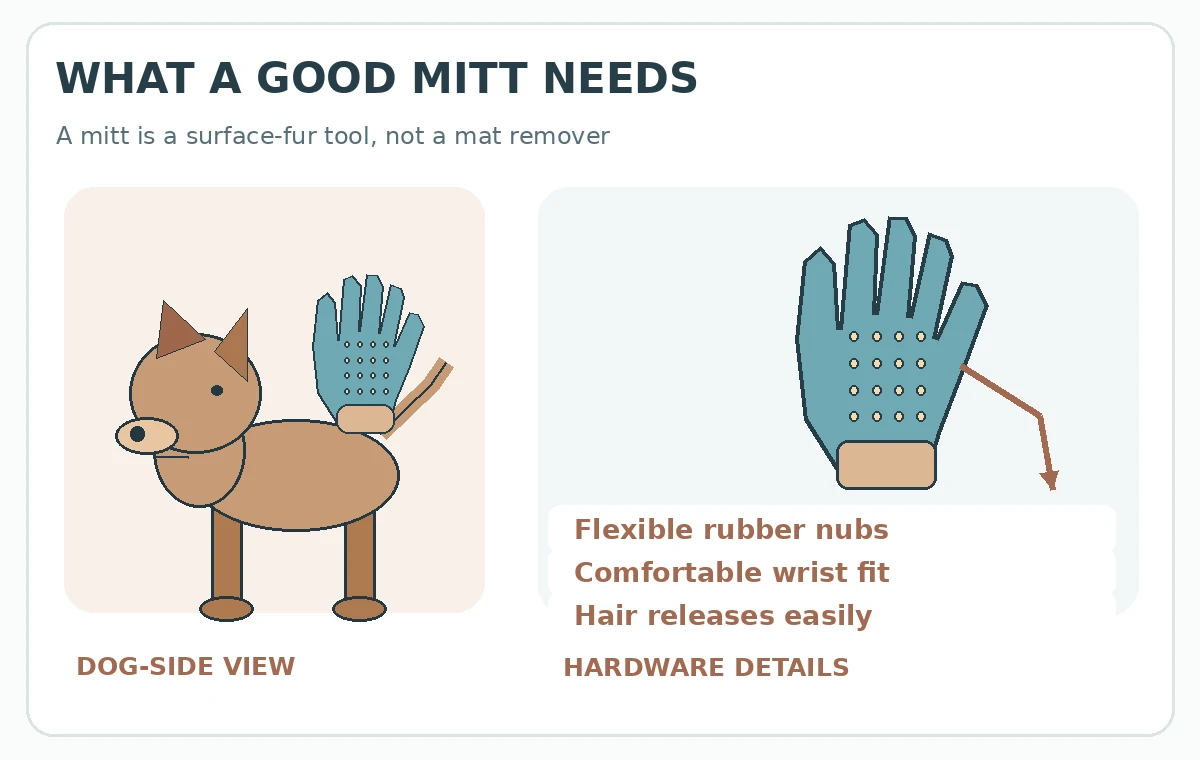
The glove should stay aligned when you flex your fingers and make a relaxed fist. Oversized fingers bunch up and drag; a tight wrist band can make repetitive movements awkward. Look for a closure you can secure and remove with one hand, especially when you need to reward or reposition a dog. Smooth seams matter at the thumb and fingertip edges. If the mitt twists sideways as you stroke a towel, it may rotate in the coat too. A washable liner can feel better, but only if it dries completely.
Compare short nubs with long stiff teeth
Soft short nubs usually make broad contact on sleek coats. Longer, firm protrusions can lift hair but may also catch at a crease or push too strongly against thin skin. Flex a few nubs by hand: they should recover shape and lack sharp molding seams. Avoid any product that sheds pieces or has an exposed hard backing. These are comfort judgments, not medical guarantees. Test a small patch along the dog’s back with almost no pressure. Stop if the dog flinches, scratches or tries to escape contact.
Use a gentle one-direction stroke
Begin with the dog standing or lying on a secure surface. Stroke along the direction of hair growth, using the full palm rather than fingertips pressed into one spot. Make a few slow passes over the back, then lift off the collected hair. Do not rub rapidly over the belly, face, underarms or any sensitive region. A mitt can create friction if dragged repeatedly across dry or irritated skin. Choose a low-pressure session and provide a break as soon as the dog withdraws or looks uncomfortable.
Choose the right coat for the tool
A beagle-like smooth coat often releases loose hair with a flexible mitt, while a dense double coat may need a separate coat-specific brush to reach under loose outer hair. A long, curly coat still requires systematic detangling and a comb check; a glove alone will miss tight areas behind ears and legs. Do not use a mitt to disguise knots by smoothing the outer layer. Compare your grooming result with the actual feel of the coat. If the skin cannot be inspected without pulling, request help from a groomer.
Dry use versus bathing use
Some mitts can work in a bath, but the packaging must explicitly allow wet use and shampoo contact. A wet glove should not be treated as a substitute for rinsing; soap trapped in seams may reach the coat later. A calm bath still needs lukewarm water, dog-specific shampoo and complete rinsing. Keep water and tools away from eyes and inside ears. Virginia Tech veterinary guidance recommends preparing the coat before wetting it. Wash the mitt afterward and hang it fully open to dry.

Collect loose fur without creating more mess
Brush outdoors or over a washable mat when practical. Peel the hair layer away in sections; shaking the glove around the house can send dander and fur back into the air. Some textured backing materials release collected hair easily, while others trap it between ridges. Before purchasing, look at the manufacturer’s cleaning demonstration and confirm the glove turns or rinses without damage. A reusable mitt must survive repeated cleaning; split nubs, wet odor or deteriorating elastic are signs to replace it.
Introduce the mitt to a cautious dog
Place the mitt beside familiar objects so the dog can investigate voluntarily. Reward a sniff, then touch the shoulder for a moment with the bare hand before trying the mitt. Keep sessions brief and let the dog move away. A glove resembling petting may still feel unfamiliar due to its smell and texture. Do not restrain a worried dog or repeatedly reach toward the face. Gradual exposure is more useful than trying to finish a full coat on day one. Schedule a calm second session later.
Know the stop signs and alternatives
Avoid brushing areas with scabs, bleeding, new swelling, painful lumps or active skin irritation. Seek veterinary advice for unexplained changes rather than increasing brushing pressure. A mitt also does not belong on a dog with embedded burrs that need careful removal. If hair tangles repeatedly, switch to suitable coat tools after professional guidance. Dogs with substantial shedding may benefit from a routine that combines proper brushing, household cleaning and veterinary review if the pattern abruptly changes.

A quick selection checklist for owners
Fit the mitt to your hand, flex the nubs, inspect seams, practice a stroke on fabric and check how hair releases from the palm. Then test gently on a small patch of dog coat while observing body language. Favor a stable grip and easy washing over marketing claims about removing a specific percentage of fur. The right mitt is the one your dog accepts and that helps you inspect the coat regularly. Store it dry away from curious mouths and replace it when nubs detach.
How We Research
We evaluated dog grooming mitts using veterinary coat-care guidance, humane handling standards and practical inspections of material, fit, surface safety, maintenance and situations that call for professional help. We do not claim to have tested specific products in a laboratory or examined each dog individually. Our recommendations prioritize observable features over marketing scores, with our editorial approach explaining our research practice. Sources reviewed October 28, 2026.
Sources
AKC, Dog Brushes: How to Choose the Right Dog Brush. Read source guidance. Reviewed October 28, 2026.
VCA Animal Hospitals, Grooming and Coat Care for Your Dog. Read source guidance. Reviewed October 28, 2026.
AKC, Scourge of the Sofa: a Shedding Dog. Read source guidance. Reviewed October 28, 2026.
Safety note: Stop grooming when your dog shows pain or intense distress. Seek a veterinarian for new or persistent skin changes; ask a qualified groomer for dense mats and high-risk coat removal. Never use equipment as a substitute for gentle handling.
Not for many long or dense coats. A mitt mainly collects surface hair; a suitable brush and comb may still be needed.
Only if its instructions allow wet use. Rinse out all shampoo and dry the mitt completely afterward.
The texture, smell or movement can still be unfamiliar. Introduce it gradually and reward relaxed choices.
No. Nubs that are too stiff or long may drag, while coat type and light technique matter more.
Remove collected hair after every session and wash it as its care instructions permit; store it fully dry.