
An oversized number on a crate label does not tell you whether a giant dog can stand, stretch or exit comfortably. For crate-related stress, discomfort or mobility changes, follow your veterinarian’s advice. See our veterinary information disclaimer.
Start with your individual dog, not a size label
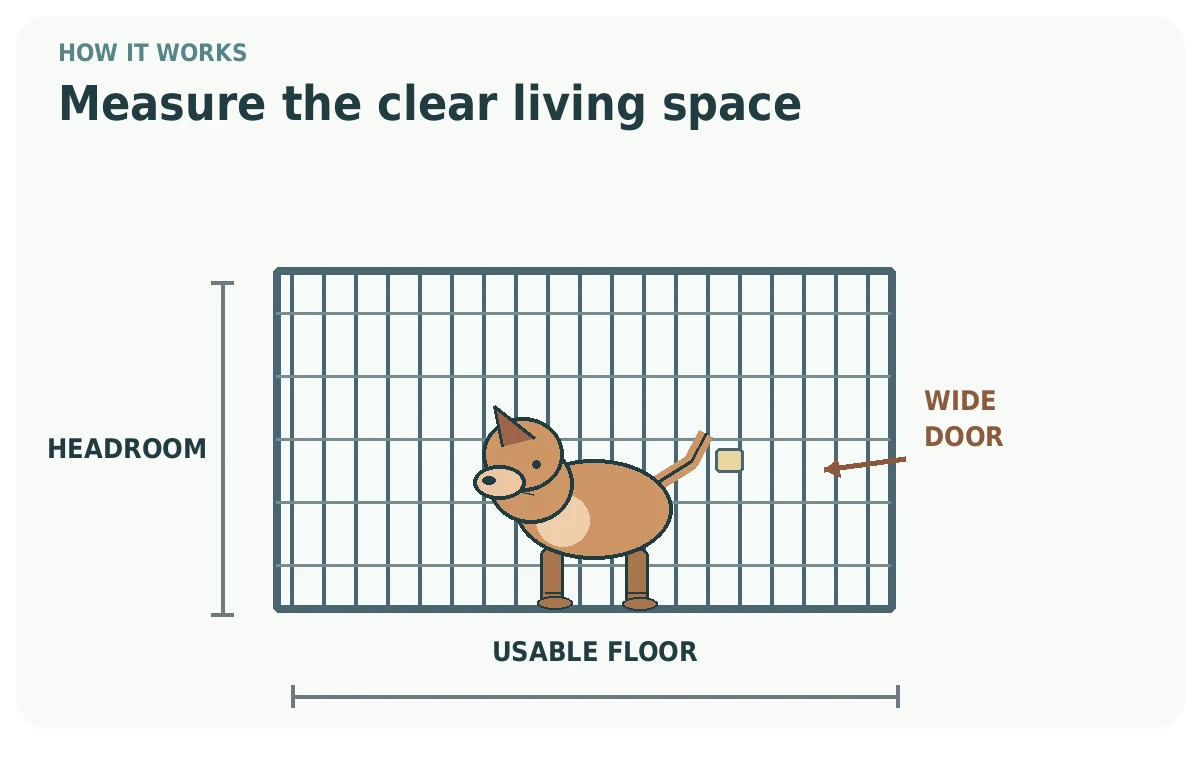
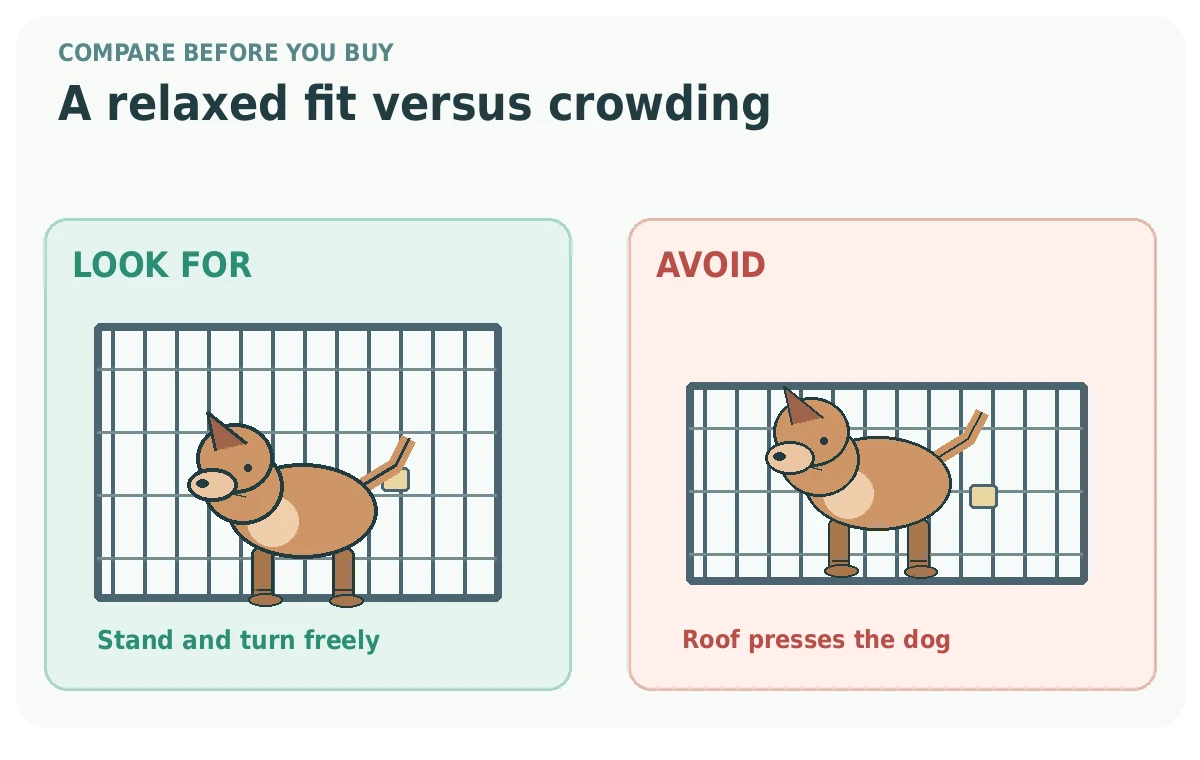
XXL, giant and extra-large are marketing descriptions, not consistent internal measurements. Measure your dog’s posture while standing naturally, then observe a normal sleeping stretch. A dog’s ear carriage, shoulder height and long tail may change the necessary clearance. A tall crate with narrow depth can still feel cramped. Cornell highlights size and durability as key selection factors. Prioritize an enclosure that permits standing, turning, sitting and lying without pressing into metalwork or the roof.
Compare usable floor area against external length
Frame feet, wall thickness, internal tray lips and rounded corners all reduce usable room. Ask for inside dimensions measured at the narrowest practical points. A removable mat may improve traction but also raise the dog toward a low roof. When testing a floor sample, have the dog turn in both directions without forcing the movement. If the rear corners obstruct a normal lie-down, increase usable dimensions or reconsider the model. Avoid a single fixed inch target for every dog; measurements depend on build and posture.
Inspect the frame in full-size photographs
Long bars and wide doorways can flex under a determined dog. Look closely at welds, corner joints, support bars and how panels connect at the roof and floor. A large crate needs enough structural support to remain square during normal use. Push the empty frame lightly from several directions and watch for racking or separated joints. Follow maker instructions for every pin or clip, especially after folding. Damaged bars or bent edges pose pinch and escape risks regardless of the crate’s stated weight capacity.
Consider door width and human access
An XXL crate can have a surprisingly small door. The dog should enter and turn without scraping shoulders, while a person should reach a dropped bowl or inspect the rear safely. Double doors may help room layout, but each latch adds another point to inspect. Keep openings away from stairways and tight corners. Make sure a fully opened door does not obstruct a household escape route. The ideal setup lets the dog walk in voluntarily and gives a caregiver fast, reliable access in an emergency.
Look for a stable, non-slip base
Heavy dogs can shift a light tray across a slick floor. Check whether the plastic pan sits securely under the metal frame and whether its lip catches toenails. A flat, grippy floor surface helps normal footing; thick loose bedding can wrinkle or reduce interior height. Test the empty tray by applying gentle hand pressure near the edges. Replace a cracked tray instead of lining it with tape or exposing a sharp seam. For chewers, avoid unsecured foam pieces and inspect all textiles regularly.
Position the footprint before bringing it home
Tape the stated outside dimensions on the floor, then mark the door swing and space needed for cleaning. Make room around the crate for ventilation and safe movement. A giant crate crammed beside a heater or door may create drafts, heat buildup or collisions. Keep cords and hanging fabrics away from the dog’s reach. Consider how you will move the crate through hallways if a panel breaks. A crate that only fits after blocking a passage is not a good match for that room.
Avoid using stronger hardware as behavior treatment
Anxious dogs can harm themselves by biting bars or pushing at doors. A heavy-duty frame does not address isolation distress. Cornell warns that dogs showing prolonged panic, pacing or drooling may need a larger protected area and support instead. Reward voluntary entry, introduce the space slowly and avoid locking the dog away for long periods. If the animal repeatedly crashes against the gate, stop confinement attempts and ask a qualified professional for help. Never tighten extra chains or improvised clamps to overpower fear.
Plan for cleaning a larger tray
A big floor pan may not fit a sink, so identify a safe washing location beforehand. Remove bedding, sweep debris, wash with appropriate soap and water, rinse and dry. CDC recommends disinfecting only as needed and following the label carefully. Do not leave chemical residue where a dog will lick the floor. Inspect under tray corners for trapped moisture. Larger enclosures also need regular hinge, latch and foot inspection because their size can disguise subtle movement or looseness.
Recheck the crate as the dog changes
An adolescent giant-breed dog may still grow or gain chest depth. Older dogs may move more slowly or struggle with a high entry lip. Assess entry, turning, sleeping posture and traction during normal use. Do not assume a previously purchased XXL model fits for life. Watch for rubbing along the doorway or refusal to step inside. If gait, comfort or mobility changes abruptly, speak with a veterinarian rather than forcing the dog to use an uncomfortable setup.
Know when a playpen is the better tool
A large indoor pen may give a calm dog room for water, repositioning and separate resting areas. However, it needs stable joints and a dog that cannot jump or climb over it. A crate can work for short periods of safe management; neither replaces exercise, human contact or toilet breaks. If you need all-day containment, reconsider the schedule and available supervised space. Choose the equipment around the dog’s routine, not solely the dimensions of the largest product in a catalog.
Use a final test before committing
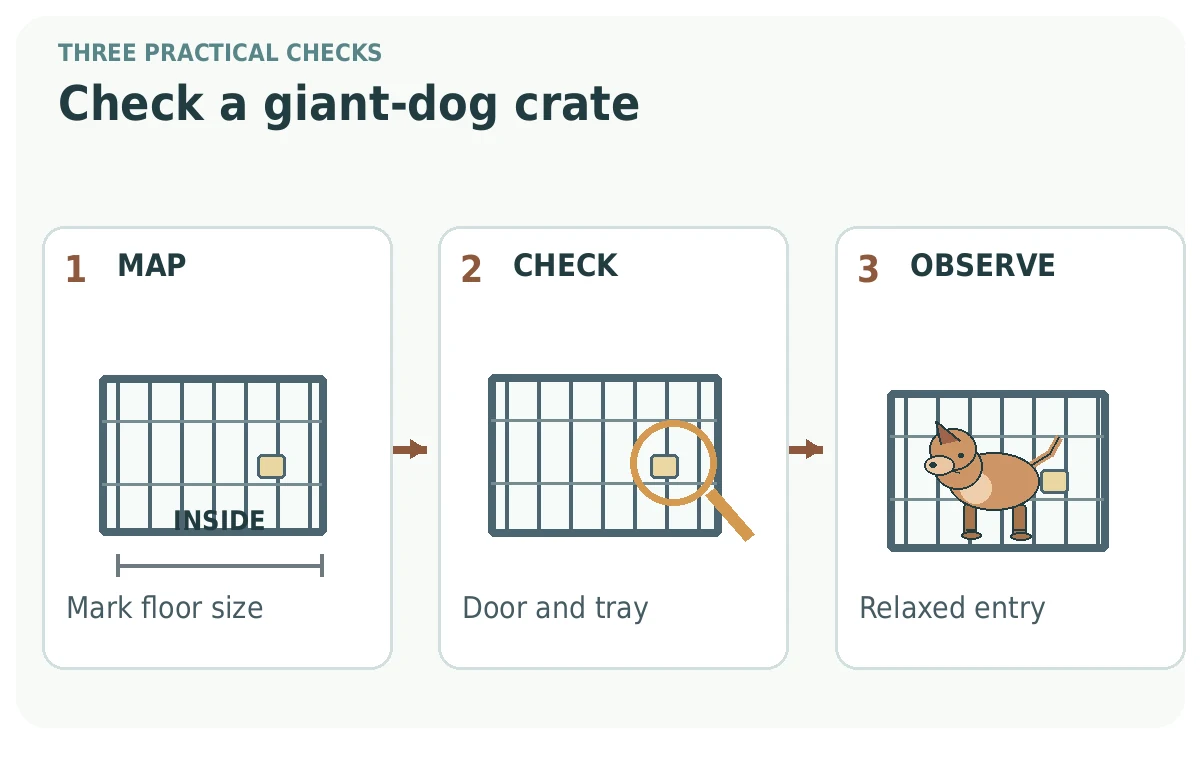
Confirm interior clearance, tray security, fully engaged latches and stable corners. Photograph your empty setup to compare after any move or cleaning. Run a hand over reachable bars for burrs and pinch points. Observe an unforced entry and relaxed exit with the door propped open. If the animal cannot turn easily, or the structure bows under gentle pressure, do not rely on it. The important result is a comfortable resting option, not a record-setting crate size.
How We Research
We compared the design and maintenance questions for XXL dog crates against the veterinary, shelter, and public-health sources below. Our evaluation considered observable dimensions, hardware, cleaning access, animal comfort, and constraints specific to this use case. This project did not laboratory-test individual products, certify crash performance, rate retail brands, or diagnose behavior from a photograph. Manufacturer instructions and the individual dog’s response take priority. Read our editorial approach. Sources reviewed October 28, 2026.
Sources
Cornell University College of Veterinary Medicine, Dog Crates: When to Use Them and How to Pick One. Read the original guidance. Accessed October 28, 2026.
CDC, About Cleaning and Disinfecting Pet Supplies. Read the original guidance. Accessed October 28, 2026.
Humane Society / Orange County, NC, Crate Training. Read the original guidance. Accessed October 28, 2026.
Safety note: If confinement causes persistent panic, repeated escape attempts, chewing of unsafe materials, or sudden difficulty moving, stop and reassess the arrangement. Consult a veterinarian or qualified reward-based trainer as appropriate. Do not leave dogs without needed water, rest, activity, or toileting opportunities.
No. Manufacturers use XXL differently. Compare real interior length, width, headroom and door opening against your dog.
No. Material choice depends on the animal, setting and behavior. Reliable construction, fit and comfortable use matter more than one material label.
No. Dogs still need movement, toilet breaks, interaction and enrichment outside the crate.
Look for a flat stable surface, no cracks, protected edges and enough traction under the dog during ordinary turning.
Avoid pushing or dragging. Return to short reward-based introduction and seek help if the dog shows severe distress.