
A cordless stick vacuum can make daily fur cleanup easier, but a motorized head, realistic battery runtime, and cleanable parts matter more than a pet label. This article provides practical checks and limitations. See our veterinary information disclaimer for health-related decisions.
Map the floors before comparing machines
Start with the surfaces that collect most of your pet’s hair: low-pile carpet, deep rugs, sealed wood, tile, stairs, or sofa cushions. Write down which rooms need a short daily pass and which need occasional deep cleaning. A cordless stick makes sense when quick access encourages frequent cleanup. A large carpeted house may still need a corded upright or canister for longer sessions. Do not mistake a ‘pet’ badge for a standardized performance guarantee. Look for independent hair-pickup tests on the exact model, including the surfaces that resemble your home. A cheap device that leaves hair embedded in carpet is not a bargain.
Choose the floorhead for the surface
Motorized bristled rollers can lift fur trapped between carpet fibers, but some aggressive brushes risk abrasion on delicate rugs or hard floors. Soft rollers often collect fine debris well on smooth floors yet lack the combing action needed on thick carpet. A multi-surface head or separate interchangeable heads can help mixed-floor households, provided you will actually switch them. Check whether the brush height adjusts, the brush stops spinning on sensitive surfaces, and the head fits beneath furniture. Follow your floor and rug maker’s guidance before using spinning bristles; the Carpet and Rug Institute specifically advises suction-only vacuuming for wool carpeting.
Treat anti-tangle claims as maintenance questions
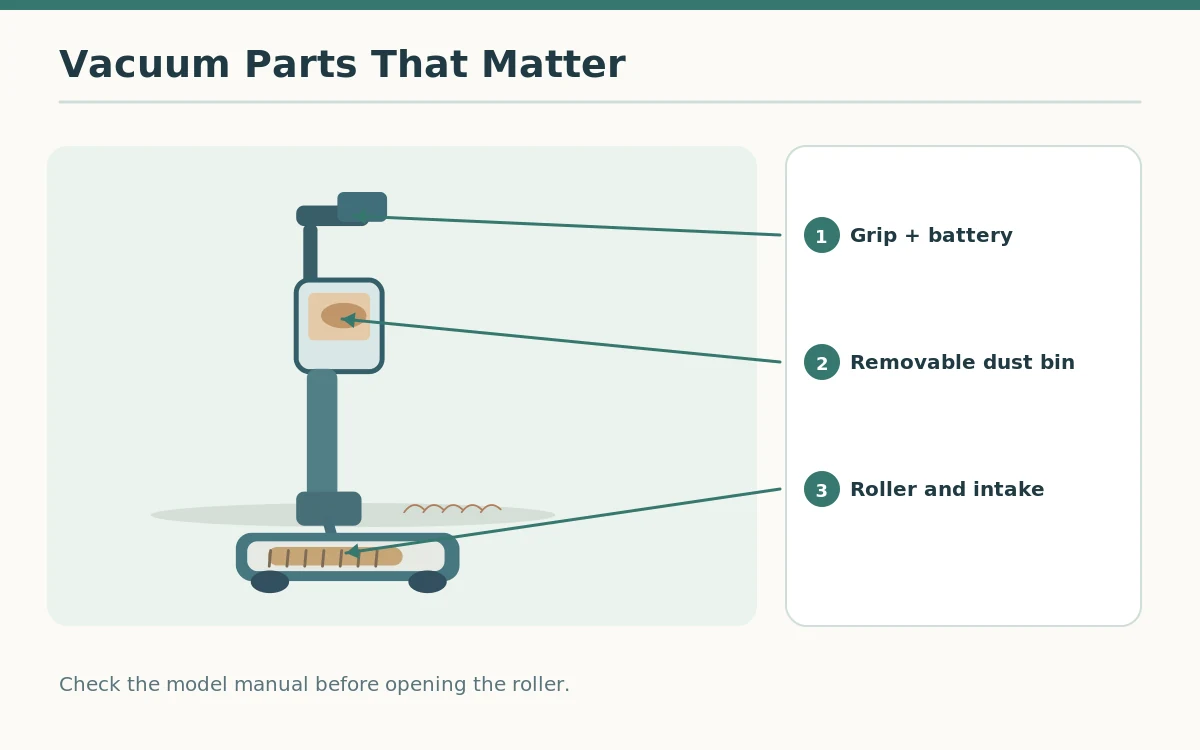
Long hair and pet fur can wrap around a roller’s axle even when the head has fins or a comb designed to reduce tangles. Look closely at the roller ends, hair channel, removable cap, and instructions for opening the head. Can you inspect those parts without a screwdriver? Are spare brush rolls available? Never reach into a powered cleaning head; switch the appliance off and remove the battery if the manufacturer directs that step. Small balls of fur also collect where a wand meets a narrow inlet. A wide, accessible path for debris often matters more than an elaborate label on the box.
Read battery claims under realistic conditions
Advertised maximum runtime often refers to a low-power setting and may not represent carpet cleaning with the motorized head running. Compare the operating time at the suction level you expect to use, the recharge interval, and whether the battery can be replaced. If a vacuum takes a long time to recharge, a removable second battery might help, but the extra cost and storage requirements are real. Weigh the complete machine with its battery and full bin, not just the handheld motor unit. Test a realistic stair-carrying motion and the ease of supporting the vacuum while clearing the head.
Match the bin, filters, and exhaust design
Fine dander and dust do not behave like visible clumps of fur. Examine the entire filtration path, the seals around the dust cup, and the way the bin opens. A poorly fitted seal can undermine a promising filter specification. People sensitive to dust may prefer an option that empties with less exposure, though no household vacuum replaces medical allergy management. Use the manufacturer’s procedure for rinsing washable filters; many filters cannot go back until completely dry. Check how frequently the mesh screen and cyclone chamber need attention. A compact bin demands more frequent emptying in a multi-pet home.

Do a five-minute handling test
Try the floorhead along a baseboard, around chair legs, under a low sofa, and on one stair if a store demonstration is possible. Note whether the head pushes fur into corners or retrieves it. Is the trigger comfortable for someone with limited grip strength? Can the vacuum stand safely on its own, or must it lean against furniture? Check the wall dock’s mounting requirements and location before drilling. Pets should stay out of the test area until cables, batteries, small attachments, and spilled dust are secure. Put accessories where a curious dog cannot chew them.
Compare full ownership cost, not only the first price
Add the likely expense of battery replacement, washable or disposable filters, brush rolls, and bags if the dock uses them. A lightweight cordless body has less value if replacement parts disappear after a year. A maintenance-friendly vacuum may last longer because its owner can clear wrapped fur promptly. Evaluate warranty exclusions for batteries and accidental blockages. Read at least one independent test measuring pet-hair pickup as well as the manufacturer’s instructions. Avoid inventing universal runtime thresholds: a twenty-minute apartment cleanup and a carpeted three-story home impose completely different demands on the same appliance.

Build a low-stress cleaning routine
Collect visible hair with a short pass through high-traffic paths before it mats into carpet. Vacuum pet bedding only when the pet has moved away and its care instructions allow that method. Introduce an anxious animal to the sound from another room rather than chasing it with the nozzle. Empty the bin before airflow drops, inspect the floorhead weekly during heavy shedding, and clean filters on the recommended schedule. If the machine smells hot, loses suction suddenly, or makes a new grinding noise, stop and check the manual before continuing. Pair cleaning with gentle grooming to reduce the fur that reaches the floor.
How We Research
We compared pet-care or textile/equipment guidance from the sources below, looking for practical checks that an owner can verify without buying a particular brand. We separated observed mechanisms from marketing claims and checked the limitations specific to cordless stick vacuums for pet hair. This guide does not claim original laboratory tests, certified product performance, veterinary diagnosis, or exhaustive testing of every model. Read more about our editorial approach. Product manuals and fabric care labels take priority. Reviewed October 28, 2026.
Sources
Consumer Reports, Vacuum Cleaner Buying Guide. Read source. Accessed October 28, 2026.
RTINGS, Best Cordless Vacuums for Pet Hair (October 2026). Read source. Accessed October 28, 2026.
Carpet and Rug Institute, Frequently Asked Questions. Read source. Accessed October 28, 2026.
Safety note: Product and routine advice must be adapted to the individual animal, fabric, and appliance. For pain, injury, unexplained coat changes, or persistent distress, contact a veterinary professional. Follow equipment and care-label instructions rather than forcing an unsafe workaround.
Some perform well, but carpet depth, head design and usable runtime vary. Compare independent tests on your actual surfaces.
A sealed, well-performing filtration system matters more than the acronym alone. Compare dust containment and maintenance requirements.
No. Hair can still gather at caps, axles and air inlets; inspect them with the machine switched off.
Check the rug maker first. The Carpet and Rug Institute recommends suction-only vacuuming for wool carpets.
Comfortable handling, an appropriate floorhead, reliable charging, an easy-to-empty bin and quick access often matter more than maximum advertised runtime.