
Use a side-by-side preference trial or a measured gradual change when transitioning litter textures, while protecting the cat’s familiar option. Switching cat litter types means changing what the cat feels beneath the paws, smells in the room, and digs into after elimination. A change from fine clumping grains to large pellets can be much more noticeable than a new package design suggests. Record the current litter’s texture, scent, depth, and how the cat covers waste. Decide why you want a change: dust, tracking, availability, or household cleanup. Keep the goal concrete. The AAFP/ISFM house-soiling guidelines and AAHA recognize individual substrate preferences, so your cat’s response matters more than a product’s advertising claims.
Keep the box location and shape constant at first
The easiest way to interpret a litter trial is to change only one variable. Do not introduce a covered tray, move the box to the garage, and replace the substrate during the same weekend. Keep a familiar roomy pan in the usual quiet location, with daily scooping and a clear exit. If you own several cats, maintain adequate stations for them rather than turning the only usable tray into an experiment. Observe which cat uses each option because one animal’s acceptance does not mean every cat in the household agrees. For cats under veterinary care, ask about substrate needs before experimenting.
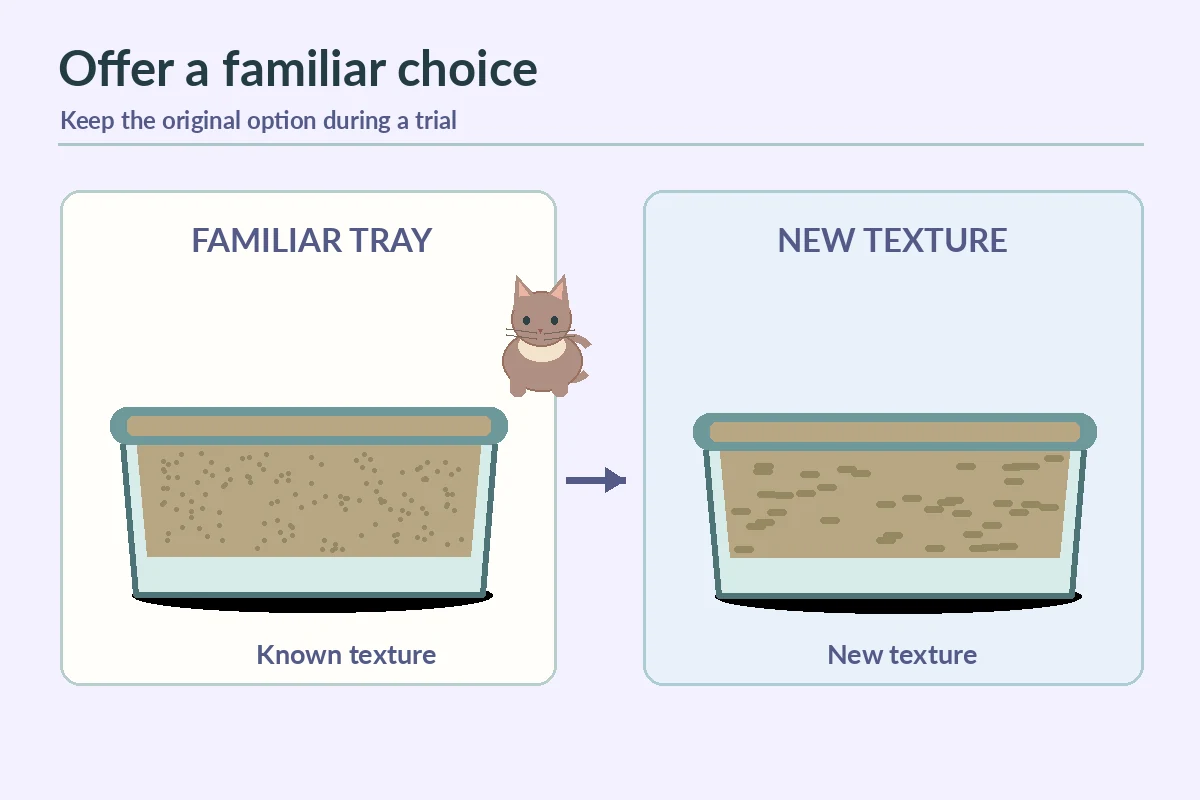
Prefer a two-box choice when space allows
Set up a second clean tray with the proposed litter beside or near the normal station, while keeping the original litter accessible. Use similar pan dimensions and openings so the substrate is the main difference. AAHA advises testing preferences with separate boxes because cats differ in what they like. Watch relaxed digging, successful use, and whether the cat returns to the old pan afterward. Position both so nobody can block the exit. This approach avoids forcing an abrupt texture change and provides clear evidence if a cat strongly dislikes the new feel.
When mixing is appropriate, start with a modest change
For a familiar litter and a compatible new granular material, you can try a small amount of the new substrate mixed into the old, then increase gradually only if ordinary use continues. The RSPCA suggests a gradual change over about a week, but the cat may need longer. Mixing is not suitable for every system: large pellets, crystal materials, or sieve-tray designs may function poorly when combined with clumping clay. Follow manufacturer instructions and favor separate choice trays when the products require different cleaning methods. Never insist on a calendar if the animal appears uncomfortable.
Watch for substrate discomfort rather than stubbornness
A cat that repeatedly sniffs the new tray then backs away, stands with paws on the rim, scratches the wall instead of the litter, or avoids covering may be expressing a preference. None of these behaviors proves a medical condition, but they are reasons to pause a voluntary trial. Offer the familiar litter again rather than punishing or physically placing the cat in the new material. Some cats dislike strong scents or sharp-feeling granules. You may find that a lower-dust version of the original texture meets your goal better than a complete material change.
Adjust the cleaning routine to the new product
Clumping litter typically allows removal of distinct wet clumps; non-clumping paper or wood products may need other ways to remove saturated sections and regular full replacement. A two-tier pellet system can have an absorbent lower compartment that must be emptied according to directions. Set up the new maintenance routine before committing to the switch. If wet litter accumulates because the owner expects clay-like behavior from pellets, the cat may reject an otherwise tolerable texture. Keep waste removal frequent, dry surfaces clean, and the usable depth consistent with the new substrate’s instructions.

Use an observation sheet for more than one day
Note the time, the tray used, the cat’s digging behavior, and whether the area around the pan stays clean. A sample note might read: ‘morning: old clay tray; evening: inspected pellet tray, no use.’ Looking at the pattern over several days is better than declaring success because of one visit. If a cat alternates comfortably, you can keep both options longer before deciding what to buy in bulk. If the new tray goes unused, the result is useful: a complete switch may not suit that individual. An unused bag is less costly than disrupting normal toileting.
Handle kittens, older cats, and sensitive paws thoughtfully
Young kittens often benefit from continuing the litter texture they used in their first home while learning the location of the tray. Cats Protection specifically recommends maintaining a familiar litter at first and changing gradually if needed. Older cats or those with paw pain may be less tolerant of rough pellets or high-sided trays. Select a comfortable surface and easy entry; ask a veterinarian for guidance if mobility, wounds, or pain affect the feet. A substrate experiment should never force an animal to endure discomfort merely to reduce tracking across a human floor.
Stop the trial promptly if elimination changes
Accidents outside the tray can signal a dislike of the new material, an environmental problem, or illness. Restore a familiar clean box and seek veterinary advice for sudden persistent house-soiling or any signs of pain. Frequent attempts with little or no urine are urgent and must not be treated as a slow adaptation to litter. Keep the old litter available while evaluating the cause. A successful change means the cat continues approaching, digging, eliminating, and leaving comfortably. If the original product worked well, keeping it is a reasonable final decision rather than a failed experiment.

How We Research
This independent HubPet guide compares the practical choices involved in switch cat litter types using veterinary and established animal-welfare guidance. We reviewed how tray access, litter texture, handling and daily observation influence use, and separated generally supported recommendations from individual preference. The diagrams are original educational drawings, not photographs or evidence of product testing. We did not test commercial litter products in a laboratory or diagnose individual cats. Observe your own pet and ask a veterinarian about concerning changes. Learn more in About HubPet.
Sources
AAHA / AAFP, General Litter Box Considerations: Read the guidance. Accessed October 27, 2026.
AAFP / ISFM, Guidelines for Diagnosing and Solving House-Soiling Behavior in Cats: Read the guidance. Accessed October 27, 2026.
RSPCA, How to Train a Cat to Use a Litter Tray: Read the guidance. Accessed October 27, 2026.
Cats Protection, Bringing a New Kitten Home: Litter Tray Tips: Read the guidance. Accessed October 27, 2026.
AAHA, Behavior and Environmental Needs: Young Adult Cats: Read the guidance. Accessed October 27, 2026.
Safety note: A sudden change in urination or defecation may signal a health problem rather than a litter preference. Repeated straining, obvious pain, or little to no urine requires urgent veterinary attention. This article is general education, not individual medical advice. See our veterinary disclaimer.
Some cats accept a gradual change over roughly a week, while others need longer or prefer two side-by-side trays. Let comfortable use guide the pace.
Mixing may interfere with the cleaning method or pellet breakdown. Check product directions and consider offering the new material in a separate tray instead.
Restore a familiar clean litter option promptly and reassess texture, scent, tray location, and comfort rather than forcing the transition.
Many professional guidelines favor plain unscented, fine-textured litter, but individual preferences differ and some cats are used to another material.
No. A new substrate may contribute, but house-soiling can also involve health or environmental problems. Seek veterinary advice for a sudden or persistent change.