
A cat litter box in a bedroom can work when the animal has reliable nighttime access and enough distance from the sleeping area. However, clutter, a closed bedroom door, and fragrance-heavy cleaning can create new problems. This guide covers floor protection, noise, ventilation, and a realistic cleaning routine. The goal is a predictable toilet station that respects both your cat’s needs and the household’s sleep. For pet-health concerns, consult our veterinary disclaimer.
Check who controls the bedroom door
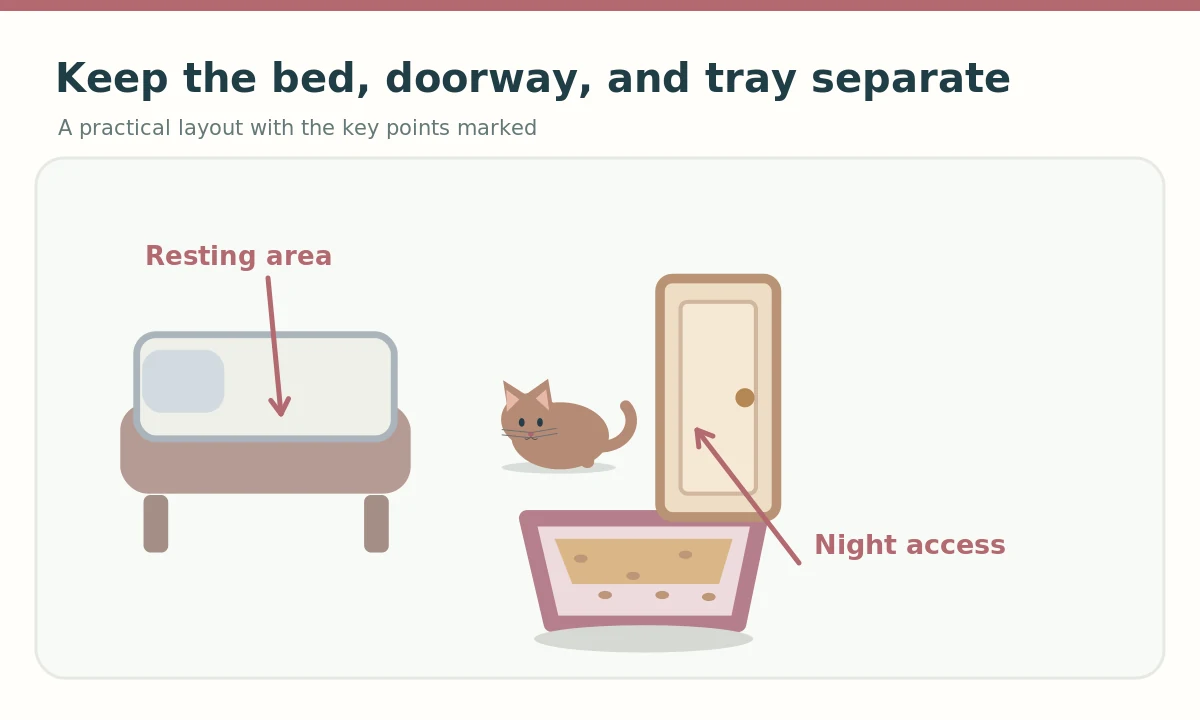
Think about what happens when people go to bed, leave for work, or close the room for guests. A cat cannot use a box it cannot reach. If you close the bedroom door at night, do not make this room the only toilet location. Offer a separate box on the cat’s usual side of the door. Cats Protection recommends round-the-clock access and a quiet location. An otherwise peaceful bedroom may become unsuitable if the access changes every evening. Plan around actual human habits instead of intentions.
Keep the tray outside the sleep path
Choose a sheltered section with room to approach from more than one angle. Avoid the narrow gap between the bed frame and a wall, especially if someone could step there in the dark. Keep the entry away from closet doors, bedside cords, rolling furniture, and floor lamps. Leave enough room for the cat to turn in the box and depart without squeezing past shoes. A cat should not need to cross someone’s feet or jump over laundry to reach the toilet. Check the route with the bedroom lights dimmed.
Separate the box from rest and food
Place the litter station away from the cat’s favorite bed and human pillows when the room allows. Keep food and water in a different area of the home, not beside the tray. Welfare guidance consistently recommends separating toileting and feeding spaces. A small bedroom may not offer adequate separation; in that case, another room may serve better. Do not place a strongly scented deodorizer between the box and the bed to compensate. A comfortable layout matters more than trying to hide the presence of litter.
Use floor protection without creating a trip hazard
Put the box on a level, washable surface that will not slide when the cat digs. A low-profile mat or tray may protect wood or carpet, but its edges should not curl under paws. Check whether it slips across hard floors or bunches on carpet. Keep it outside the main path from bed to door. Sweep tracked litter gently rather than grinding grains into the floor. Clean accidents quickly using products suited to the floor finish, and dry the area before allowing the cat back onto a slippery surface.
Address odor with hygiene, not perfume
Scoop at least once a day, and more often if the box sees heavy use. Put waste into a secure container and remove it from the bedroom regularly. Wash the tray with mild unscented soap and let it dry before adding litter. Fragrance sprays can bother cats and do not replace waste removal. Open windows safely or use normal room ventilation when conditions allow. Never leave an unsecured screen or open window where a cat could escape. If odor persists despite cleaning, review tray condition, litter type, and possible medical concerns.
Account for nighttime digging sounds
Some cats dig vigorously just as people settle for sleep. A thick rug may reduce a tray’s rattling, but it must stay stable and clean. Never seal a cat inside a hooded box to mute noise. Test different safe tray materials or locations without changing every variable at once. If the sound wakes someone, move the household’s sleep arrangement or provide a truly separate accessible toilet rather than blocking the cat. Nighttime toileting is normal; punishment or sudden confinement can make the box less appealing.

Plan for guests and shared rooms
A roommate or overnight guest may close the door or leave bags along the path. Put household instructions where people will see them and keep a second box outside the room. Check the location before visitors arrive. Do not introduce a new covered box just to improve appearances during a short stay. Cats may avoid unfamiliar changes during social disruptions. Instead, rely on routine scooping and a familiar, accessible alternative. If an anxious cat needs extra quiet, allow them a separate resting area away from guest traffic.
Monitor the cat’s preferred route
Notice whether your cat enters confidently or pauses at the bedroom threshold. Watch for sudden exits when a light switches on or someone walks close. If the animal repeatedly waits for the room to empty, move the tray to a less exposed spot. A cat can use a box while still feeling uneasy; absence of accidents does not prove ideal placement. Test a second location without taking away the original. Keep the space calm while your cat explores. Observe behavior rather than imposing a fixed schedule.
Maintain a realistic morning routine
After waking, scoop the box, check the floor and mat, and wash your hands. Refill litter as needed while keeping the familiar depth. Inspect the rim for cracks and the surrounding floor for moisture. Once a week, consider whether the current position still supports the cat’s route as furniture or schedules change. Do not let bedding, suitcases, or a laundry pile quietly take over the path. A simple inspection prevents a room that once worked well from becoming crowded.

When to reconsider bedroom placement
Move toward another option if the room stays locked, the tray sits in a narrow dead end, or people cannot maintain hygiene. Likewise, seek veterinary care if your cat suddenly toilets elsewhere, strains, or shows discomfort. A blocked urinary tract can be an emergency. Location can influence habits, but symptoms deserve professional assessment. Keep a familiar accessible box while resolving a household placement problem so the cat never loses their only acceptable toilet.
How We Research
We reviewed current animal-welfare and veterinary guidance on litter-box access, placement, hygiene, and household transitions. We compared Cats Protection, Battersea, the ASPCA, and the Merck Veterinary Manual, then checked relevant cautions against Cornell feline-health materials. Our process is explained on the HubPet About page. This is an editorial setup guide, not a product test or a substitute for individual veterinary advice.
Sources
Cats Protection — Preparing for a Cat — guidance on cat toilet location, access, hygiene, and health warning signs.
Battersea — Best Litter Tray Set Up — guidance on cat toilet location, access, hygiene, and health warning signs.
ASPCA — Litter Box Problems — guidance on cat toilet location, access, hygiene, and health warning signs.
Merck Veterinary Manual — Providing a Litter Box for a Cat — guidance on cat toilet location, access, hygiene, and health warning signs.
Cornell Feline Health Center — House Soiling — guidance on cat toilet location, access, hygiene, and health warning signs.
Safety note: New house soiling, pain signs, or straining to urinate can indicate a medical problem. Seek veterinary attention promptly; an inability to pass urine can be an emergency.
It can be suitable if the room stays accessible, quiet, clean, and separated from food and resting areas. Offer another location if the bedroom door closes.
Scoop daily, remove waste, clean the tray with mild unscented soap, and ventilate the room safely. Avoid strong air fresheners.
No. Repeatedly relocating the only box can confuse access. Keep an appropriate toilet available throughout the night.
A cramped under-bed gap may restrict turning, cleaning, and escape. Choose a full-size open area rather than hiding a tray in a tight slot.
Offer a quiet accessible alternative and call a veterinarian for new elimination changes, repeated attempts, or straining.