
Small apartments can offer a comfortable litter setup when the path, visibility, and daily maintenance work for the cat—not just the floor plan. This guide focuses on the decision that actually changes daily use. Consider the animal’s access and comfort first, then fit, cleaning, and long-term upkeep. The examples are practical screening tests rather than promises that one design works for every pet.
Begin with a route map, not a furniture map
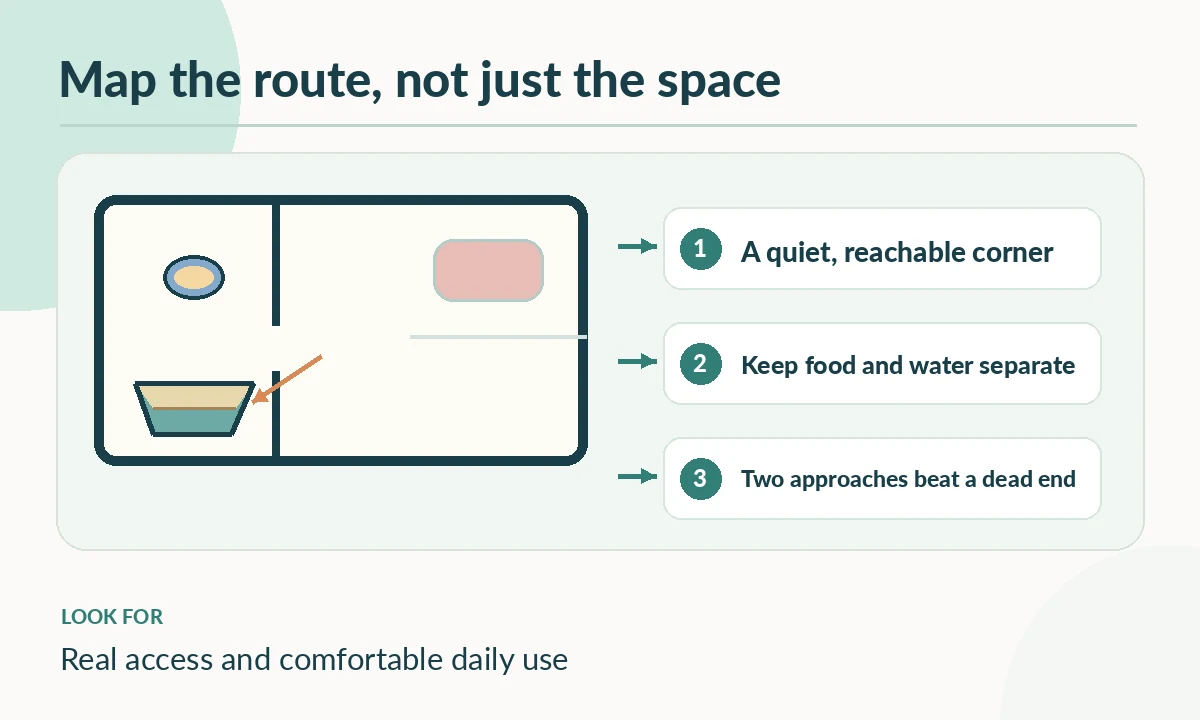
In a small apartment, a litter box often gets squeezed into the only unused square of floor. That makes the human layout efficient but may make toileting difficult for the cat. Walk the route from your cat’s usual resting places and observe doors, narrow hallways, slippery thresholds, and anyone who might block the approach. A comfortable corner needs room for a full-sized tray. The cat should enter, turn, dig, and leave without brushing against stored items. Measure usable floor space rather than the label on a storage bin. A box behind a swinging door stays accessible only while the door is open. Hallway traffic can interrupt bathroom visits.
Separate the litter area from essentials
Cats generally prefer toileting resources separated from their food, water, and sleeping areas. In a studio, place resources on different sides of the room. A quiet alcove or carefully placed furniture can soften the sightline. Avoid placing the tray beside the water bowl. Do not put a sealed cupboard around the box simply to hide it. The important decision is whether the cat has a predictable, undisturbed route. If two cats share the apartment, separate the trays where possible. Two adjacent trays form one resource location that another cat may block.
Evaluate the three tempting locations honestly
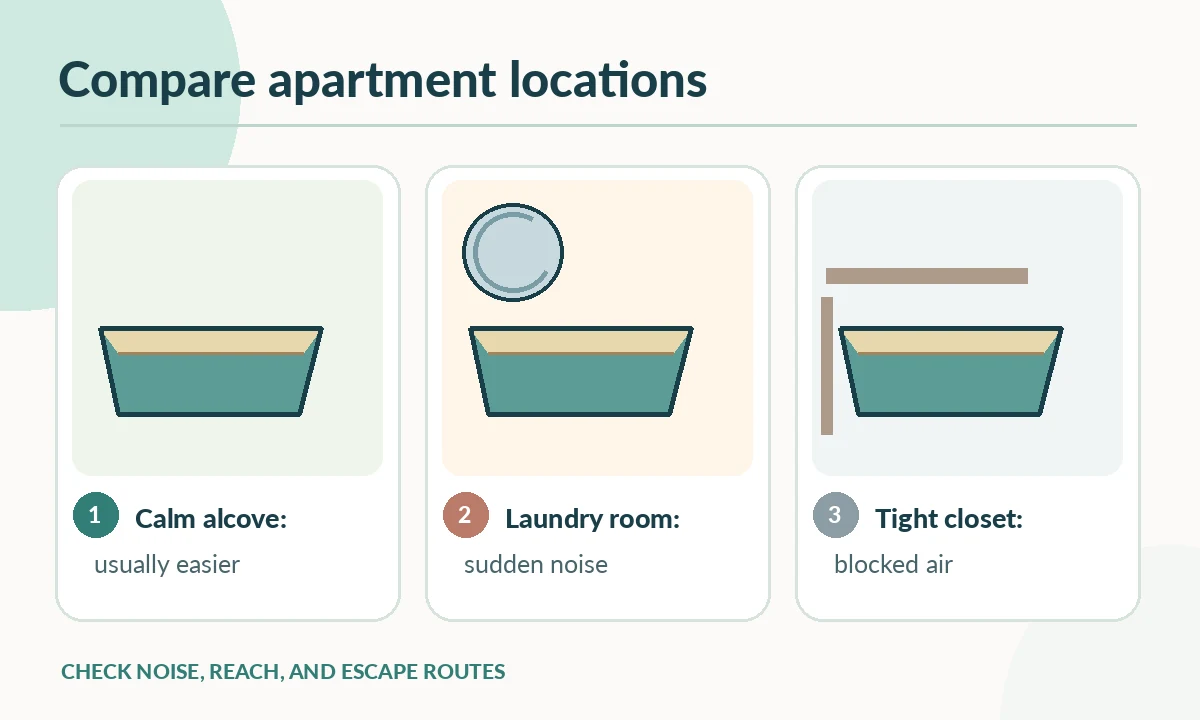
A bathroom can work if the cat always has access. Keep the tray clear of strong fragrances and cleaning supplies. Laundry floors may be washable, yet the spin cycle and dryer noises can startle a cat. Closets conceal mess but can hold odors and create a blind, single-entry spot. List the trade-offs. Who uses the room? When does the loudest noise occur? Is ventilation adequate? Can you scoop easily? The right answer for a quiet adult cat may be wrong for a kitten or an older cat.
Do the size and exit test
Use a cardboard outline or painter’s tape to mark the proposed footprint before buying a new tray. Check whether a large, open tray will fit and whether the cat can enter without stepping around bins, cords, or cleaning bottles. The cat should be able to turn around; tiny decorative trays do not solve an access problem. Consider a low entrance when a high step would be difficult. Observe whether the cat has an escape route when a person passes nearby. Avoid placing the sole tray behind a pet gate or close to a door that guests routinely close.
Build maintenance into the location decision
A spot that requires moving a heavy cabinet to scoop will not stay clean consistently. Put a covered trash can or waste bag supply nearby without blocking the cat’s path, and keep a scoop dedicated to this job. Remove waste at least daily, follow the litter manufacturer’s change schedule, and wash the empty tray with an appropriate unscented product. Wash hands after handling waste. The CDC recommends daily litter changes as a toxoplasmosis risk-reduction step; people who are pregnant or immunocompromised should follow additional healthcare guidance. Consider washable flooring protection that lies flat and does not shift under paws.
Introduce a new location without removing the old choice
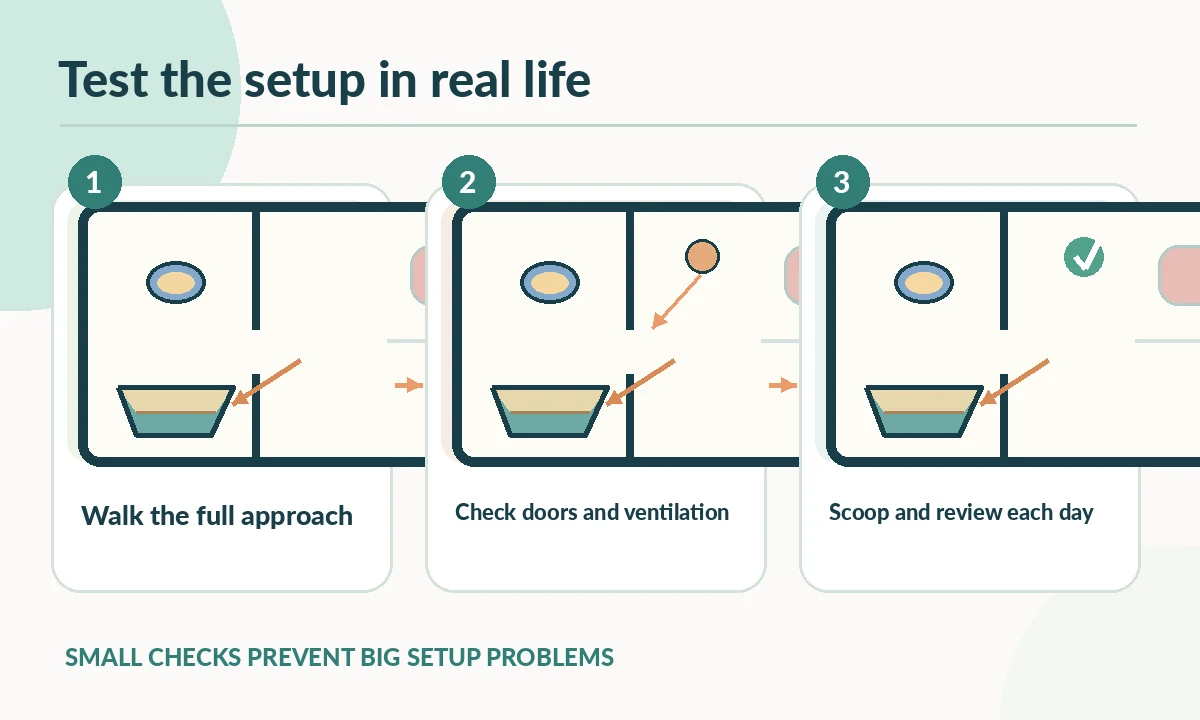
Keep your cat’s familiar tray available while the new position earns trust. If possible, set up a second box with the same familiar litter rather than suddenly relocating the only toilet. Watch actual use for several days. Look for relaxed entry, normal digging, and an unhurried exit. Do not judge by appearances alone. If the cat hesitates, revisit sound, privacy, a trapped exit, litter changes, or size before investing in furniture-style covers. Do not punish accidents. A sudden toileting change deserves veterinary attention rather than an assumption that the cat is being stubborn.
Make a small-space decision you can maintain
Choose a location that works on busy days. Doors must remain open, and cleaning supplies must stay accessible. The cat needs access during showers and visits. A second tray in a different corner may be more important than a sleek enclosure. Test the plan at the cat’s level, not just yours. Photograph the corner and make a simple note about what changes during the week. If you notice repeated hesitation or another cat guarding the doorway, widen the route or relocate a resource while maintaining a familiar alternative.
Quick decision checklist
Before making a change, check your cat’s approach and exit. Check stability and cleaning access. Ask whether the setup still works on a busy day. Offer a familiar alternative when testing a new toilet feature. Watch real use rather than relying on a product promise, and revise the arrangement if your cat hesitates or appears distressed.
How We Research
Our research compares physical design and daily use with feline welfare guidance. We prioritize voluntary access, enough room, familiar litter, and cleaning that works in a real home. Relevant sources include veterinary bodies such as AAHA, plus Cats Protection and International Cat Care. Marketing claims do not count as evidence. We make no claims of hands-on testing on commercial models. Illustrations demonstrate general principles, not safety certifications. Learn more about our editorial approach on the HubPet About page.
Sources
Battersea, Best litter tray setup: Read the source. Accessed October 27, 2026.
AAHA, General Litter Box Considerations: Read the source. Accessed October 27, 2026.
AAFP/ISFM, Feline Environmental Needs Guidelines: Read the source. Accessed October 27, 2026.
CDC, About Toxoplasmosis: Read the source. Accessed October 27, 2026.
Safety note: A sudden change in urination or defecation, repeated straining, apparent pain, or persistent litter-box avoidance needs veterinary assessment; do not assume a behavior or equipment problem. For general context see our veterinary disclaimer.
Sometimes, if the door remains open to the cat, cleaning is practical, and household traffic does not make the approach frightening.
A closet can restrict airflow and become a one-way trap. Avoid it if the cat cannot escape disturbances or if cleaning is awkward.
When possible, provide separate locations and an additional box, even in compact housing. Two trays next to each other offer less choice.
It is better to separate toileting resources from feeding and drinking. Cats may avoid a tray or resource placed too closely.
Restore the familiar option and arrange veterinary advice for a sudden change. Reconsider noise, access, litter texture, and conflicts around the route.