
A puppy potty training schedule is not a fixed number of bathroom trips for every age or breed. Two littermates may differ in bladder control, water intake, excitement, and how quickly they learn the route outdoors. Instead of treating an age-based time rule as permission to wait, create predictable chances after waking, eating, drinking, energetic play, and before rest. Keep the interval shorter if the puppy shows signs or has frequent accidents. The goal is to make successful toileting in the appropriate place easy, frequent, and immediately rewarding.
Choose one practical potty destination
Pick a suitable location that is easy to reach promptly and follow your veterinarian’s advice on infectious-disease exposure until vaccination is appropriate. If you have a private low-risk yard, designate a consistent spot away from hazards. In apartments, plan the route from the sleeping area to the designated toilet area and account for elevators and stairs. Have a leash, appropriate footwear, and treats close to the door. A long walk is not necessary every time; a calm focused trip gives you a better chance of noticing when the puppy actually eliminates.
Start the day with a bathroom opportunity
When the puppy wakes, take them directly to the designated area before a long cuddle, breakfast, or indoor play session. Wait calmly, allow a little sniffing, and give a small reward immediately after the puppy finishes in the right place. If nothing happens, return to careful supervision and offer another chance soon. Puppies can become distracted outdoors; a failure to go does not prove they no longer need to. Do not punish hesitation or keep a puppy outside in uncomfortable weather for an extended period to force a result.
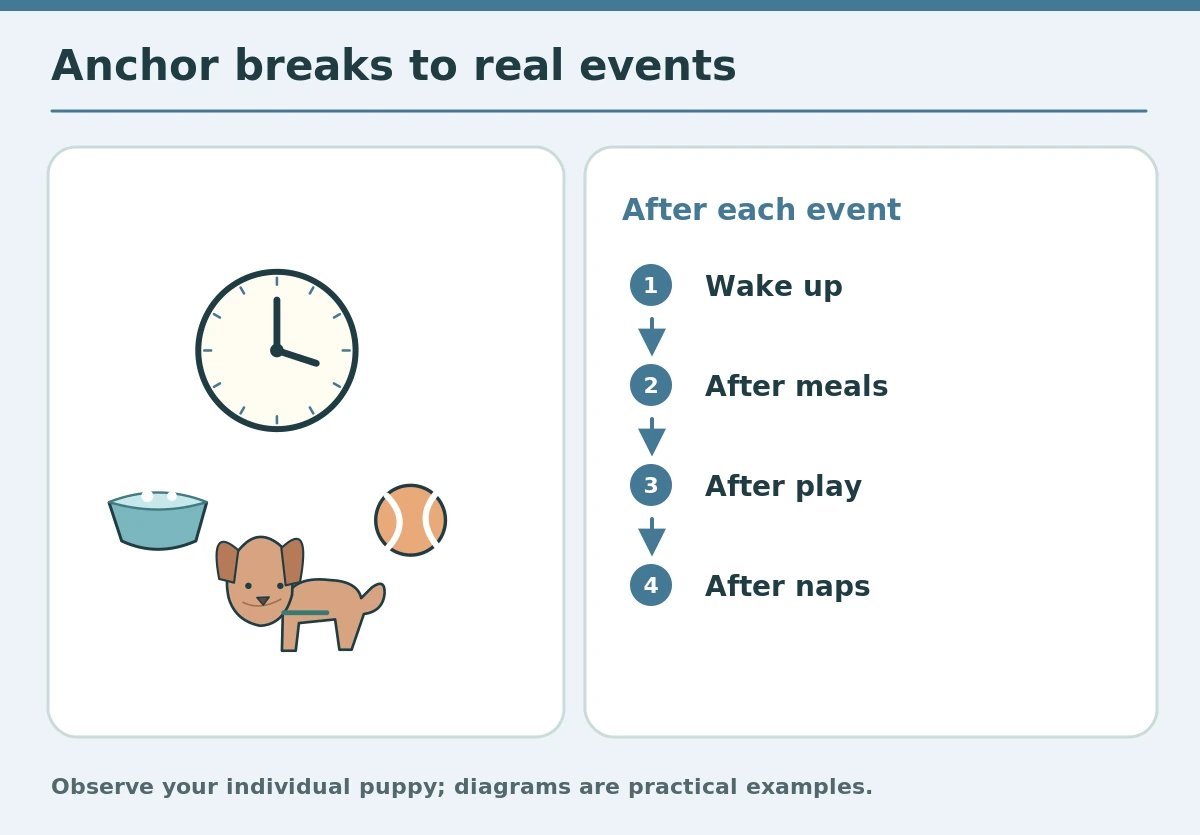
Link meal times to a second outing
Feed on a consistent veterinarian-appropriate schedule and offer an additional bathroom break after a meal or substantial drink. Food can stimulate bowel movement, but the interval varies by individual. Keep a simple log of when the puppy eats and when elimination usually occurs; after several days it is easier to anticipate useful windows. Maintain ordinary access to fresh water rather than restricting drinking to prevent accidents. Ask your veterinarian before changing a young puppy’s feeding pattern, especially for very small or medically vulnerable animals.
Treat play as a schedule reset
A puppy who just urinated may need another opportunity after racing through the room, greeting someone, or playing intensely. Excitement, movement, and short attention spans can make the usual interval unreliable. Watch for sudden sniffing, circling, leaving a game, or heading toward a familiar corner. Calmly guide the puppy outside before the behavior becomes an accident. When you cannot watch closely, use a suitably sized safe pen or supervised close-by area, and arrange a caretaker if you must be away longer than the puppy can comfortably wait.
Try this sample morning sequence
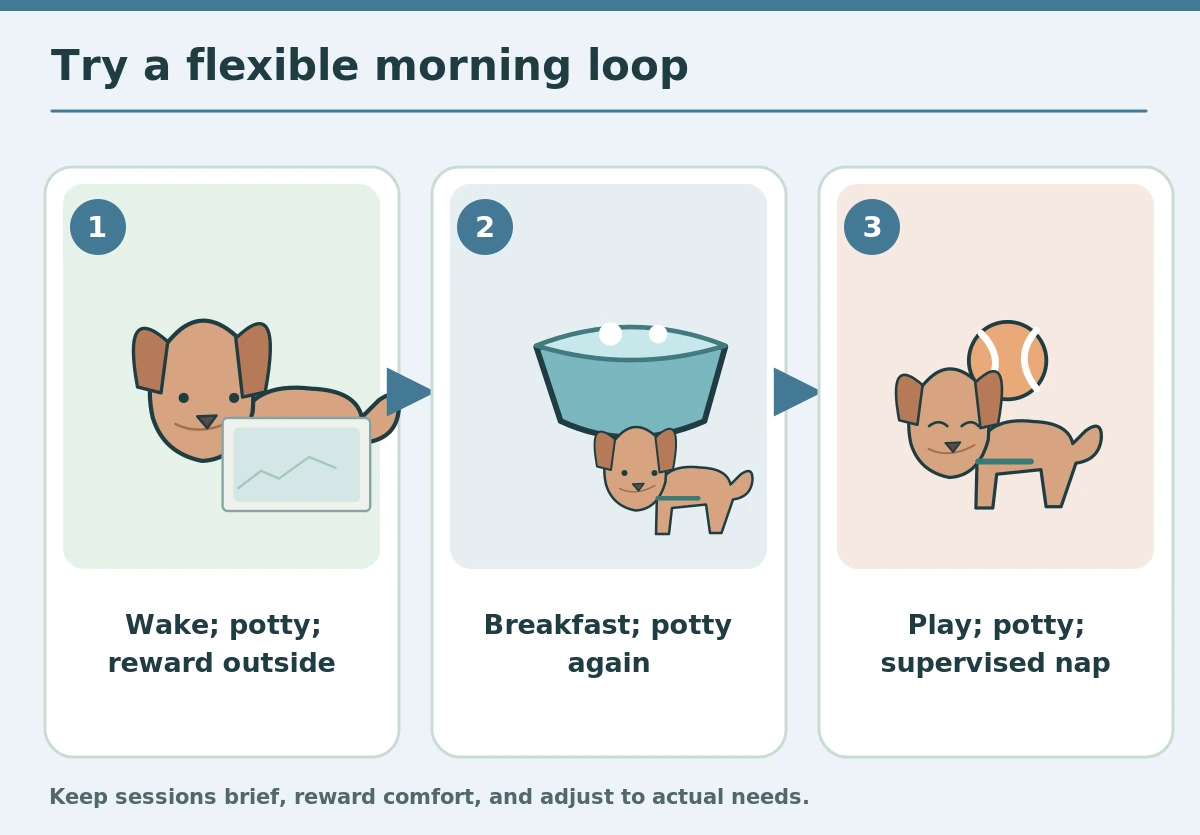
Think in sequences rather than exact clock times: wake up, potty, reward; breakfast, potty chance; short supervised play, potty chance; nap; immediate potty chance after waking. Repeat a similar pattern through midday and evening. This is a planning example, not a claim that a puppy will eliminate at every stop or remain dry between them. VCA describes frequent opportunities for young puppies, especially after activities; the actual pace must be tailored to the animal. Build extra time into the human schedule so bathroom needs are not always rushed.
Use a short, useful accident log
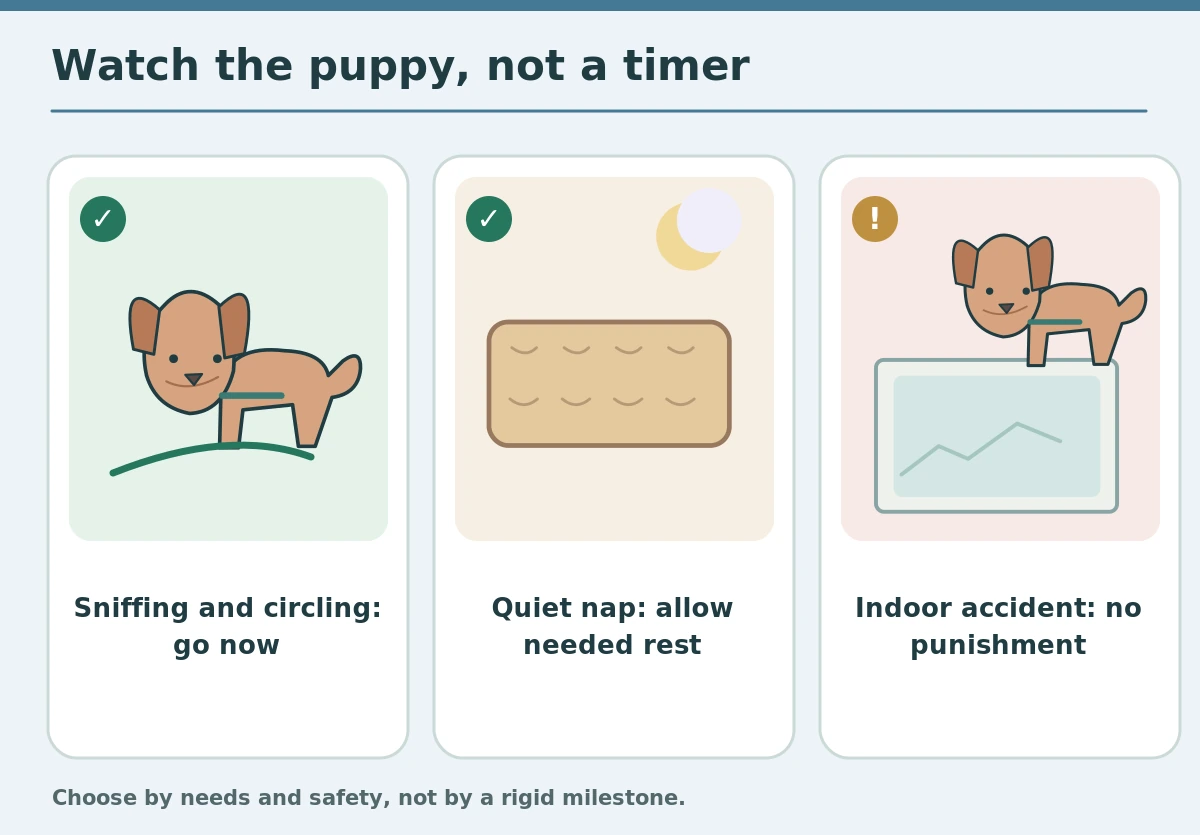
When an indoor accident happens, quietly secure the puppy elsewhere while you clean with a product appropriate to the surface and follow its label. Note what happened just before it: a meal, nap, long phone call, or active game. If you catch a puppy starting to go, guide them to the right area without frightening them. Scolding after the fact, rubbing a nose in waste, or withholding water can undermine welfare and does not teach a reliable toilet location. Adjust opportunities instead of blaming a puppy for a predictable need.
Make supervision realistic for working households
A young puppy may not be able to wait through a full workday or even a long errand. Arrange a trusted person for needed bathroom breaks, or set up a veterinarian-appropriate, sanitary confined area with separate toilet and rest zones when outings are genuinely impossible. Do not leave a puppy enclosed in a crate beyond their comfort and ability to eliminate. Build transitions from crate or pen to an immediate toilet opportunity. If the puppy frequently soils bedding, reconsider the routine, setup, and possible medical factors rather than relying on stricter confinement.
Reward the place, not the return indoors
Give a small high-value reward promptly after the puppy finishes in the approved spot. Waiting until you are back in the kitchen can accidentally reward returning indoors, not toileting. Choose a quiet phrase or cue and use it calmly near the beginning of elimination; avoid repeating it frantically. After a successful outing, allow a short pleasant sniff or gentle interaction when appropriate so the puppy does not learn that going quickly always ends outdoor access. Be consistent across caregivers and do not punish hesitation.
Plan nighttime as a separate schedule
Nighttime sleep is not the same as an active daytime interval. Very young puppies may still need an overnight bathroom trip, while other puppies gradually sleep longer. Keep the sleep area close enough to notice distress and plan brief, boring outings with little play or conversation. The puppy should not be forced to remain in soiled bedding. Avoid interpreting every whine as a demand for entertainment; first check for a legitimate elimination need or discomfort. Speak with your veterinarian if frequency suddenly changes or urination seems painful.
Know the reasons a schedule may need medical help
Repeated straining, blood in urine, marked thirst, diarrhea, vomiting, painful urination, or a sudden increase in accidents are reasons to ask a veterinarian for advice. Young puppies can become unwell quickly, and behavior advice alone cannot distinguish infection or digestive illness from ordinary house training. Avoid online shortcuts promising a fixed housetraining deadline. Growth, routines, access, health, and management all matter. A schedule is successful when it reduces mistakes and helps the puppy feel safe asking for an outing.
Revisit the plan every few days
Count successes near the planned bathroom site, identify the most common accident window, and shorten that window with an extra trip. As dry periods lengthen, adjust cautiously without pushing the puppy to wait until distressed. Keep rewarding correct elimination even as the routine becomes familiar. Share schedule notes with any dog walker or caregiver so changes do not create mixed expectations. When progress stalls, look first at access, distractions, consistency, and health rather than assuming stubbornness. The puppy’s behavior provides the schedule’s best feedback.
How We Research
We compared VCA event-based housetraining recommendations and ASPCA positive management advice with AKC daily-routine guidance. We intentionally avoid universal bladder-holding formulas, fixed timelines, and punitive training claims. Read About HubPet for our general editorial approach.
Sources
VCA Animal Hospitals — Housetraining for Puppies and Dogs: Read source. Reviewed October 27, 2026.
ASPCA — House Training Your Dog or Puppy: Read source. Reviewed October 27, 2026.
American Kennel Club — Setting Schedules and Developing a Routine for Your New Puppy: Read source. Reviewed October 27, 2026.
American Veterinary Society of Animal Behavior — Humane Dog Training: Read source. Reviewed October 27, 2026.
Safety note: This puppy care and training guide cannot replace individual veterinary advice. Seek veterinary care for illness, painful elimination, suspected ingestion, or significant ongoing distress. Read our veterinary disclaimer.
Offer breaks after waking, meals, drinking, and play, with additional frequent daytime opportunities based on your puppy’s age, accidents, and signals. Exact intervals vary, so adapt the plan.
No. A schedule reduces missed opportunities but does not override bladder development, medical needs, or excitement. Supervision and prompt rewards remain essential.
Offering another opportunity soon after meals is useful, but puppies differ in when they need to eliminate. Use your own log to refine the timing rather than relying on one fixed rule.
Return to direct supervision and try again soon in a calm, familiar spot. Reward success promptly. If there is straining, pain, or an unusual change in elimination, consult your veterinarian.
Do not restrict normal access to drinking water without veterinary guidance. Instead plan suitable overnight breaks and discuss unusual thirst or urination with your veterinarian.