
Pet-care safety note: If your animal is ill, has injured skin, or may have contacted a household chemical, contact your veterinarian. Read our veterinary information disclaimer for the limits of general website guidance.
When dog poop lands on carpet, stop foot traffic and move other animals out of the area. The mess is easier to contain before anyone steps in it or a dog investigates. Put on disposable gloves and collect supplies: an unprinted white towel, a blunt spoon or scoop, an appropriate bag, and a cleaner compatible with the carpet. Do not reach straight for a scrub brush. Moving the stool across the pile can spread contamination and push material into the backing. Wash your hands thoroughly afterward, even if you wore gloves.
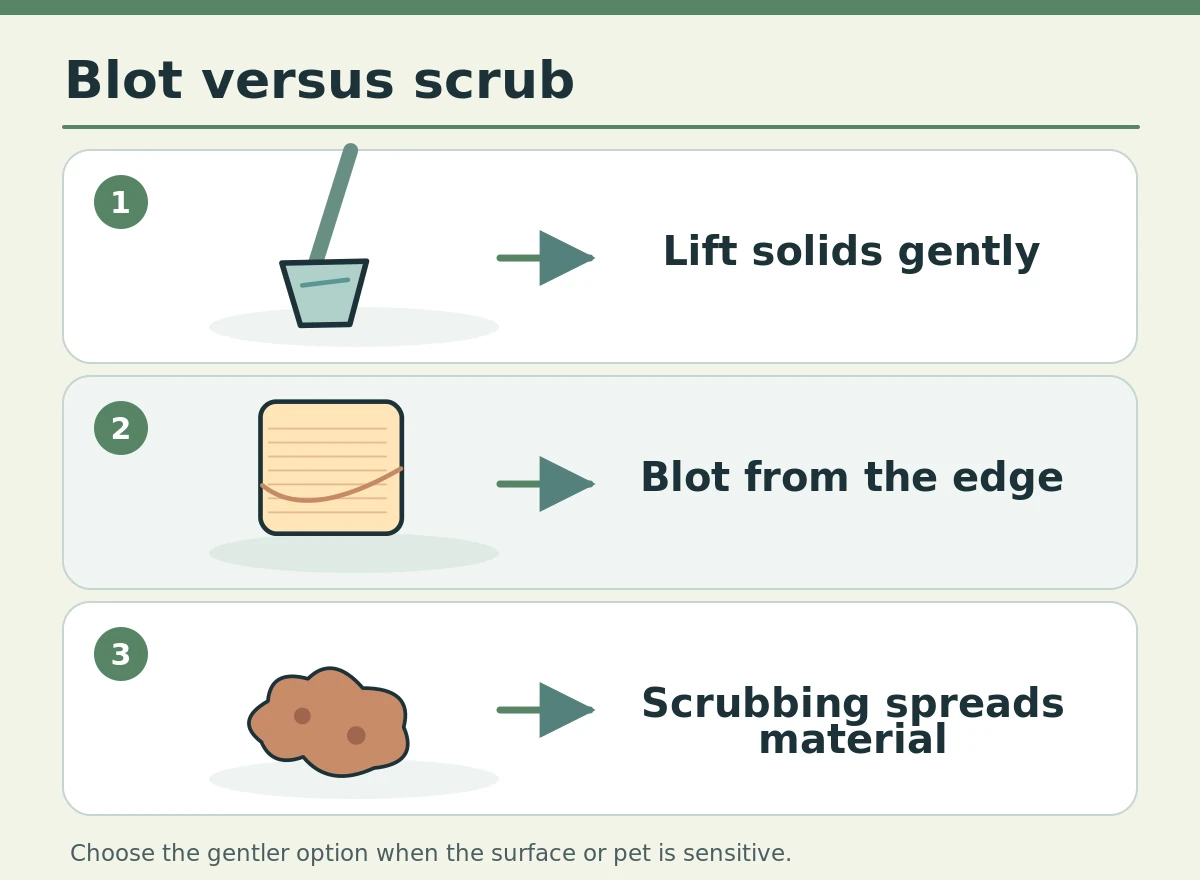
Lift solids straight up
For formed stool, gently pick up the bulk with a bag or a rounded scoop and transfer it to a waste bag. For softer stool, work slowly from the clean edge toward the center using a blunt tool rather than dragging across a wider patch. Set used towels and scoops aside so they do not touch furniture or fresh carpet. Resist the impulse to dry-vacuum fresh feces; a household vacuum is not a suitable first-step waste collector. This is a hygiene task as well as a stain problem, and the tool you choose must be washable or disposable.
Blot residue instead of rubbing
Press a clean, white absorbent cloth gently onto the remaining spot and lift it away. Repeat with unused sections of the cloth until material stops transferring. Scrubbing can fray or distort pile and drive mess deeper; the Carpet and Rug Institute recommends blotting and lifting semi-solids with a rounded spoon. Work in a small area rather than flooding the entire patch. Watery stool often requires more fresh towels. Keep the cleanup controlled, with the goal of removing visible matter before introducing a cleaning product.

Check the carpet material before adding liquid
Look at the care guidance for the installed carpet or rug and identify whether it permits aqueous spot cleaning. Wool, silk, unknown dyes, vintage rugs, and certain backings may be damaged by ordinary carpet spot products. Pretest a small amount of the chosen cleaner on a hidden area, checking for dye on a white cloth and texture changes after drying. If color transfers, stop. A visible stain is frustrating, but permanently bleeding the dye or weakening the backing is a bigger and more expensive mistake. Contact a rug specialist for uncertain fibers.
Treat with a compatible spot cleaner
Choose a carpet-compatible stain product and follow its exact directions for application time, rinsing, and extraction. Apply it carefully, using only the amount needed, without mixing products. An enzyme-based formula may help with some organic residues when indicated by its label, but it is not a guarantee against pathogens and should not be treated as a substitute for hygienic waste removal. ASPCA advises allowing treated surfaces to dry before pets return; cleaners may irritate if ingested. Keep both the concentrate and wet spot away from pets and children during the whole process.
Remove solution and dry the fibers
After the specified treatment, blot or extract the remaining liquid as the care and product instructions permit. Don’t pour buckets of water over the carpet hoping to flush residue away. Water can wick into pad or backing and carry contamination to an area you cannot see. Provide good ventilation and air circulation, then keep the spot off limits until fully dry. If the carpet is still damp beneath the visible fibers, seek professional advice. Once dry, check whether odor or discoloration returns; repeated spraying without evaluation may make matters worse.
What if the stain has already dried?
Do not scrape dried residue aggressively with a sharp implement. Carefully remove loose solids without grinding them into the pile, and use an approved spot-treatment approach in small stages. Depending on the material, an experienced cleaner may be the better option. Old staining can be harder to reverse, and some fibers are less tolerant of repeated cleaning. Avoid using household steam heat on an unknown biological stain just because a device is nearby. Test first, follow the maker’s instructions, and stop when the texture begins to change or color moves.
Use separate tools for waste cleanup
Keep the scooper, disposable gloves, and towels for contaminated work apart from ordinary kitchen and grooming supplies. Discard waste securely following your local rules, then clean reusable tools according to their material instructions. Wash hands with soap and running water after handling pet waste or cleaning the area; CDC emphasizes handwashing after cleaning up after animals. Do not carry dirty towels uncovered through the house. A washable entry mat or protected cleanup station can reduce future spread, but it does not replace prompt collection and careful spot treatment.
Know when the mess is bigger than a spot
Multiple accidents, widespread diarrhea, a saturated carpet pad, persistent strong odor, visible mold, or an antique rug calls for more than an ordinary spot wipe. Contact an appropriate professional about cleaning or replacing affected material. If the dog has sudden or repeated diarrhea, bloody stool, lethargy, or other illness signs, consult a veterinarian promptly instead of focusing solely on the stain. Avoid self-prescribing treatments. A home article can help contain the mess, not determine the medical cause or whether a particular organism is present.
Reduce the chance of repeat cleanup
Place a washable protective mat near the exit if your dog sometimes struggles to reach the door. Offer frequent, predictable outdoor opportunities and reward the dog calmly for toileting in the right place; punishment after an indoor accident teaches little about what to do next and can increase stress. For a senior dog or a dog with changing habits, involve a veterinarian when accidents become new or frequent. Keep a compact cleanup kit accessible so you’re not hunting for a brush while a stain spreads. Prevention and timely response both protect the carpet.

A final inspection after the area is dry
Look at the spot in good light. The pile should not be stiff, faded, or left with detergent residue. Sniff only from a normal distance rather than touching your face to contaminated material, and keep pets away until you are satisfied with the result. If a discoloration appears to return as the carpet dries, it may be wicking from deeper material. Do not repeatedly soak it; request professional advice. Record the carpet’s material and the approved cleaning product so the next accident requires fewer guesses.
How We Research
We adapted the Carpet and Rug Institute’s spot-cleaning method to the specific sequence of removing dog feces, cross-checking CDC pet-waste hygiene and ASPCA cleaner safety. We avoided claims that general-purpose stain products reliably disinfect carpet or treat pet health problems. See About HubPet for our editorial approach.
Sources
Carpet and Rug Institute: Cleaning and Maintenance for Homes: Read the original source. Accessed October 27, 2026.
Carpet and Rug Institute: CRI 204 Carpet Maintenance Standard: Read the original source. Accessed October 27, 2026.
CDC: Ways to Stay Healthy Around Animals: Read the original source. Accessed October 27, 2026.
ASPCA Animal Poison Control: Poisonous Household Products: Read the original source. Accessed October 27, 2026.
No. Gently lift the solids, then blot residue using a clean white cloth. Scrubbing can damage carpet pile and push contamination farther into the fibers.
Do not use an ordinary dry vacuum as the first cleanup step for fresh feces. Remove bulk waste with gloves and a disposable or washable blunt scoop, then treat remaining residue appropriately.
Do not assume so. An enzyme stain cleaner is designed for organic residues, and disinfecting claims require specific approved uses and directions. Remove the waste, clean the textile appropriately, and use professional help when needed.
Liquid or residue may have traveled into the backing or pad and wicked up again. Avoid repeated saturation and contact a qualified carpet professional for persistent problems.
Seek veterinary advice when accidents are new and repeated or stool is bloody, persistent diarrhea occurs, or the dog shows other illness signs. Carpet cleanup cannot diagnose a health problem.