
A backyard dog-waste bin should make regular disposal easier, not create a second odor problem beside a patio. Small step cans, tight-lid pails, and larger outdoor trash containers each solve a different storage problem. The right setup depends on how many dogs use the yard, how often the main household trash is collected, and where people and pets spend time. This guide compares lid mechanisms, liner sizing, placement, and cleaning. It does not promise that a sealed bin can sterilize waste, eliminate every smell, or make dog feces suitable for a garden compost pile.
Decide how long the waste will wait
Start with the interval between your normal trash pickups and the approximate number of bags you add each day. A tiny container may fill quickly in a multi-dog household, while an oversized bin can encourage waste to sit longer than necessary. The best capacity lets you empty it on a predictable schedule without compacting dirty bags by hand. Consider whether a larger municipal trash can already accepts securely tied pet-waste bags. In many homes, an additional outdoor can is mainly a convenience for distance and odor separation, rather than an essential purchase.
Compare lid shapes and opening mechanisms
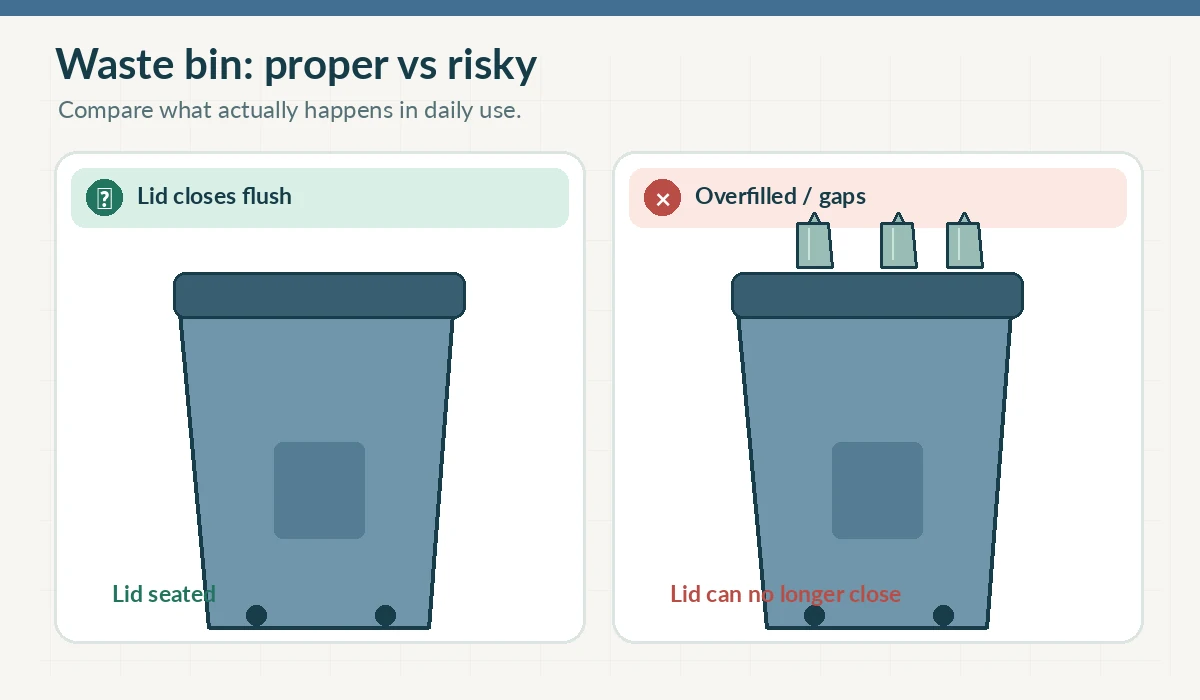
A hinged lid with a solid overlap can reduce rain entry and discourage insects; a simple lift-off lid may be easier to wash but less convenient when your hands hold a filled bag. Step pedals keep fingers away from the rim, although outdoor hinges and pedal linkages can jam with mud or grit. Test whether the lid closes under its own weight and whether it has gaps after the liner is folded over the rim. A gasket can reduce odor escape, but no gasket compensates for infrequent emptying or a cracked container. Prefer straightforward parts you can inspect.

Match the liner to the actual inner opening
Measure the interior height and circumference rather than assuming a printed gallon rating guarantees fit. A liner that rides up the walls can trap moisture; a bag stretched across a sharp corner may split when removed. If the can has a liner-retaining ring, make sure you can release it without touching soiled surfaces. Avoid pushing used bags into the liner by hand to force extra capacity. A secondary outer trash bag should not replace the first bag used during pickup. Double-bagging is optional and depends on local disposal rules and actual leakage risks.
Pick a site with shade, drainage, and access
Place the container where it will not tip into a walkway or block a gate, children’s play area, or emergency exit. A stable, level surface is more helpful than a decorative stand. Shade may reduce heating of the closed container during summer, but it is not a substitute for timely disposal. Keep the can away from food-preparation areas and accessible animal feeding stations. Prevent pets and wildlife from opening or chewing it; a locking lid may be useful where scavengers roam. Confirm that the spot remains reachable when it rains or snows.
Understand what odor features can and cannot do
Odor-control inserts, charcoal pads, and tight seals can reduce what escapes while the lid stays closed, but opening the lid releases trapped air. Fragrances may mask smell temporarily without removing contamination. Do not pour disinfectant, ammonia, bleach, or deodorizing chemicals onto collected feces. Chemical mixing can create hazardous fumes, and residues may harm animals. The safest default is a secure lid, regular bag replacement, soap-and-water cleaning of reusable surfaces, and complete drying. If a container smells strongly after cleaning, inspect its joints, base, and damaged liner holder.
Build an emptying routine you can maintain
Tie bags as you collect each deposit, add them to the lined container, and close the lid immediately. Remove the main liner before it is overfull; carry it without dragging it across surfaces. Dispose of waste through an approved trash stream according to local rules. After emptying, inspect for leaked liquids, wash the interior if needed, rinse thoroughly, and let the can dry before relining. Wear gloves for dirty handling and wash hands afterward. Keep a short reminder near your regular collection calendar rather than trusting the container to stay odor-free indefinitely.
Choose materials for weather and cleaning
Smooth hard plastic is usually light and easy to rinse, but sun exposure and cold can weaken some plastics over time. Painted metal may feel sturdier yet can rust around scratches, hinges, or screw holes. Stainless steel resists rust better but may heat in direct sun and still needs cleaning. Check the bottom for stable contact and water traps. Look for a lid hinge you can inspect or replace instead of hidden narrow channels that accumulate waste. Any opening large enough for a small pet to investigate deserves a secure cover.
Avoid common disposal mistakes
Do not bury household dog feces near a vegetable garden, abandon tied bags beside a park trash can, or wash loose waste toward storm drains. Rainwater can carry bacteria and nutrients into waterways. Keep the disposal method consistent with your municipality’s guidance, especially if you live in an area with separate composting and refuse collection. Most ordinary backyard compost systems are not an appropriate place for pet waste. Wash your hands with soap and running water after handling waste or a dirty liner, even when you used gloves or collection bags.

Final buying checklist for a yard bin
Confirm that the lid closes with the liner fitted; the opening is wide enough to add a tied bag without contact; the can stands firmly on its intended surface; and the liner comes out without snagging. Try emptying the clean container once before buying extra accessories. A purpose-built dog-poop can may be convenient, but a washable covered container can also work if it is secure and emptied promptly. The best choice is the one your household will actually maintain, not one marketed as completely odorless or maintenance-free.
How We Research
We review public-health guidance, the actual functions of the tools discussed, and the practical disposal pathway before recommending a setup. Our checklist focuses on access, clean handling, failure points, and the difference between product claims and outcomes. We do not claim to have independently tested individual products, inspected local facilities, or verified a manufacturer’s unprovided performance data. Check current municipal rules and read our editorial approach. Sources reviewed October 28, 2026.
Sources
CDC, Ways to Stay Healthy Around Animals. Read the original guidance. Accessed October 28, 2026.
Philadelphia Water Department, Pet Waste = Pollution. Read the original guidance. Accessed October 28, 2026.
CDC, Hygiene Practices Around Animals. Read the original guidance. Accessed October 28, 2026.
Safety note: Pet feces may contain germs or parasites. Use appropriate waste containers and wash hands after cleanup. This article offers general product and hygiene guidance, not veterinary advice. Read our veterinary information disclaimer.
Often yes, if local rules allow it. Use tied collection bags, keep the container securely closed, and empty it regularly.
No. Seals may contain some odors while closed, but they cannot replace regular emptying, washing, and drying.
Choose a stable, shaded, accessible place away from food and play areas, where pets and wildlife cannot open it.
No. Do not pour household chemicals onto collected feces or mix cleaners. Wash the empty container following product directions.
Check the container’s inside dimensions and rim shape; choose a liner that reaches the bottom without overstretching or snagging.