
A dog car hammock is usually a protective fabric panel suspended between the front and rear headrests. It can keep mud off upholstery and reduce access to the footwell, but it is not a tested crash restraint by default. A hammock can even interfere with seatbelt routing if the design covers buckles or creates extra straps around the dog. Before buying, measure the rear cabin, then decide how your dog will actually be restrained. This is a buying and vehicle-fit guide, not a substitute for veterinary guidance; see the HubPet veterinary disclaimer.
Decide whether a hammock solves your problem
Start with the reason for buying. Muddy paws and hair on the rear bench call for an easy-clean cover. A dog slipping into the footwell while braking calls for an appropriate vehicle restraint, not just a fabric bridge. If you need both, select the restraint system first and then find a hammock that does not interrupt its operation. A dog who chews dangling straps may make this format a poor choice. Write down the specific surfaces to protect and the seatbelt path that must stay usable throughout the trip.
Measure the entire rear seating area
Check the width and depth of the bench and the distance between headrests with the front seats in their normal driving positions. Measure gaps at the doors and between split seats. A cover that stretches taut may tear at the anchors when seats slide; one that hangs loosely may bunch under the dog or trap feet. Look at the actual dimensions rather than labels such as “SUV size.” If the back seat carries a person or child restraint at other times, plan how the cover will fold away without blocking their required seatbelt hardware.
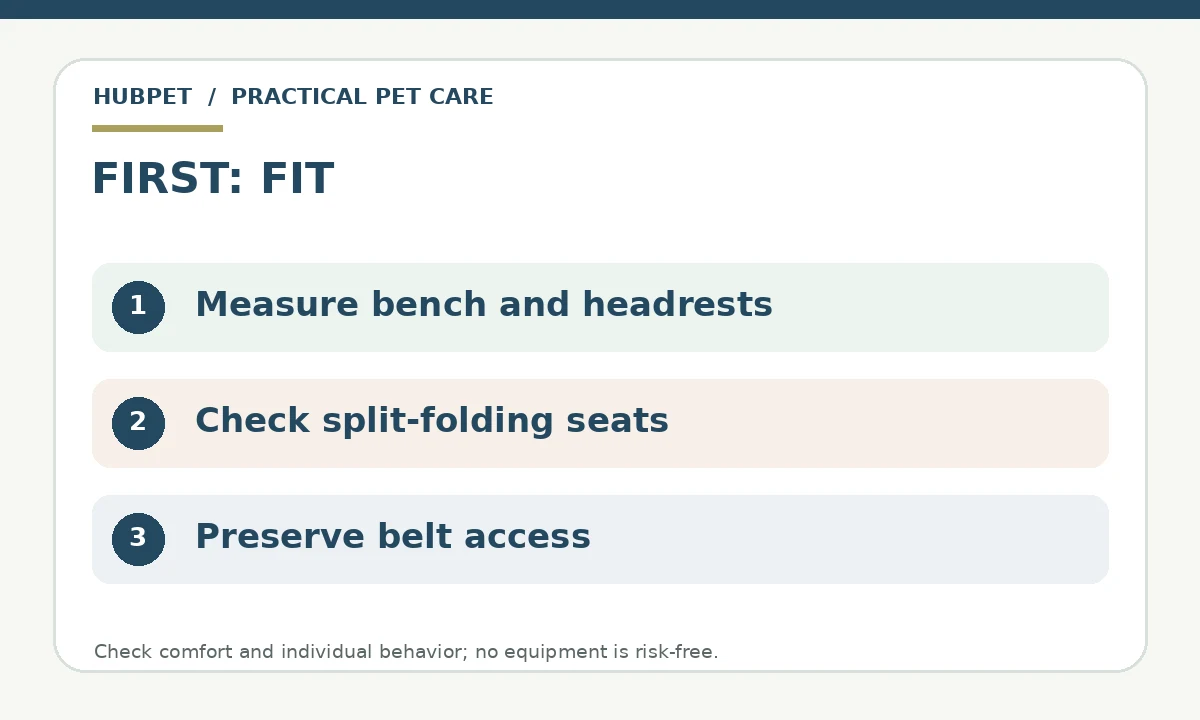
Keep all harness and belt connections exposed
A hammock with openings for seatbelt buckles may still cover the actual shoulder-belt route needed by a tested dog harness. Install the restraint while parked, then place the cover around it and confirm that no strap changes the approved path. Do not thread an extra leash through a fabric slit as a makeshift tether. Center for Pet Safety cautions against extension tethers and advises using tested vehicle systems as directed. Fabric panels should never become part of the restraint load path unless the product’s evidence specifically includes that arrangement.
Check headrest straps and hardware
Inspect how the hammock attaches to headrests and whether the loops interfere with adjustments or seat controls. Buckles should lock consistently, with no exposed sharp edges. The front panel must not block the driver’s controls, floor pedals, or view through the cabin. In some vehicles, active airbags or side-impact features make certain strap placements unsuitable; consult the owner’s manual rather than guessing. A cover that requires hooks on safety hardware or a permanent modification to the car is a poor choice for a routine pet-cleanup accessory.
Compare fabric surfaces for slip and comfort
Smooth waterproof layers can shed moisture but may also slide under paws. Inspect the top texture and underside grip independently. A thicker quilted layer may reduce slipping without making the hammock suitable for impact loads. Rub a sample of the fabric with a damp cloth to check color transfer if the manufacturer permits. For dogs with sensitive skin, choose a surface that will not snag nails or rub the belly. Clean and dry the fabric thoroughly before reinstalling it, because trapped moisture under a waterproof backing can affect upholstery.
Assess door flaps and side coverage
Door panels can protect trim when a dog climbs in, but a dangling flap may catch a paw or interfere with closing the door. Check whether the product provides secure attachment for flaps without wedging fabric into latch mechanisms. Side panels must never cover essential labels, seatbelt guides, or vehicle controls. If a flap creates a step-like hanging shelf, discourage jumping onto it. Help older or small dogs enter using a separate stable ramp where practical, with the car parked and a person controlling the door.
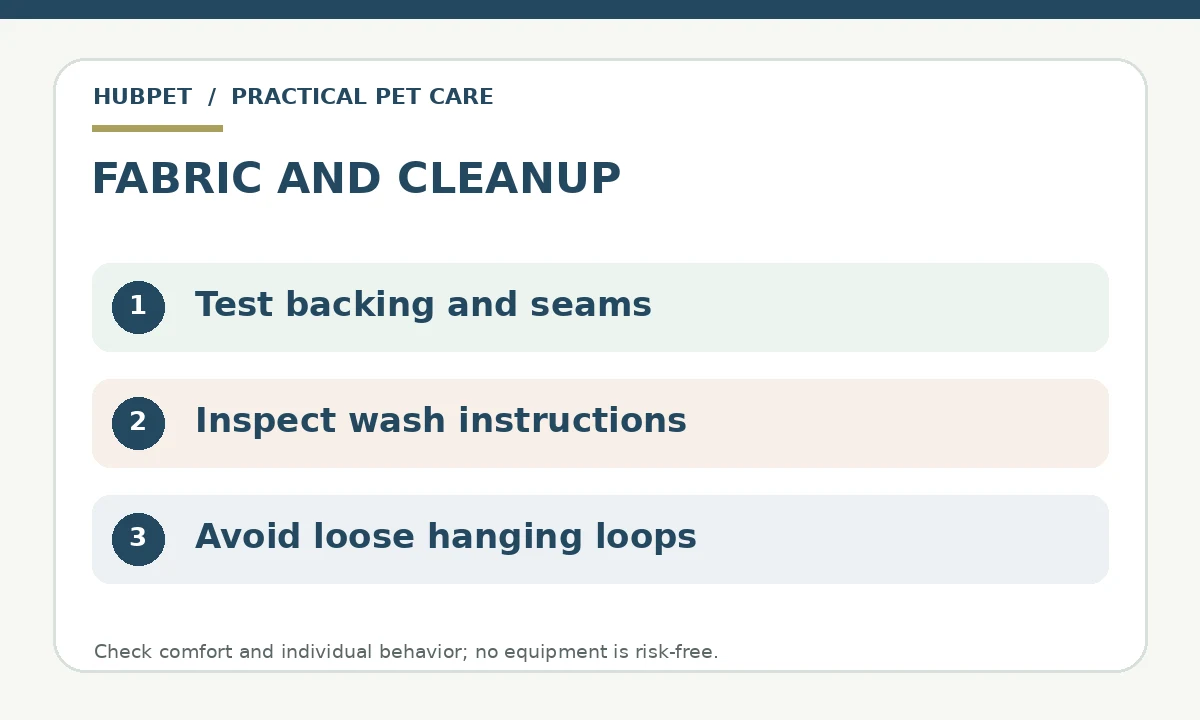
Inspect washing and drying requirements
A removable cover is only convenient if you can clean it safely. Read instructions for machine washing, detergent, spin settings, and drying. A waterproof coating may crack or delaminate with high heat. Shake out hair outdoors or vacuum the surface before laundering to protect the washer, and dry the cover fully before folding. Recheck seams and anchors afterward. Avoid scented sprays or household cleaners without fabric guidance; strong odors can be unpleasant for dogs, and lingering chemical residues can transfer to skin or paws.
Choose a setup for shared passenger use
If people sometimes ride alongside the dog, a full-width hammock may block access to the middle buckle or make it hard to operate child restraints. Consider split or partial covers only if they leave all safety equipment exposed. Never improvise child-seat compatibility: consult the vehicle and child-restraint manuals and keep pet accessories outside the defined installation zone. In multi-dog households, a shared hammock does not replace individual restraint decisions. Two dogs moving on a broad fabric platform can still collide or interfere with each other.
Do a stationary inspection before each drive
With the vehicle parked, clip the hammock to the intended anchors and check that it cannot shift unexpectedly. Install the dog’s tested harness or secured carrier as directed, and ensure the cover has not blocked anything. Check that the dog can rest comfortably without standing in the footwell. Remove chewable loose objects and verify that windows and doors function normally. Run the same inspection after anyone adjusts the front seats. Small changes in seat position can make hammock anchors unexpectedly tight.

Make a simple buy-or-skip decision
Buy a hammock when the main goal is easier cleaning and it fits around existing safety systems. Skip models that demand unapproved restraint routing, have weak anchors, or place bulky flaps in essential seatbelt paths. A pet-proof fabric may protect your upholstery yet still fail at crash protection, so evaluate those claims separately. Save the cleaning instructions and the actual product dimensions. For long trips, keep a towel and spare cover available rather than accepting a bad fit just because a design looks tidy in product photos.
How We Research
Our editorial team compared current pet travel, vehicle restraint, and safety-testing guidance with the specific shopping question in this guide. The review distinguishes sourced safety principles from practical inspection prompts. Our team did not test specific products, and this guide does not claim any car accessory prevents injuries or fits every dog. Our team reviewed source pages on October 27, 2026. Learn about our process on the About HubPet page. For distress, injuries, or medical questions, consult your veterinarian.
Sources
Centers for Disease Control and Prevention: Pet travel safety. Reviewed October 27, 2026.
Center for Pet Safety: Extension tether safety advisory. Reviewed October 27, 2026.
ASPCA: Travel safety tips. Reviewed October 27, 2026.
U.S. Food and Drug Administration: Travel training for you and your pets. Reviewed October 27, 2026.
Merck Veterinary Manual: Traveling by car with pets. Reviewed October 27, 2026.
No. A fabric hammock is a cover and footwell barrier, not a documented crash restraint.
Only if it leaves the precise approved belt routing and all required vehicle connections unobstructed.
No. Water resistance and grip are separate properties; inspect the upper texture and backing.
Yes. Check every occupied seat and keep buckle access and required restraint paths clear.
They may protect trim, but avoid designs that catch paws or interfere with door latches.