
Soft-sided dog crates look inviting because they fold flat, weigh less, and can create a familiar temporary resting spot. Yet fabric panels, mesh windows, and zipper closures behave differently from rigid wire or plastic. Cornell describes fabric crates as useful for travel or shorter use with suitable dogs, while noting that chewing can destroy them. Before buying one, define the exact setting: a calm hotel room, a supervised visit, or a temporary indoor retreat. Do not treat a fabric crate as a crash-tested car restraint or a solution for a dog who panics when confined. For health and injury limits, see the HubPet veterinary disclaimer.
Decide whether the dog is a fabric-crate candidate
Consider your dog’s history before comparing colors or folding weight. A settled adult who rests voluntarily behind a door may manage a fabric crate during supervised visits. However, a puppy who chews seams or a dog who lunges at barriers can tear fabric or swallow pieces. Sudden escape attempts create injury risk as well as damaged equipment. Cornell recommends considering size, material, and durability together. If confinement already causes heavy panting or frantic scratching, ask a veterinarian or qualified behavior professional for another management plan.
Check the shape when the crate is open
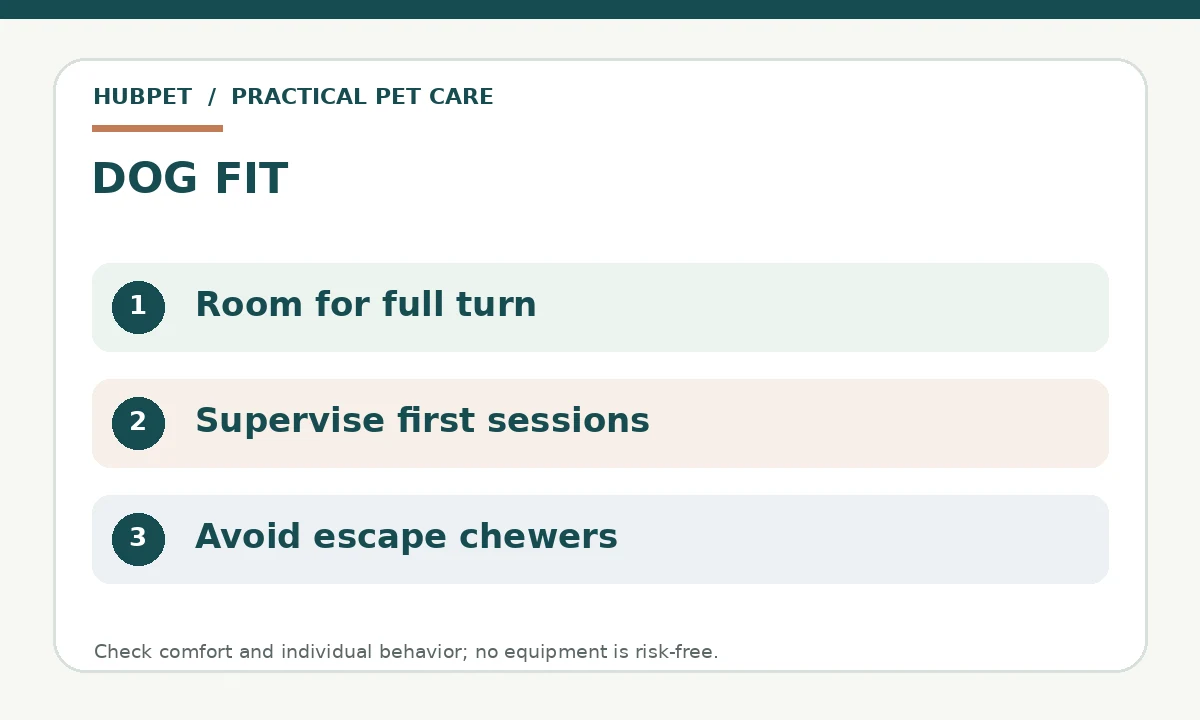
Measure usable space while the frame stands fully assembled. Some soft carriers taper upward, which reduces headroom even when the floor looks generous. Watch the dog stand, turn in a smooth circle, and settle on its side without pressing against mesh panels. Next, place the intended pad inside and repeat the fit check. Soft walls should not sag onto the dog during normal movement. Also look at the threshold: a high entry lip may inconvenience animals with mobility limitations. Comfort must take precedence over an advertised weight category.
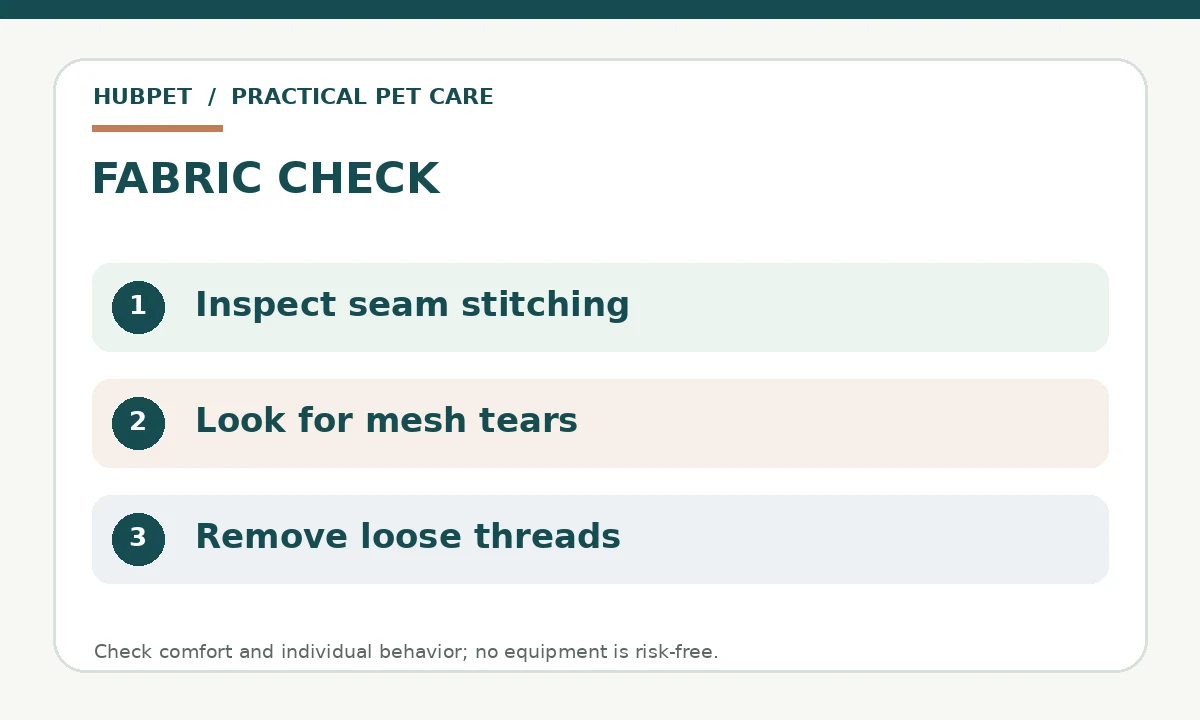
Inspect each mesh panel and seam
Run a fingertip along the seam allowances while the crate is empty. Look for fraying, exposed plastic threads, torn mesh, and loose binding tape. Mesh supports airflow but can rip if a dog scratches or bites repeatedly. A sturdy-looking fabric panel does not automatically withstand claws. Therefore, examine both the interior and exterior corners after each folding cycle. If a seam begins to separate, do not patch it with accessible tape or staples. Retire the enclosure until you can replace the damaged component under its maker’s instructions.
Test zipper security without an animal inside
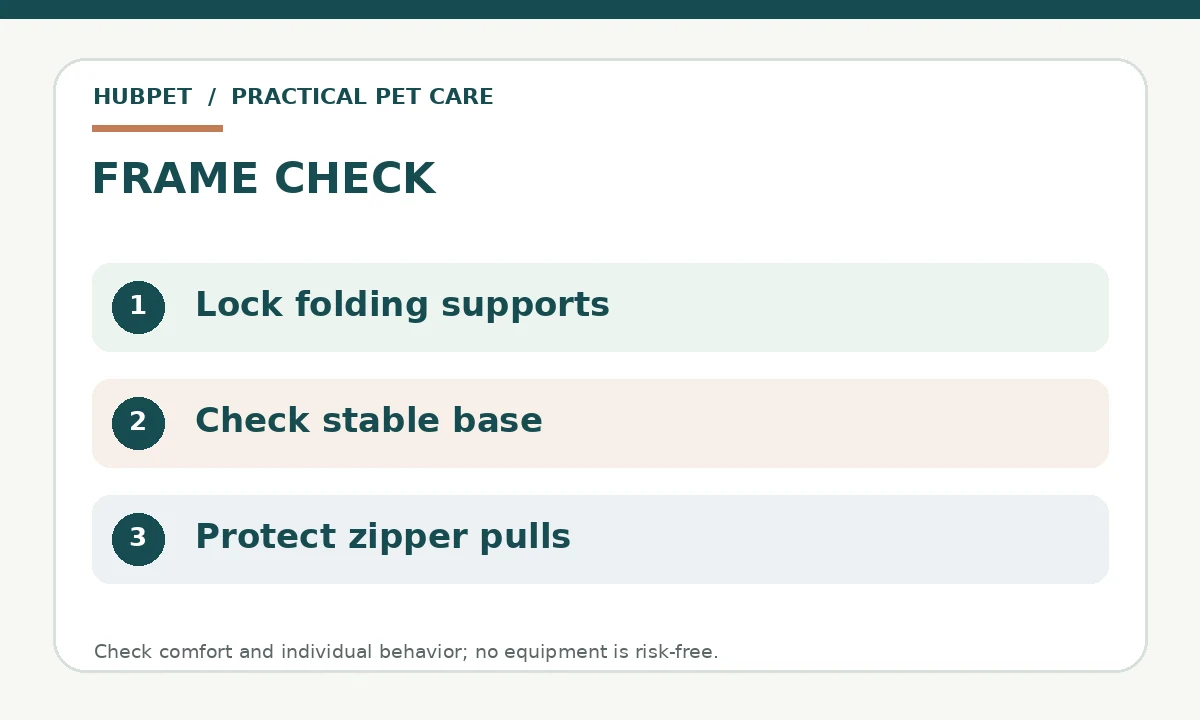
Close every zipper and note whether the pull moves freely around corners. A slider that snags may create an emergency problem if you need to open the door quickly. Meanwhile, dangling pulls invite chewing for some dogs. Check whether protective tabs or covers stay out of the dog’s reach. Never improvise a padlock, cable tie, or clip that could delay emergency access. The exit should open swiftly for you and remain securely shut during planned use. Practice opening it while the crate sits in its real location, not only on a store display.
Understand what the folding frame can and cannot do
Unfold the support poles and confirm that each joint seats into its intended stop. A soft-sided design should stand square without wobbling after you add the dog’s normal bedding. However, even a stable folding frame cannot guarantee containment if the animal pushes persistently against a panel. Check manufacturer restrictions regarding maximum load and placement. Keep the unit off unstable tabletops and avoid leaning luggage on it. For regular use, inspect hinges after transport because repeated folding can loosen attachment points or shift the fabric around the frame.
Use a level surface and control temperature
Place the crate on firm, level flooring where the dog will not slip during entry. Avoid direct sunlight, outdoor heat, or confined spaces with poor airflow. Mesh windows may allow ventilation, but the fabric roof can still trap warmth. In addition, keep the crate away from cords, heaters, doors, and active children. If you use a hotel room, select a quiet corner instead of a path to the bathroom. The dog should still have access to regular bathroom breaks, water, movement, and human interaction outside the crate.
Practice at home before bringing the crate on a trip
Introduce the unfolded crate in a familiar room with the door secured open. Reward voluntary investigation, then add short relaxed rests. Later, briefly close and reopen the door while remaining nearby, provided the dog stays comfortable. Never wait for full panic to end a session. Moreover, bring familiar washable bedding, but remove any material the dog tends to shred. Try the setup in a quiet new room before a busy gathering. Familiarity matters more than a new product’s marketing language when the dog meets unfamiliar sounds and smells.
Distinguish a travel resting place from a vehicle restraint
A fabric crate can help organize belongings during a trip, although that does not make it a crash-tested restraint. Verify the exact product’s intended use and any independent testing before using equipment in a moving vehicle. Likewise, an airline’s pet transport rules differ by route, cabin, carrier size, and airline. Do not rely on generic ‘airline approved’ language. If you cannot document suitability for the intended trip, choose other transportation equipment and use the fabric crate only at a safe destination.
Plan a simple cleaning and drying routine
Check whether you can remove the base pad without dismantling the frame. Spot-clean spills according to the material label, then dry every seam and interior corner completely. Moisture can linger under waterproof liners even when the top feels dry. If the dog has an accident, move the dog into a safe area while you clean instead of wiping around the animal. Avoid strong scents or cleaners without pet-safe directions. Reassemble the crate only after the floor and zipper tracks have dried and the frame still locks correctly.
Use a stop rule rather than hoping fabric holds
End a session immediately if the dog bites mesh, paws forcefully at the door, repeatedly tips the enclosure, or shows obvious fear. Avoid escalating the challenge with stronger zipper ties. Instead, return to voluntary training or an alternative safe room. A soft crate suits a narrow set of behaviors and settings; it is not a universal replacement for a rigid kennel. Before the next outing, document any wear, the dog’s comfort, and whether the intended travel setting still makes sense. A low-stress plan outranks portability.
How We Research
Our editorial team compared current dog welfare, crate-selection, and humane training guidance with the equipment problem in this guide. The review distinguishes sourced safety principles from practical inspection prompts. No specific products were tested, and this guide does not claim a crate prevents injuries or suits every dog. Sources were checked on October 27, 2026. Learn about our process on the About HubPet page. For distress, injuries, or medical questions, consult your veterinarian.
Sources
Cornell University College of Veterinary Medicine: Dog crates: when to use them and how to pick one. Reviewed October 27, 2026.
Humane World for Animals: How to crate train your dog or puppy. Reviewed October 27, 2026.
ASPCA: Separation anxiety and confinement. Reviewed October 27, 2026.
VCA Animal Hospitals: To crate or not to crate?. Reviewed October 27, 2026.
They may be unsuitable for puppies that chew, scratch, or swallow fabric. Supervise use, check the maker’s restrictions, and choose a sturdier setup if damage appears.
Do not assume a portable fabric crate offers crash protection. Seek model-specific evidence for travel restraint and follow vehicle safety guidance.
Follow the fabric and frame instructions, remove washable parts, and dry seams fully. Check mesh and zippers again after cleaning.
Stop using the crate until you resolve the closure problem. Do not improvise hardware that could interfere with emergency access.
Consider rigid options when your dog chews fabric, damages mesh, or needs different transport equipment. Persistent confinement distress needs behavior support, not simply tougher material.