
An outdoor dog water fountain can supply a circulating stream in a yard or kennel run. Some connect to a hose; others recirculate water through a pump. However, neither design replaces fresh potable water, shade, or supervision in hot weather. Outdoor bowls collect leaves, dirt, insects and paw debris. A pump can also fail or lose power without warning. This guide helps you compare plumbing, drinking height, splash control, location and cleaning access before buying. The AKC specifically recommends keeping a separate sturdy bowl of fresh water in shade. If a dog seems overheated or unwell, get veterinary help promptly and read the HubPet veterinary disclaimer.
First identify the water supply type
A recirculating fountain pumps reservoir water through a channel, while a hose-fed unit draws from a supply line. Some hose attachments activate when a dog steps on a paddle. These mechanisms have very different failure modes. A reservoir can empty or grow dirty; a hose can disconnect or become hot in the sun. Check whether the dog can drink when the pump is off and whether the hose source meets local potable-water requirements. Do not connect an animal drinking device to untreated irrigation or chemical-injection equipment. Ask a qualified professional if the plumbing arrangement or backflow requirements are unclear. Safe water comes before novelty features.
Place every drinking station in shade
The AKC recommends sturdy shaded water containers during hot weather. Direct sun can warm exposed water and make a basin unpleasant. Choose a location with dependable shade across the hours your dog uses the yard, not just at sunrise. Keep the fountain off a hot metal platform or surface that becomes uncomfortable for paws. Meanwhile, make room for the dog to stand and step back without squeezing against fencing. Locate water away from outdoor chemicals and manure storage. If shade shifts during the day, move the station or supply another shaded bowl. A fountain does not prevent heat-related illness by itself.

Make the basin reachable for the actual dog
Watch your dog’s normal drinking posture. A tall pedestal may suit a larger dog but challenge a puppy, senior animal or dog with mobility pain. A ground-level tray might admit soil and leaves more readily. Choose an approach path that stays stable after rain and offers traction under paws. If several dogs share the space, add water stations rather than making one animal negotiate access through another. The drinking area should have smooth edges and enough room for normal lapping. Consider large breeds and small breeds separately. A dog who avoids the fountain still needs an easy plain bowl without training pressure.
Plan around heat, freezing and power loss
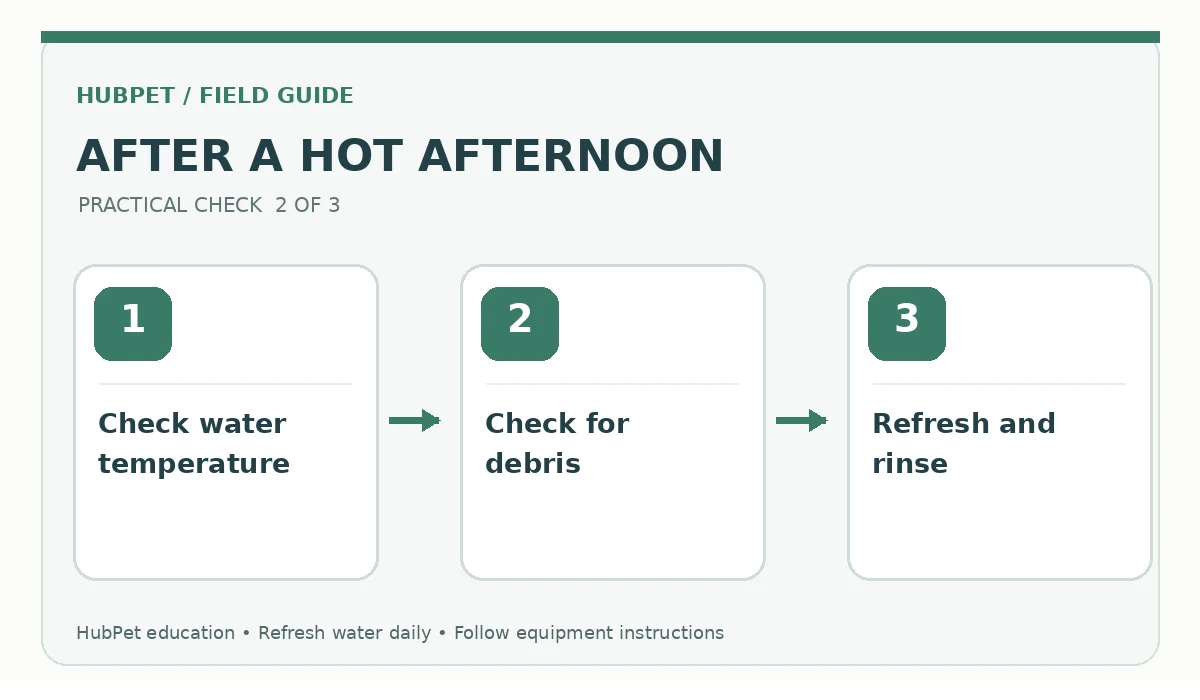
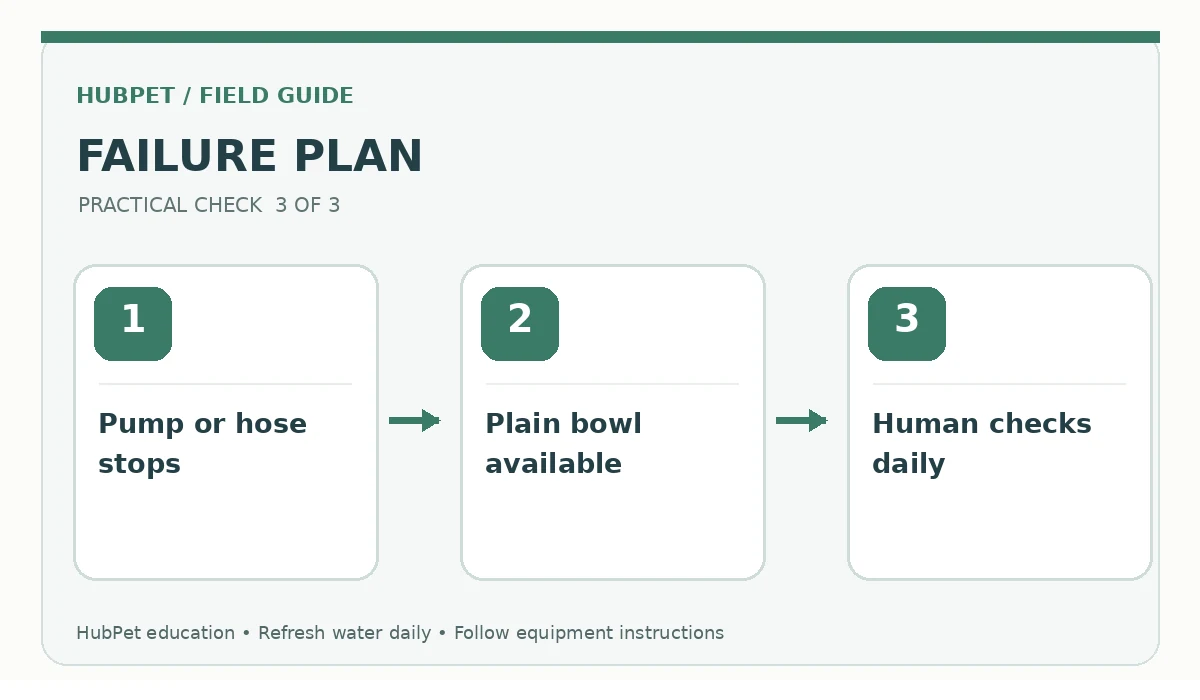
In warm weather, hoses lying in sunlight may deliver hot water at first. Run and check a supply according to the product and plumbing instructions before a dog drinks. During freezing weather, an unprotected line or pump may crack. Do not improvise electrical heating with unapproved cables. Instead, use a winter-appropriate watering plan and monitor water availability. A power outage stops a pump, and a stuck valve can stop a hose-fed unit. Therefore, keep a backup bowl, check both stations every day, and give fresh water whenever the main system fails. Never count an unattended pump as a caregiver.
Make cleaning possible without special tools
Outdoor fountains often trap more dust, leaves and insects than indoor fountains. The CDC advises daily cleaning of pet water bowls. Apply that standard to drinking surfaces and clean internal parts as the manufacturer directs. Drain stagnant water safely rather than letting it collect beside a walkway. Unplug pumps before disassembly and keep power connections dry. Scrub residue from channels and intakes. If the unit requires a screwdriver for every routine wash, consider whether your household can maintain it. Also inspect for slippery buildup, cracked tubing and blocked overflow paths. Clean water matters more than a constantly moving stream.
Prevent algae and standing-water problems
Sunlight and nutrients can encourage visible growth on wet surfaces. Yet a clear-looking basin may still need cleaning. Do not add household bleach, pond chemicals or fragrance directly to drinking water as an improvised algae treatment. Follow safe cleaning instructions and rinse thoroughly before refilling. Empty nearby containers that hold stagnant water, which can attract pests. Make sure drainage does not create muddy patches where a dog could slip. If unusual odors or colored buildup return quickly, review water source, cleaning schedule and sun exposure. Consult a professional about persistent plumbing contamination rather than trusting extra filtration claims from a product listing.
Inspect hose and electrical routing
Hide loose hose lengths from chewing and lawn equipment. Keep connectors away from areas where dogs sprint or dig. A plug-in fountain needs an outdoor-rated installation that matches the manufacturer’s instructions. Never route an indoor extension cord through puddles or leave a charging adapter where rain reaches it. Check for leaks at every joint after installation. If a hose-fed fountain requires a step-on pedal, supervise initial sessions; pressure may frighten some dogs. Also consider what happens when the pet paws repeatedly at a mechanism. A calm, dependable drinking station has greater value than clever activation if it spills or startles.
Choose features that suit supervision
Automatic flow control may reduce splashing, but it can also make a supply less predictable. Ask whether a float valve can jam and whether the dog could knock an exposed lever out of place. Look for a clearly visible water level and access to shutoff controls. In a multi-dog yard, watch for guarding or crowding around one narrow stream. More than one bowl can help prevent bottlenecks. If the fountain makes a loud pump noise, some dogs may avoid it. Test each feature with an adult present and verify that the dog actually drinks. Never infer hydration from a wet floor or a running motor.
Use a daily yard-water checklist
At the beginning of yard time, check the shade, water temperature, source cleanliness and an accessible backup bowl. Next inspect the drinking lip, hose and any electrical housing. Empty and refresh water when appropriate, then watch the dog drink normally. After heavy wind or yard work, look for mulch, grass clippings and chemicals that might have reached the basin. Record recurring problems, such as a valve sticking after irrigation. During hotter weather, check water more often. A checklist helps caregivers notice failures rather than assuming the fountain worked because it made noise yesterday. Consistent observation is essential.
Know when a fountain is the wrong solution
A dog that spends only short supervised periods outdoors may need nothing beyond a shaded, stable, washable bowl. For a yard with unreliable electricity, long hoses or little shade, a fountain could add risk rather than convenience. Likewise, an unsupervised pet should not depend on a foot-operated device it has not learned to use. Prioritize shelter, fresh water, and human checks. Look for heavy panting, weakness or altered behavior during hot conditions and seek urgent veterinary guidance if needed. The final choice should reduce daily maintenance errors, not introduce a new gadget that nobody inspects.
How We Research
Our editorial review compared animal-welfare recommendations with consumer safety guidance for pet drinking stations, material safety, cleaning routines, and equipment reliability. Each source supports the specific safety context named above; water circulation and filters do not replace fresh drinking water or cleaning. We did not test specific products in laboratory conditions, certify filtration claims, or receive manufacturer endorsements. Follow equipment manuals and seek veterinary advice when a pet’s drinking pattern changes. We reviewed these sources on October 27, 2026. Read about our editorial standards on the About HubPet page.
Sources
American Kennel Club: Getting kennels ready for hot weather. Accessed October 27, 2026.
Centers for Disease Control and Prevention: Cleaning and disinfecting pet supplies. Accessed October 27, 2026.
ASPCA: Travel safety tips for pets. Accessed October 27, 2026.
No. Outdoor air and direct sunlight can warm the reservoir and hoses. Place drinking water in shade and check its temperature and freshness throughout warm periods.
Do not make it the sole source. Hose valves can stick and supply lines can disconnect. Keep a stable shaded bowl of potable fresh water and check it regularly.
Limit sunlight, empty stale water and clean the fountain according to its instructions. Never improvise by adding pond treatments or household cleaners to water your dog will drink.
Only use equipment and electrical installation that the manufacturer rates for the intended outdoor conditions. Protect connections and stop use if wiring or housing becomes damaged.
Offer an ordinary fresh bowl immediately. Do not force the dog toward a noisy stream or pedal. You can introduce new equipment slowly, but dependable access to water comes first.