
How to teach a dog to stay is a gradual reward-based exercise. Ask for a known position, give a clear stay cue, wait briefly, reward in place, and increase difficulty in small steps. RSPCA recommends building duration first, then distance, and practicing in different places (RSPCA, accessed 2026). AVSAB recommends reward-based methods for all dog training and rejects aversive methods (AVSAB, 2021; reaffirmed 2025).
How to Teach a Dog to Stay: Start With One Easy Win
To teach a dog to stay, begin where the dog can succeed. Ask for a familiar sit or down and give the cue plus hand signal. Wait only a brief moment, then reward before the dog gets up (RSPCA, accessed 2026). If the dog moves, make the next repetition easier instead of adding pressure.
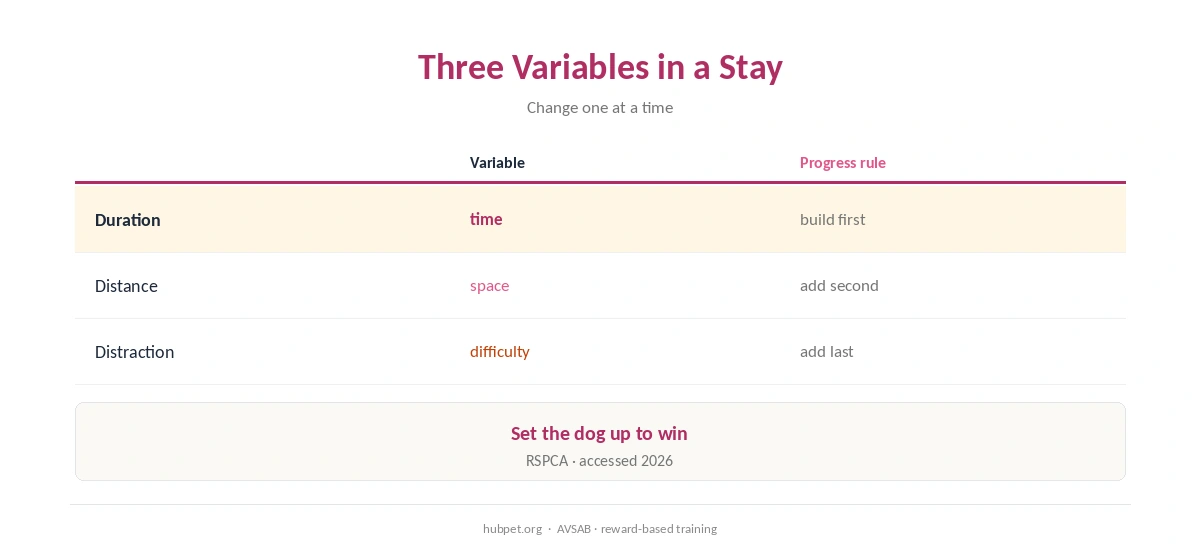
| Training variable | Start here | Progress when |
|---|---|---|
| Duration | Very brief pause | Dog remains relaxed and successful |
| Distance | Stay close | Short duration is easy |
| Distraction | Quiet familiar place | Duration and distance are reliable |
How to Teach a Dog to Stay: Build Duration, Then Distance
RSPCA advises increasing the time by small amounts and rewarding before the dog breaks position (RSPCA, accessed 2026). Then add distance gradually, beginning with a small step away. In practice, how to teach a dog to stay becomes much clearer when you treat duration, distance, and distraction as separate skills.
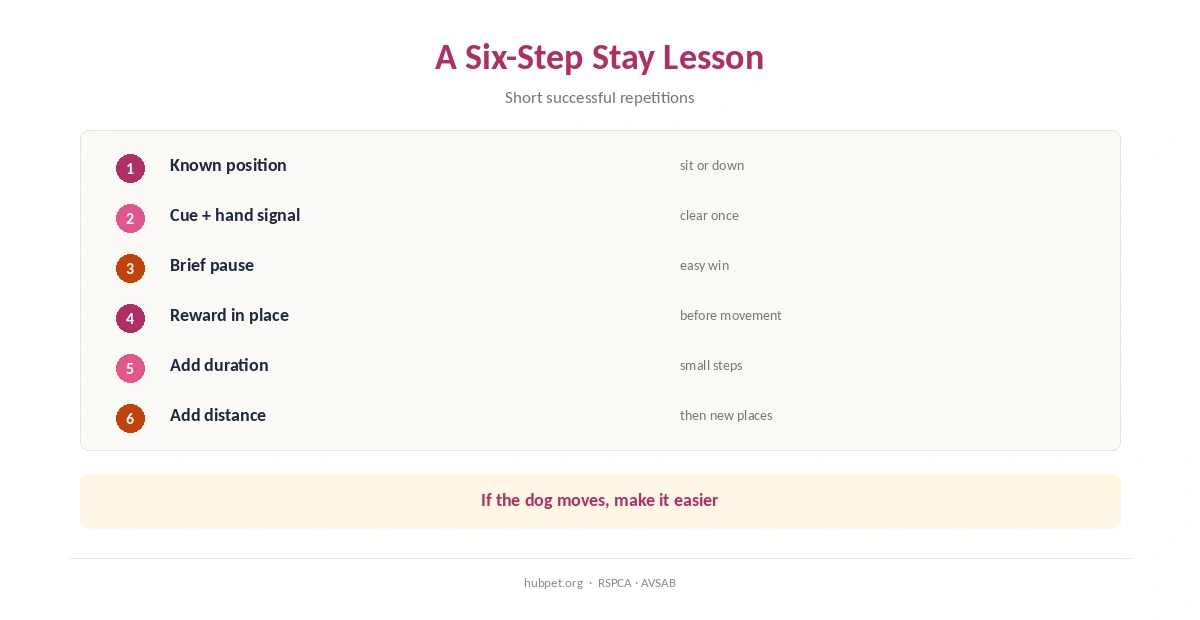
- Ask for a familiar sit or down in a quiet place.
- Give your stay cue and a consistent hand signal.
- Wait briefly, then reward while the dog is still in position.
- Increase duration in small steps while keeping distance easy.
- Return duration to an easy level and add a small amount of distance.
- Practice in new places only after the easier version is reliable.
Use the reward timing principles from positive reinforcement. Keep sessions short like the routine in basic dog training at home. Also, teaching sit gives you a useful starting position, but the stay can begin from any trained position.
What Counts as Success
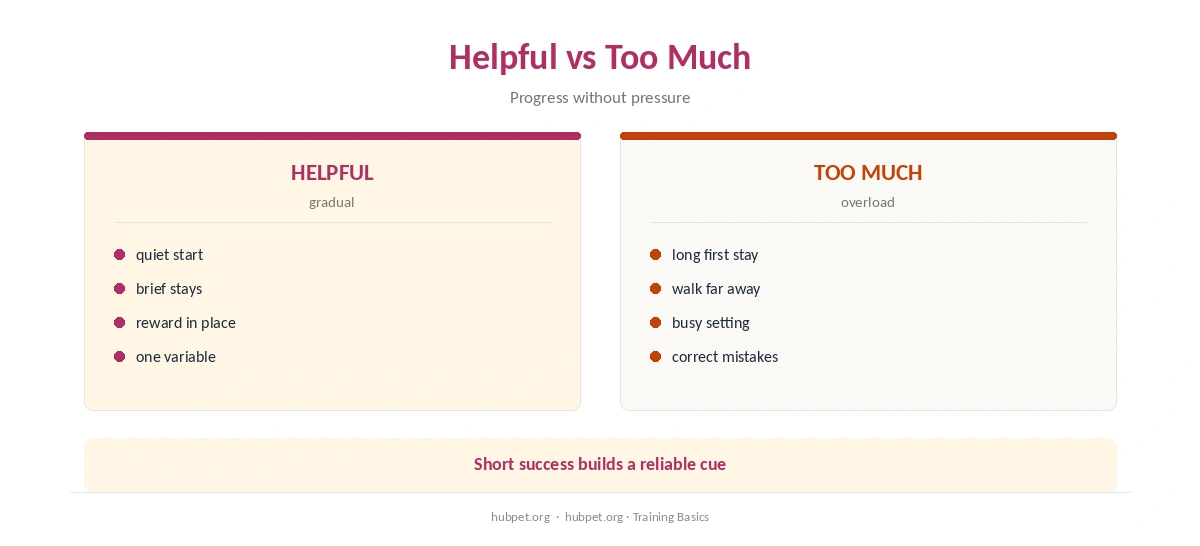
A successful stay is not the longest possible repetition. Instead, success means the dog understands the cue and can remain in position until the planned reward or release. Therefore, end many repetitions before failure. RSPCA specifically advises watching for signs the dog may break the stay and rewarding first, which keeps practice easier and clearer (RSPCA, accessed 2026).
A stay cue can support household routines, but it is not a substitute for management. Use pet-proofing your home to prevent access to unsafe areas. For greeting problems, use jumping on people and door barking as the more specific plans.
When to Get Professional Help
Get help from a qualified reward-based trainer if the dog repeatedly becomes frightened, shuts down, or cannot work at a very easy version of the exercise. AVSAB recommends humane, reward-based training and advises against aversive techniques (AVSAB, 2021; reaffirmed 2025). A professional can simplify the setup and identify whether a different training plan is needed.
How We Research
HubPet uses published welfare and behavior sources rather than personal anecdotes. We read these sources on October 11, 2026: RSPCA teaching a dog to stay, AVSAB Humane Dog Training position. See How We Research for our method.
How to Teach a Dog to Stay FAQ
Start with a very brief pause. RSPCA recommends building the time gradually rather than expecting a long stay immediately.
No. Keep one variable easy while you increase another. Build duration first, then add distance gradually.
Reward while the dog is still in position during early learning. RSPCA specifically advises rewarding before the dog gets up.
Make the next repetition easier by reducing time, distance, or distraction. Then reward a successful shorter stay.
No. AVSAB recommends reward-based training and states that aversive methods are not necessary for dog training.
The Bottom Line
How to teach a dog to stay comes down to small successful repetitions. Reward while the dog still holds the position. Build duration before distance, and add distraction only after the basics are solid. RSPCA and AVSAB support a gradual reward-based approach rather than punishment (accessed 2026; AVSAB 2021/2025).