
Your dog circles twice, paws at the comforter, and digs as if the mattress hides buried treasure. Bed digging often belongs to an ordinary settling routine rather than deliberate destruction. However, a sudden or intense change deserves a closer look. The best response depends on timing, the dog’s body language, and whether the behavior ends in peaceful rest. For discomfort, sleep disruption, or abrupt behavior changes, contact your veterinarian and review HubPet’s veterinary information disclaimer.
Start with the entire settling sequence
Watch what happens before and after the paws begin moving. A dog may sniff the cushion, circle, scratch briefly, then lie down with soft muscles. That short sequence often resembles nest arranging. In contrast, a dog that repeatedly leaps up, pants, or whines may have trouble relaxing. Record the time of day, how long digging continues, and whether the dog finally rests. A one-minute video can show more than the word “digging” alone. Avoid labeling the action as defiance before you know its context.
Comfort and surface preference are practical explanations
Blankets bunch, foam changes shape, and fabric can hold warmth. Some dogs seem to adjust a resting spot before settling, particularly after moving from a cool floor to a soft bed. Meanwhile, other dogs prefer to sleep against a firm edge or curl into a protected corner. Offer a flat, stable resting surface as an option and notice where the dog chooses to sleep. You do not need to buy a new bed immediately. Start by comparing familiar bedding with a simple washable mat.
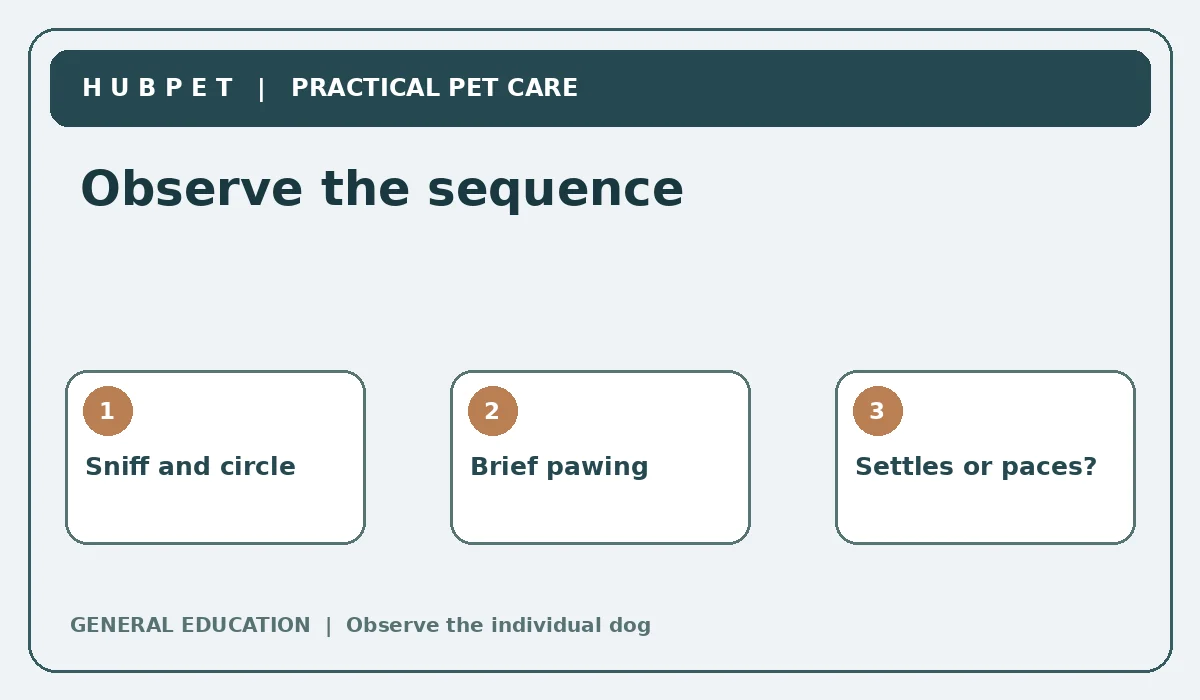
Differentiate habit from a frustrated digging episode
A predictable three-second scratch before sleep usually has a different meaning from frantic digging while a dog is left alone. For example, barrier frustration, insufficient activity, or noise outside may appear as repeated pawing with pacing or vocalizing. Look for damaged door frames, scratched floors, or escape attempts before assuming the bed is the problem. If your dog panics when separated, a veterinarian or qualified reward-based behavior professional can help. Punishment after the event does not teach a safer bedtime behavior.
Check the location and evening routine
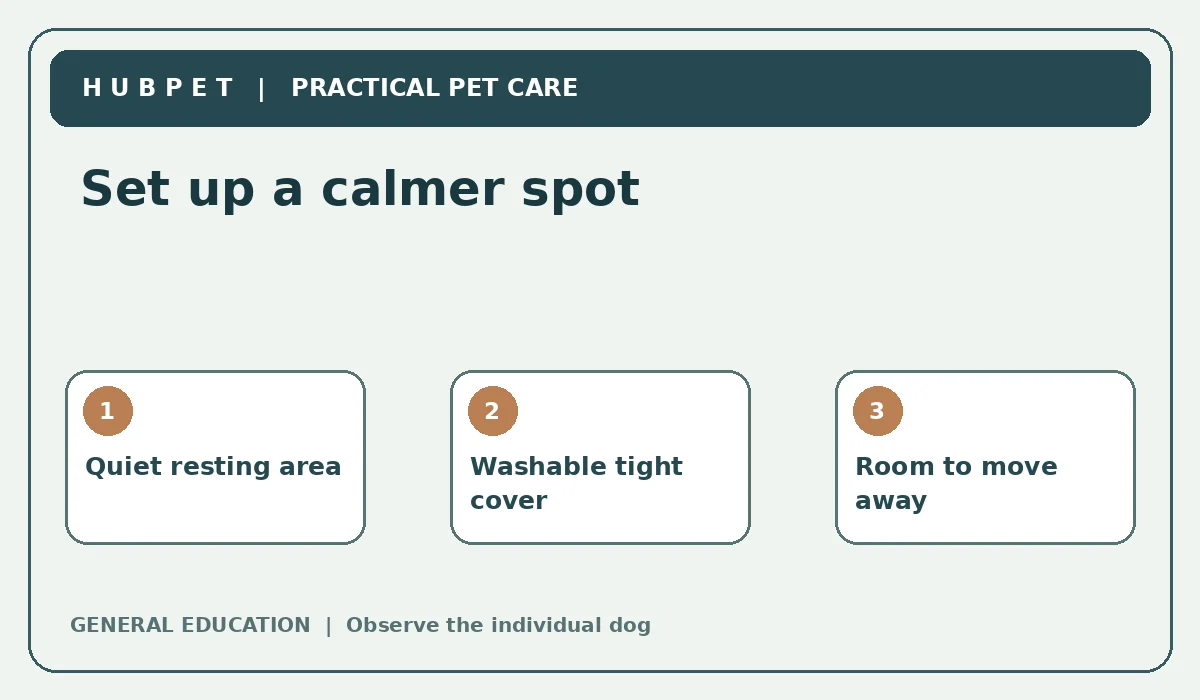
Placement matters. A resting area near a busy doorway or noisy appliance may prevent a tired dog from settling. Try a quieter spot with room to stretch and a clear path to water. Next, review the final hour before bed: an unpredictable burst of intense play may leave an excited dog struggling to downshift. A brief sniff walk, calm interaction, and consistent cue can create a more understandable sequence. Keep the dog free to leave the resting place rather than insisting on a fixed position.
Protect bedding without escalating the behavior
If claws snag thin fabric, replace it with a tightly woven washable cover. Avoid loose fringe, strings, exposed zippers, and foam that a determined chewer might swallow. Instead of scolding, interrupt gently by inviting the dog to an approved mat and reward resting there. Reward the pause, not the frantic digging. Consider a separate digging-friendly outlet for dogs that enjoy pawing at soft objects. Supervise any new enrichment item until you know whether the dog will shred or ingest pieces.
Choose a better outlet for energetic diggers
Outdoor digging and bed scratching may share a motor pattern, but their motivations can differ. Offer a safe digging box outdoors when the dog enjoys excavation, or create a supervised towel-search game indoors. However, do not leave food wrapped in fabric with dogs who eat cloth. A sniffing game can provide a calmer transition than vigorous fetch right before sleep. For every outlet, observe whether the dog actually relaxes afterward. If the behavior intensifies, reduce difficulty and return to a simpler activity.
Use a simple observation log for one week
Write down the resting surface, approximate time, recent activity, and outcome. Note whether the dog digs once, repeats the sequence, or abandons the bed. Also record scratching at the skin, stiffness when lowering the body, or an unusual reluctance to lie down. Patterns may reveal a preference for one surface or a particular evening trigger. Share your notes with a veterinary professional if symptoms develop. The goal is not perfect data; it is a reliable comparison between ordinary nights and unusual ones.
Know when to ask for medical or behavioral help
Call your veterinarian when bed digging appears suddenly with pain, confusion, itching, restlessness, or repeated attempts to get comfortable. A dog who cannot settle or who guards a resting place also needs an individual assessment. Meanwhile, ongoing destructive digging during absences calls for a welfare-focused behavioral plan. Do not use physical corrections, confinement as punishment, or deterrents that frighten the dog. Address any underlying discomfort before treating the behavior as a training issue.

What progress looks like at home
Success does not have to mean zero scratching. Many dogs will always adjust a blanket before sleep. A useful outcome is a dog who chooses a safe surface, settles comfortably, and leaves the bedding intact. Compare resting quality, not only the number of paw movements. If the dog walks willingly to a mat and sleeps there, reinforce that choice. Also allow normal variation across seasons, ages, and activity levels. Consistent responses give you better information than switching strategies every night.
How We Research
Our editorial team reviewed veterinary and animal-welfare guidance on dog body language, everyday routines, and safe handling. We compared practical owner observations with the limits of behavioral interpretation. These materials support general education; they do not allow us to diagnose pain, anxiety, or other conditions from a single behavior. We did not test commercial products or claim endorsement by any organization. Learn more About HubPet and ask your veterinarian about new or severe symptoms.
Sources
VCA Animal Hospitals: Dogs and Destructive Digging. Reviewed October 27, 2026.
AVSAB: Humane Dog Training Position. Reviewed October 27, 2026.
AKC: Why Does My Dog Dig?. Reviewed October 27, 2026.
A brief circle-and-scratch routine can be normal. Notice whether your dog settles afterward and whether the behavior has changed.
Fabric texture, location, and familiarity may matter. Compare the surfaces and offer an approved washable resting area.
No. Protect the surface, redirect gently, and reward comfortable resting on an approved mat instead.
Sometimes poor enrichment or an unsettled evening contributes. Look at the larger routine rather than assuming boredom from one action.
Seek veterinary advice when digging is sudden, intense, or accompanied by pain signs, itching, confusion, or inability to settle.