
A carrier that works for a short veterinary visit may not fit a longer car journey or an airline’s current rules. Many listings use the same words—portable, airline friendly, escape resistant—without explaining what each design actually does. Start with the animal, journey, and way the carrier will be moved, then check the physical details.
AVMA advises acclimating pets before travel, checking current carrier requirements, and securing cats inside a carrier in vehicles. For stress, breathing concerns, or medical travel questions, speak with your veterinarian rather than relying on a product label. Read our veterinary information disclaimer for the limits of this guide.
Write down the actual trip before shopping
List the main journey: a walk to a clinic, a ride in a car, a train journey, or a flight. Add expected handling points such as stairs, security checks, or waiting rooms. A pet may need secure containment during the trip but also easy, low-stress access for a veterinary exam.
Do not buy from a single travel-ready claim. Airlines and operators can impose different size limits and restrictions, while car safety requires a different assessment. A carrier that squeezes under one seat may not let your animal assume a normal posture. Welfare and the specific journey must both fit.
Check usable interior dimensions with the pet inside
Measure the animal standing in a natural posture and observe their normal turning and resting movements. Compare those observations with the carrier’s internal floor area and height, not just the outside length on the listing. Thick bedding, walls that taper inward, and a narrow doorway reduce usable room.
Choose enough space for normal turning and lying without forcing an animal into a crouch. At the same time, avoid an unstable oversized container that lets the pet slide across an empty floor. A non-slip liner can help, provided it does not block ventilation or crowd the opening.
Compare rigid shells and soft-sided designs honestly
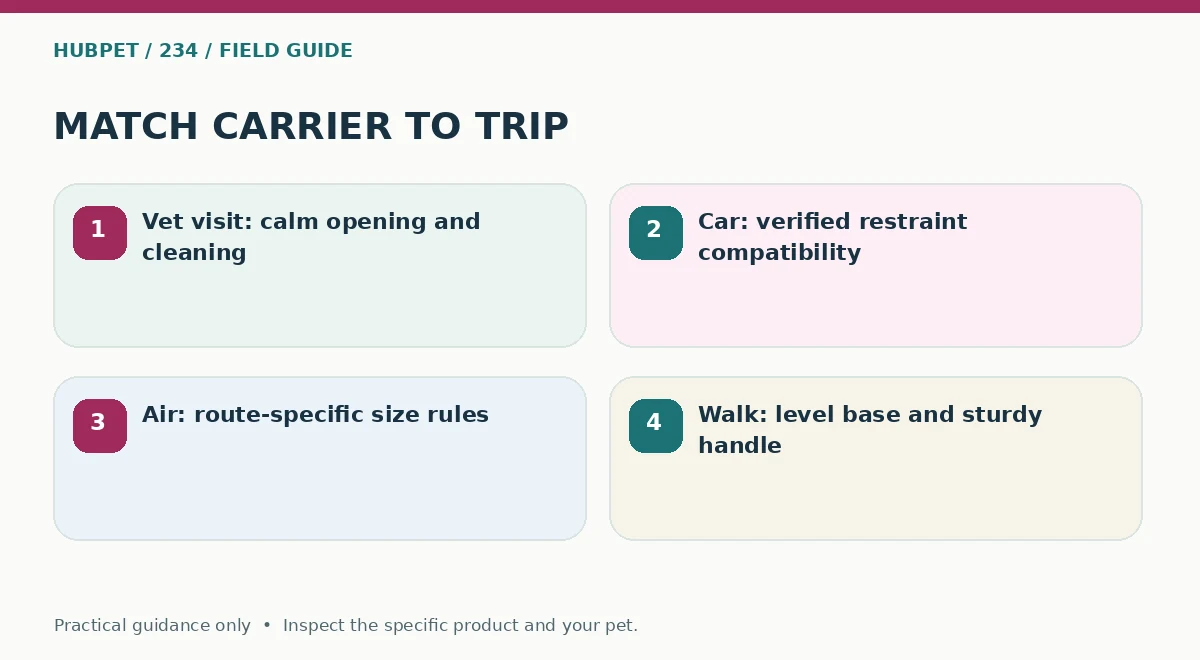
Rigid carriers tend to hold their shape and can offer wipe-clean surfaces. However, they may be bulky to store and can develop cracked corners or loose fasteners. Soft-sided carriers may offer flexible entry and lower carrying weight, but check the frame, zip track, base support, and whether the walls fold against the pet.
Neither category is automatically safer for every journey. A car carrier must have an appropriate restraint arrangement; a cabin carrier must meet the chosen airline’s dimensions and rules. Compare the exact product to its actual use rather than assuming material alone answers the question.
Test doors and closures without an animal
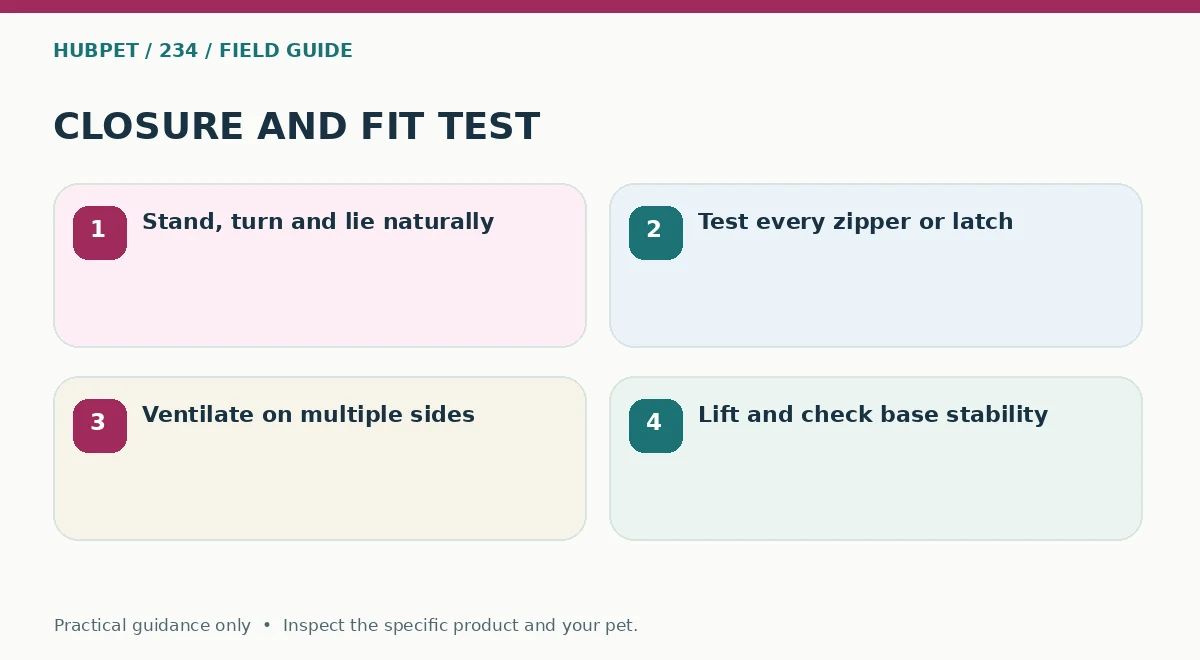
Operate each latch, zip, buckle, and door hinge several times. The closure should remain secured under ordinary handling and should not expose sharp edges. Check whether a curious paw can reach a pull tab, whether an opening can gape at the corners, and whether the base separates unexpectedly from the top.
For animals that avoid entering from the front, a top opening or removable lid can reduce handling stress. A door that opens too abruptly may startle them. Check access while the carrier rests on the floor so you can learn the mechanism before a rushed appointment.
Do a ventilation and temperature check
Look for ventilation on multiple sides and confirm that neither a sleeve nor a towel blocks the openings. AVMA includes adequate airflow among transport-crate requirements. Mesh windows should stay open under normal handling and should resist casual scratching without fraying into loose threads.
A carrier can heat quickly in sun or a parked vehicle. Never leave an animal unattended in a car. Use travel conditions and the animal’s normal respiratory comfort to choose safer timing and routes. A carrier’s ventilation cannot make extreme heat or poor vehicle conditions safe.
Inspect the floor, handles, and carrying angle
Put a small harmless weight inside an empty carrier to see whether the base stays level when lifted. Check that handles attach to structural parts rather than thin decorative fabric. A shoulder strap can ease the human load yet cause swinging if the carrier hangs at an angle. Evaluate your ability to carry it steadily.
A non-slip washable liner can prevent the animal from sliding during normal movement. If the pet is heavy, confirm that the product’s load limit includes the actual animal and bedding. Weight ratings remain maker claims unless supporting tests are described; do not mistake them for crash ratings.
Car travel needs an independent restraint check
A loose carrier can move during sharp braking. Read your vehicle instructions and the carrier maker’s specific restraint guidance. Avoid placing a carrier on a passenger’s lap or near an active airbag. AVMA recommends keeping cats confined during car travel so they cannot move beneath a driver’s feet.
Do not describe an ordinary tether or a seat-belt loop as crash tested without documentation for that exact configuration. If vehicle safety is central, seek credible test evidence rather than marketing graphics. Our dog car-anxiety guide covers gradual comfort work separate from product claims.
Airline rules can override an attractive specification
Before purchasing, check the exact airline, route, aircraft, pet size policy, cabin or cargo status, and current approved carrier dimensions. Read the latest published requirements and contact the provider when unclear. Even a carrier marked airline approved may not qualify for your specific booking.
AVMA warns that requirements and travel conditions vary. Discuss flight fitness with your veterinarian, especially for animals with breathing or mobility challenges. Never administer tranquilizers or other medication simply because a product listing suggests an easier journey. A vet should assess medical needs.
Introduce the carrier before the appointment
Leave the open carrier in a quiet familiar room and place soft, familiar bedding inside. Allow the animal to investigate without pressure. Reward voluntary approaches with an appropriate food treat or play. Then practice brief door closures and gentle lifts while keeping sessions short and calm.
Move slowly enough that you can stop at early stress signs. A cat may prefer a removable top, while a dog may respond better to approaching a wide entry. Our carrier introduction guide offers a non-forceful routine for both species.

Make the decision from a trip-specific checklist
Ask whether the pet can stand, turn, and settle. Verify airflow, intact hardware, a stable base, and a secure closing system. Check how you will lift the carrier and where it will rest during the journey. Include cleaning access and the ability to replace worn parts in your comparison.
Before departure, recheck the closure and identify a quiet location for opening it safely. Keep identification and veterinary records appropriate to the trip. Our vet visit preparation checklist helps with routine appointments; travel rules still need separate confirmation.
How We Research
We reviewed current animal-welfare, behavior, and veterinary guidance alongside the decision criteria in this article. Sources were checked on October 26, 2026. Product dimensions, travel policies, and available models can change, so verify them directly before purchasing or traveling. We have not purchased, crash-tested, ranked, or endorsed individual models. Learn about HubPet at About HubPet.
Sources
American Veterinary Medical Association: Traveling With Your Dog or Cat. Accessed October 26, 2026.
Cats Protection: Choosing and Using a Cat Carrier. Accessed October 26, 2026.
Humane World for Animals: How to Crate Train Your Dog or Puppy. Accessed October 26, 2026.
No. A listing label is not a universal airline approval. Check the exact airline, route, cabin or cargo rules, aircraft, and current carrier dimensions before buying.
Construction alone does not establish collision protection. Check the exact carrier’s restraint guidance and independent safety evidence where available, plus your vehicle instructions.
Provide usable room for comfortable standing, turning, and lying in a natural posture. Confirm fit inside the actual carrier with bedding present, not just by comparing weight limits.
Partial covering can help some pets feel sheltered, but never block ventilation or create overheating. Watch your pet’s comfort and keep the carrier secure.
Begin well before the trip when possible. Let the pet explore voluntarily, add familiar bedding, and build up brief closures and movement without rushing or forcing entry.