
A dog exposing its belly is not issuing a universal invitation to pet it. One dog may roll into the grass while enjoying play; another may lower its body and show its stomach because it feels uncertain. ASPCApro and AKC both emphasize reading posture and the full situation rather than one isolated signal. Notice the eyes, muscles, tail, movement, and whether the dog can leave. That small habit helps people respond to a comfortable dog without missing a quieter request for space.
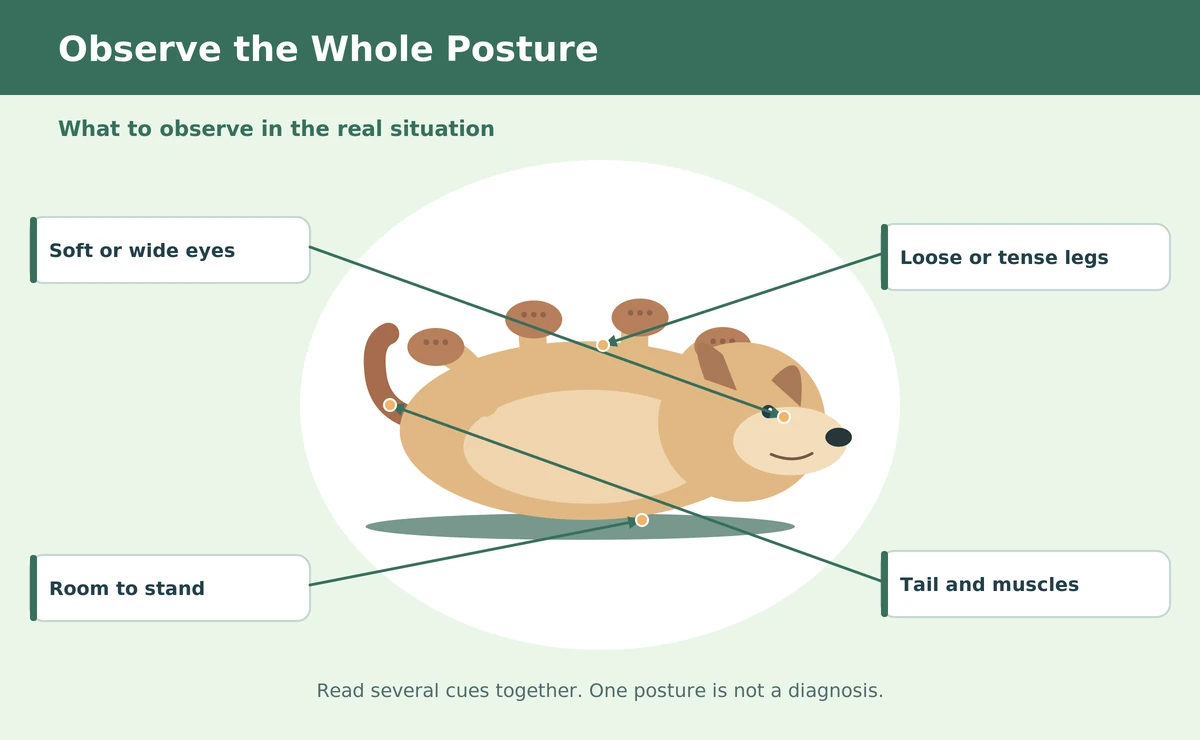
Start with the whole body, not the exposed belly
A loose back roll may include wiggly movement, soft facial muscles, and an easy return to standing. A worried dog may become still, tense, tuck the tail, turn the head away, or show very wide eyes. None of those signs should be interpreted alone, and dogs vary in how they communicate. Notice what happened immediately before the roll, especially whether someone approached, reached over the head, or blocked a path. The safest response is to allow the dog choice instead of assuming that belly exposure means consent to touch.
Recognize playful rolling without grabbing the dog
During relaxed play, a dog may turn onto its side or back, kick its legs lightly, and spring back into a game. Some dogs roll to rub on grass or carpet after activity. If the posture remains loose and the dog willingly re-engages, you can continue the kind of interaction the dog appears to enjoy. Avoid pinning a dog down to copy this behavior or rolling one over as a control exercise. Movement that the dog chooses is different from an exposed belly produced by force or fear.
Notice the difference between stillness and relaxation
A dog lying quiet is not always relaxed. Tight muscles, held breath, a rigid tail, ears pulled back, and a frozen stare can signal discomfort. A dog that looks away or licks its lips when a person leans closer may want the contact to end. Pause your hands and move back enough to restore space. The dog’s ability to stand and walk away matters more than whether it eventually tolerates a belly rub. Do not reward yourself with more contact when the dog is communicating reluctance.
Ask before offering a belly rub
If the dog seeks touch, briefly stroke a familiar comfortable area such as the chest or side, then stop and see what happens. A dog who leans back into contact, remains loose, or chooses to approach again may welcome more. If the dog freezes, turns away, shifts position, or leaves, respect that answer. Do not reach toward a dog’s stomach simply because it is visible. With an unfamiliar dog, ask the handler before interacting, keep your body sideways, and let the animal decide whether to approach.
Give a fearful dog room to recover
ASPCApro lists rolling onto the side or back among behaviors that may occur when a dog is frightened. If the animal seems small, tense, or unable to move away, do not crouch over it or hold out a hand insistently. Take a step back, allow an open exit route, and lower the social pressure. Ask others to give the dog space too. A quiet environment can make more difference than repeated soothing touches. If the pattern appears during routine handling, ask a qualified reward-based professional for a gentler plan.
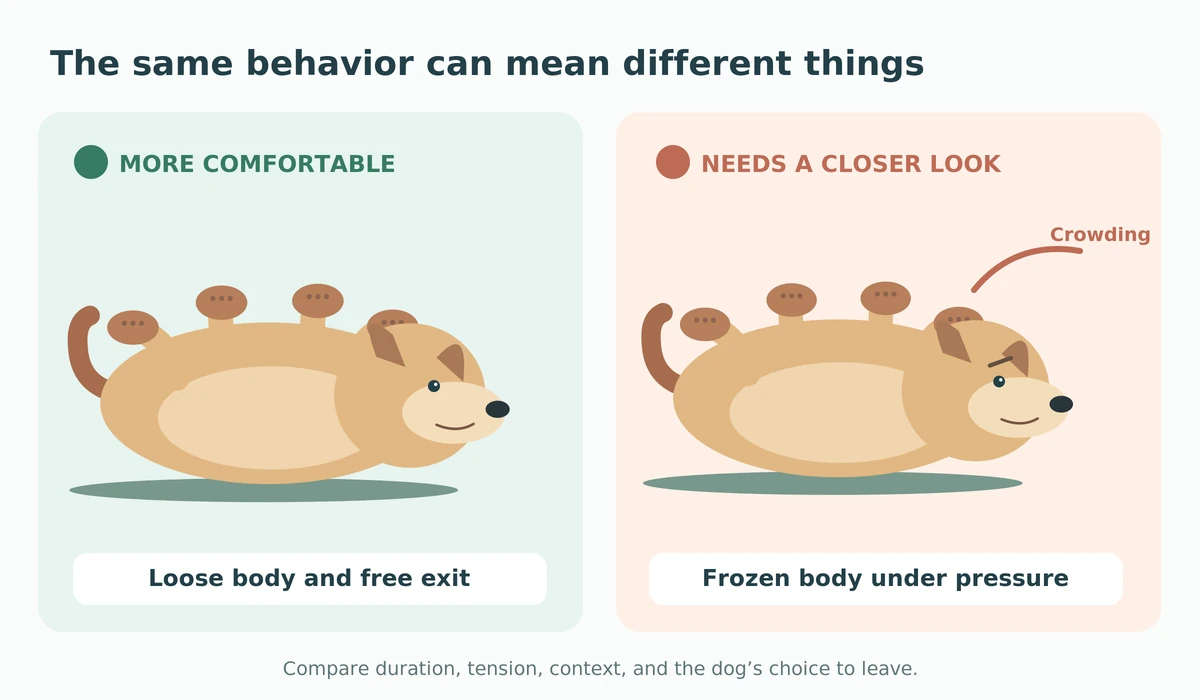
Watch rolling during dog-to-dog play
A dog may briefly roll during a friendly wrestling game, but the sequence matters. Look for pauses, balanced turn-taking, loose movement, and both dogs choosing to return. If one dog repeatedly pins the other, blocks an escape, or ignores attempts to leave, calmly interrupt and separate the activity. Rolling does not prove that one dog has accepted a permanent lower rank. Keep play partners compatible and provide room to move. If either dog seems frightened, stop the session rather than waiting for a growl or snap.
Know when a back roll may signal discomfort
Repeated rolling with scratching, crying, difficulty rising, unusual stiffness, or sudden changes in movement can justify veterinary advice. A dog may try to relieve an itch or react to physical discomfort, and posture alone cannot identify the cause. Do not manipulate the spine, hips, or abdomen to test for pain. Note when the behavior began and whether the dog moves normally afterward. If your dog cannot stand, seems acutely distressed, or has other serious symptoms, seek urgent veterinary care instead of interpreting the position as a mood signal.
Teach children a consent-based greeting
Children may be tempted to rub an exposed belly because it looks inviting. Teach a simpler rule: do not touch a dog that has rolled away, become still, or moved to rest. An adult should supervise all interactions and make sure the dog has a quiet place that children do not enter. Practice asking a seated or standing dog for brief touch, then pausing to see whether the animal comes back. This helps children notice real communication instead of guessing from one dramatic posture.
Compare the approach that led to the roll
Context can change the interpretation. A dog rolling loosely in the yard on its own is different from one dropping onto its back when a stranger leans directly overhead. Notice the person’s posture, the noise level, the dog’s ability to move away, and any earlier avoidance. If a roll follows pressure, back away and do not repeat the interaction to see whether it happens again. A familiar, relaxed dog might enjoy a brief belly rub, but no dog has to prove trust by staying upside down.

Use the response that preserves choice
The safest practical pattern is observe, pause, and let the dog choose the next move. If the dog approaches with loose posture after a brief pause, offer gentle contact. If it stays frozen or moves away, stop. Tell guests which cues your dog uses and provide a resting area away from busy doorways. With ongoing fear or sudden behavior changes, seek veterinary or qualified behavior guidance. Respecting an animal’s ability to leave is more reliable than assigning a single meaning to a back roll.
How We Research
HubPet reviewed current veterinary and animal-welfare guidance for this specific behavior, compared the practical recommendations, and separated normal context from signs needing an examination. We do not diagnose an animal from a posture or brief video. We accessed the sources below on November 1, 2026; individual dogs can communicate differently. Learn more about our editorial process at About HubPet.
Sources
ASPCApro: Canine Body Language Tips. Consult the complete source for context and limitations.
AKC: How to Read Dog Body Language. Consult the complete source for context and limitations.
This article provides general education, not an individual diagnosis. For pain, injuries, sudden behavior changes, or safety concerns, speak with your veterinarian. Read the HubPet veterinary disclaimer.
No. A relaxed dog may welcome touch, but a tense dog may roll to communicate fear or appeasement. Read the whole body and context.
Stillness with tight muscles or wide eyes can indicate discomfort. Stop reaching, create space, and let the dog move away.
It may be playing, rubbing against a surface, or exploring scents. Watch for relaxed motion and any signs of persistent itching.
No. Forcing this posture does not build trust and can make a dog fearful. Use voluntary reward-based training instead.
Ask your veterinarian about sudden repetitive rolling, pain, difficulty getting up, persistent scratching, or other unusual changes.