
Use supervised, reward-based activities and ask your veterinarian about injuries or suspected swallowed toy parts. See the HubPet vet disclaimer.
Rope tug toys for dogs range from braided cotton knots to fleece-braid handles and rubber-and-rope hybrids. A thicker weave is not automatically safer, nor is a label such as “heavy duty” proof that a dog cannot shred it. The right choice gives the dog a comfortable grip, puts distance between teeth and fingers, and holds together through supervised play. This buyer checklist compares material styles and use cases rather than naming winners without laboratory testing. It also explains how to reject a toy before a loose strand or small broken connector becomes an ingestion hazard.
Choose the material for the kind of tug your dog enjoys
Tightly braided cotton rope is easy to grip and comes in many lengths, but individual fibers can work free as it wears. Fleece tug toys may feel softer for puppies and dogs with sensitive mouths, yet seams and strips still need inspection. Rubber-core rope hybrids provide a central grip, but exposed connectors, rigid pieces and loose rubber can be additional failure points. Do not leave any of these designs as a permanent unsupervised chew for a destructive dog. VCA specifically says to retire a rope once it frays; the safer choice depends on observed chewing style, not the strength promised on packaging.
| Type | Potential advantage | Main inspection point |
|---|---|---|
| Cotton braided rope | Flexible grippy bite area | Pulling strands, exposed ends |
| Fleece braid | Gentler mouth feel | Seam failure and long strips |
| Rope plus rubber grip | Multiple textures | Loose connectors and hard edges |
| Rope with ball | Easy to toss between rounds | Ball size and knot security |
| Handle-loop tug | Hand space for the person | Dog reaching the handle |
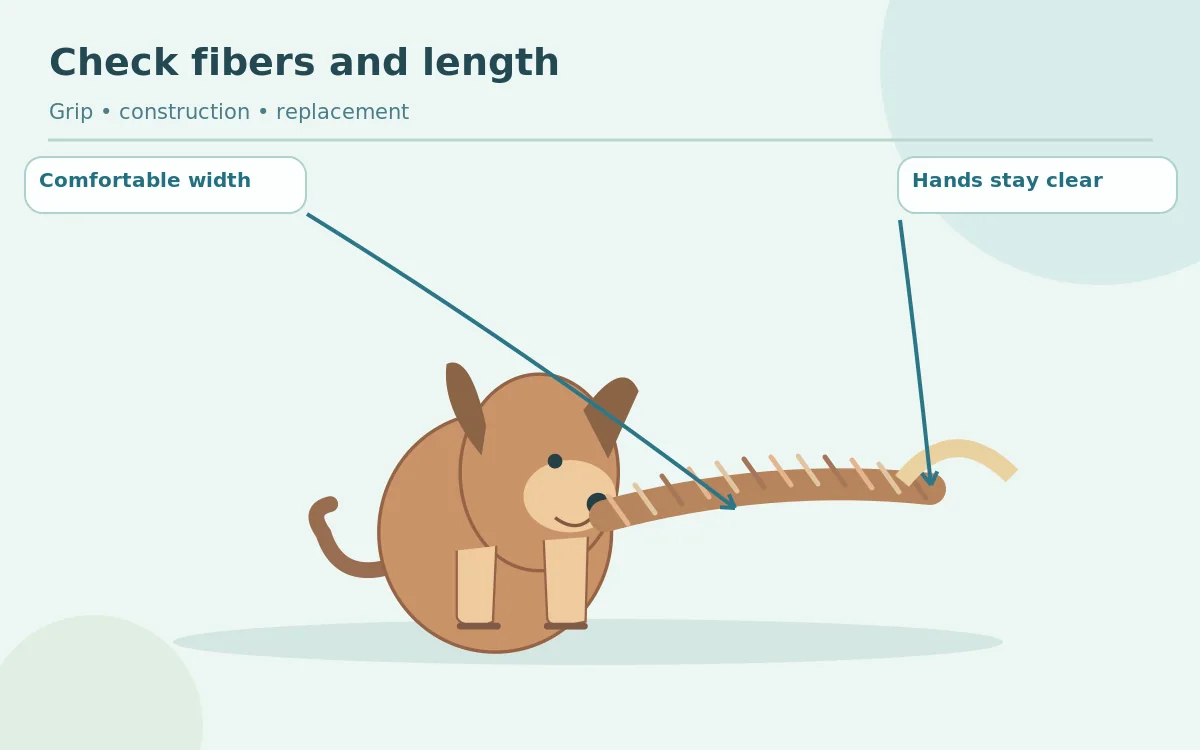
Inspect length, knots and mouth clearance
A good tug toy is long enough to keep the person’s hand outside the dog’s bite zone. That means a short knotted rope may be fine for gentle carrying but poor for energetic tug with a large dog. Evaluate the dog’s preferred grip width and whether its jaws can hold the central section without pinching the lips. Test knots gently by hand before first play; no knot should be small enough to swallow if detached. Look for long tassels, loose plastic caps or hard rings. If the dog repeatedly chews one end apart, the material may be unsuitable even though the toy survived several games.
Sellers market some ropes as dental cleaners. A textured surface can produce friction, but it is not a replacement for brushing, professional assessment or veterinary dental treatment. Do not choose a very rough rope to “scrub” teeth; VCA cautions against overly abrasive toy surfaces and very hard materials. For dogs with pain, broken teeth or a tendency to swallow fabric, select a different activity after veterinary advice. Ease of cleaning is important as well: a rope that stays damp and develops odor needs cleaning according to the manufacturer instructions and complete drying, or replacement.
- Measure your dog’s comfortable bite width and note how it handles previous toys.
- Choose a grip that keeps your fingers well away from the mouth.
- Check braid ends, knots, ball diameter and any rubber fittings.
- Use it only for short supervised play and trade on cue.
- Inspect after every game, clean appropriately and retire at first fraying.
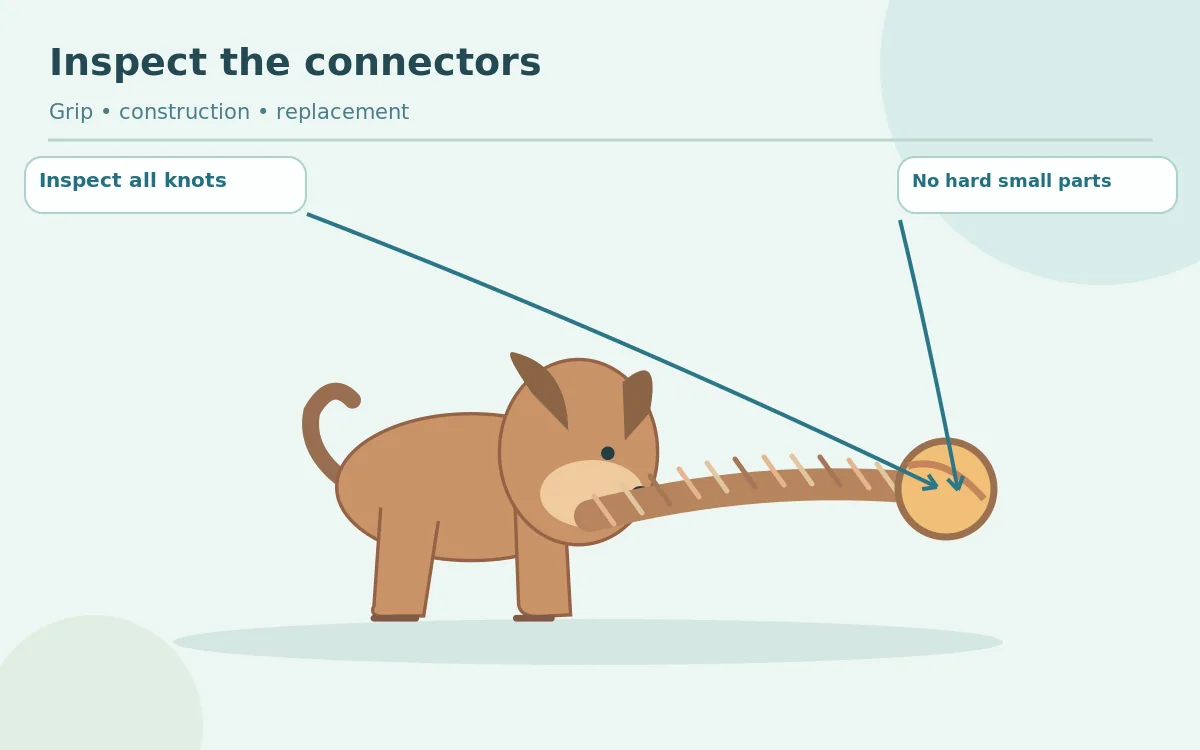
Compare use cases before buying a multipack
A gentle puppy may enjoy a soft fleece strip that allows easy holding without a hard knot. A large dog that plays strongly may need a longer design with plenty of hand clearance, but stronger resistance is not an invitation to pull violently. Dogs that only carry toys may prefer a lighter braid. A multipack is not automatically economical if half the toys have unsafe sizes or detachable components. If two dogs compete over objects, purchase separate supervised-play options and avoid encouraging a joint pulling contest. See our explanation of guarding behavior before using a highly valued toy in a tense household.
| Shopping scenario | Priority | Avoid |
|---|---|---|
| Puppy introduction | Soft mouth feel, short session | Very hard knots |
| Large adult tugger | Length and handle clearance | Short toy near fingers |
| Dog loves chewing through rope | Switch material or activity | Unsupervised fiber ingestion |
| Multi-dog home | Separate supervised use | Competition for one rope |
| Travel or outdoor bag | Easy cleaning and quick drying | Damp fraying toy |
Do not confuse a suitable toy with safe play technique
Even a sturdy rope cannot prevent rough handling. Pulling upward while the dog hangs from the toy, jerking the neck or allowing prolonged frantic wrestling raises risk. Use a comfortable low angle, invite the dog to take the rope and practice a reward-based release. Our drop-it lesson shows how to make giving up the toy worthwhile. If the dog is grabbing skin or becoming stiff when approached, end the session and seek professional support instead of trying to win possession. Buying a stronger toy does not solve a behavioral mismatch or relieve pain.
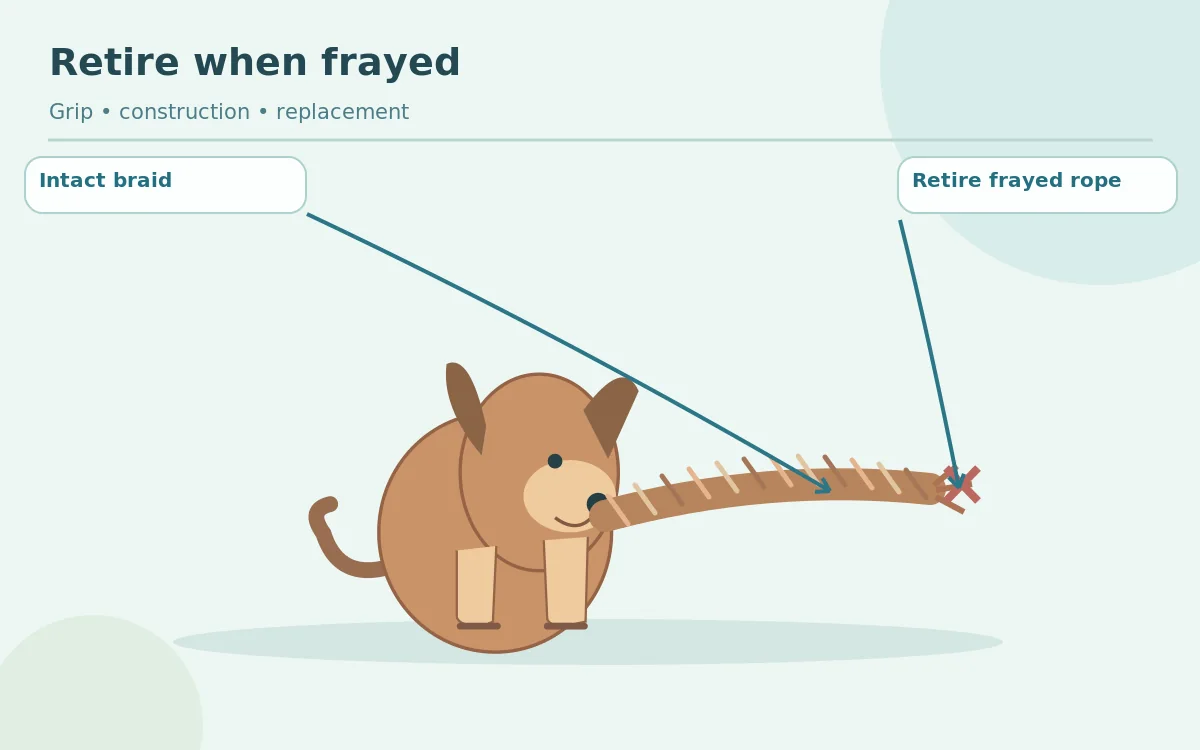
Use a repeatable post-game check: flatten the braid and inspect every segment in bright light, bend the handle gently, look for tiny rubber splits and compare the toy with its earlier shape. Retire it as soon as strands come free or pieces loosen; cutting off tassels is not a substitute for ensuring the structure remains intact. Rotate active toys and store tug ropes away between sessions using our toy-rotation ideas. A product listing’s durability claim cannot guarantee safety for an individual strong chewer. If a pet has swallowed fabric or plastic, consult a veterinarian rather than guessing whether it will pass.
When to Call Your Vet
Get veterinary help for suspected swallowed rope, plastic or knot pieces, gagging, repeated vomiting, mouth bleeding or signs of pain. A dog that guards toys intensely or has bitten someone needs calm management without confrontation and a referral to a qualified reward-based behavior professional.
How We Research
This comparison applies VCA toy-safety and retirement criteria and the AKC’s reward-based tug guidance. Manufacturer categories establish which materials exist, but we make no unsupported tear-strength rankings or dental-cleaning claims. Individual suitability depends on the dog’s size, health and willingness to release. Read HubPet’s editorial approach for more information.
Sources
VCA — Choosing the Best Dog Toy — source and guidance checked for this article.
AKC — Safe Tug of War — source and guidance checked for this article.
PDSA — Chew Toy and Rope Precautions — source and guidance checked for this article.
Choose by mouth comfort, size, hand clearance and the dog’s actual chewing habits rather than a universal best material.
Neither is universally safer. Both can shed material as they wear, so inspect and supervise every session.
A durability label is not proof of safety. Retire the toy if strands or pieces come loose and never leave destructive chewers unsupervised.
No. Texture claims do not replace toothbrushing, oral checks or veterinarian-recommended dental care.
Retire it once fibers fray, knots loosen, connectors crack or the dog could swallow any part.