
This article is general information, not veterinary advice. For sudden behavior changes, pain, aggression, bite risk or distress, consult your veterinarian. Read our vet disclaimer.
A tall wide pet gate has two jobs at once: span a larger-than-average opening and stay high enough for a dog that may jump or climb. Those demands interact. A tall frame with many extensions may flex. A rigid wide gate may still be too low for an agile dog. Before buying, measure the usable opening and observe how your dog approaches barriers. The strongest choice is the approved product configuration that fits both dimensions and the exact room, not simply the biggest height or width printed in a shopping title.
Start with two measurements and the dog’s behavior
Measure the width at the lower and upper mounting points, allowing for baseboards and trim. Measure the finished gate height. Can your dog jump, rest its front paws on the rail or use nearby furniture as a foothold? Do not set a universal height based on weight or breed. The AKC notes that larger and athletic dogs may need taller barriers, while some smaller climbers can defeat lower designs. Think in terms of clearance and opportunity, not one number presented as a guarantee.
Record whether the opening runs between solid walls, a doorway and banister, or another irregular pairing of surfaces. Height and width claims only matter when the manufacturer approves the mounting geometry. Inspect the floor for sloping surfaces and a bottom bar that could trip a person. In areas with children, use certified child-appropriate equipment; pet containment suitability alone is not a child-safety rating. If the dog already jumps over gates, supervise while changing the setup rather than testing success with unsupervised trials.
| Design question | What to verify | Common mistake |
|---|---|---|
| Actual width range | Minimum and maximum plus approved increments | Using title size as exact fit |
| Finished gate height | Dog jump or climbing behavior | Assuming large dog equals tall-enough gate |
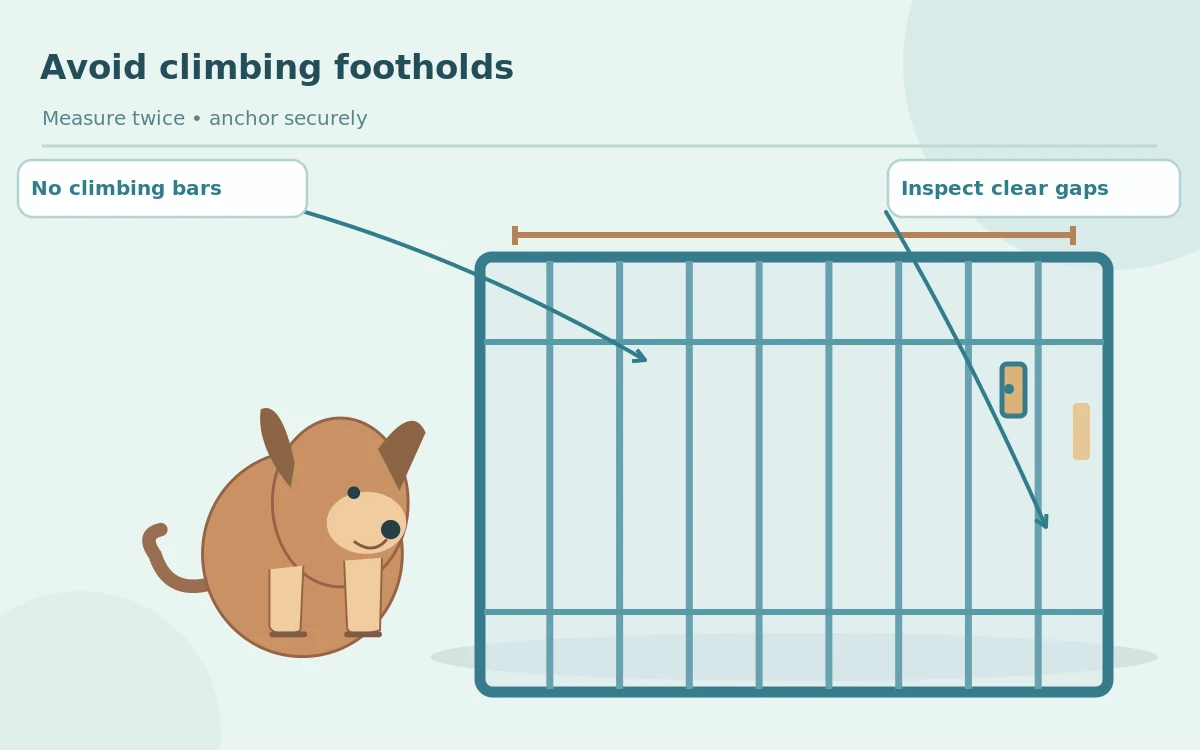
| Bars and footholds | Safe spacing and vertical design | Unintentional climbing ladder |
| Mounting method | Approved wall surfaces and attachments | Improvised extensions or weak anchors |
| Stair location | Hardware-mount approval | Pressure mounting at top of stairs |
| Human access | Latch reach and floor threshold | Awkward swing or tripping path |
Read the full extension chart, not only the title
Some tall-wide gates use a fixed main frame plus approved extension pieces. Others are modular and require particular panel sizes or wall attachments. An extension may increase width only in listed increments, and the latch may have restrictions on where it can sit. Before purchasing, find the installation manual and check the exact measured interval, included parts and any extra hardware needed. Do not add generic rods, aftermarket extensions or homemade spacers to bridge a few missing inches.
For example, Safety 1st lists one tall-and-wide gate at 36 inches (91 cm) high with a 29–47 inch (74–119 cm) width range, This example shows why the phrase ‘extra wide’ does not establish a specific 60-inch fit. Dimensions vary by model and edition, so always check the current manufacturer’s own documentation for the exact gate under consideration. A gate sold with a maximum span may not support every intermediate width. If the chart leaves uncertainty, choose another product with a clear approved installation.
- Measure the opening at both mounting heights and identify its surface materials.
- Estimate jumping and climbing risk from the individual dog rather than its breed label.
- Verify both height and exact width configuration in a manufacturer installation chart.
- Choose secure mounting, appropriate bar spacing and a practical walk-through latch.
- Install all listed hardware, then introduce the gate calmly and recheck connections.
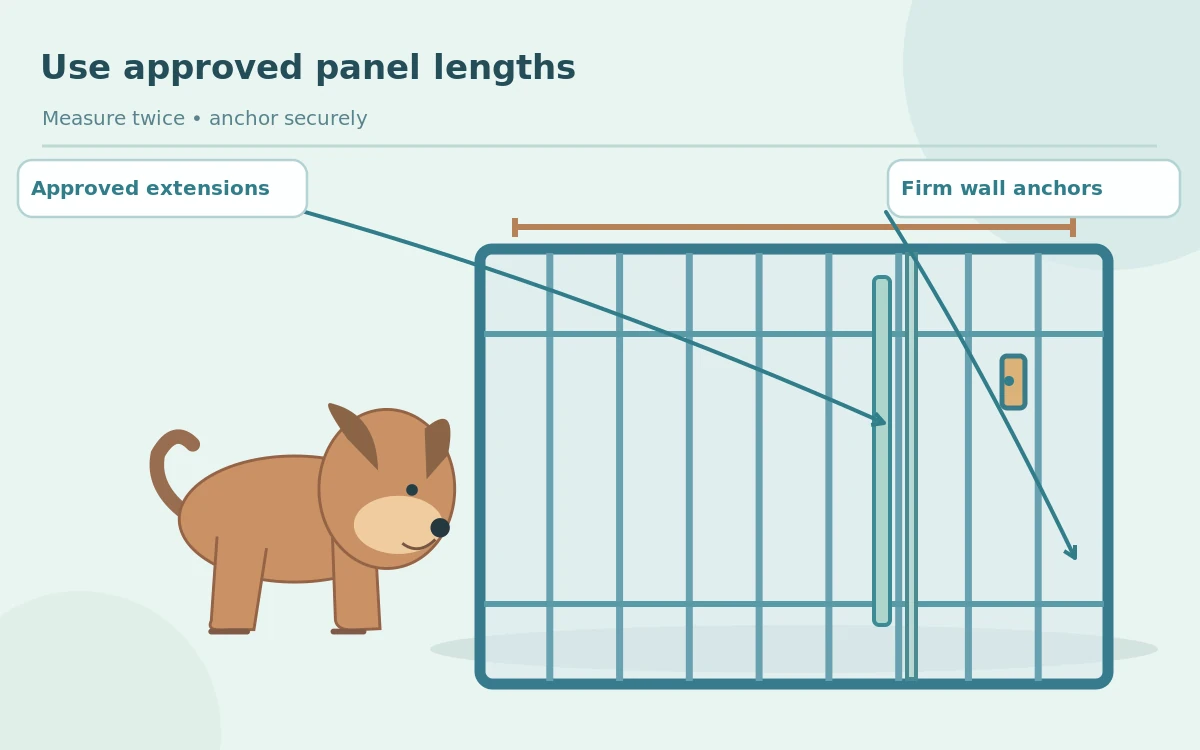
Choose secure mounting, bars and latch
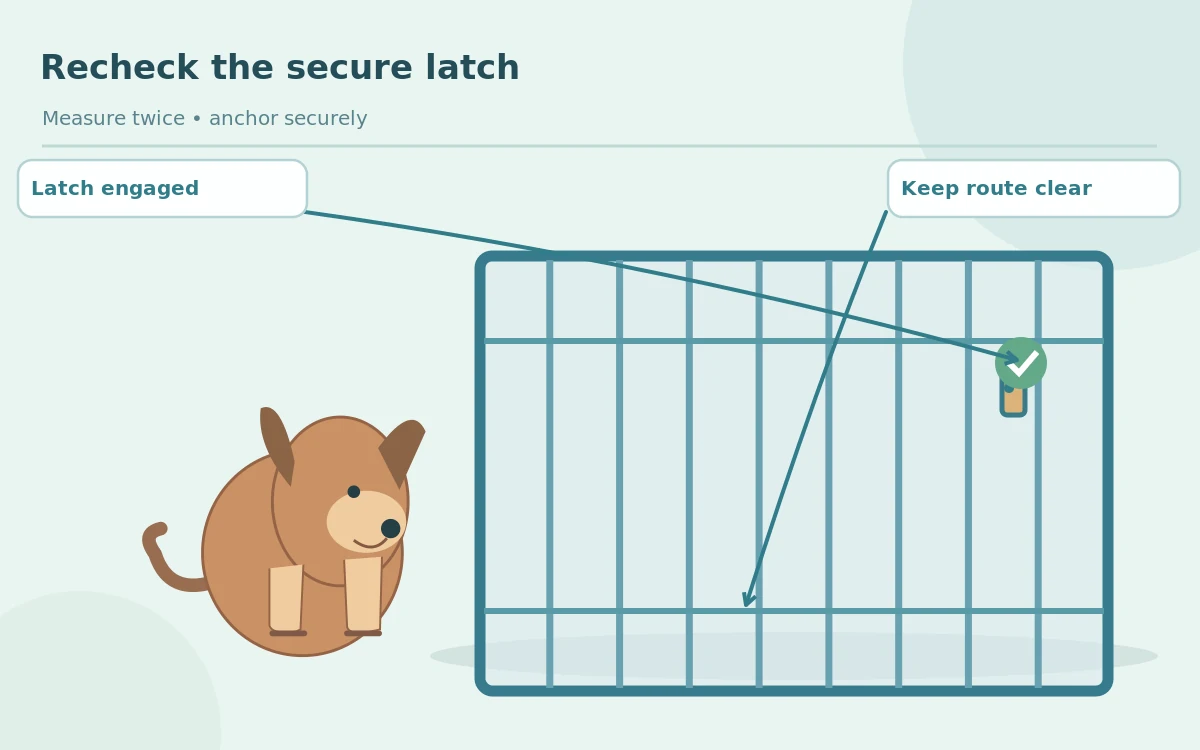
For a high-energy or heavy dog, stable hardware mounting and well-supported framing may be preferable to a portable or lightly tensioned design. Pressure-mounted products must meet the exact location and instruction requirements; they do not belong at the top of stairs. Check bar spacing for paw or head entrapment. Avoid horizontal footholds and sharp exposed joints. The latch should stay engaged after normal use, and the frame should not rock when an adult gently checks it.
Tall gates can place the handle higher than some household members expect, so test practical access for everyone who must use the doorway. A spring-closing system can be helpful only if it reliably latches and users verify closure. Consider whether a long horizontal base makes the threshold unsafe for someone carrying packages or using mobility aids. A gate that looks sturdy but creates a major trip hazard is not a good safety solution. The whole-home pet-proofing guide helps identify adjacent dangers that a taller gate does not solve.
Train calm use and recheck the installation
Before the dog experiences the closed gate, let it inspect the area while you offer a comfortable place to rest on the permitted side. Reward looking at the barrier calmly, walking away and settling. Close it for easy, brief moments while the dog stays relaxed, then gradually practice normal household movements. Do not permit repeated charging or climbing: move the setup or lower arousal before further practice. The aim is a predictable boundary, not a barrier that provokes continuous frustration.
Inspect anchors, tension hardware, extensions and latch alignment regularly, particularly after a dog bumps the gate or family members move furniture nearby. If any component bends or looseness develops, restrict access until fixed with approved parts. For complex open-plan configurations, compare the pet-proofing checklist with your actual traffic patterns. A tall wide gate is one layer of supervision and management; it is not a substitute for teaching calm choices or addressing persistent escape-related stress.
A tall and wide pet gate is not automatically a better gate for every home. Extra height may complicate latching and reduce convenience; extra width creates more joints that installers must fit correctly. Reject vague claims such as ‘fits all doors’ without a drawing of the supported width range. Do not trust a pressure-mounted setup for top-of-stair fall protection. Avoid improvised add-ons and furniture footholds near the gate. Product specifications are a starting point; stable installation and the dog’s real behavior decide whether the setup is appropriate.
When to Call Your Vet
A dog repeatedly jumping at or chewing a gate may injure paws, mouth or joints or may be showing frustration or separation distress. Stop using the barrier as a forced test and seek veterinary or qualified humane behavior help for distress or injury. For any actual injury, consult your veterinarian promptly. If you also plan to use the gate for children, follow dedicated child-safety standards and installation instructions.
How We Research
For this guide HubPet compared the stated reader problem with published veterinary, animal-welfare and, where applicable, manufacturer instructions. We distinguish observable signs and verified installation requirements from diagnoses, guarantees and our own product testing, which we did not perform. Read our editorial approach.
Sources
AKC — Dog Gate Height, Width and Style — primary background for the behavior or equipment safety advice above.
Safety 1st — Tall and Wide Gate Specification Example — primary background for the behavior or equipment safety advice above.
Safety 1st — Pressure-Mounted Gate Stair Warning — primary background for the behavior or equipment safety advice above.
Tall enough that this specific dog cannot clear or climb it, with no furniture footholds nearby. Verify the actual product height.
No. Check what is included and which exact extension combinations the manufacturer permits.
No. Do not use a pressure-mounted gate at the top of stairs.
No. Some agile dogs can jump or climb; height must be evaluated against the dog and surroundings.
Follow the manual, verify full engagement after closing and inspect alignment and fasteners regularly.