
This article offers general pet product and home-care information, not a veterinary diagnosis. Follow each manufacturer’s cleaning and electrical instructions. Contact a veterinarian about sudden drinking changes, signs of illness, or difficulty breathing. Read our veterinary disclaimer.
A cat water fountain splash tray protects the floor only when it collects drips without becoming a hidden puddle. A broad mat might seem sufficient, yet a raised edge, stable base, and sensible cable exit often matter more. The goal is not to trap every drop beneath a permanent wet appliance; it is to make spills visible and simple to clean. Use this guide to measure the footprint, choose an accessible edge, and build a safe routine around the power cord and nearby walking space.
Trace where the fountain actually spills
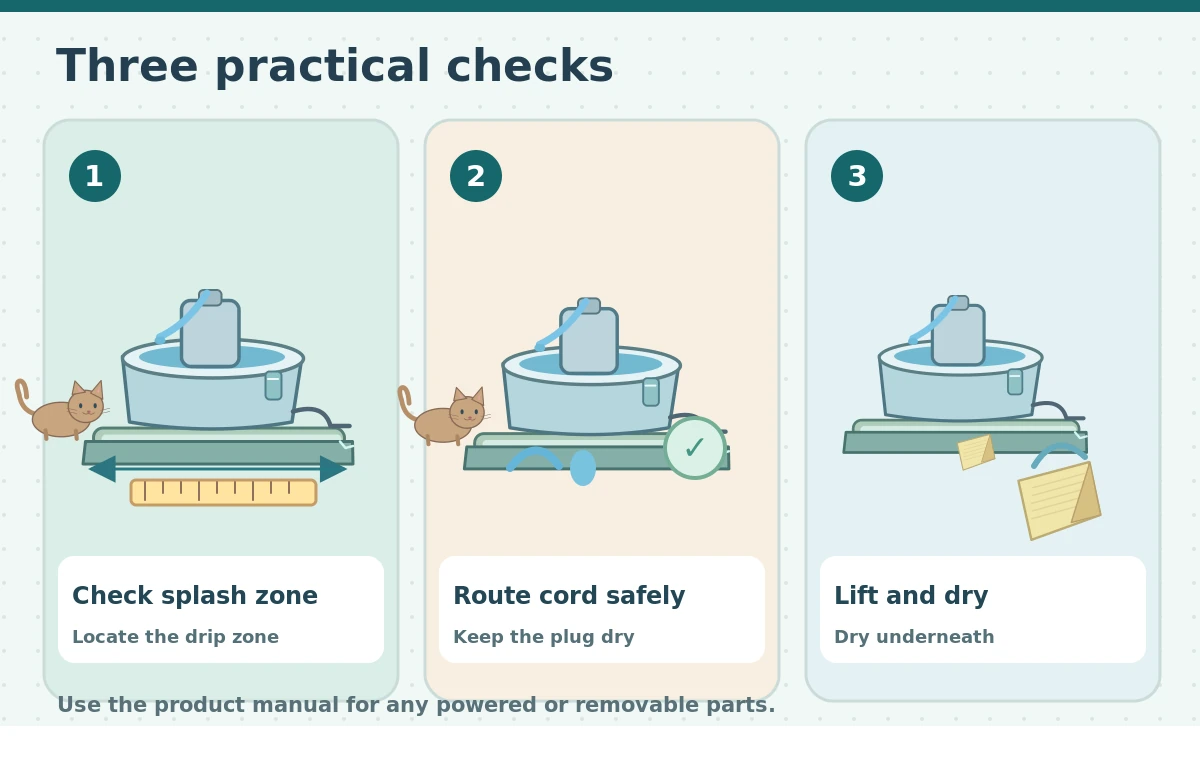
Watch a normal drinking session from a safe distance. Some cats splash by tapping the stream, while others drip water as they move away. Mark those landing areas with a dry paper towel instead of guessing from a product photo. Check whether the fountain itself leaks at a lid or joint, since a tray cannot repair a defective seal. A tray should protect the floor during ordinary use, not excuse continual overflow. Note whether the cat enters from one side or circles the station; either pattern changes the area you need to cover.
Measure the footprint and walking approach
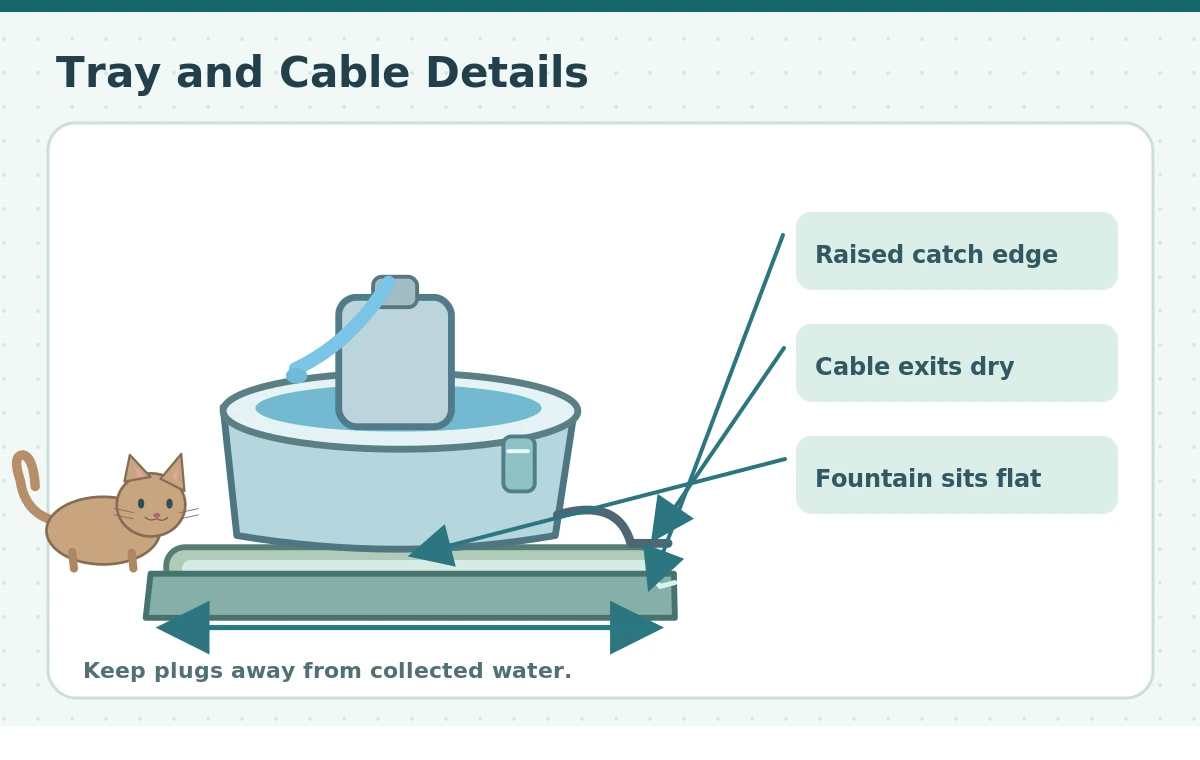
Measure the full base, including the protruding pump housing or drinking spout, then add room for water droplets and easy lifting. A narrow tray can tip when the fountain sits partly over its raised edge. On a slick floor, check that the tray has a stable underside and does not curl upward. Its edge should be low enough for the cat to approach the water comfortably. Test the empty tray first and then the filled fountain while supervising. The base must sit flat with no wobble, even if the material flexes.
Route the cord through a dry, protected exit
An electric fountain needs a clear cable route that does not pinch insulation against a raised rim. Avoid drilling or cutting a tray unless its manufacturer explicitly supports that change. Position the power connection away from splashes, keep outlets dry, and follow the fountain manual for cord placement. Never suspend a plug or adapter in a water-catching recess. Consider a tray designed with an open cable channel, but check that the opening does not let water run toward the connection. If a cord shows chewing damage or heat discoloration, unplug it safely and replace the device parts as directed.
Compare shallow mats with raised-edge trays
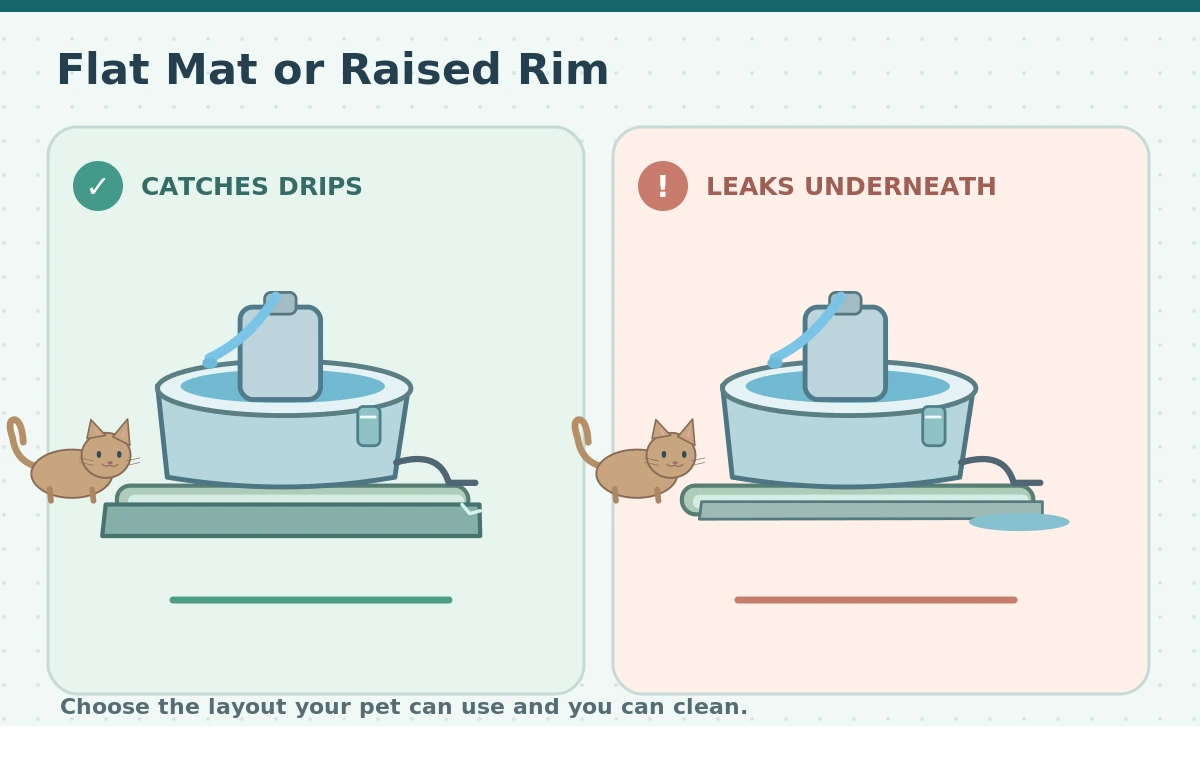
A flat waterproof mat works where splashes are light, provided water remains visible and can be wiped away. A raised-edge tray catches more spilled water, but its lip may interfere with a short or hesitant cat. Hard trays can be easy to wipe yet slide on tile; soft silicone trays usually grip but may fold when lifted. Examine how much usable floor area remains inside the rim, not only the advertised outside measurements. The tray is a convenience layer, not a substitute for cleaning the fountain or checking the surrounding flooring.
Keep the water station away from hazards
Place the fountain where the cat can drink without being crowded by doors, cords, appliance traffic, or another pet. Avoid unstable shelves and areas where the tray blocks a hallway. The AAFP/ISFM feline guidelines support separating water resources from other essentials, including food and litter stations. Do not force the fountain beside a litter box merely because the floor there is waterproof. Where electrical outlets are scarce, choose a suitable safe location rather than extending cables across a walking path. Keep a separate ordinary water bowl available during cleaning or an outage.
Test actual cleaning, not just water resistance
Lift the empty tray to check whether grime can collect beneath an embossed pattern. Look closely at rim corners, textured bottoms, and seams that can trap slime. Wash the tray according to the maker, rinse away detergent, and dry both sides before replacing it. CDC guidance calls for daily water bowl cleaning, and the fountain requires its own documented cleaning schedule. Do not pour dirty tray water into the fountain or assume that filters sterilize either surface. If the tray smells after washing or its edges crack, consider replacement.
Check what happens during a small spill
Test the setup with a small amount of plain water while the fountain is unplugged and removed. Confirm that water pools inside the rim rather than flowing toward the outlet. Never pour water near a connected appliance as a demonstration. If the tray flexes so that its rim collapses under the fountain, choose a sturdier option. A large-volume leak should lead you to stop using and inspect the fountain; it should not be treated as normal. In multi-pet homes, evaluate whether dogs can step onto the tray and drag it out of position.
Watch for hidden moisture under the tray
Water can migrate below a mat from drips, mopping, or humid floors. Each day, lift the tray and check for damp patches before replacing the fountain. Dry any trapped moisture promptly and follow the floor manufacturer’s cleaning instructions. Laminate seams and unsealed wood can be vulnerable even when a splash pad looks intact. A waterproof top does not guarantee a dry underside. If the installation sits on a delicate floor, consider moving it to a safer area instead of layering more mats and making an invisible pocket of moisture.
Build a simple refill and inspection routine
Each refill is a useful moment to look for a wet plug, a cracked vessel, a twisted cable, and trapped debris. Unplug before handling powered parts according to the manual, then check the tray separately. Restore the station only after surfaces are clean and dry and the fountain has the required water level. Track a cat that avoids the tray or hesitates at the rim; a floor mat should not make drinking more difficult. Replace damaged accessories rather than using adhesive tape as a permanent water barrier.
Know when a tray is the wrong solution
Skip a raised tray if the cat cannot cross its rim or if it creates a trip edge in a busy room. A fountain with constant leakage, exposed electrical damage, or a loose lid needs repair or replacement, not a bigger catchment. If your cat suddenly changes drinking habits, loses interest in water, or shows other illness signs, contact a veterinarian; an accessory guide cannot diagnose the cause. Keep several clean drinking options available and prioritize simple daily access over a visually elaborate station.
How We Research
HubPet reviewed guidance from the CDC and FDA on hygiene for pet water bowls and the AAFP/ISFM feline environmental needs guidelines on separated resources. We also examined ordinary product fit and manufacturer-dependent maintenance issues; we did not conduct laboratory tests, certify materials, or test specific brands. Our original diagrams illustrate what an owner can inspect at home and do not replace any product manual or individual veterinary advice. See the HubPet editorial approach for how we evaluate claims.
Sources
CDC: Cleaning and Disinfecting Pet Supplies — guidance informing water-station hygiene or safe resource placement.
FDA: Proper Storage of Pet Food and Treats — guidance informing water-station hygiene or safe resource placement.
AAFP/ISFM: Feline Environmental Needs Guidelines — guidance informing water-station hygiene or safe resource placement.
No. A tray catches ordinary drips, but persistent leakage can indicate a faulty seal or misassembled fountain that needs correction.
No. Keep adapters and electrical connections away from collected water and follow the fountain manufacturer’s cable instructions.
Not necessarily. Raised rims contain more water but may obstruct some cats; choose a low, accessible edge and a stable base.
Inspect underneath daily, clean it whenever wet or dirty, and follow the accessory care label. Water bowls need daily cleaning.
Yes, a separate clean bowl provides another accessible drinking option during fountain cleaning, failure, or a power outage.