
This guide offers general home-care information, not veterinary advice. If a pet has sudden toileting changes, pain, or signs of illness, consult a veterinarian. Read the veterinary disclaimer.
Cat urine on tile may look easy to wipe away. Yet the narrow grout joints deserve a closer look. Unglazed or cement-based grout can absorb moisture, while glazed tile usually releases a spill more readily. A quick pass with a mop may spread the liquid along the joints. This guide focuses on a small, fresh accident on a household tile floor. If a cat starts urinating outside the litter box, arrange a veterinary assessment rather than assuming the behavior reflects a cleaning problem.
Identify the grout before applying cleaner
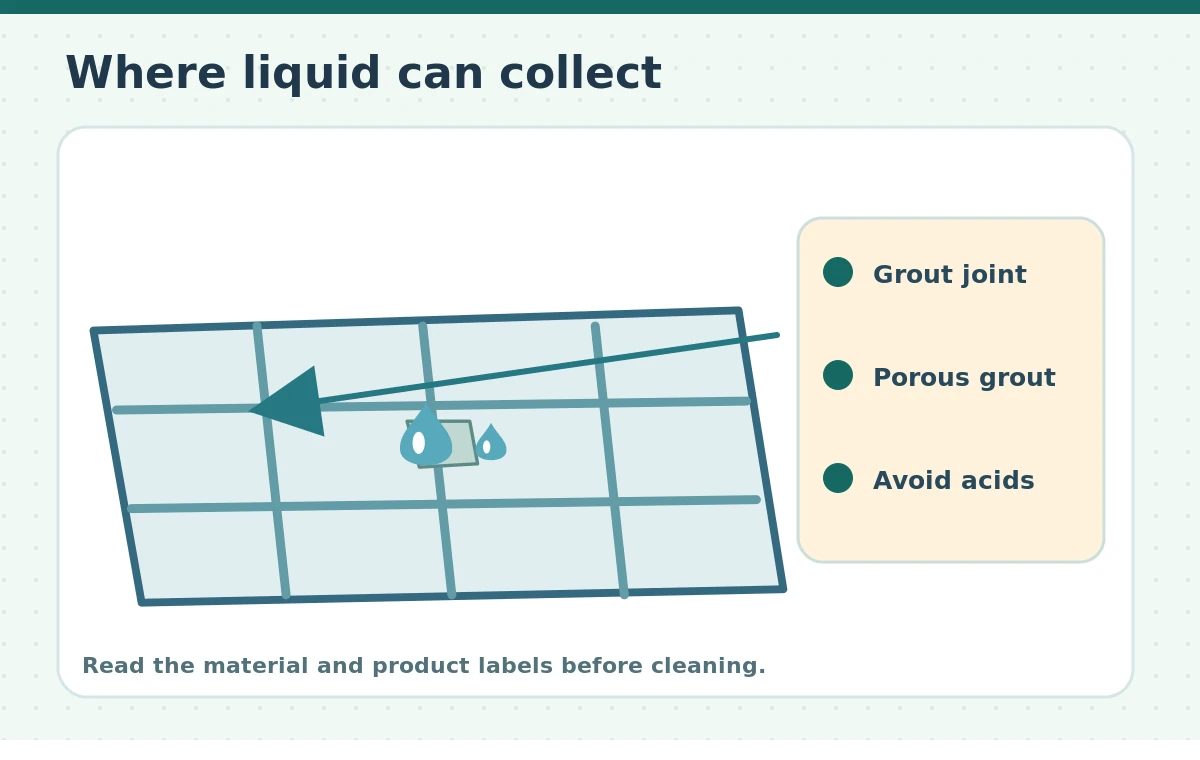
Look at the joint between tiles, not just the shiny face of each tile. Cement-based grout can be porous, even when it appears smooth. Epoxy grout and some sealed joints resist staining differently, so do not assume every floor has the same finish. The Tile Council of North America notes that acids can damage cement-based grout. Keep vinegar and acidic descalers out of this cleanup plan. If you cannot identify the grout or its sealer, ask the installer or flooring manufacturer before testing a chemical.
Blot the spill rather than washing it across the floor
Keep your cat away from the wet spot, then place absorbent paper or a clean towel directly over the liquid. Lift and replace the material until it stops drawing up moisture. Follow the grout lines with a fresh folded towel to reach liquid resting in the recess. Do not scrub the urine into rough joints. Bag the used towels or wash reusable cloths separately using fabric directions. Protect your hands and wash them afterward. Your first objective is removal, not covering the smell with fragrance.
Choose a surface-compatible product
Read both the cleaner label and flooring care information. An odor product intended for carpet may not suit sealed tile or porous cement grout. An enzyme-based product should list appropriate surfaces, application time, and any rinsing requirements. Test a hidden spot and follow the exact directions. Avoid mixing products, especially bleach with another cleaner. CDC guidance separates routine cleaning from disinfection, which calls for its own labeled product and instructions. A perfume alone does not show that the affected joint is clean.
Use a soft tool along the joint
Apply only the amount the grout and product directions permit. A soft cloth or gentle nylon brush can lift soil from grout without the aggressive abrasion of a wire brush. Work along each affected joint and keep liquid from pooling beside cabinetry or under baseboards. If the tile is natural stone rather than standard glazed ceramic, obtain stone-specific instructions first. Harsh acid, gritty scrubbing, and repeated soaking can damage materials even when the stain looks minor. Never scrub toward your cat or leave open cleaner containers nearby.
Rinse when the label requires it and dry the area
Remove the product using a slightly damp clean cloth if the instructions call for rinsing. Then blot the joints dry and increase ordinary room airflow. Do not trap moisture with a mat while the floor is damp. Keep pets off the treated area until the cleaner has completely dried and any required rinse is finished. ASPCA guidance emphasizes following chemical labels and limiting exposure during cleanup. If you notice a wet baseboard, an adjoining wood edge, or a loosened grout joint, the problem may extend beyond the visible tiles.

Understand why the odor may return
A clean-looking tile face does not guarantee that an absorbent joint or underlying material is dry. Persistent odor can indicate residue deeper in a porous grout line or a previous accident that escaped notice. Resist repeating an unknown chemical every day. Recheck the source, surface compatibility, and drying conditions first. When the joint has failed, a qualified tile professional may need to assess grout repair or resealing. Sealers can reduce future absorption, but they do not make every installation waterproof or remove contamination already below the surface.
Protect pets during the entire cleanup
Give your cat access to another quiet room, water, and a clean litter box while the floor dries. Pick up used wipes before they become chew toys. Avoid concentrated fragrance sprays or essential oils in an effort to hide smells. The CDC advises keeping animals away from wet cleaning or disinfecting agents. Store chemicals in closed containers out of reach. If your pet licks a cleaner or shows irritation after exposure, contact your veterinarian or animal poison service with the product label available.
Prevent another accident without punishment
Check that the litter box is accessible, clean, comfortable, and placed away from sudden noise. Cats may avoid a box because of location, texture, social conflict, or illness. Never punish or frighten a cat for an accident. Use an appropriate enzyme cleaner only where its instructions allow, while you address the underlying reason. Sudden straining, frequent visits with little urine, vocalizing while toileting, or blood in urine requires urgent veterinary advice. The floor-care steps cannot diagnose a urinary problem.
Decide when repair or professional cleaning makes sense
If the joint stays dark, loose, smelly, or damp after appropriate drying, stop soaking it with more cleaner. Inspect nearby cabinets, baseboards, and any floor transition for hidden moisture. A flooring professional can identify grout type, sealer condition, and whether repair is needed. Record which products you used so the professional can avoid incompatible treatments. If discoloration is limited to the glazed tile, ordinary manufacturer-approved cleaning may be sufficient. Distinguish a staining issue from a structural or moisture issue before spending on stronger chemicals.

Keep a practical follow-up checklist
After cleanup, look at the joints in natural light, touch them only when fully dry, and notice whether odor returns in the same location. Wash the cloths and any nearby washable mat. Put the litter box back into normal service and monitor your cat without scolding. Keep a note of repeat incidents and take it to your veterinarian if needed. A useful routine is simple: remove fresh urine quickly, use the right product for grout, dry thoroughly, and deal with any recurring toileting change.
How We Research
HubPet compared published guidance from animal-care organizations, public-health authorities, and material manufacturers. We checked that each cleaning method suits the actual surface rather than recommending one chemical for every household. Product labels and flooring or fabric care instructions take priority over generic techniques. We did not run a laboratory stain test or independently certify any cleaner. The illustrations are original educational drawings showing common construction details, not a substitute for a manufacturer diagram. Read our research approach.
Sources
Tile Council of North America — Cleaning grout — guidance on safe cleaning methods, compatible materials, or pet exposure precautions.
American Cleaning Institute — How to clean grout — guidance on safe cleaning methods, compatible materials, or pet exposure precautions.
CDC — Cleaning and disinfecting pet supplies — guidance on safe cleaning methods, compatible materials, or pet exposure precautions.
ASPCA — Poisonous household products — guidance on safe cleaning methods, compatible materials, or pet exposure precautions.
Humane World — Removing pet stains and odors — guidance on safe cleaning methods, compatible materials, or pet exposure precautions.
Avoid vinegar on cement-based grout. The Tile Council of North America warns that acids can damage cement. Choose a grout-compatible cleaner instead.
A sealer may reduce absorption, but it does not make every grout joint waterproof. Follow the installer or sealer manufacturer guidance.
Do not assume steam is suitable for your grout, sealer, or adjoining materials. Check flooring instructions before using heat or heavy moisture.
Porous joints or underlying materials may retain moisture or residue. Recheck the source and consider a flooring professional if the odor persists.
Seek prompt veterinary guidance for sudden changes. Straining, bloody urine, pain, or repeated attempts with little urine can require urgent care.