
A basket of toys can look tidy while hiding frayed fabric, cracked rubber, and dried food residue at the bottom. A sensible storage system starts with separating toys by use and inspecting them as they come back from play. Rotating a small selection can renew interest, but a favorite comfort toy may be worth leaving available. This guide shows how to choose a bin, organize supervised versus ordinary-access toys, set a cleaning routine, and avoid storage features that create hazards for curious dogs.
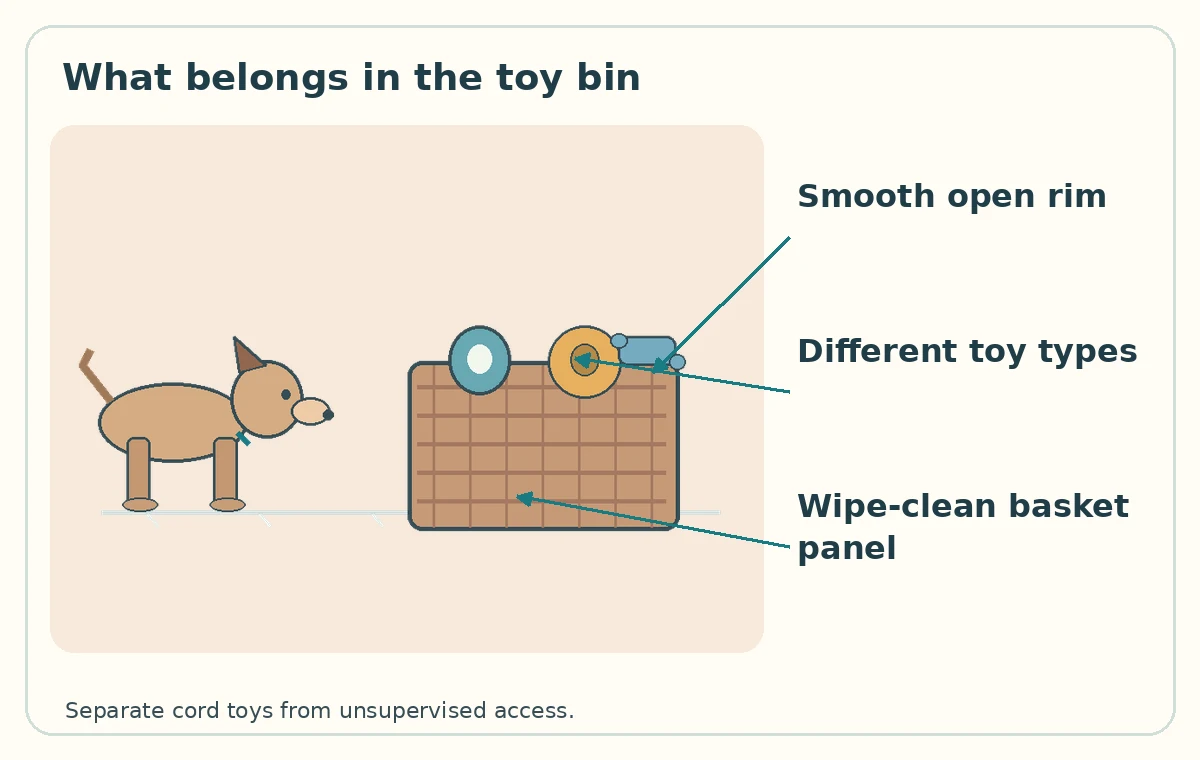
Choose a bin that is easy to inspect
A good bin has a broad, stable base, smooth edges, and a top opening that does not trap a dog’s head. Check handles, wicker strands, metal fasteners, and decorative rope for pieces a dog might chew off. A heavy hinged lid may pinch paws; soft baskets with long loops can catch collars or legs. If the dog chews the container itself, move it out of reach and switch designs. The best storage is not necessarily the most decorative. It should be easy to empty, wipe, and check for lost small pieces.
Separate supervised toys from accessible toys
A flirt pole, long cord, food puzzle with detachable parts, or damaged toy should not sit where an unsupervised dog can take it. Use an elevated, closed cabinet for equipment that requires a person. Keep only suitable, intact toys available in a low basket if the dog can choose them safely. Different dogs have different chewing habits, so a toy that works under supervision may not be appropriate alone. In a multi-dog home, consider whether one dog guards certain toys and provide separated access or guided sessions when needed.
Sort toys by how they are used
Group soft comfort toys, chew items, interactive tug or fetch toys, and food-contact puzzles so you can inspect and clean each one correctly. A bin liner or separate washable pouch can help keep dirty items from rubbing against clean ones. Do not bury small loose parts among large plush toys. Check squeakers, stuffing, seams, and chewed rubber edges before storage. The ASPCA recommends choosing items appropriate to the dog and removing objects that fragment into swallowable pieces. A rotation routine must never return an unsafe toy to service.
Keep a small useful set in circulation
Seattle Humane recommends rotating toys and offering different kinds of play, rather than leaving every toy out indefinitely. Start with a manageable selection suited to the dog: perhaps a carry toy, a chew-safe item, and something for interactive play. There is no requirement to follow an exact weekly schedule. Watch what the dog actually chooses and which items need a person present. If one soft toy helps a dog settle calmly, leave it accessible when safe instead of forcing novelty for novelty’s sake.
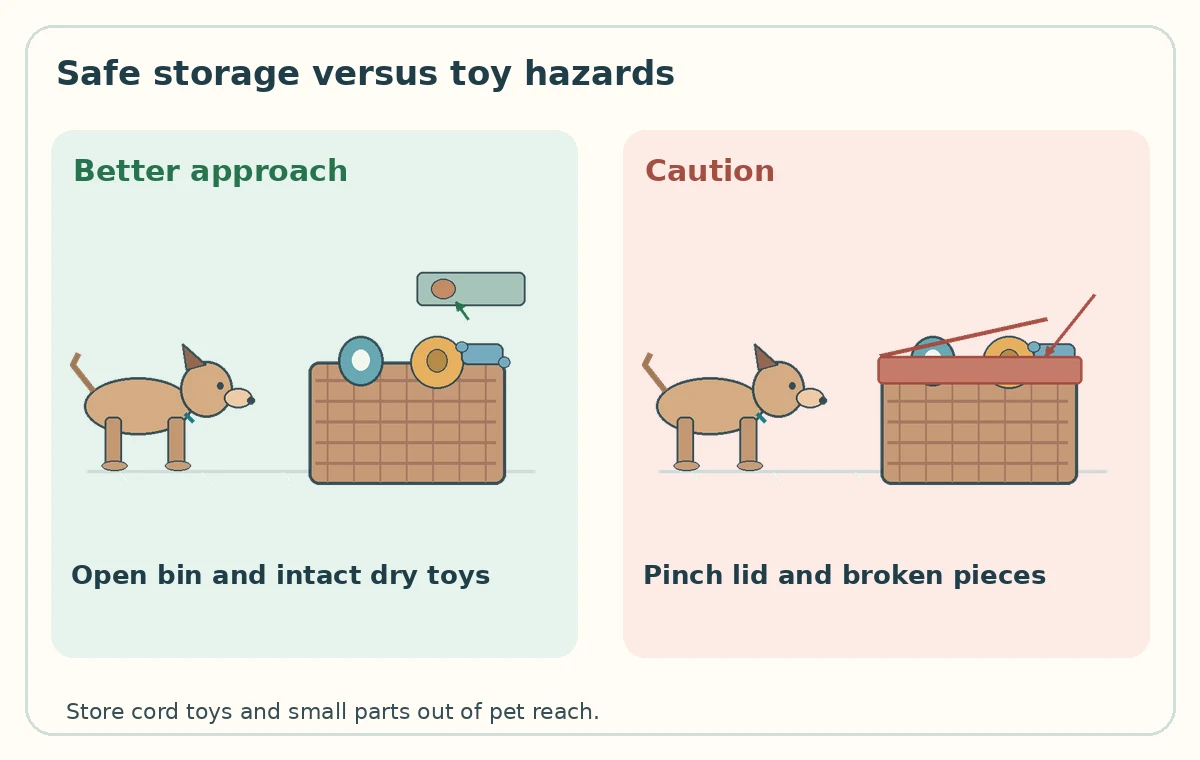
Compare an organized shelf with a hazard pile
An effective setup shows clean toys in a shallow open bin, food puzzles washed and dry, and supervised cord toys on a separate high shelf. A caution setup shows damp fabric buried at the bottom, a cracked ball beside loose squeaker parts, and a hinged lid resting over the dog’s muzzle. Use the illustration as a reminder to look for pinch points, swallowing risks, and moisture. Avoid claiming that a toy storage product alone creates a pet-proof home. Check how your own dog approaches the container.
Make new play feel familiar rather than forced
When changing the selection, let the dog investigate one toy at a time. You can briefly demonstrate a game or reward choosing the toy, then put it down and allow voluntary interest. Some dogs prefer predictability and may ignore novelty. That is normal. Rotate activities as well as objects: carry, sniff, gentle retrieve, or a brief owner-led game can all change the experience. Do not use rotation as a response to sudden withdrawal from play or pain. A behavior change that persists deserves veterinary attention.
Build a realistic cleaning routine
Follow each toy’s label. CDC advises washing hard toys with suitable soapy water and soft washable items through approved laundry methods. Clean food-contact puzzles promptly after use and allow them to dry completely before closing storage. Remove dog saliva, outdoor dirt, and food crumbs from the bin, not just the toys. Disinfection is a separate step and is not always required; use only products and methods appropriate for the item and situation. Keep pets away from active cleaning and cleaners until every surface is safe and dry.
Know when to retire, not rotate
Throw away fabric toys with exposed stuffing or accessible squeakers, hard toys that crack or shed pieces, and cords that fray into chewable strands. Check for embedded grit, moldy smells, and stains that resist the recommended cleaning method. Discard toys that fail inspection instead of saving them for next week. Keep a small discard container out of pet reach, then dispose of damaged materials promptly. A replacement does not have to be the same style; choose a safer function if your dog repeatedly destroys one design.
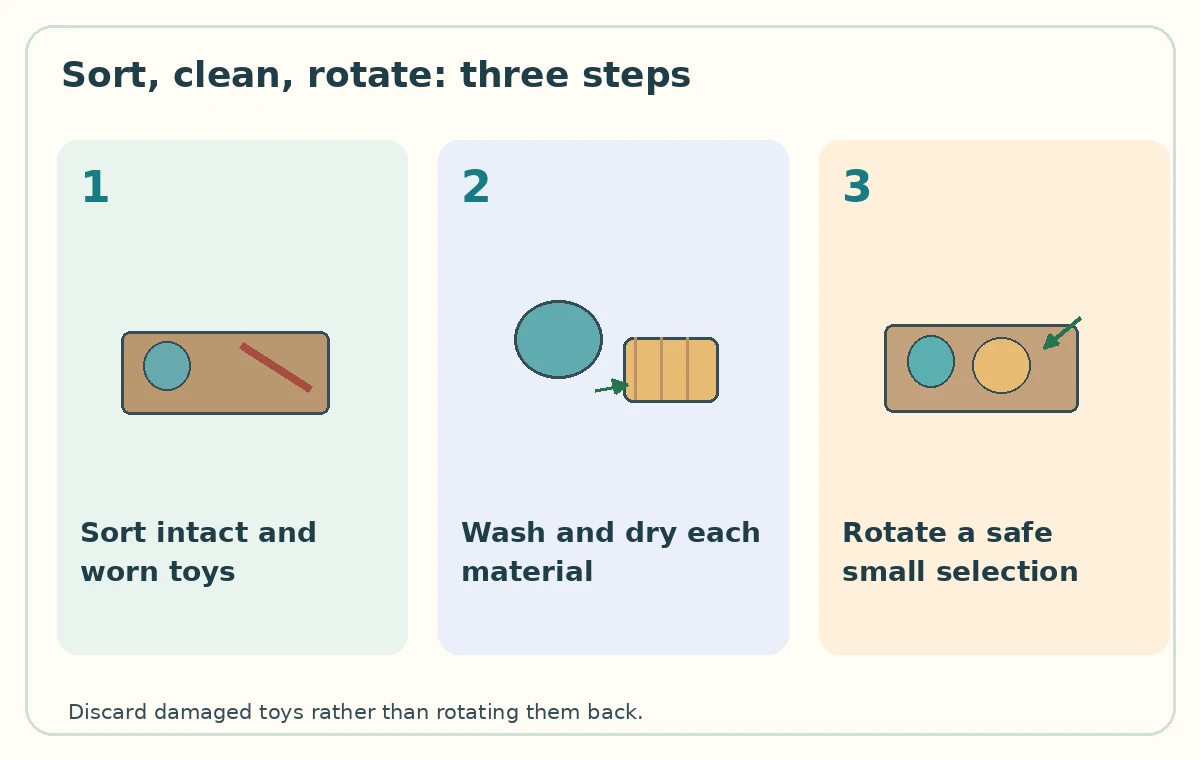
Set up a quick weekly review
Empty the basket, sort toys by condition, wash what needs washing, and check the floor for missing small pieces. Return a varied selection of safe items and store supervised equipment where a dog cannot reach it. Note any toy the dog clearly dislikes, chews aggressively, or guards. The goal is a practical system that works with the dog’s behavior and the home’s layout. If the basket becomes a daily tug target, put storage out of reach and hand out selected toys yourself. Cleanliness and safety come before display value.
A quick pre-play safety check
Before each session, inspect the toy for splits, loose pieces, accessible stuffing, or dirty food-contact surfaces. Select a clear play area and a difficulty or movement level that suits the individual dog. Supervise interactions, pause if the dog becomes distressed or you notice toy damage, and store cords or food puzzles appropriately after use. The right choice is not the fastest, hardest, or most expensive toy. It is the one your dog can use comfortably without chewing off parts, exhausting itself, or turning a rewarding activity into a struggle.
How We Research
HubPet reviewed veterinary-hospital enrichment advice, animal-welfare instructions for interactive play, and published hygiene guidance for pet supplies. We distinguished the limits of a particular toy design from general precautions about swallowing risk, food calories, floor conditions, and supervision. We did not perform laboratory strength tests or independently verify claims that any toy is indestructible. Product sizes, materials, and cleaning rules vary by maker. This guide is general educational information, not veterinary advice; contact your veterinarian if you suspect pain, injury, ingestion, or a sudden behavior change. Read our editorial method and veterinary disclaimer.
Sources
Seattle Humane — Dog Toys and How to Use Them. Used for the described safety, enrichment, and handling guidance.
CDC — About Cleaning and Disinfecting Pet Supplies. Used for the described safety, enrichment, and handling guidance.
ASPCA — Position Statement on Dog Chews/Treats. Used for the described safety, enrichment, and handling guidance.
Humane Colorado — Canine Enrichment: Dog Toys and How to Use Them. Used for the described safety, enrichment, and handling guidance.
A weekly review is one option, but adjust the timing to the dog’s interest and cleaning needs.
Not if it is safe and helps your dog settle; toy rotation does not require withholding a favorite.
Avoid lids that can fall or pinch a pet; check any latch and keep unsafe containers out of reach.
Only after you wash and fully dry food-contact pieces; separate storage makes hygiene checks easier.
Retire toys with loose internal parts, cracks, frayed cords, or pieces that the dog could swallow.