
This guide provides general education, not veterinary advice. If your cat shows sudden changes or discomfort, seek professional guidance. Read our veterinary disclaimer.
A cat may tap the surface of a water bowl, dip one paw, or scoop droplets before taking a drink. That routine can look like a complaint about the water, but one motion does not reveal a single motive. Some cats enjoy the moving surface; others seem to investigate the waterline or prefer a different drinking position. Watch what happens before and after the tap. This guide separates normal exploration from access problems and shows low-risk changes to test without restricting water.
Watch the complete drinking sequence
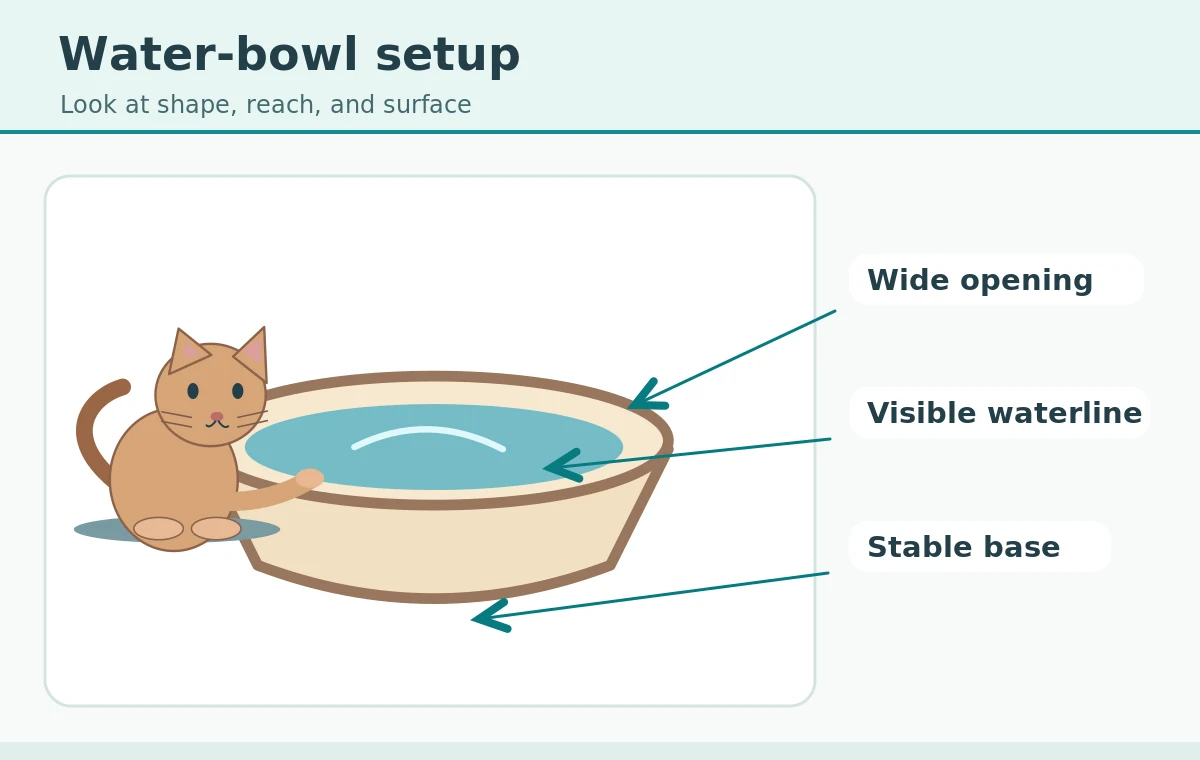
Notice whether your cat taps once and then drinks, repeatedly splashes without drinking, or carries water away on a paw. Observe the location, lighting, water depth, and the time since you washed or refilled the bowl. A playful paw-swipe with normal drinking is different from a cat that approaches, hesitates, and leaves. Write down changes across several ordinary days rather than reading intention into a single amusing moment. The goal is to understand access and preference while always keeping drinking water available.
Why a moving surface might attract attention
Water reflects window light, shadows, and the cat’s own moving paw. A tap makes rings spread outward and can make the surface easier to locate. Some cats appear interested in the movement itself; others simply investigate with their paws. Veterinary writers describe several possible explanations, not a proven universal cause. Avoid claims that every cat is testing water safety or needs a fountain. You can test the visual explanation by offering the same clean water in a stable, matte-finished wide bowl away from bright reflections.
Compare shallow, wide, and deep containers
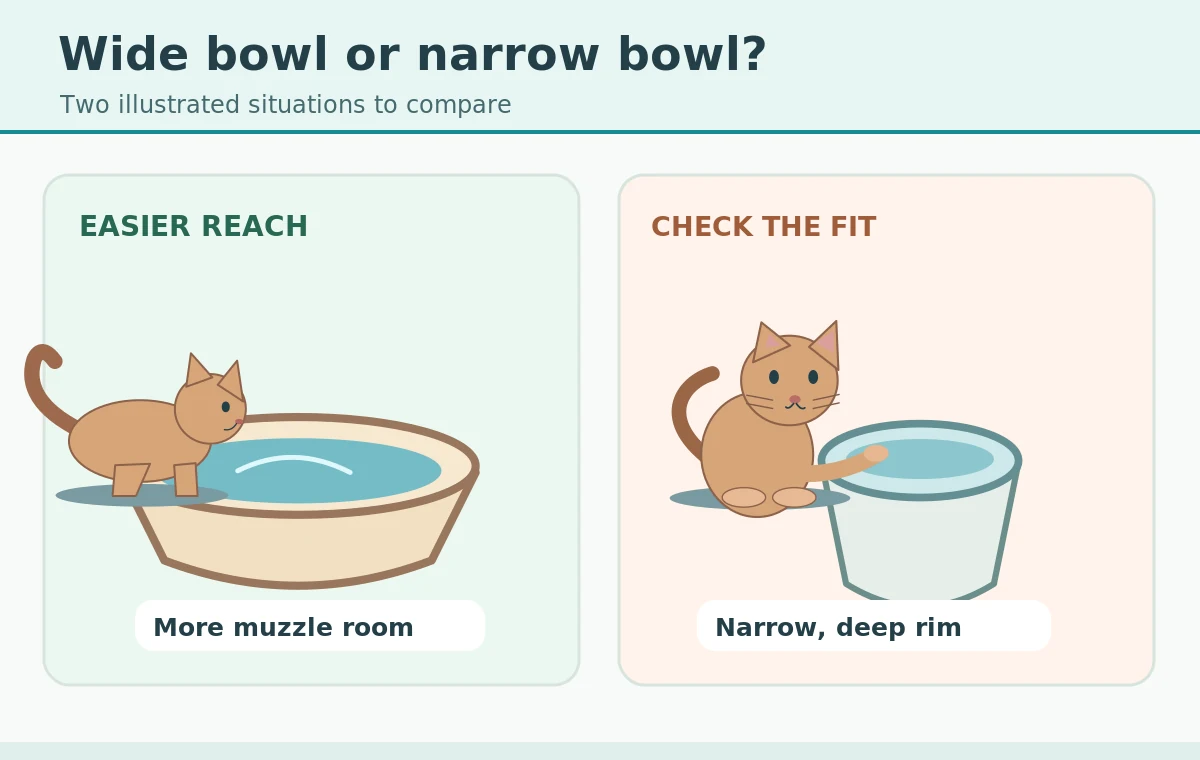
The rim and interior width change how a cat reaches the water. A narrow, deep container can brush the whiskers or require the cat to lean into the bowl. A wide, shallow vessel gives more room around the muzzle and makes it easier to see the surface. Some cats do not mind whisker contact, so do not assume every splasher has so-called whisker fatigue. Select a washable, stable bowl and offer a choice of designs. Keep both filled during a gradual preference trial.
Choose a quiet and reachable water station
Place a bowl where your cat can approach without being cornered by another pet. Keep drinking stations away from the litter box and, when feasible, separate from feeding areas. A busy hallway, vibrating appliance, or bowl that slides across tile can discourage a calm drink. Put a nonslip mat underneath and check that its edges do not curl. If several cats share the home, provide water in more than one place so a cat cannot guard every access point.
Keep the water fresh without introducing new hazards
Wash the bowl thoroughly with an appropriate dishwashing method, rinse away detergent, and refill with fresh drinking water. Replace water as it becomes dirty rather than relying on splashing to indicate freshness. Check chipped ceramics, sharp metal edges, cracked plastic, and unstable glass. A wet floor can become slippery for people and animals. Use a broad absorbent mat, but do not let standing water remain trapped underneath where it can damage flooring or support unwanted growth.
Try a simple two-station experiment
Offer the familiar bowl and a second, wider bowl in separate quiet spots. Keep the water type and cleaning schedule consistent. Watch which station the cat chooses and whether pawing changes; do not remove the original bowl during the test. If your cat likes moving water, a well-maintained fountain is another option, not a requirement. A fountain must have accessible parts for cleaning, a stable power setup, and an alternative bowl in case the pump stops. Never use the experiment to limit drinking.
What counts as comfortable drinking
A relaxed cat can approach freely, lower the head without bumping hard edges, drink, and leave. A cat may still tap the water as part of that routine. Avoid physically holding a paw or pushing a cat toward a bowl to stop splashing. You can reward exploration of a new station with calm praise or a nearby treat, but let the cat decide to drink. An accessible water station is more valuable than perfectly tidy floors.
Separate play from problems accessing water
A cat that enjoys splashing may bat at water and then return later to drink normally. If the cat consistently avoids the bowl, seems unable to lower its head, or is blocked by other animals, address setup first. Consider a second bowl on a stable low platform only if it matches the cat’s mobility and does not tip. Avoid repeatedly moving all water stations; predictable resources make observations clearer. Check the amount of wet food in the diet before interpreting how often you see drinking.
Recognize when a veterinarian should assess a change
A sudden increase or decrease in drinking, repeated unsuccessful attempts to drink, vomiting, lethargy, obvious mouth pain, or difficulty walking warrants veterinary advice. These signs cannot be explained safely as a bowl preference from a drawing or a home experiment. Do not restrict water to reduce spills, and do not give flavored liquids or supplements to force interest. Contact your veterinarian promptly if you notice marked changes; note what you observed and when it began.

Make a practical daily water checklist
At each refill, check that the bowl stands flat, the rim is intact, the water looks clean, and the path remains open. Keep a towel or mat nearby for spills and dry the surrounding floor. Once a week, compare the stations for sliding, splash marks, and blocked access. If the cat favors a wider bowl, there is no need to buy complicated equipment. The successful setup is the one your cat can use comfortably, not the one that looks smartest in a product photo.
How We Research
HubPet compared professional veterinary and animal-welfare explanations with practical home-safety guidance. We separated observed behavior from theories about a cat’s intentions. We checked that each response preserves choice, water, safe rest, and essential resources. The illustrations are original educational drawings, not diagnostic tools or measurements of a particular animal. We did not run product trials or measure cats. We do not claim a proven cause for uncertain behavior. This article offers general information, not individualized veterinary advice. Learn how HubPet researches guides.
Sources
Cats Protection — Cats and drinking — source guidance used for factual context and limitations.
Pet Professional Guild — Why cats paw at water — source guidance used for factual context and limitations.
Vetstreet — Pawing at water dishes — source guidance used for factual context and limitations.
It can be a normal way to explore or play with the surface, especially when your cat still drinks comfortably. A new or disruptive pattern deserves closer attention.
Not necessarily. Offer a wide, steady alternative and observe whether drinking becomes easier. Avoid deciding from a single splash.
A fountain may appeal to a cat that likes moving water, but a clean stable bowl can work well. Keep another water source and follow cleaning directions.
Use a nonslip washable mat, wipe spills promptly, and check underneath for trapped moisture. Do not reduce access to water to stop messes.
Seek veterinary guidance if pawing appears with changes in drinking, appetite, energy, movement, or repeated attempts to drink without success.