
Dog Leash Width should make everyday walks easier without adding pressure or confusion. Start with the real dog and the route, not a store claim. Check every strap, seam, and connection before use. This guide explains observable fit and handling tests you can repeat at home. It does not endorse a model, and it cannot replace individual advice for pain, limited mobility, or difficult behavior. See the HubPet veterinary disclaimer for health-related limits.
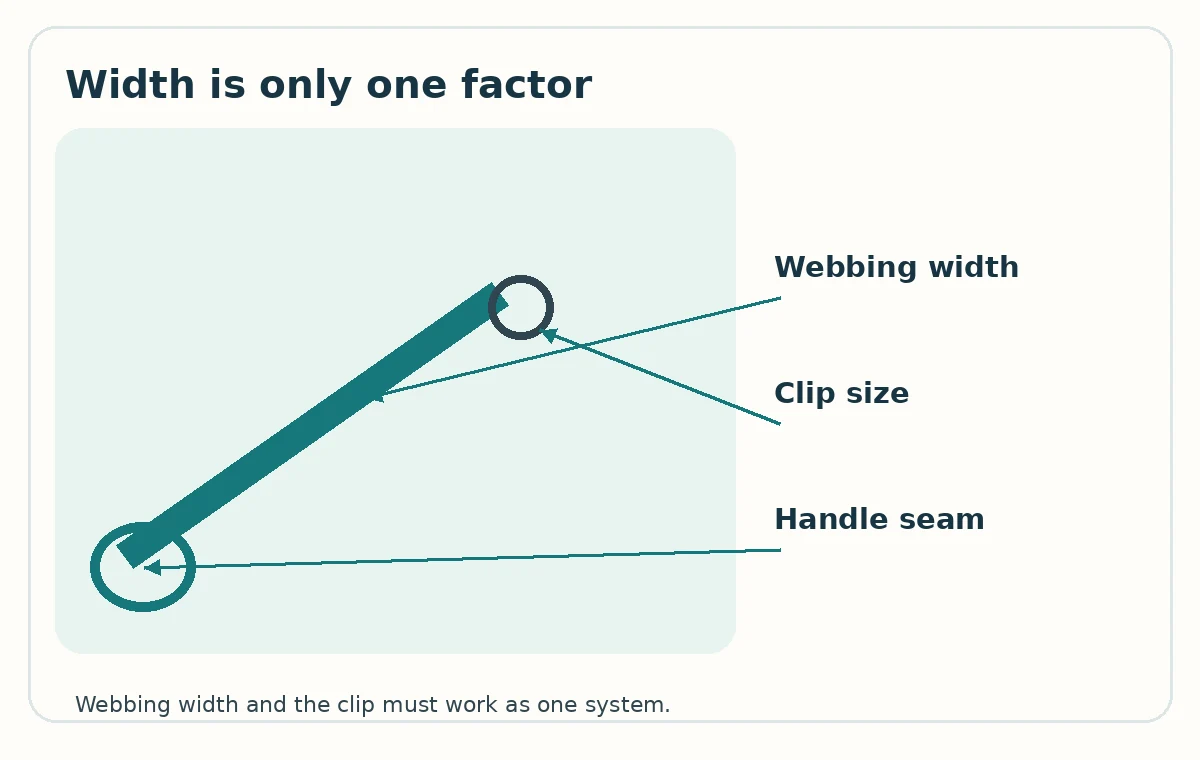
Width is not the same as overall strength
Webbing width can affect how a leash feels in the hand, but the material, weave, stitching, and hardware also matter. A very wide strip is not automatically stronger than a well-made narrower leash. Likewise, a thin line is not automatically appropriate for a small dog. Treat manufacturer ratings and intended use as part of the decision. Examine the whole load path from handle to clip, not a single width number.
Check the leash against your actual grip
Hold a sample in the hand you normally use. Flat webbing should lie comfortably without digging into fingers. Very narrow tape can feel sharp under tension, while wide webbing may be bulky in a small hand. Check the sewn loop opening and where doubled-over webbing sits against the palm. Do not coil a long leash around your wrist. Comfort matters because an awkward grip may reduce control during an unexpected distraction.
Balance the clip with the dog’s size
A broad leash can be paired with an unnecessarily heavy metal hook. On a small dog, that hook may swing and pull at the collar or harness ring. Compare the whole clip and leash assembly against the dog’s frame. The clip should operate smoothly, close fully, and fit the ring without binding. Hardware weight should be reasonable, but never replace secure mechanical function with an undersized flimsy fastener. If in doubt, consult a professional fitter.
Look at webbing layers and edge finish
A folded hem can feel thicker than the width listed on a product page. Run your finger along both edges for rough binding, hard stitching, and fraying. Flat webbing often stores neatly, but a very stiff strip may twist when the dog turns. Check that the handle return is securely sewn through structural layers. Avoid attaching carabiners or improvised extension straps unless the manufacturer explicitly designed the gear for that setup.
Compare a broad tape with a thin cord
A flat tape is generally easy to see and grasp, while a narrow cord can be difficult to spot in low light. A thin tensioned line can cause painful friction if it slides across bare skin. Do not try to stop a fast-moving dog by grabbing the middle of a moving cord. The safest comparison considers length, finish, visibility, and how the clip behaves, not just the advertised width. Avoid sudden yanks and repeated leash corrections.

Measure length and width as separate decisions
Leash width describes the cross-section; length describes working distance. Shorter everyday leads can help maintain a clear connection near roads, while longer lines belong in suitable open spaces. Choosing one dimension does not solve the other. Lay the leash flat, measure the webbing away from folded seams, and compare that number to the manufacturer’s sizing information. Then judge whether the normal handle position gives your dog appropriate slack for the setting.
Try the leash during calm practice
Clip the leash to a correctly fitted harness and walk across a familiar, clear space. Check whether the webbing twists, scrapes against your fingers, or snags on the dog’s legs. Give a little slack and reward relaxed movement. Observe the metal clip during turns; a heavy hook may knock against the chest or swing freely. This test is not a pull-strength trial. Never make a dog lunge or pull hard to check the equipment.
Match conditions and maintenance needs
Wet nylon can feel different from dry nylon, and grit can make woven material abrasive. Wash according to the label and air dry. Leather and coated materials have different cleaning needs, so follow the specific instructions. If the leash is stiff after washing or the edge threads unravel, inspect it carefully before reuse. A thinner strip can be easier to pack, while a wider one may feel more manageable with gloves. Choose for the handler and actual route.

Keep the whole setup proportional
Recheck the dog’s neck or harness fit, ring size, and leash clip together. A clip too large for a small ring may bind, while an unsuitable tiny clip may not close reliably. Avoid choosing by dog weight alone without considering behavior and maker specifications. No leash can replace calm handling or training. A comfortably held leash with secure hardware and appropriate length is a better everyday choice than chasing a single supposedly ideal width.
Quick decision checklist
Before buying or reusing dog leash width, confirm that the product matches the dog and the setting. Check the hardware, fabric, and fit while the dog is standing naturally. Repeat the check during a calm walk rather than pulling hard to test strength. Look for rubbing, changed movement, or a twisted connection after a few minutes. If you cannot get a secure and comfortable fit, choose a different construction. Do not modify structural stitching, shorten straps by cutting them, or leave walking equipment on an unattended dog. An ordinary, well-fitted setup beats a dramatic marketing promise.
How We Research
We compared published veterinary and animal-welfare guidance with practical equipment features that owners can check without laboratory tools. The distinctions above are observational buying and handling criteria, not results of a product trial. VCA emphasizes shoulder movement and avoiding chafing in harness selection. AKC explains how leash styles and grips match different walks. We did not independently certify strength, reflection, breathability, or any model claim. For site standards and scope, read the HubPet editorial information. Ask your veterinarian about persistent discomfort or unusual gait changes.
Sources
American Kennel Club — Choosing the Right Dog Leash. Consulted for equipment fit, practical walking limits, and safety principles. This source does not evaluate the individual items pictured here.
AKC Pet Insurance — Choosing the Right Canine Tools. Consulted for equipment fit, practical walking limits, and safety principles. This source does not evaluate the individual items pictured here.
VCA Animal Hospitals — Controlling Pulling on Walks. Consulted for equipment fit, practical walking limits, and safety principles. This source does not evaluate the individual items pictured here.
No. Strength depends on fiber, weave, stitching, hardware, and construction as well as width. Use the maker’s guidance.
Yes. Heavy hardware can swing or add uncomfortable weight. Choose a secure clip that is proportionate to the dog’s gear.
No. Width and length answer different questions. Choose each for the dog, handler, and walking environment.
Avoid grabbing a moving, tensioned cord. It can cause friction injuries, especially during a sudden run or lunge.
Measure the flat webbing away from folded seams with a ruler. Check handle bulk and clip weight separately.