
A head halter can change the direction of a dog’s head; fit and slow, willing acceptance are essential. This guide focuses on observable steps and realistic safety limits. Good walking equipment should be comfortable, and a reward-based lesson should leave the dog able to make voluntary choices.
What a head halter does and does not do
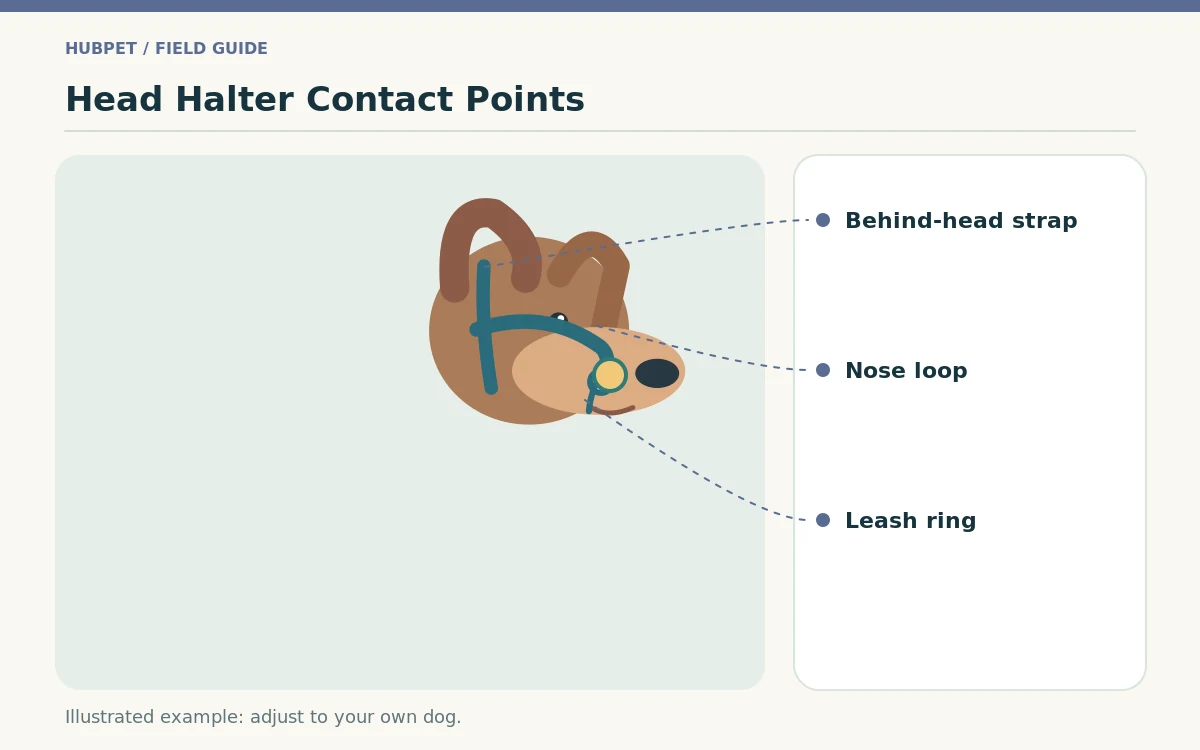
A dog head halter has a loop around the muzzle and a strap behind the head. A leash connection can guide the direction of the nose. Some sellers market the device as an easy fix for pulling. However, it does not teach a dog why loose-leash walking is worthwhile. It is not a muzzle. A correctly fitted dog must be able to open the mouth, breathe, and pant naturally. A head halter changes the mechanics of restraint. That creates specific handling risks as well as possible practical benefits for some teams.
Begin by deciding whether it is appropriate
A comfortable, well-fitted Y-shaped body harness is often an easier and more accepted first choice. Head halters can help certain handlers manage strong dogs. However, the animal must tolerate the gear and the person must handle it gently. Do not guess at fit for dogs with neck pain, respiratory concerns, intense jumping, or sudden lunging. Seek veterinary and qualified reward-based training guidance before introducing a device that can turn the head abruptly. Some dogs never become comfortable wearing a head halter; their refusal is useful information, not a training failure.
Identify the three important contact areas
First inspect the nose loop. It should rest on the muzzle as the maker describes, away from the eyes and mouth opening. Next check the neck strap behind the head for secure closure without skin pinching. Finally, locate the leash ring and any safety attachment to a separate harness or collar. You should know which ring you are holding before a walk. Adjust with the dog calm and standing normally. Brands use different strap paths. Therefore, follow the specific instructions rather than copying a diagram for another model.
Make panting and movement nonnegotiable
Look at the dog from the front and side while the leash is slack. The dog should open the mouth comfortably and turn the head voluntarily. The strap must not cut into the eyes. Watch for nose rubbing, repeated pawing, freezing, low posture, or attempts to run away. If these occur, stop rather than tightening the halter further. A dog with a short muzzle or unusual face shape may not have a suitable fit in a general-purpose head halter. Choose a body harness when the anatomy or comfort is incompatible.
Condition acceptance before clipping on a lead
Begin with the halter lying on the floor while the dog receives rewards nearby. Next present the open nose loop and allow the dog to choose to bring the muzzle toward it. Reward brief voluntary contact, then let the dog move away. Over separate comfortable sessions, reward the dog for entering the loop. Later, briefly fasten the strap. Remove the halter before the dog paws or panics. Do not lure the dog into wearing it and then trap them in place. Build calm acceptance at the dog’s pace rather than on a fixed calendar.
Practice stationary handling first
When the dog can wear the halter comfortably indoors, attach a short, ordinary leash while keeping the line slack. Reward turning toward you and taking a single step without the leash pulling the head. Practice in a quiet, enclosed area before moving outdoors. Do not make the halter responsible for physically stopping every rush toward a distraction. Avoid retractable leads and long lines, which can create dangerous sudden impacts when a dog reaches the end. Never jerk, snap, or sharply twist the lead. If you cannot prevent sudden lunges, work first on distance and management.

Add a safe backup for escape prevention
Some head halters can slip off when a dog paws at the nose strap or backs away. Veterinary guidance advises a backup connection to a fitted harness or suitable collar. Choose routing that avoids tangles and strain. Ask a qualified professional to demonstrate the manufacturer’s recommended arrangement, then practice it without distractions. The backup should not let you yank both attachments together. Keep the dog on a short, controlled line when entering busy places. Remove the halter when the dog is unattended, tethered, or free to play with other dogs.
Recognize the risks of a sudden impact
A head halter directs forces through the muzzle and head instead of spreading them across the torso. When a dog reaches the end of a long line at speed, the head may rotate abruptly and injure the neck. This is why loose-leash management, short controlled lines, and a calm training setting are essential. Walkers must keep their own balance and avoid winding the leash around a hand. When the dog notices a trigger, increase distance and reward voluntary attention before it becomes urgent. Never use the head halter for leash corrections or to forcibly turn a frightened dog toward a stimulus.
Know when to choose a different option
Discontinue this tool if your dog cannot pant freely or develops muzzle irritation. Persistent pawing or anxiety also means stop. A well-fitted front-clip or back-clip harness may offer a gentler foundation, paired with rewards and walking practice. For a dog that reacts strongly to people or other animals, plan for greater distance and an individual behavior approach. A trainer can help you assess handling safety without promising that hardware will change the dog’s emotional response. Neck symptoms, breathing changes, and pain require veterinary evaluation rather than a new strap adjustment.

Use the tool only as a temporary support
Record whether the dog willingly approaches the halter and stays comfortable. Also note when the leash hangs slack. Progress means the dog chooses calm behavior and responds to familiar cues. Nose control alone is not progress. Continue teaching loose-leash walking on a comfortable harness and in low-distraction locations. A head halter may help in selected situations. However, it never replaces rewards, supervision, or escape prevention. For many dogs, the safest long-term answer is a familiar harness and reliable training rather than a facial restraint.
How We Research
We reviewed veterinary and animal-welfare guidance on dog head halters. Then we translated that advice into observable fit checks and reward-based exercises. We did not test product strength, measure injury rates, or certify specific gear. Model-specific safety instructions must come from the manufacturer; health and behavior concerns require individualized professional advice. Sources checked October 28, 2026. Read our About HubPet page for editorial context.
Sources
American Veterinary Society of Animal Behavior — Humane Dog Training Position Statement. Read source. Accessed October 28, 2026.
VCA Animal Hospitals — Collar and Harness Options for Dogs. Read source. Accessed October 28, 2026.
RSPCA Australia — Equipment for Teaching Dogs to Walk on a Leash. Read source. Accessed October 28, 2026.
VCA Animal Hospitals — Controlling Pulling on Walks. Read source. Accessed October 28, 2026.
Safety note: This guide offers general walking information. It does not provide a diagnosis, personal behavior treatment, or equipment certification. Stop the exercise if your dog develops pain, breathing changes, or marked fear. Consult a veterinarian or qualified reward-based behavior professional for persistent dangerous lunging. See the HubPet veterinary disclaimer.
No. A correctly fitted head halter permits panting and mouth opening. It is not a bite-prevention muzzle.
A gradual reward-based introduction is safer. Let the dog volunteer to touch and wear the loop before attaching a leash.
No. A retractable leash or long line can produce sudden head and neck forces when the dog reaches its end.
Stop the session, check the fit, and move back to easier voluntary introduction. Some dogs may never tolerate this equipment.
Veterinary guidance recommends a backup to a fitted harness or suitable collar. Some dogs can escape from head halters.