
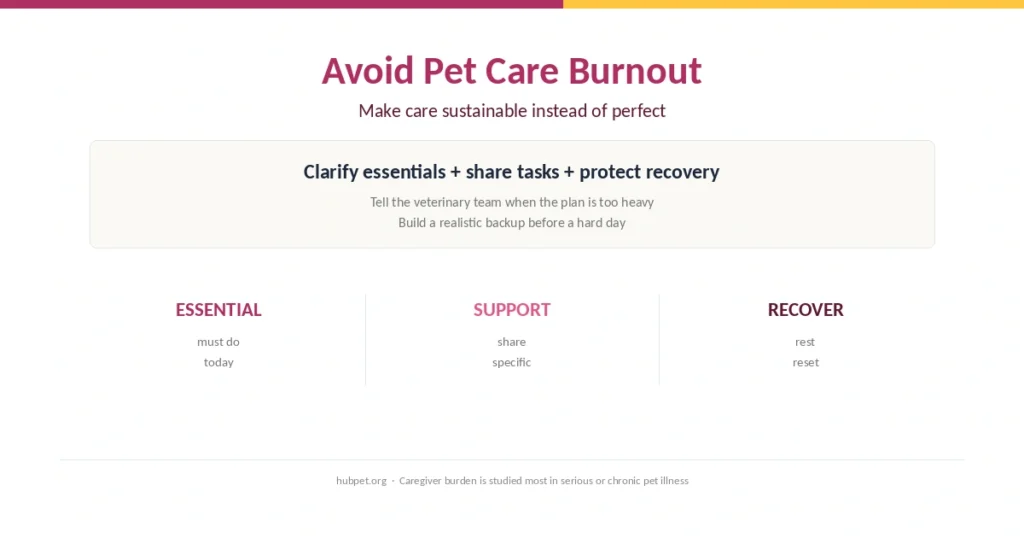
How to Avoid Burnout as a Pet Owner
Pet caregiving can become physically and emotionally demanding. Use realistic routines, specific support, and veterinary teamwork to make care sustainable.
Pet caregiving can become physically and emotionally demanding. Use realistic routines, specific support, and veterinary teamwork to make care sustainable.

Make everyday routes easier for an aging dog or cat with traction, accessible resources, safer heights, quiet rest, and attention to new mobility changes.

Balance attention in a multi-pet home with predictable individual contact, separate resources, and group time that stays optional.

Limited outdoor access can work well when pets still get appropriate movement, exploration, foraging, play, rest, and safe choices indoors.
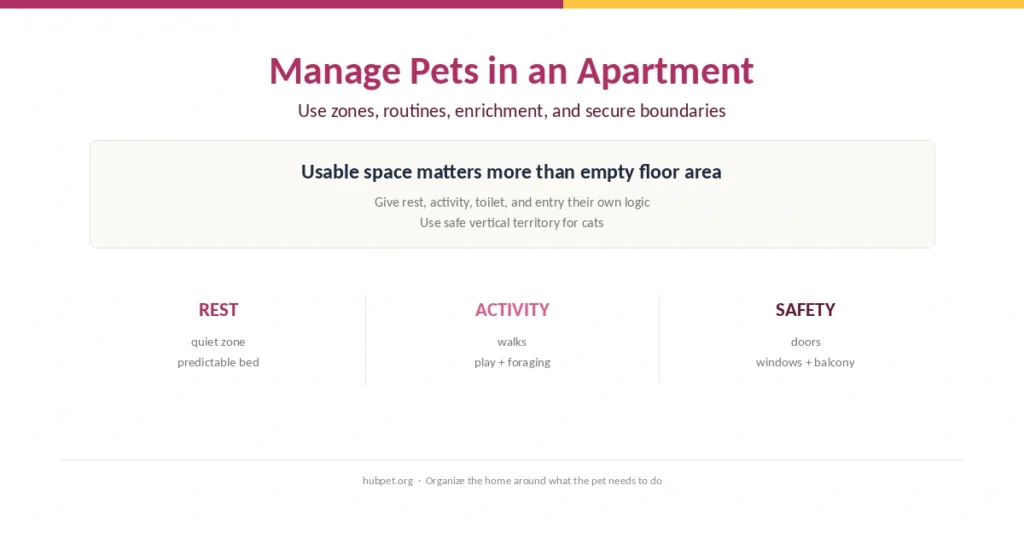
Apartment pets do best with clear rest and activity zones, predictable routines, enrichment, and secure doors, windows, and balconies.

Secure windows and balconies with physical barriers first, then add views and enrichment behind them.

Make a cat balcony safer with full-height containment, secure windows, no exploitable gaps, stable furnishings, safe plants, and regular inspections.

A good pet routine alternates varied activity with calmer transitions and protected rest instead of pushing constant stimulation.

Safe cat climbing space is about stable routes and useful choices, not maximum height. Build secure perches and exits around your cat’s mobility and household.

Toy rotation can restore novelty, but there is no universal schedule. Group toys by function, track interest, vary presentation, and check safety.