
This article is general information, not veterinary advice. If your pet seems unwell, is in pain or may have eaten something harmful, contact your vet or an animal poison control line right away. Read our vet disclaimer.
How to create a safe balcony for cats starts with one rule: a cat’s balance does not make an open drop safe. The ASPCA 2023 high-rise syndrome guidance describes accidental falls from windows, terraces, and fire escapes. Cats may fall while focused on birds or other movement. The Merck Veterinary Manual, updated in 2025 also warns that open windows and balconies can lead to falls and injury.
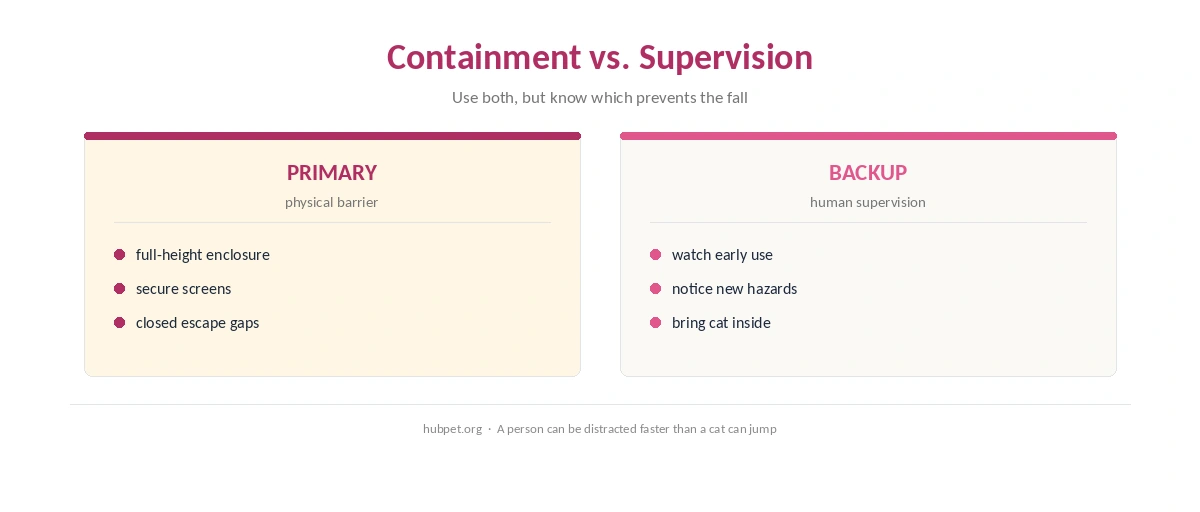
A safe setup therefore needs a physical barrier, not supervision alone. Cats Protection guidance accessed in 2026 recommends secure floor-to-ceiling containment, such as suitable mesh or netting. It also warns that poor installation can create entanglement or escape risks. Treat this as a containment project, not a decorative screen. HubPet’s pet-proofing guide uses the same principle: remove the hazard before relying on training.
How to Create a Safe Balcony for Cats: Containment First
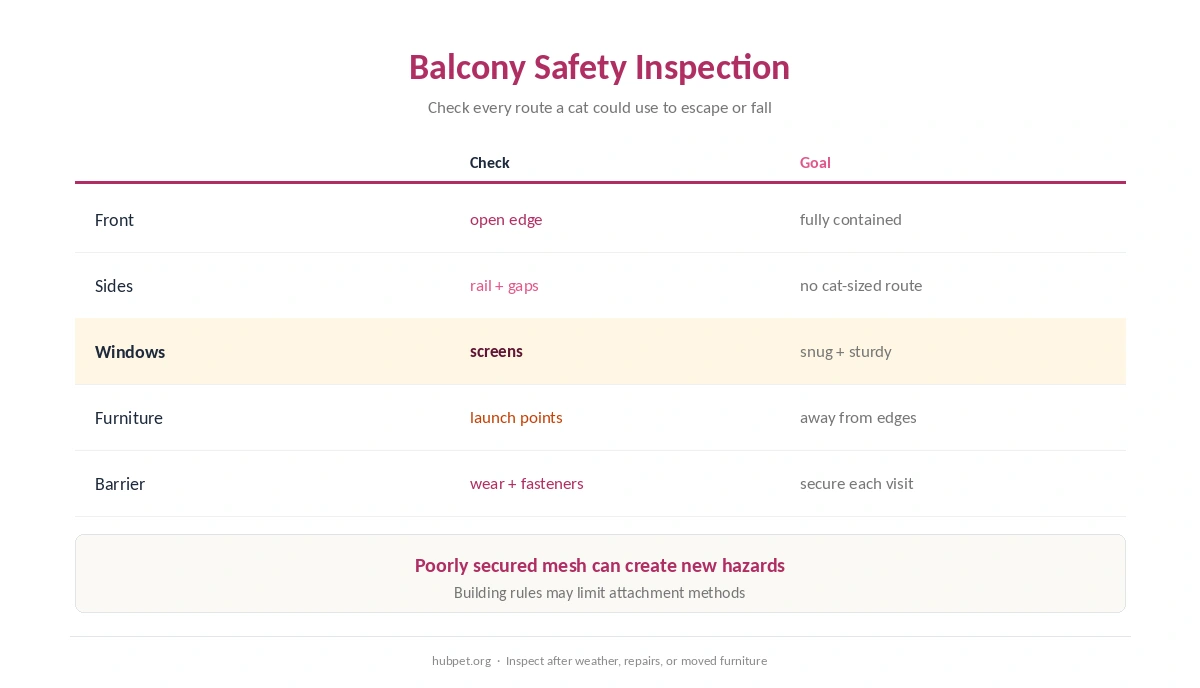
Start by identifying every route out. Check the open front, side gaps, railing gaps, nearby ledges, drain openings, and furniture that creates a launch point. This inspection is the first practical step in how to create a safe balcony for cats. A barrier should leave no cat-sized gap. Secure it so normal pushing, climbing, or weather cannot open an escape route. If you rent or live in a managed building, confirm which installations the property rules allow before changing the structure.
For windows connected to the balcony, the ASPCA 2023 guidance recommends snug, sturdy screens. It warns that childproof window guards alone are insufficient because cats can slip through them. Do not assume an ordinary loose insect screen is a cat-containment system. The broader checklist in the pet-proofing checklist can help you inspect doors, windows, cords, plants, and other hazards at the same time.
| Balcony feature | Risk to check | Safer setup |
|---|---|---|
| Open railing or edge | Fall or escape | Secure full-height containment with no usable gaps |
| Window or door screen | Loose frame or tear | Snug sturdy screen designed to stay fixed |
| Furniture near edge | Creates a launch point | Move climbing furniture away from unprotected edges |
| Plants and planters | Toxic plant, tipping, soil access | Use pet-safe plants and stable containers |
| Netting or mesh | Loose attachment or entanglement | Use appropriate material, secure every edge, inspect regularly |
How to Create a Safe Balcony for Cats That Is Worth Using
After containment, add choices that do not depend on the balcony edge. A stable low platform, shaded resting place, scratching surface, and view can make the space useful. You can adapt ideas from safe climbing spaces and a calm pet space to a protected balcony. Keep furniture far enough from the boundary that it cannot help the cat bypass the barrier.
Keep plants cat-safe. Review toxic houseplants before moving greenery outside, and use the plant-chewing guide if the cat persistently mouths leaves or potting material. Avoid strings, loose ties, sharp wire ends, or dangling hardware that could become a new hazard.
Enrichment should remain optional. Some cats enjoy watching outdoor movement; others become frustrated or overstimulated. The guides to indoor-cat stimulation, enrichment spaces, and toy rotation provide indoor alternatives. Keep an easy route back inside instead of using the balcony as the cat’s main source of stimulation.
Balcony Safety Checks Before Every Use
Inspect the barrier after strong weather, maintenance work, or any time an attachment point looks different. Check for tears, loose fasteners, new gaps, shifted furniture, sharp edges, or objects that could tip. Keep the door routine predictable so a second cat or another household member cannot accidentally defeat the setup.
Supervision is still useful even after physical containment, especially while you learn how the cat uses the space. How to create a safe balcony for cats also means inspecting that containment as the cat starts using it. However, supervision is a backup rather than the barrier. The home-alone safety checklist is a useful reminder that hazards should stay controlled when a person is not watching.
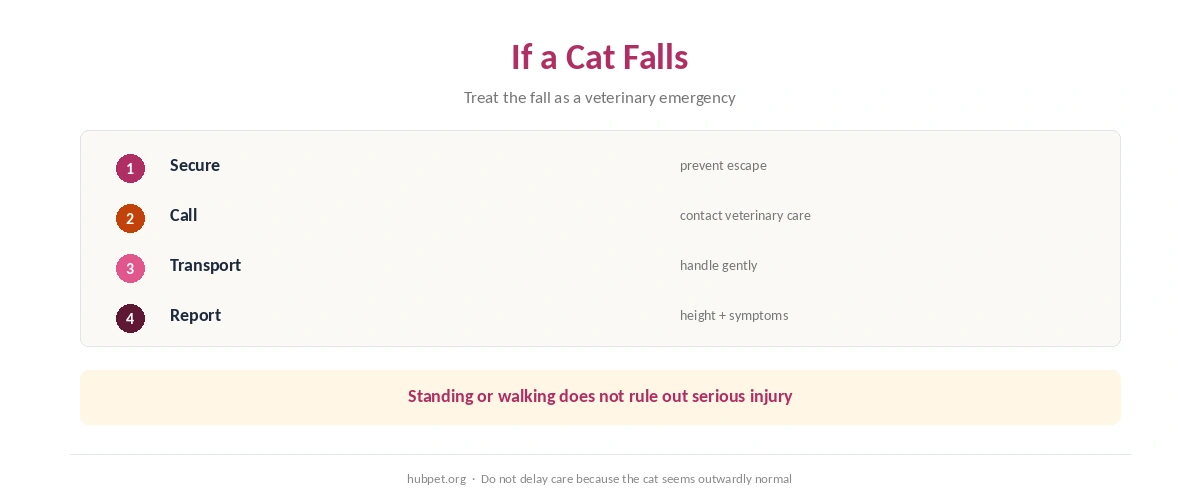
If a cat falls, do not assume that standing means the cat is unhurt. Do not use the height of the fall to rule out injury either. ASPCA 2023 describes serious injuries from high-rise falls and recommends immediate veterinary care. Use pet emergency signs and the first-aid checklist for transport and emergency preparation.
For the myth behind “cats always land safely,” see do cats always land on their feet. If you are preparing a new home, add the balcony check to the new pet owner checklist.
How We Research
HubPet reviewed balcony-safety sources on October 11, 2026. We used the ASPCA 2023 high-rise syndrome guidance, the Merck Veterinary Manual home-safety guidance updated in 2025, and Cats Protection balcony guidance, accessed in 2026. Our research process prioritizes physical hazard control over assumptions about a cat’s balance or training.
Use secure full-height containment with no escape gaps, protect connected windows with snug sturdy screens, keep climbing furniture away from unprotected edges, and inspect the barrier regularly.
No. A distraction can happen faster than a cat can jump or fall. Use physical containment first and treat supervision as an extra layer.
Cats Protection lists mesh or netting as options but warns about entanglement and escape when owners secure the material poorly. Use appropriate materials and secure every edge.
The ASPCA says childproof window guards are not sufficient because cats can slip through them. Use snug, sturdy window screens or another cat-secure barrier.
Locate the cat and seek veterinary care immediately. Serious internal or orthopedic injuries may not be obvious at first.
The Bottom Line on How to Create a Safe Balcony for Cats
How to create a safe balcony for cats comes down to secure containment, no exploitable gaps, safe furnishings, and routine inspection. Build the barrier first, add enrichment second, keep an easy route indoors, and never rely on a cat’s balance or supervision as the primary fall-prevention system.