
Scented cat litter may seem like a quick fix for odor, but a fragrance that pleases people can bother a cat’s sensitive nose. Many veterinary and welfare sources recommend unscented litter, regular scooping, and a well-placed box. Instead of chasing stronger perfume, compare the two choices through the cat’s behavior, the room’s airflow, and the cleaning routine. Read our veterinary information disclaimer before interpreting changes in toileting as a product issue.

Separate fragrance from actual waste removal
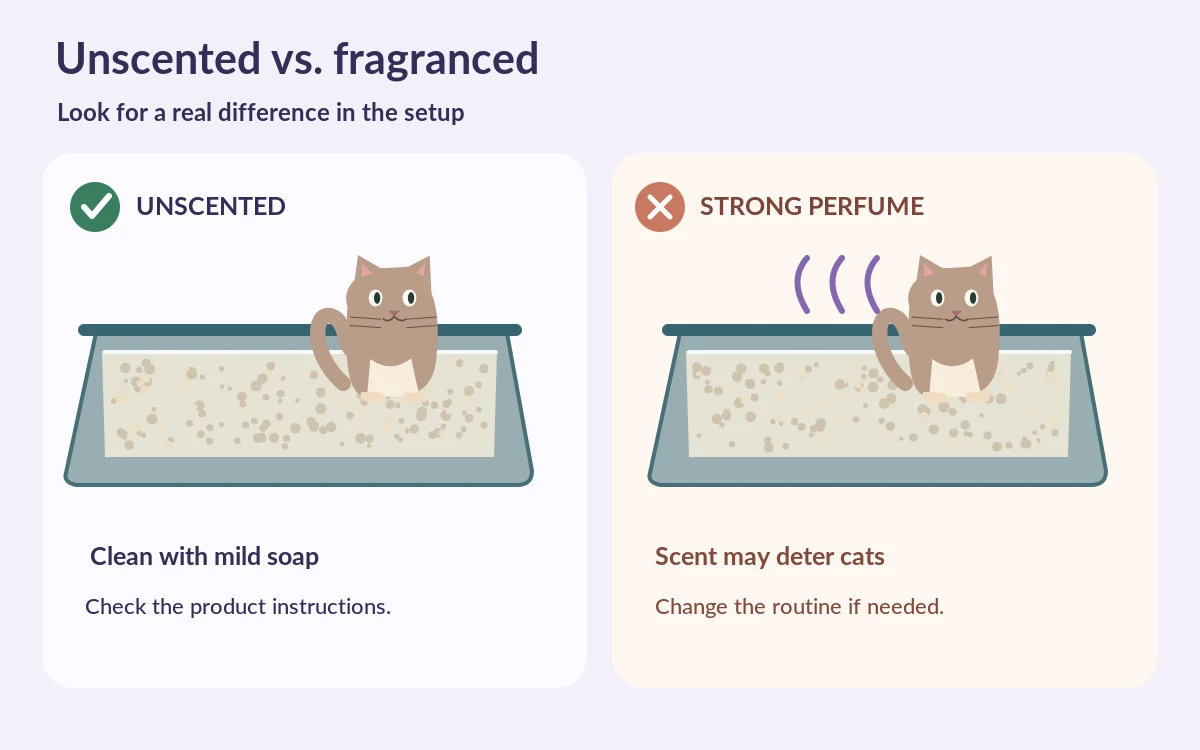
A floral or fresh scent changes what a person smells near the box; it does not remove urine or stool. A dirty box still needs prompt scooping. Check labels for added perfume, fragrance beads, or scent-release marketing and note whether a product is explicitly unscented. Fragrance-free and unscented claims can have different meanings in other product categories, so read the full product list and test the real smell rather than trusting a colorful front label.
Consider the cat’s stronger scent sensitivity
Cats rely on smell to navigate their environment and can develop preferences around their litter area. A noticeable fragrance may discourage some cats from approaching or digging. Watch for entry hesitation, a quick exit, or a shift toward another toilet area. Do not try to overpower the smell with room spray or scented cleaners. Even an unscented litter can become unpleasant if its box remains dirty or stands next to a loud appliance.
Make an honest comparison with two boxes
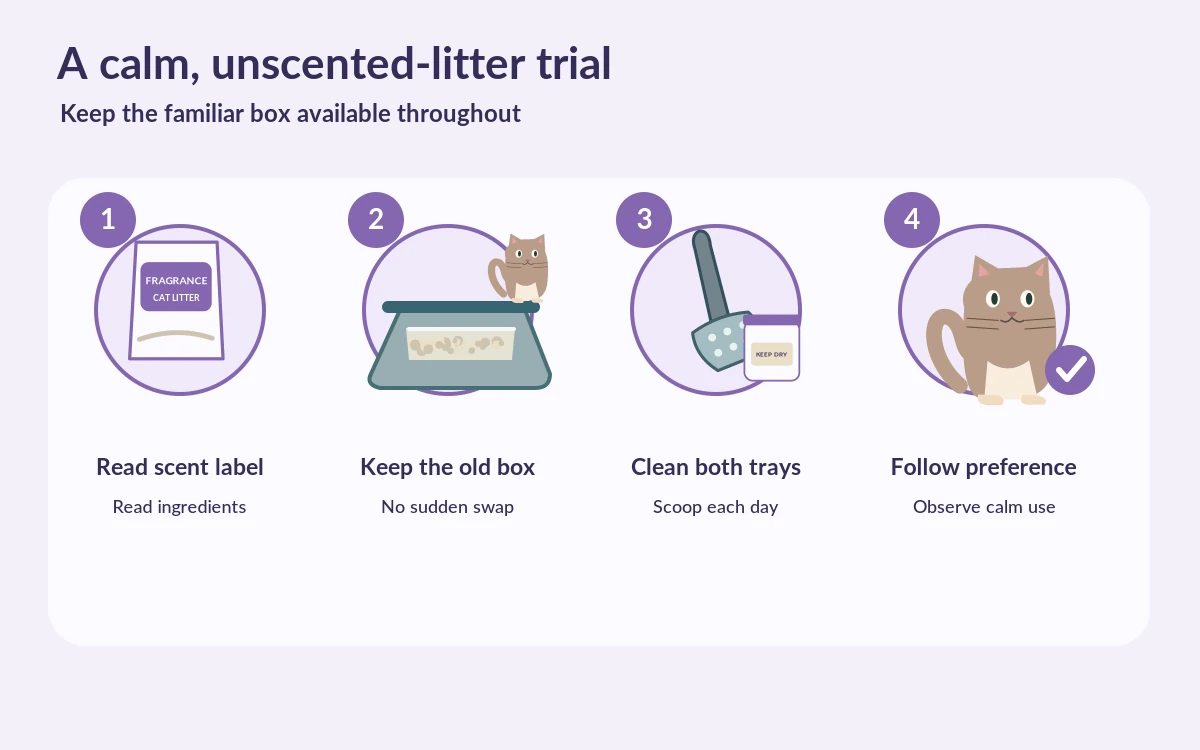
For an adult cat already using a scented product successfully, set up a second similar large box with a fine, unscented option. Keep depth, scoop schedule, and surrounding access similar. Avoid swapping every factor at once. Allow your cat to choose and record ordinary use over several days. If the cat avoids the new box, check texture as well as smell; a different particle size may explain part of the preference.
Use a stable hygiene schedule
Scoop at least once daily, with additional checks for busy multi-cat homes. Remove damp clumps, replace litter as directed, and wash the tray with mild unscented soap on an appropriate schedule. Dry it before refilling. Keep waste in a covered household container that is easy to empty and clean. Fragrance should never be used to postpone a needed full change or to hide a wet tray bottom.
Place the box where air moves gently
A quiet accessible location helps more than positioning an air freshener directly above the litter. Avoid strong drafts, sudden appliance noise, and tiny enclosed cabinets that trap odors. Keep the box separate from food and water. If another pet may block the entrance, give the cat an alternative route and another box. Room layout and social comfort can affect litter acceptance even when the substrate is identical.
Understand deodorizing additives
Charcoal, baking soda, and perfume are different ingredients with different purposes. Do not pour household cleaners, essential oils, or loose chemical additives into the litter box to create a stronger smell. Follow instructions only for products intended for cats. When a bag makes an odor claim, assess whether the litter removes cleanly during routine scooping and whether your cat still uses the box comfortably.
Introduce the unscented option without pressure
Leave the established litter available until the cat consistently chooses the alternative. If you must change products, a side-by-side setup is clearer than suddenly replacing the only box. Observe normal digging, covering, and toileting rather than tempting the cat into the box. Never punish accidents. The practical target is a clean reliable toilet, not a particular fragrance preference or a claim of instant odor elimination.
Investigate persistent odor rather than masking it
If a freshly cleaned box develops an unusual smell quickly, inspect the substrate, tray seams, scooping method, and ventilation. Older scratched plastic can hold residue. Persistent elimination outside the box or sudden changes in urination may need a veterinary evaluation. Straining or repeated attempts to urinate are urgent signs. A stronger perfume can delay noticing trouble; it cannot address a health or environmental cause.
A practical buying and routine checklist
Before buying a large supply, record the exact ingredient list, whether the formula clumps, and its recommended depth. Check the weight of the bag you will carry and the storage space you have. Keep a washable mat and a scoop that matches the grain size. Most important, preserve your cat’s access to a familiar clean box during trials. Revisit the decision after a week of ordinary use instead of relying on a single enthusiastic visit.
What to record during a trial
A scent preference trial works only if the cat has a genuine option. Place the alternative box where it is accessible, not behind a busy doorway or next to an appliance. Avoid changing the litter depth or moving a favorite tray to make a product appear more successful. You can track normal visits with simple notes instead of watching the cat closely. If visitors complain about odor, improve waste removal and ventilation before adding any fragrance to the animal’s toileting area.
How We Research
We reviewed cat litter guidance from the Ohio State Indoor Pet Initiative, ASPCA, Cats Protection, and RSPCA. Those sources support clean, accessible boxes, individual substrate preferences, and cautious litter changes. Product-specific grain behavior should be checked against the actual manufacturer label. Our illustrations explain practical checks rather than laboratory testing or brand endorsements. Read more about our approach on the About HubPet page.
Sources
Ohio State Indoor Pet Initiative: Litter Boxes — reference for cat litter preference, box hygiene, and safe comparison of substrates.
ASPCA: Litter Box Problems — reference for cat litter preference, box hygiene, and safe comparison of substrates.
Cats Protection: How to Choose Cat Litter — reference for cat litter preference, box hygiene, and safe comparison of substrates.
Many veterinary and welfare organizations recommend it because added fragrances can discourage sensitive cats from using the box.
No. Perfume does not replace daily removal of urine clumps and stool or regular tray cleaning.
Do not add essential oils, household spray, or cleaning chemicals to cat litter. Use products as directed and ask a veterinarian about safety concerns.
Avoid abrupt changes. Offer a separate unscented option if you want to compare preference while maintaining a clean familiar box.
Check for wet residue, missed waste, trapped odor in the tray, or poor ventilation. A stronger perfume is not a substitute for maintenance.