
Remove Pet Hair From Carpeted Stairs: Edges, Pile, and Hose Safety addresses a specific everyday task, not a promise of a perfectly fur-free home. Start by identifying the material or coat in front of you, then choose a method that avoids damage and unnecessary stress. This guide explains what to inspect, which tools fit the job, and how to recognize when a simple maintenance task needs professional help. Product manuals and the animal’s comfort always take priority over generic advice. For concerns involving your pet’s health, read our veterinary disclaimer.
Find where fur collects first
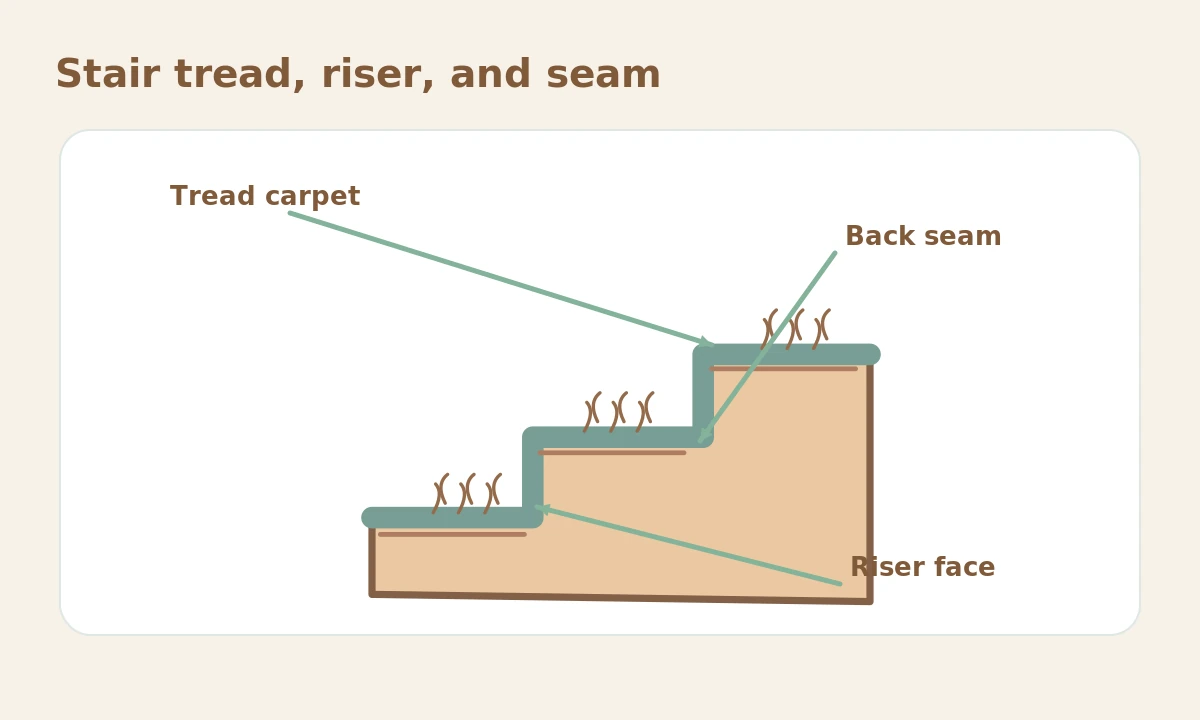
Pet hair gathers on the flat tread, at the back crease where it meets the riser, and along outer carpet edges. These are different surfaces for a vacuum tool. Look at the stair carpet before cleaning: a tight low pile behaves differently from a loose loop or long shag. Check whether a runner is securely fastened. Do not start a powered brush on loose fringe or a lifted edge. Clearing toys, shoes, and pet bowls first prevents the cleaner from snagging objects on the stairs.
Make the staircase safe to work on
Choose a time when dogs and cats can stay in another room. Keep a clear path and good lighting, and wear stable shoes. Place the vacuum body securely on a level landing if its hose reaches; do not balance a heavy upright on a tread. Keep the cord and hose out of your walking path. If the attachment cannot reach without pulling the machine, move to a safer position. Do not lean past a railing or stretch with one hand while trying to hold a vacuum with the other.
Start with a gentle surface pass
Begin on the broad carpeted tread using a tool that suits the manufacturer’s pile recommendations. Slow overlapping strokes lift surface fur and grit. A suction-only upholstery head is a sensible first test on a delicate fabric stair runner. Use a motorized brush only if it is safe for that carpet construction and does not pull loops. Listen for new scraping sounds. Stop if fibers lift or the attachment grabs the carpet. Dry pickup comes before any damp cleaning method.
Switch tools for seams and corners
The narrow line where a tread meets the riser often traps fur beyond a wide tool’s reach. Use a crevice attachment with the opening angled toward the seam, not forced beneath attached carpet. Clean each side edge and the vertical riser with smaller strokes. If a tool has a sharp plastic corner, protect delicate carpet by holding it slightly above the surface. A short soft-bristle attachment may loosen stubborn tufts. Do not scrape with metal or a rigid blade.
Use a fabric-safe manual tool when needed
If some fur remains, a soft rubber squeegee or upholstery brush may draw strands into a small clump. Test in an inconspicuous place first, particularly on loop pile or wool. Apply light pressure in short strokes so you do not fuzz the carpet. Lift the clump with a vacuum or dampened cloth, without soaking the stairs. Avoid strong adhesive tape on fragile fibers or backing. One rubber tool that works on automotive carpet may be too aggressive for a fine domestic stair runner.
Compare suction-only and powered attachments
For firmly installed dense pile, a powered mini brushroll can work well, but it can also grab a loose stair nose or snag loops. Meanwhile, a suction-only upholstery head offers more control on delicate surfaces, though you may need another pass. The crevice nozzle reaches edges but cannot replace the broad tool on every tread. Choose based on the carpet’s construction rather than advertised pet-hair performance alone. A short trial on one step should show whether the tool lifts hair without visible damage.

Clean treads, risers, and landing in order
Work from a secure position and follow a repeatable path: broad tread, back seam, both side edges, then vertical riser. Choose a sequence that lets you stand firmly and keep the hose behind or beside you. The landing deserves a separate pass because fur often rolls there. Empty the vacuum’s dirt container before suction falls. If stairs become crowded, pause and move the equipment; do not try to finish while carrying a pet or laundry basket.
Watch the carpet and vacuum response
A cleaner that starts dragging, whistling, or shedding unusual carpet fibers may have a blockage or an unsuitable attachment. Switch off before inspecting the head. Follow the manufacturer’s method for removing hair from the brushroll. Do not reach toward moving parts. If the stairs feel damp or have a stain, address the spill with the appropriate carpet care instructions after dry fur removal. Avoid adding water merely to make hair stick together, especially on wood-backed or delicate runners.
Keep pets away until the path is clear
Some pets chase the nozzle, fear its sound, or try to walk between your feet. Close a gate or arrange a separate resting area before turning on the vacuum. Never leave a hose stretched across stairs when you step away. Restore the usual route only after tools, cord, and collected hair are gone. If a pet has mobility limitations, make sure its normal safe route remains accessible when cleaning ends. A clear, non-slip staircase matters more than removing every single strand.

Maintain the cleanup between full sessions
Vacuum stair edges more often during heavy shedding and make a light pass over treads during routine floor cleaning. Brush your dog or cat gently in a designated area to reduce fur transfer without expecting a hair-free home. Replace worn attachments and check runner edges regularly. If fur persistently embeds in the same seam, inspect airflow and tool fit rather than pressing harder. Save a note about which head works on your particular carpet so the next cleaning is quicker and safer.
How We Research
Our research draws on veterinary, animal welfare, manufacturer, and government guidance for this task. The article separates documented recommendations from practical inspection advice that depends on the pet, surface, or machine. HubPet has not independently tested products or certified a safety result. Source material was checked in October 2026, and the exact equipment manual should govern maintenance and use. Read more about our process on the About HubPet page.
Sources
BISSELL — How to Clean Carpet on Stairs (accessed October 2026).
ASPCA — Grooming Your Pet (accessed October 2026).
VCA Animal Hospitals — Coat and Skin Appearance in the Healthy Dog (accessed October 2026).
Home safety note: Keep electrical cords, hoses, and cleaning tools off active walkways. Follow carpet and vacuum manuals, and never leave equipment balanced on a step.
A crevice tool often reaches the tread-to-riser seam, while a smaller upholstery head covers the broad surface.
Only if the carpet and attachment instructions allow it. Avoid powered brushing on loose loops, fringe, or unsecured runner edges.
No. Test a soft tool in a hidden area and stop if it fuzzes fibers or pulls loops.
Keep the main unit on a secure, level surface within hose reach. Do not perch an unsecured upright on a step.
Usually remove loose fur dry first. Wet cleaning should follow the carpet maker’s guidance and allow thorough drying.