
This guide explains why dogs circle before lying down using observable behavior rather than a one-size-fits-all meaning. Read the surrounding situation, watch the dog’s whole body, and respond with safe, low-pressure choices. If a new symptom or sudden behavior change raises a health concern, review our veterinary information disclaimer and contact your veterinarian. The goal is practical interpretation, not a diagnosis.
Understand the bedtime turning ritual
Many dogs turn once or several times before settling into a bed. They may paw at a blanket, nose a cushion, or rearrange fabric. The behavior often looks like a small preparation routine rather than a goal-directed search. Veterinary sources describe circling as a pattern linked to how dogs have historically prepared resting places. Yet there is no fixed number of turns that defines a normal dog. Notice whether your pet settles comfortably afterward. That final outcome matters more than counting every circle.
Why ancestral behavior is one explanation
Wild canids needed to choose and prepare places to rest. Turning and adjusting the ground may have helped create a suitable surface. Domestic dogs can retain parts of those routines even with a soft cushion nearby. However, we should be careful about claiming to know exactly why an individual dog circles. The same movement may also help the dog find a position that feels comfortable right now. Think of ancestral behavior as useful background, not a diagnosis of motivation.
Watch the bed, not just the dog
A mattress can bunch into a ridge or slide against a wall. For example, a small dog may circle because a thick bolster blocks the easiest entry. Meanwhile, a larger dog may struggle to extend its legs in a narrow sleeping area. Examine the bed from the dog’s point of view. Check usable flat space, edge height, grip under the base, and whether fabric wrinkles into a lump. Simple layout changes can make settling easier without trying to eliminate a familiar ritual.
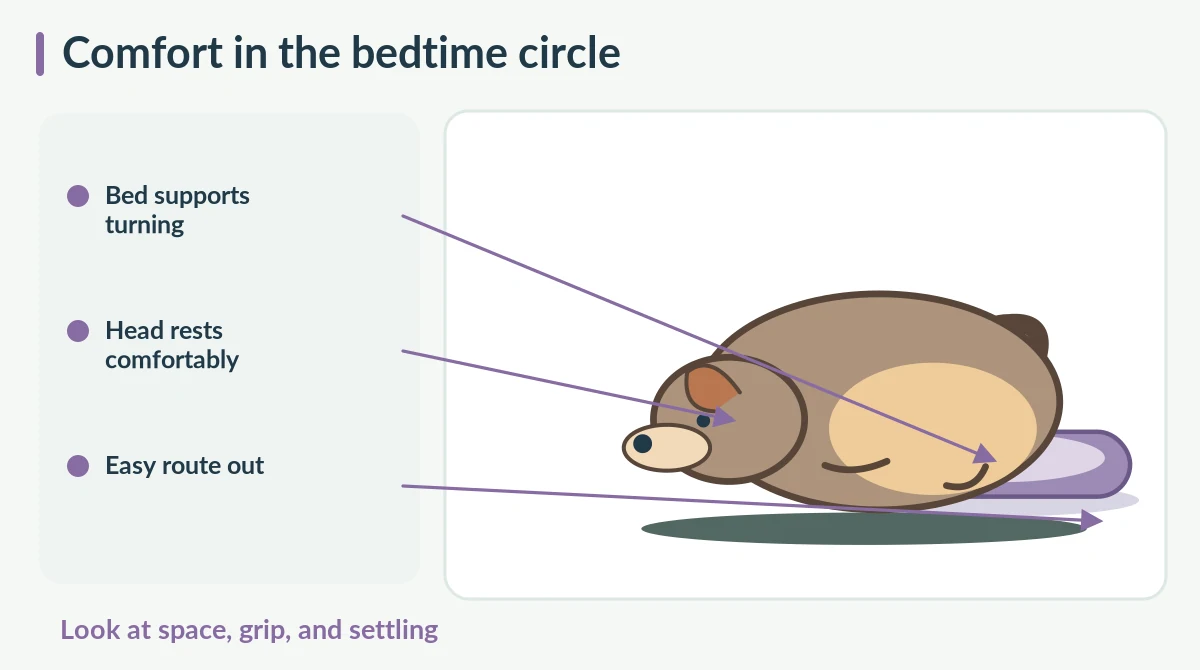
Check floor grip and the route in
A bed that slips during a turn can make a dog hesitate. Place it on a level, non-slip surface and keep loose cords away. Leave an open approach so the dog can enter without twisting sharply around furniture. For older or less mobile dogs, consider a low edge and a stable surface. Avoid forcing a dog into a raised or deep bed. Instead, let it explore and choose. Better traction can improve comfort even if the dog still circles before lying down.
Distinguish a quick turn from pacing
A short circle followed by relaxed sleep usually differs from repeated wandering. A dog who circles, lies down, stands immediately, and repeats may be having trouble finding comfort. Watch for panting, whining, unusual posture, stiffness, or difficulty rising. These signs can justify a veterinarian’s assessment. Do not assume that restless circling is always a behavior problem or an age-related habit. The distinction lies in the frequency, accompanying signs, and whether rest becomes possible.
Consider room conditions
Noise, foot traffic, heat, and limited access can affect where a dog wants to sleep. A bed beside a frequently used door may prompt repeated repositioning. Offer a quieter location with comfortable airflow and room to move away. Keep water accessible and avoid trapping the bed in a hot, crowded corner. If your dog leaves the bed for a cool floor, pay attention to that choice. Resting preference can change with weather, activity, and household routines.
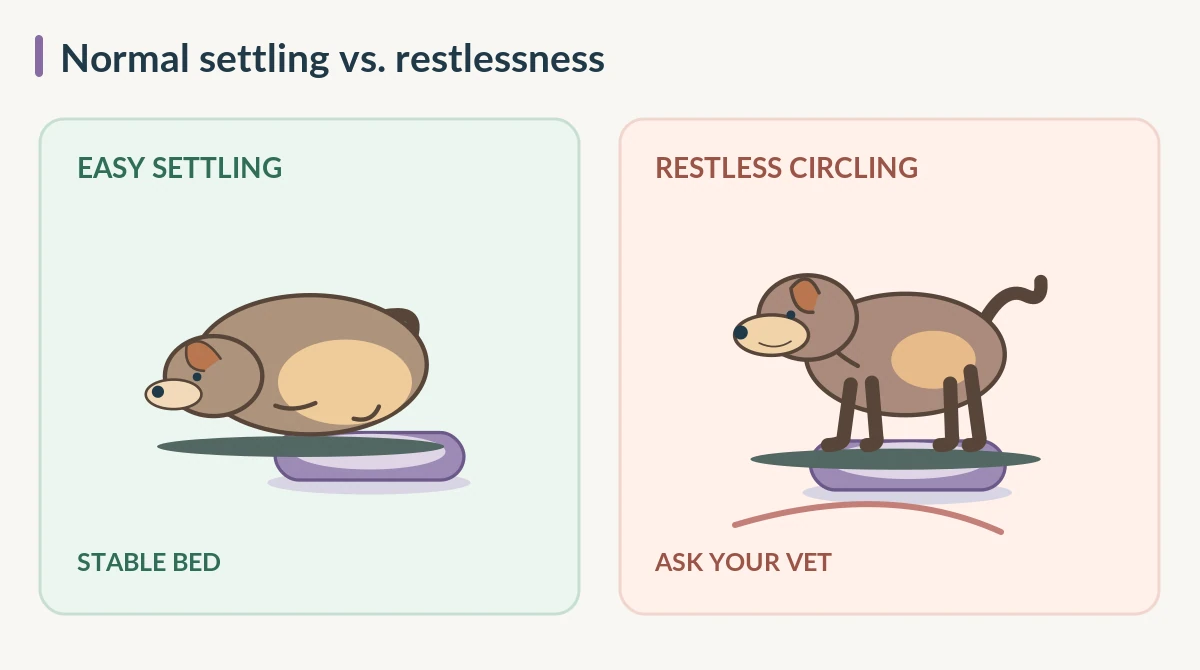
Let the dog arrange lightweight bedding
Some dogs prefer to nose or paw a thin blanket before resting. You can allow this when the fabric is intact and the dog does not chew or swallow it. Remove loose threads, long fringe, and damaged foam. Avoid heavy bedding that bunches into a hard obstacle or covers breathing space. Also make sure the dog can get out easily. The point is to provide a comfortable, low-risk choice rather than arranging the bed to satisfy a human idea of tidiness.
Observe changes across the day
Notice whether your dog circles only before nighttime sleep or also before daytime naps. Compare different surfaces and rooms. A dog that settles easily on a rug but struggles in a deep bed may be telling you something about fit. Keep notes on how long the sequence lasts and whether the dog rests afterward. A sudden increase in circling or new difficulty lying down deserves attention. Avoid repeatedly testing uncomfortable locations simply to confirm a pattern.
Support a dog with limited mobility
Comfort should take priority over the look of a bed. Choose a stable, accessible place and allow the dog to turn without slipping. Avoid high platforms or tight corners that require awkward twisting. Keep commonly used pathways clear and ask your veterinarian about changes in movement or rest. Do not prescribe supplements or exercises based on circling alone. You can adjust the environment immediately while seeking individualized medical advice for persistent discomfort.
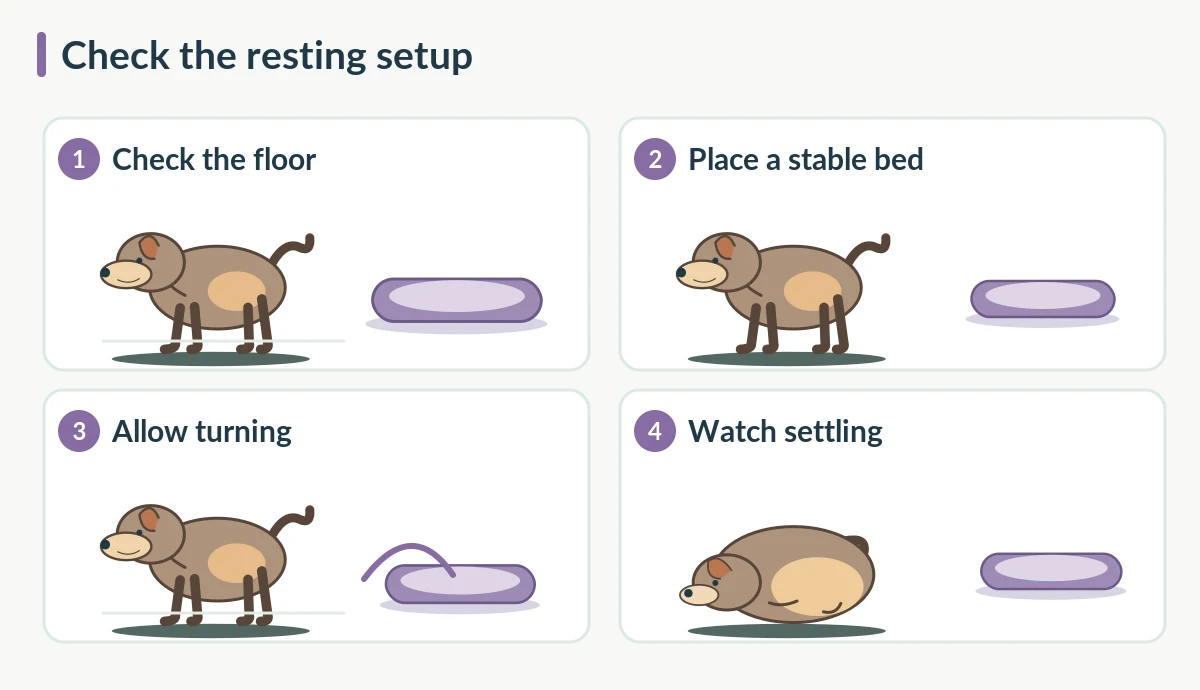
Know when circling becomes concerning
Seek veterinary guidance when a dog cannot settle, shows obvious pain, seems disoriented, circles persistently away from bedtime, or develops a new abnormal gait. Sudden severe neurologic signs require urgent veterinary care. Such patterns differ from the quick turn-and-nest routine of an otherwise comfortable dog. A short video may help your veterinarian see the movement, but never delay care to record one. Describe the timing, any accompanying symptoms, and the dog’s usual resting behavior.
Make comfort checks part of the routine
Each week, inspect bedding for slipping, wet spots, sharp edges, and worn seams. Confirm that the dog has space to stretch and an easy route to water. After cleaning, replace the bed in a familiar location if your pet prefers consistency. Then let the dog decide how to lie down. A little circling may remain part of normal bedtime. What matters is a dog who can settle safely, move freely, and rest without persistent discomfort.
How We Research
We reviewed veterinary and established animal welfare guidance on body language, normal behavior, and low-stress responses. We compared the observable details in each situation and separated common explanations from signs that warrant individual care. This is general education, not proof of an animal’s inner motivation. Our About HubPet page explains the site and its editorial scope. Sources below were consulted in October 2026.
Sources
ASPCApro — Canine Body Language Tips — ASPCApro — Canine Body Language Tips (consulted October 2026).
RSPCA — Dog Care and Welfare — RSPCA — Dog Care and Welfare (consulted October 2026).
VCA — Why Dogs Turn Around Before Lying Down — VCA — Why Dogs Turn Around Before Lying Down (consulted October 2026).
VCA — Why Do Pets Circle Before Lying Down? — VCA — Why Do Pets Circle Before Lying Down? (consulted October 2026).
Safety note: Never punish normal communication or force a fearful dog to interact. Contact your veterinarian about sudden changes, obvious discomfort, or persistent unusual movement. For repeated conflict, work with a qualified, reward-based behavior professional.
Yes. Brief turning before lying down is common. Watch that your dog settles comfortably and does not appear distressed.
No specific count separates normal and abnormal behavior. New repetition, inability to settle, or other symptoms matter more.
Light pawing can be part of a nesting routine. Check that the blanket has no loose threads or dangerous material.
It may make finding a comfortable position harder. Try a stable, non-slip surface and a clear entry route.
Contact your veterinarian for sudden changes, restless pacing, discomfort, disorientation, or difficulty lying down. Seek urgent care for severe acute symptoms.