
Most cats do not need to be taught the entire concept of a litter box. A loose, diggable surface gives them an indoor place to perform a familiar sequence: explore the spot, dig, eliminate, and sometimes cover what they leave. That instinct does not mean a cat will accept any plastic tray in any room. Footing, scent, access, and other pets change the experience. This guide explains what the behavior tells us and how to keep a litter area usable without punishment. Sudden changes in urination or defecation deserve veterinary attention rather than a behavior label. See our veterinary disclaimer.
Digging is a behavior, not an obedience test
A cat may paw at a surface before and after using it because loose substrate allows a natural digging-and-covering sequence. Not every cat covers every deposit; differences in preference and situation are normal. The important question is whether the cat can move, balance, scratch, and leave without feeling trapped. A tray with nothing to dig in, sharp litter, or a surface that shifts under the paws may be unpleasant. Never put a cat in a tray by force or hold its paws to demonstrate digging. Offer a comfortable option and let the animal decide how to use it.
Watch the whole bathroom sequence
Observe from a respectful distance instead of hovering over the box. Some cats sniff, circle, dig briefly, then cover; others leave quickly. What matters is a relaxed approach, a stable stance, and an easy exit. Repeated entering and leaving without eliminating, straining, crying, or signs of pain are not training problems and call for a veterinarian promptly. A cat may also avoid a box after a frightening interruption. Keep a short record of when and where the cat goes, what the litter feels like, and whether a person or pet blocks the route.
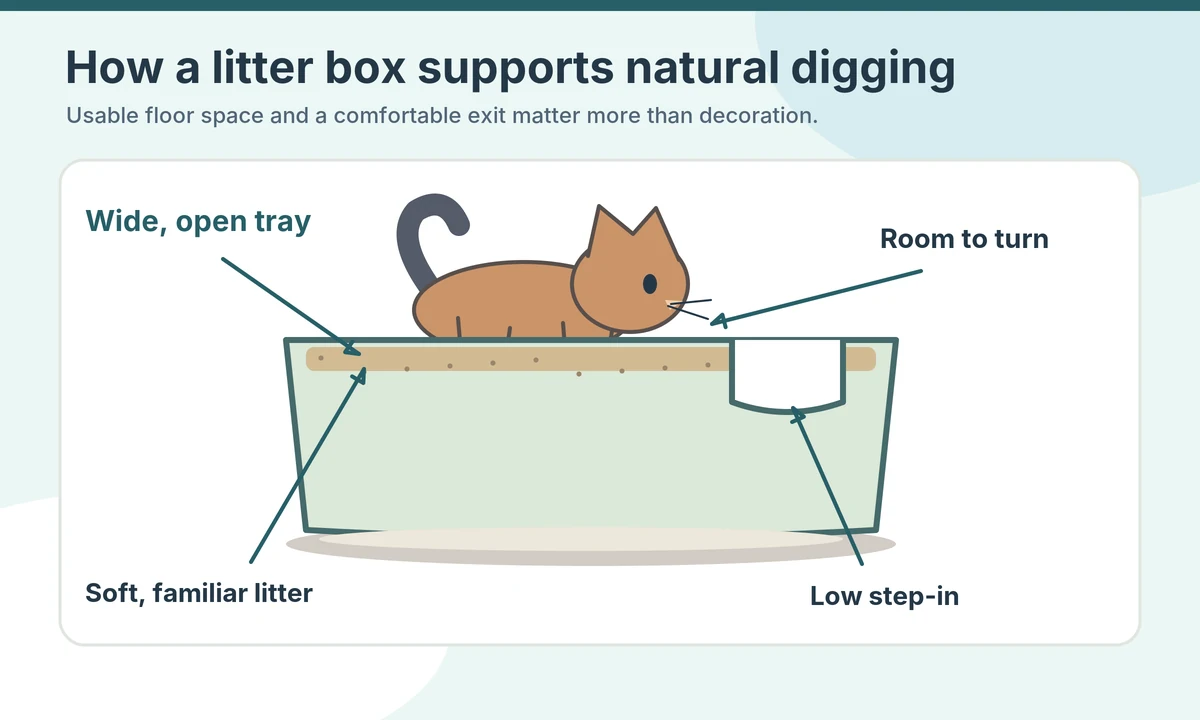
Choose a tray that leaves turning room
Measure your cat’s body and look at the usable floor inside the tray, not just the product’s outer dimensions. The cat should be able to enter, turn, dig, squat, and exit without hitting the walls. A low entry can help kittens and cats with reduced mobility. High walls may contain scatter, but a very narrow opening or an awkward top entrance can discourage use. Put the tray on a steady surface where it cannot slide or rock. If the cat frequently perches on the rim, consider whether the usable interior is too small or uncomfortable.
Start with a familiar, comfortable substrate
Texture can matter more than a litter package’s marketing. Many cats favor an easy-to-dig, unscented, fine-textured substrate, but the most useful starting point is what your particular cat already accepts. Scented formulas, abrupt granule changes, or uneven deep piles can alter paw feel and odor. Keep a consistent layer according to veterinary guidance and manufacturer directions, then adjust thoughtfully to your cat’s digging style. Do not mix several new products at once, because you will not know what changed the cat’s response. If you must switch, offer a gradual transition.
Place the box on a quiet, dependable route
A litter box should be easy to find and access at all hours. Avoid loud laundry cycles, doorways where people step across the cat, and spots beside food bowls. A cat walking toward the tray should not have to pass a guarding dog or another cat waiting in a narrow corridor. Give more than one access route when practical. In a multi-cat home, distribute boxes across separate locations rather than lining them all up in a single room. Privacy helps, but isolation behind a door that might close can create a new problem.
Understand why an uncovered tray can help
An open tray lets a cat see its surroundings and leave without pushing a flap. Covered models can contain scatter, but some trap odors, restrict turning, or allow another pet to ambush the exit. Neither shape is universally right. If you use a cover, check usable floor dimensions, airflow, and how the cat reacts. Observe the actual animal instead of assuming cats always want enclosure or darkness. A box inside furniture also needs a generous entry, a clear escape, and easy cleaning access. Do not make the litter area feel like a closed tunnel.
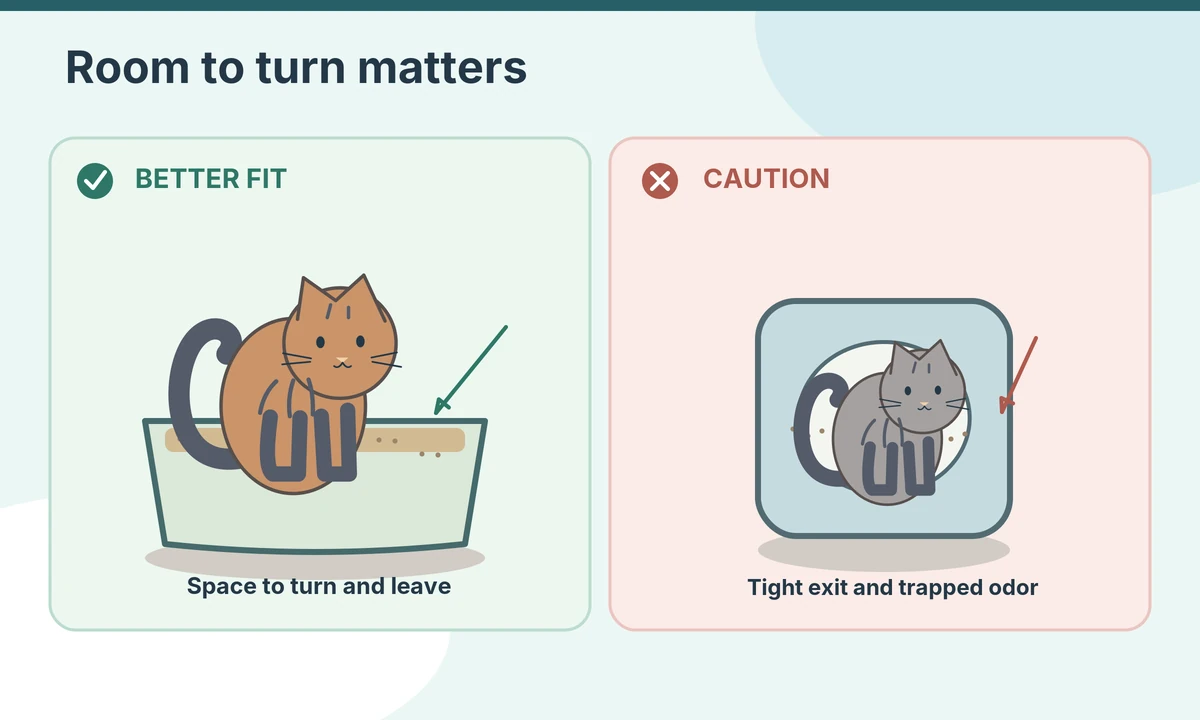
Cleaning preserves the habit without scolding
Remove waste frequently and replace soiled litter as needed. Wash the tray with a suitable mild cleaner, rinse well, and dry before refilling; follow the litter and box labels. Strong fragrances used to hide odors may repel a sensitive cat. If waste builds up, the cat might look for a cleaner alternative. Scoop gently when the cat is elsewhere rather than surprising it in the box. Never punish accidents, rub a cat’s nose in waste, or use loud deterrents. Those actions can increase fear and do not address access, discomfort, or environmental causes.
Offer real choice if preferences are unclear
Two well-placed trays with different safe substrates or designs can reveal which option your cat readily approaches. Keep the preferred box available while testing; don’t replace every station overnight. For kittens, start with an easy low-sided box in a calm room, then add more access as they explore. For older animals, check whether a formerly easy climb has become difficult. When sharing a home with multiple cats, follow the practical starting principle of one box per cat plus an extra, located in separate spaces. Observe how access actually works.
Respond calmly to misses outside the box
Clean the soiled spot with a pet-appropriate cleaner and prevent lingering odors from encouraging another visit. Then investigate the whole setup: a dirty tray, blocked hallway, unfamiliar substrate, noise, or a painful experience may all affect habits. Do not assume deliberate revenge or stubbornness. Urinary problems can become urgent, especially when a cat strains without producing urine; seek immediate veterinary care. If elimination changes suddenly, arrange veterinary assessment before embarking on a behavioral reset. Environmental improvements can support care, not replace it.
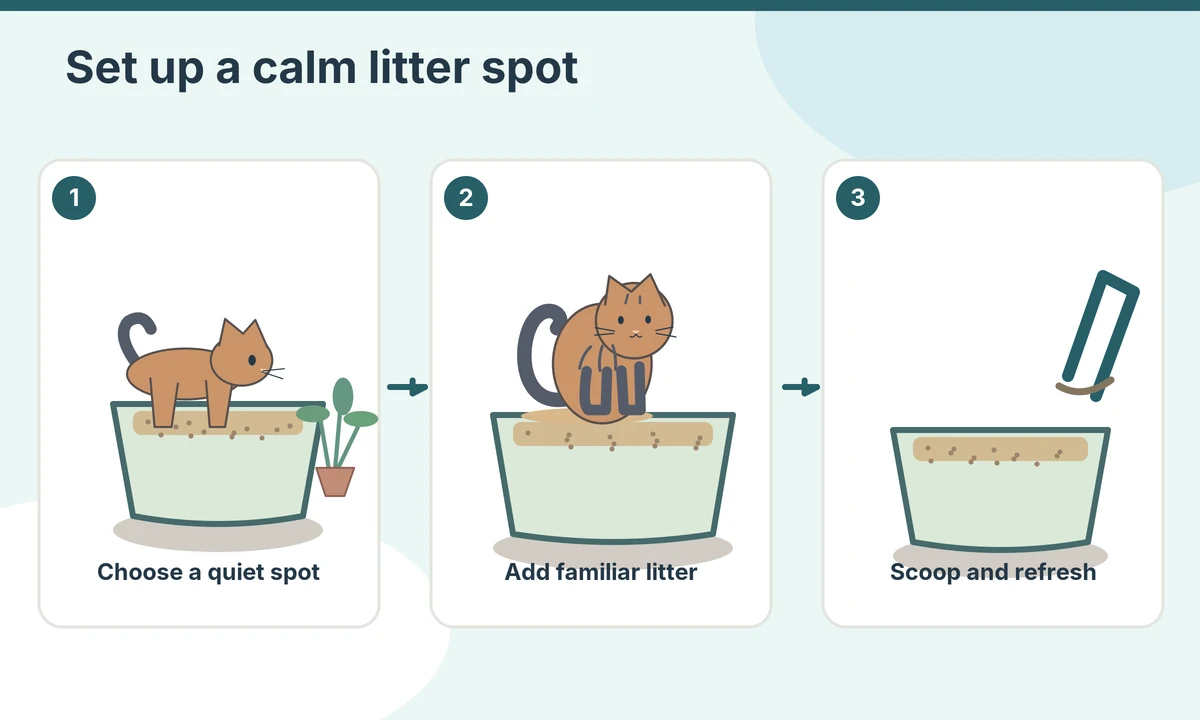
Review the setup after household changes
A new pet, construction noise, a moved food station, or a new closed door can change how safe a tray feels. Walk the cat’s route as if you were the animal: can it reach the station quietly and leave without a confrontation? Check that the litter supply is consistent and that box cleaning stays predictable. Make one change at a time and watch over several days. For a cat that still avoids the box despite medical assessment and sensible access, a qualified feline behavior professional can help identify patterns without fear-based methods.
The useful measure is relaxed, reliable access
A good litter-box setup is neither glamorous nor complicated. It offers the right surface under the paws, enough room to turn, a clean tray, and an exit that stays open. Those details explain why a seemingly simple plastic pan often works better than a cramped decorative enclosure. Keep your cat’s established preferences at the center of decisions and revisit the layout if mobility or household dynamics change. The goal is not to make every cat bury perfectly. It is to make toileting predictable, low-stress, and easy to maintain for the cat and caregiver.
How We Research
HubPet compared feline-welfare guidance on substrate preference, toileting access, separate resources, and observable behavior. The diagrams are explanatory drawings, not evidence that one product or litter brand has been independently tested. We prioritize comfortable movement, clean surfaces, and early veterinary assessment for sudden elimination changes. Visit our editorial information for context on HubPet content standards.
Sources
NSPCA, Litter Training Your Cat — https://nspca.ie/animal-advice/litter-training-your-cat-a-simple-guide/ (accessed October 2026).
Cats Protection, Preparing Your Home for a Cat — https://www.cats.org.uk/help-and-advice/getting-a-cat/preparing-for-a-cat (accessed October 2026).
AAFP/ISFM, Feline Environmental Needs Guidelines — https://pmc.ncbi.nlm.nih.gov/articles/PMC11383066/ (accessed October 2026).
Safety note: Straining, crying in the box, frequent unproductive trips, blood, or suddenly changed elimination needs prompt veterinary guidance; inability to pass urine is an emergency. Do not medicate or punish a cat based on this article.
Many cats readily recognize a loose, diggable substrate, but they still need a reachable, comfortable, and consistently clean tray.
Covering varies between cats and situations. A clean, comfortable box matters more than trying to force a particular covering pattern.
Not automatically. Some cats prefer an open view and easy escape; choose according to usable space, ventilation, and your cat’s response.
Do not make abrupt changes first. Check for medical problems, dirty or blocked access, and recent changes; then trial substrate options gradually.
A practical starting point is one box per cat plus one extra, distributed to prevent another cat from controlling access.