
Why dogs sit on you can be as simple as wanting warmth or social contact. A dog may also have learned that climbing onto your lap produces petting, conversation or a chance to see what you are doing. Sitting close is not, by itself, a dominance test or proof of separation anxiety. Instead, pay attention to whether the dog is relaxed, can move away freely and responds comfortably when you need space. This guide offers practical boundary options without pushing or punishing your dog.
Watch the approach and the entire posture
A relaxed dog may walk over with soft eyes, loose muscles and an easy tail, then settle against you. Another dog might leap up urgently, brace its body or repeatedly crowd a person who cannot move. The two scenes should not receive the same interpretation. Observe the face, mouth, ears and body together rather than judging only the dog’s position on your lap. RSPCA guidance notes that even a wagging tail needs surrounding body context. If tension appears, pause contact and give the dog space.
Consider warmth, familiarity and location
Your lap or feet may be warmer than the floor, and the sofa may be the most comfortable shared resting place. Familiar smells and predictable routines can also make you an appealing spot. These possible explanations do not require a story about the dog controlling the household. Compare what happens in a cool room, beside a sunny window or near a soft dog bed. Notice whether the dog chooses other seats too. Simple observation will tell you more about the individual than a breed stereotype.
Recognize how attention reinforces the habit
If you speak, laugh or pet the dog each time it climbs onto you, your response may make that behavior more likely. The San Francisco SPCA explains that even unwanted attention can reward demanding actions. This is not deliberate manipulation by the animal; it is ordinary learning. Decide which interactions you welcome and make those moments predictable. Reward an alternative such as lying beside you. Avoid wrestling the dog off because physical interaction can become exciting and raise stress for both of you.
Set limits before the dog climbs up
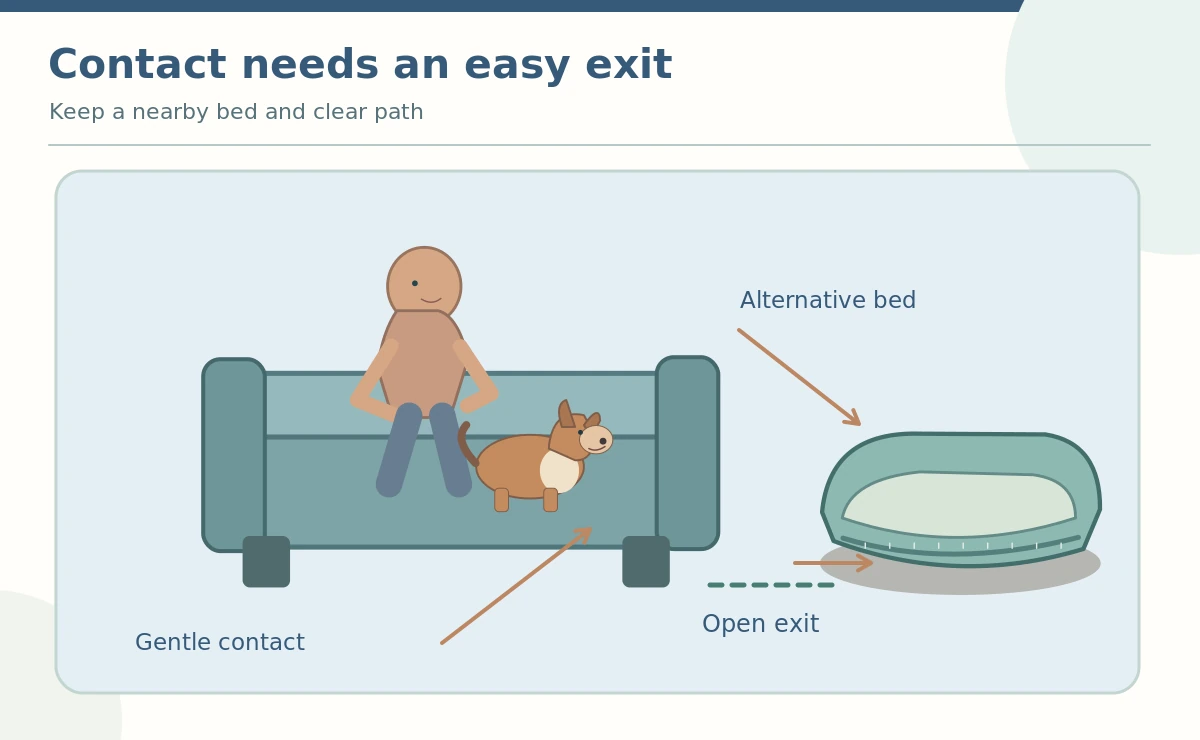
It is reasonable to prefer no dog on your lap during meals, computer work or when a guest feels uncomfortable. Create a clear alternative before the usual climbing time. Place a nonslip bed within sight, offer a familiar calm cue and reward the dog for choosing that spot. If you permit furniture access at other times, give consistent invitation and release cues that everyone follows. Do not rely on harsh corrections or shove the dog away, especially when children or a fragile person are nearby.
Teach a comfortable nearby resting place
Begin in a quiet room. Put a stable mat or bed close enough that your dog can still feel part of the group. Mark and reward one paw on the mat, then a full step onto it, then a sit or relaxed lie-down. Keep sessions brief and easy. Add a familiar word only after the dog has learned the action. Increase distance and duration gradually, and release the dog regularly. A successful resting place should be something the dog chooses willingly, not a spot where it feels trapped.

Keep contact safe for children and visitors
A heavy dog can knock a person off balance even without aggressive intent. Supervise every dog-child interaction, and never permit a child to sit on, restrain or hug a dog. Teach visitors to invite contact only when the dog remains relaxed and has an exit. If a person is recovering from an injury or has limited mobility, provide a nearby bed instead of lap access. Respect a dog that turns away, freezes or shows discomfort; increasing restraint does not teach it to enjoy closeness.
Avoid guessing dominance or jealousy
Climbing onto a lap can look possessive to an observer, but the posture alone cannot prove dominance, jealousy or guarding. If a dog stiffens when someone approaches, blocks people, growls or guards the occupied seat, handle the situation as a safety issue. Stop crowding, keep distance and seek help from a qualified reward-based professional. Never punish growling or try to prove leadership by pinning the dog down. The goal is safe space for everyone, not winning a confrontation.
Choose a house rule before guests arrive
If your dog commonly jumps onto laps at the door, prepare a separate resting place before friends arrive. Invite the dog to that place while the home is still quiet. Ask guests not to clap, grab or push the dog when it approaches. Instead, reward all four paws staying on the floor or a voluntary rest on the nearby mat. Practice with familiar people first, then add mild distractions. This routine gives guests a predictable greeting and avoids accidentally rewarding repeated climbing.

Make sure the alternate bed is genuinely usable
A decorative dog bed is not a suitable alternative if it sits in a draft, slips on the floor, blocks a doorway or is too small for the dog to turn. Place it where the dog can still see household activity without being stepped over. Offer rewards for relaxed use, and respect a dog that prefers a quiet corner. For older dogs, check the entry height and surface traction. If the dog cannot stand up comfortably, adjust the resting place before expecting any new routine to succeed.
Notice sudden changes in clinginess
A dog that begins seeking constant contact after previously resting independently may be responding to a household change, stress or discomfort. Look for additional signs such as appetite changes, sleep disruption, pain, difficulty moving or distress when left alone. Contact your veterinarian for new or concerning changes rather than assigning a single emotional explanation. If separation-related distress appears, professional behavior advice is more suitable than forcing the dog to stay away from you as a quick answer.
Create a consistent household routine
Choose one simple rule, such as invited lap time only or sitting beside you instead of on you. Reward the behavior you want before the dog becomes excited. Coordinate the same signals with household members, and offer a safe resting option during guest visits. Check that the bed remains comfortable and accessible as the dog ages. Progress means the dog can settle peacefully and people can choose their space, not that affectionate contact must disappear. Reassess your rule if it causes distress.
How We Research
Our review compares veterinary and animal welfare guidance on canine communication, normal behavior and warning signs. The review separates likely motivations from diagnosis and values the whole dog more than any one gesture. Our latest source review took place on October 28, 2026. Read about HubPet to learn our editorial approach. This article does not claim direct testing or veterinary examination.
Sources
San Francisco SPCA, Attention Seeking. Read the original guidance.
RSPCA, What Does My Dog’s Body Language Mean?. Read the original guidance.
RSPCA Knowledgebase, Should I Hug My Dog or Cat?. Read the original guidance.
Safety note: This is general behavior education, not a veterinary diagnosis. If behavior changes suddenly, includes pain, swallowing fabric, distress or unsafe interactions, consult your veterinarian or a qualified reward-based behavior professional. See our veterinary disclaimer.
No. Lap sitting alone cannot establish dominance. Consider comfort, history, attention, relaxed posture and the surrounding context.
It can be if both of you are comfortable and safe. Give the dog freedom to leave and set clear boundaries when you need space.
Teach a rewarded cue toward a nearby mat or bed in calm practice. Avoid physically shoving, grabbing or intimidating the dog.
Guests may offer new scents and attention, or the dog may have learned that climbing brings interaction. Manage greetings and reinforce an alternative spot.
Sudden persistent changes accompanied by pain signs, appetite changes or distress when alone deserve veterinary or qualified behavioral advice.