
This guide provides general pet-product information, not veterinary advice. For new pain, illness, suspected ingestion, or movement changes, contact a veterinarian; read our veterinary disclaimer.
A tall cat tree is only useful when your cat can land, turn, stretch, and rest without feeling that the structure shifts underfoot. For a larger cat, perch depth and distances between levels matter. So does the connection between the trunk and base. A marketing photograph can make a small platform look roomy. This guide turns those details into measurements and an at-home inspection. It does not assign a universal safe weight limit: use the maker’s current specifications, confirm compatibility with your particular cat, and reject anything that flexes or tips.
Measure usable resting space
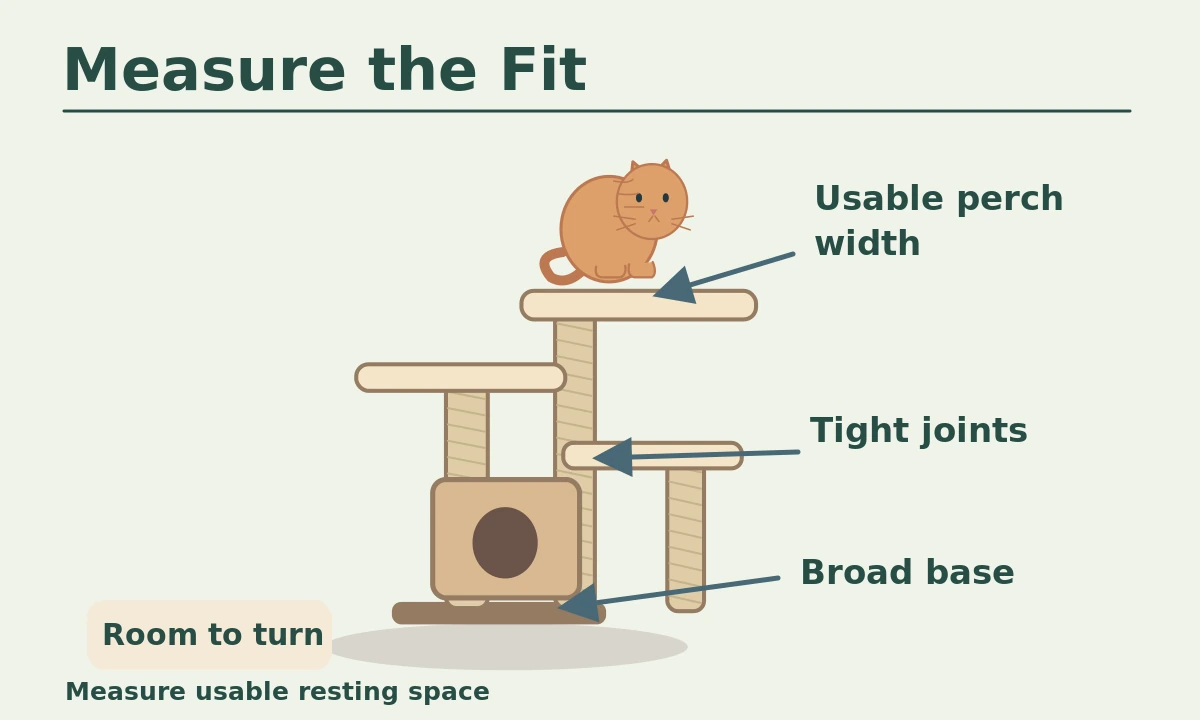
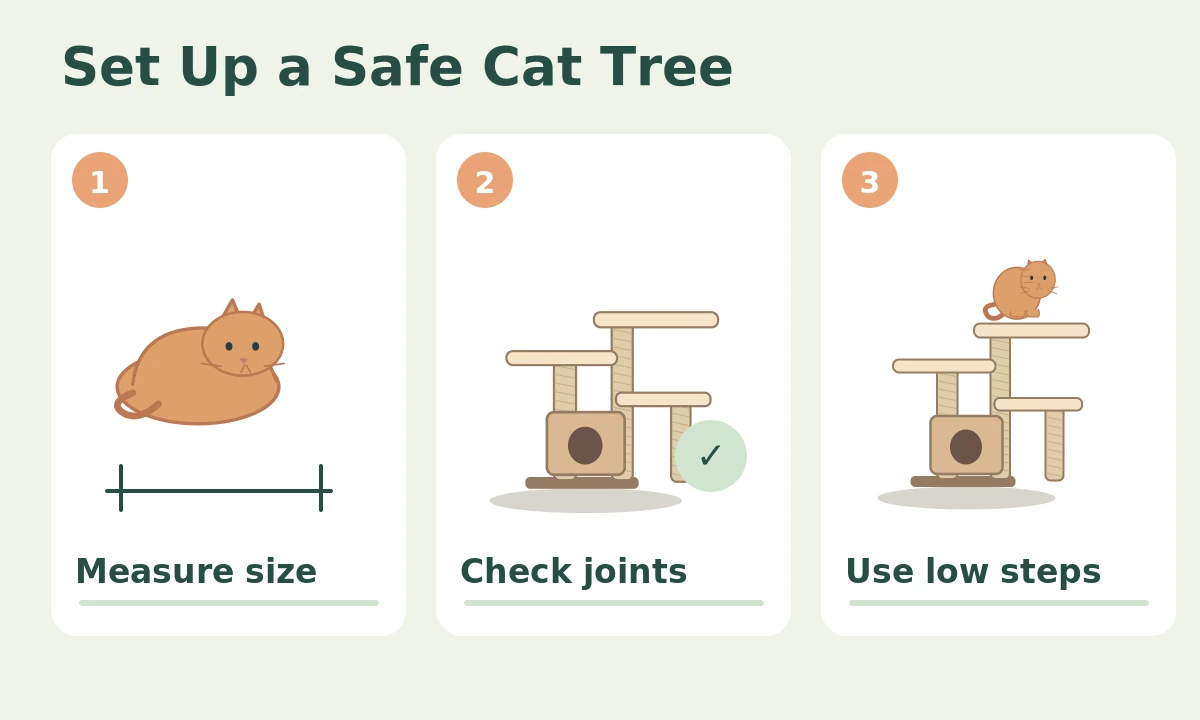
Measure your cat while lying in a relaxed curl and while stretched out, then compare those dimensions with the flat area between bolsters, posts, and cutouts. An advertised platform width is not always the amount a cat can actually use. Rounded hammocks can be especially deceptive: their rim occupies space and the fabric may sag under a larger body. A broad flat perch with a low retaining rim usually provides easier foot placement than a narrow shelf with a tall decorative edge. Leave enough room for the cat to turn around without balancing on the perimeter.
Look below the perch
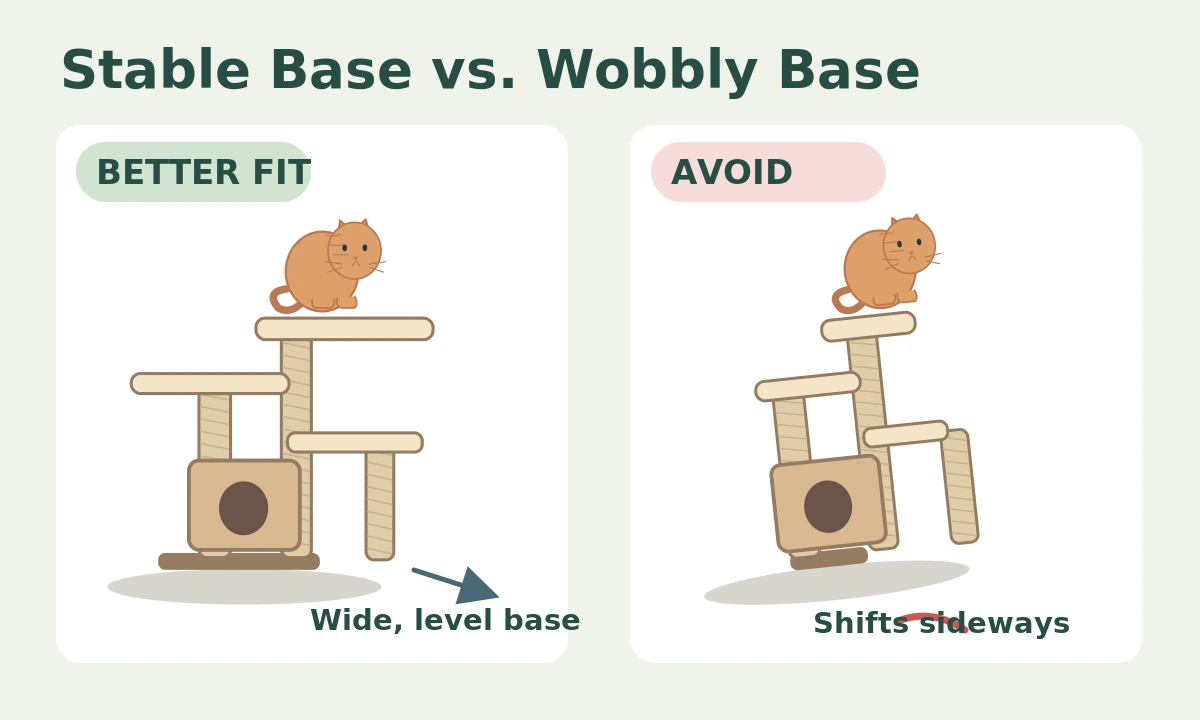
A stable tower carries the cat’s changing weight through strong joints. Its base must stay planted. Check the base footprint, the position of the main posts, and whether the widest or highest platform projects far beyond support. A decorative tall tower on a tiny lightweight base can rock when a cat jumps on from the side. Read the manufacturer’s anchoring instructions and use the specified anti-tip hardware if supplied or required. Do not rely on a wall bracket attached to weak drywall, and do not substitute improvised adhesives for structural hardware.
Inspect posts, screws, and joints
Look for a clear parts diagram, replacement-hardware availability, and joints you can tighten without crushing particleboard. Scratching rope may look substantial while weak connectors leave the underlying post loose. A wide central post or multiple well-connected posts can distribute forces more predictably than a loose single column. Examine every bolt hole before assembly: damaged threads, split panels, missing washers, and crooked connecting plates are reasons to stop. Recheck all fasteners after initial use, following the product’s directions, because repeated jumping and scratching can loosen connections.
Plan a route that suits your cat
Large cats still need an easy sequence of footholds. Compare the vertical jump, horizontal gap, and landing width between each level; a climb that works for a small agile cat may require an awkward sideways leap for a bigger one. Stagger perches so there is a clear line of travel and another way down. Place the tree on a flat non-slip surface, away from opening doors, unsecured windows, hot appliances, and fragile furniture. Put the most inviting resting platform where the cat can watch the room without household traffic trapping it.
Do not confuse height with strength
Height gives a cat more options only if the support remains rigid as the cat moves. When two towers have similar advertised dimensions, compare the base depth, total assembly mass, joint design, and usable platform area before considering the number of levels. A low wide model may be the better choice for a heavy cat or for a home where wall anchoring is not possible. A maker’s weight rating is a ceiling under stated conditions, not a promise of comfort or safety for every shape of cat or every dynamic jump.
Choose surfaces your cat can grip
Bare polished shelves may be easy to wipe but can offer poor traction, especially on a fast descent. Look for securely attached textured surfaces that do not bunch, curl, or expose sharp staples. A scratching post should let the cat stretch without pulling the whole tower toward it. Sisal, carpet, and wood have different wear patterns; inspect each for loose threads or splinters. Avoid loose loops that could catch a claw. Choose removable covers only when their fastenings stay firmly enclosed and the maker allows washing without changing fit.
Compare useful designs, not decorative levels
A large low condo can create a sheltered resting spot, while a round hammock offers a different sleep position; neither is automatically superior. Ask whether the cat has a real entrance, enough turning room, and a supported base under the chosen space. Watch out for multi-level designs whose platforms overlap so tightly that they block access. Some makers market oversized towers for multiple cats, but cats may prefer separate resting paths. Provide additional resources around the room rather than assuming one crowded climbing structure will prevent competition.
Test the empty tower before invitation
Assemble exactly as directed and confirm that the structure stands level. With no cat on it, apply gentle hand pressure in several directions to detect rocking, shifting feet, or clicking joints; this is a screening check, not a certified load test. Secure anchoring where required, then inspect the wall or floor interface. If anything moves, stop and correct the setup before introducing the cat. Place a few treats on a reachable lower level, allow voluntary exploration, and never place a reluctant cat on the top shelf to demonstrate its height.
Maintain the tree in use
Keep a small calendar reminder to inspect the most used landing joints, base connection, screws, scratching wrap, and fabric seams. Vacuum fur so grip surfaces remain usable. Follow the manufacturer’s cleaning advice; soaking composite panels can weaken them. Move the tree carefully rather than dragging it by a high platform. If a post begins spinning, a platform splits, or the unit leans, block access until repaired with approved parts or replaced. A good purchase is one you can inspect and maintain, not just one that looks impressive on delivery.
A practical purchase decision
Write down the cat’s resting measurements, your room’s available floor space, and whether approved wall anchoring is possible. Compare the inner dimensions of more than one platform and the widths of the landing steps. Ask for installation instructions before buying if the seller does not post them. Confirm that spare posts or covers exist, especially on a high-use scratching tree. Choose the model whose secure assembly and comfortable route you can explain clearly, even if it has fewer shelves or a lower top perch than a more dramatic alternative.
How We Research
Our research approach compares design and safety considerations with published feline behavior and care guidance from veterinary organizations. Product dimensions, structural load ratings, fasteners, and installation restrictions vary by model; check the current manufacturer instructions before use. We do not claim hands-on laboratory tests, safety certification, veterinary diagnosis, or that one product fits every cat.
Sources
Cat Friendly Homes, Living with a Clawed Cat. Read source.
FelineVMA, Your Cat’s Environmental Needs (2026). Read source.
Cat Friendly Homes, Intercat Tension Caregiver Handout. Read source.
Safety note: Inspect cat furniture and toys for damaged parts before use. Supervise unfamiliar equipment and remove anything unstable or swallowable. For pain, altered movement, persistent chewing of nonfood items, or suspected ingestion, contact a veterinarian; this buying guide is not veterinary care.
There is no universal height. Choose a height that works with your available anchoring, stable base, and the cat’s comfortable landing route; perch space matters more than the advertised maximum.
Possibly, if the hammock has sufficient usable space, secure supports, and an explicit compatible load rating. Sagging fabric and narrow access often make a flat platform easier.
Follow the manufacturer’s installation instructions. If the maker supplies or requires anchoring, use the specified hardware and a suitable structural fixing; do not assume a lightweight bracket alone is adequate.
Inspect joints and base contact while the tree is empty, confirm correct anchoring and level placement, then observe early use. Any rocking, leaning, or damaged joint means access should stop.
No. Cats may compete for routes and resting spots. Provide multiple separate resources and retreat options instead of assuming the number of shelves solves household tension.