
An inexpensive cat tracker with no recurring fee may help you locate a collar nearby, yet it may not show your cat’s position on demand. Cats add a separate welfare problem: a collar can snag while climbing, and any attached tracker adds weight. Before comparing prices, distinguish true position updates from proximity finding and check whether the attachment preserves a quick-release mechanism. Cats Protection recommends safe collar fit and permanent microchip identification. For injury, skin irritation or changes in activity, consult a veterinarian; see HubPet’s veterinary information disclaimer.
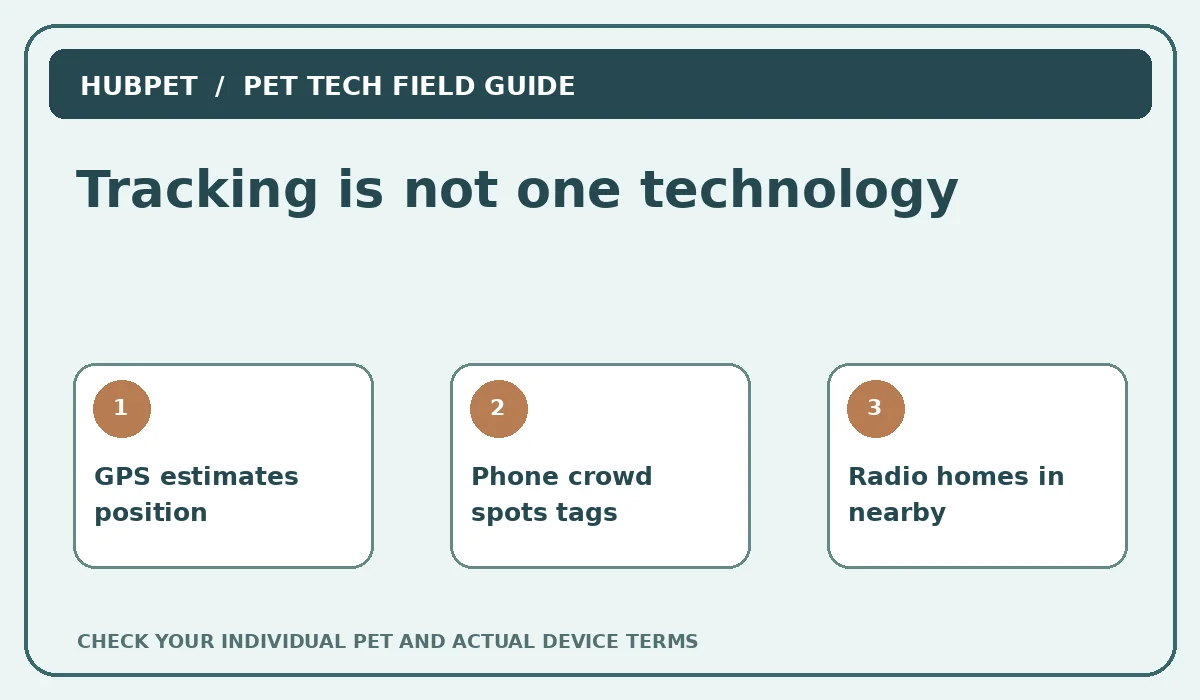
Separate GPS, Bluetooth and radio homing
A GPS receiver can estimate its position from satellites, but you need a way to receive that information. Cellular models may need ongoing service. Bluetooth crowd-network tags depend on nearby compatible devices; they do not provide their own independent long-distance satellite location feed. Some radio-frequency cat locators help an owner search within a limited distance using a handheld receiver. A “no subscription” label may describe any of these designs. Ask exactly what appears on your screen when nobody carrying a participating phone is nearby, and what the system reports beyond its working range.
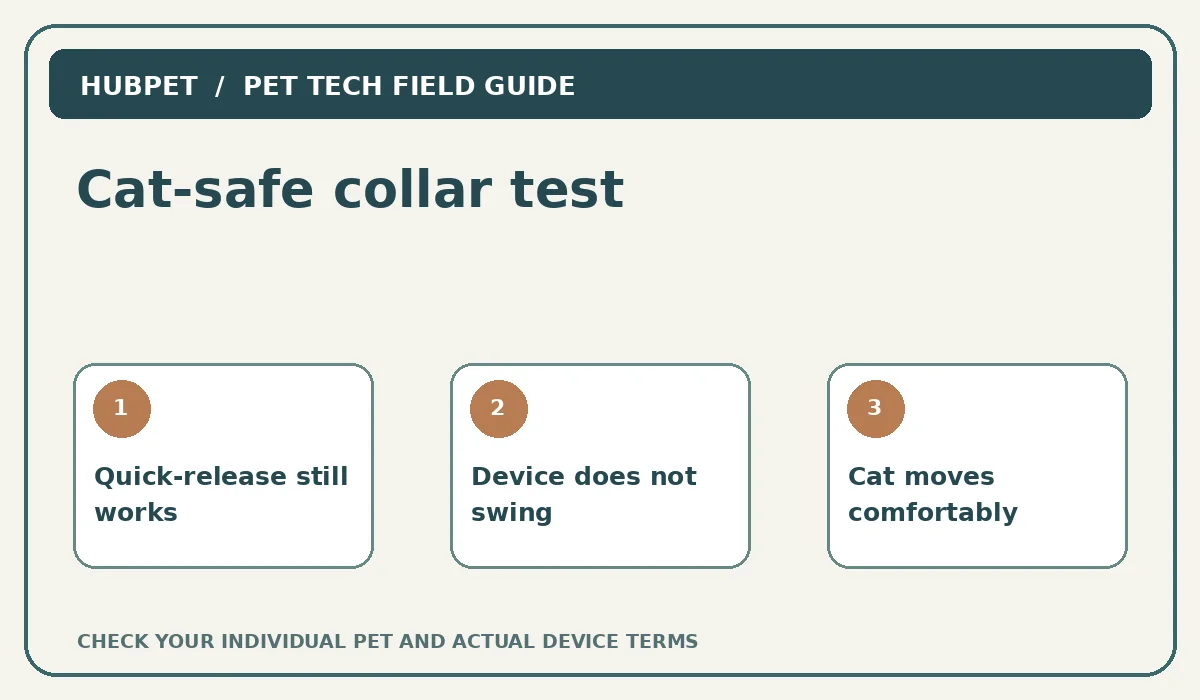
Start with the release collar, not the app
Cats can squeeze through spaces and climb structures that catch tags and collars. Cats Protection recommends a properly fitted quick-release cat collar instead of an elasticated style. Check whether the tracker bracket obstructs the release clasp, enlarges a dangling loop or places a hard edge against the throat. Test the release mechanism off the cat according to the collar instructions, then watch carefully during brief supervised wear. Never tape the clasp shut to keep expensive hardware attached. Losing a detachable tracker is preferable to trapping or injuring a cat.
Measure bulk on the individual cat
Published weight alone does not establish comfort. A rigid tracker can project from a narrow neck even if its listed ounces seem low. Evaluate the shape, attachment, movement and how the cat eats, grooms and turns its head. Check the maker’s minimum animal size rather than assuming a device suitable for a larger cat will fit a kitten. Introduce the collar gradually indoors and remove it if the cat paws frantically, freezes, scratches or cannot move normally. Ask your veterinarian about safe alternatives if your cat is very small or has a medical concern.
Match range to the reason you are buying
Owners often want one of two very different outcomes: finding a cat hiding nearby or locating a cat that roams beyond the property. A short-range radio locator might help with a shed or garden; a Bluetooth tag may report more sightings in a populated neighborhood than an isolated rural area. Neither is automatically equivalent to live GPS reporting. Check maps and range descriptions for your actual setting. Dense vegetation, walls and elevation can alter performance. Be cautious of marketing maps that omit update age or imply continuous coverage.
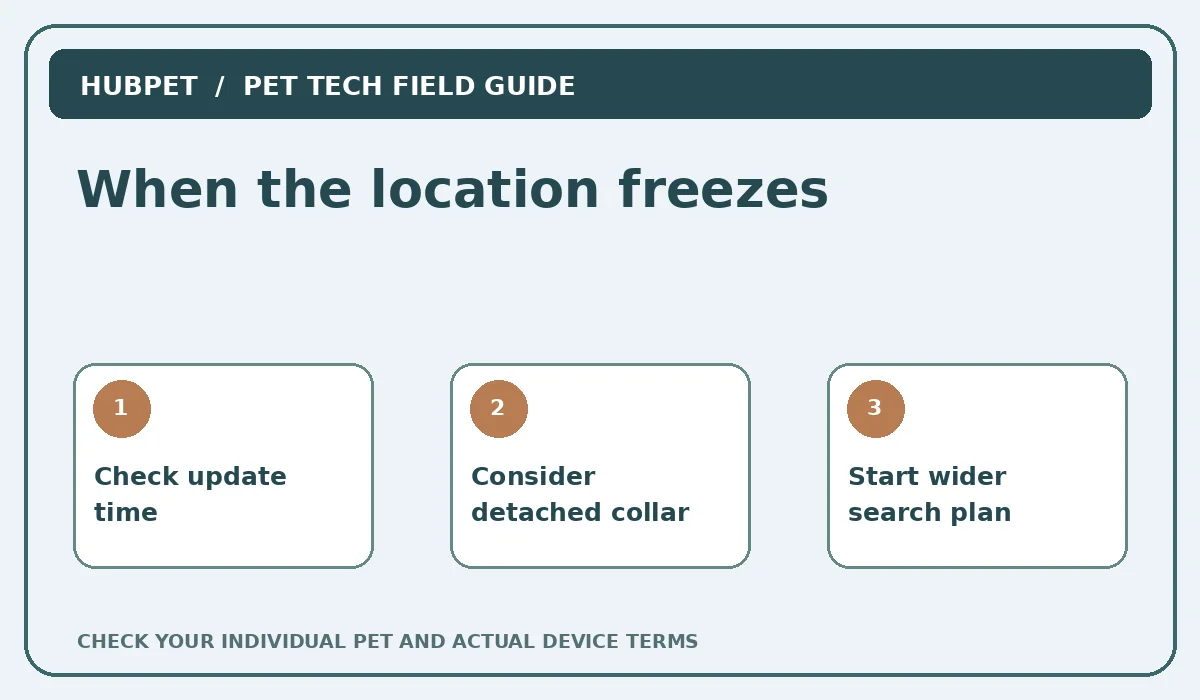
Consider what happens when the collar drops off
The most welfare-friendly collar should release when necessary. Therefore, a location dot may indicate the detached tracker rather than the cat. Teach everyone in the household how to recognize an unmoving or stale marker. Do not treat the last location as proof of the cat’s present whereabouts. Keep a recent photograph and the microchip registration up to date, and contact local shelters if the cat goes missing. Design your recovery steps around the possibility of a lost collar, not around the assumption that your cat will always wear it.
Check battery practicality and cleaning
A small battery and frequent radio updates can create a demanding charging schedule. Confirm whether the cat must be left without its tracking attachment while charging and how you will manage that time. Examine the enclosure for scratches, broken seams and dirt. Follow the maker’s instructions before rinsing or immersing a device. Never leave a loose charging cable where a cat can chew it. Charging and inspection routines are particularly important for an outdoor cat whose owner may otherwise forget the accessory until it fails.
Read subscription claims carefully
Some products advertised as subscription-free use proximity detection only, while others include an upfront service term or require replacement hardware later. Make a simple comparison including device, collar, handheld receiver, app functions, replacement clips and possible service costs. Find out whether historical locations and live alerts are restricted to a paid tier. If a brand offers “free tracking,” ask whether it means free satellite positioning or free transmission of that information. A clear answer prevents confusion when an emergency requires a feature you never actually purchased.
Protect location history and household privacy
Cat location data may reveal where you live or when nobody is home. Check how family sharing works, whether links expire and whether the company lets you erase stored tracks. Use a unique password and secure your phone. Avoid posting screenshots that show your home address while asking neighbors to look for a lost cat. The FTC’s app security guidance explains why location-related data needs protection. A useful location service should offer sensible account controls as well as a colorful map.
Decide whether a tracker suits your cat at all
Some cats tolerate lightweight quick-release collars; others become distressed or repeatedly remove them. A tracker is optional, not a substitute for welfare. Prioritize microchipping, up-to-date registry details, safe indoor enrichment and secure outdoor access where practical. If you choose a device, conduct calm indoor trials and record how your cat behaves. Stop if the cat becomes uncomfortable. The best buying decision may be to skip the wearable and strengthen your identification and search plan.
How We Research
HubPet compared guidance from veterinary, animal-welfare, consumer-privacy, and government positioning sources, focusing on device limitations and practical safety rather than sponsored product rankings. We have not performed hands-on tests of commercial GPS trackers and do not claim endorsement by these organizations. Device specifications, app fees, coverage and availability may change; confirm current conditions with the manufacturer. These articles are educational, not a substitute for veterinary assessment or professional lost-pet assistance. Learn more About HubPet.
Sources
Cats Protection: Choosing a Cat Collar. Editorially checked October 27, 2026.
Cats Protection: Keeping Cats Safe Outside. Editorially checked October 27, 2026.
GPS.gov: GPS Accuracy. Editorially checked October 27, 2026.
American Veterinary Medical Association: Microchipping: FAQs for pet owners. Editorially checked October 27, 2026.
Federal Trade Commission: App Developers: Start with Security. Editorially checked October 27, 2026.
Some proximity and radio products do, but verify whether they deliver location updates over the distance you need.
No. Bluetooth crowd-network tags depend on other nearby devices and do not perform independent GPS reporting.
Use a properly fitted quick-release collar and ensure the tracker does not block its release action.
The last known position may belong to the detached collar, not the cat. Use tags, chip records and a search plan.
No. A registered microchip remains a permanent identification layer if a collar detaches.