
A no-spill dog water bowl can reduce splashes, yet nothing guarantees a dry floor when a dog bumps the bowl or plays with water. Some models use a floating disk, others a recessed lip or narrow drinking opening. Each design trades access and easy cleaning against spill control. A dog must always be able to drink enough; see our veterinary information disclaimer for health concerns.
This guide compares mechanisms and household use rather than promising a universal spill-proof result. Fresh, accessible water comes first. FDA advises cleaning water bowls daily, and Cornell emphasizes accessible fresh water for pets. A bowl that conceals dirty reservoirs or makes drinking difficult is not a useful upgrade.
Identify the source of the water mess
Watch your dog during a normal drink. Some dogs flick water from their tongue or chin; others step into dishes, push them around, or intentionally splash. A product that controls wave motion will not keep long ears dry or prevent drips carried across the room.
Place a plain washable mat around the current bowl for a day and observe the pattern before choosing a complex design. If most drops fall several steps away, changing the drinking opening may not help. Do not reduce water availability to protect flooring.
Understand the two common mechanisms
A floating plate exposes water through a limited opening, often lowering surface movement when the dish tips slightly. A recessed lip uses geometry to catch some waves. Both can leave hidden water underneath components, and either can spill if knocked over or emptied by play.
Compare the actual drinking area, not just the headline capacity. A disk may take up usable volume; a high lip may make access harder for a short-muzzled dog. The manufacturer should provide a clear diagram showing how parts come apart for washing.

Test comfortable muzzle access
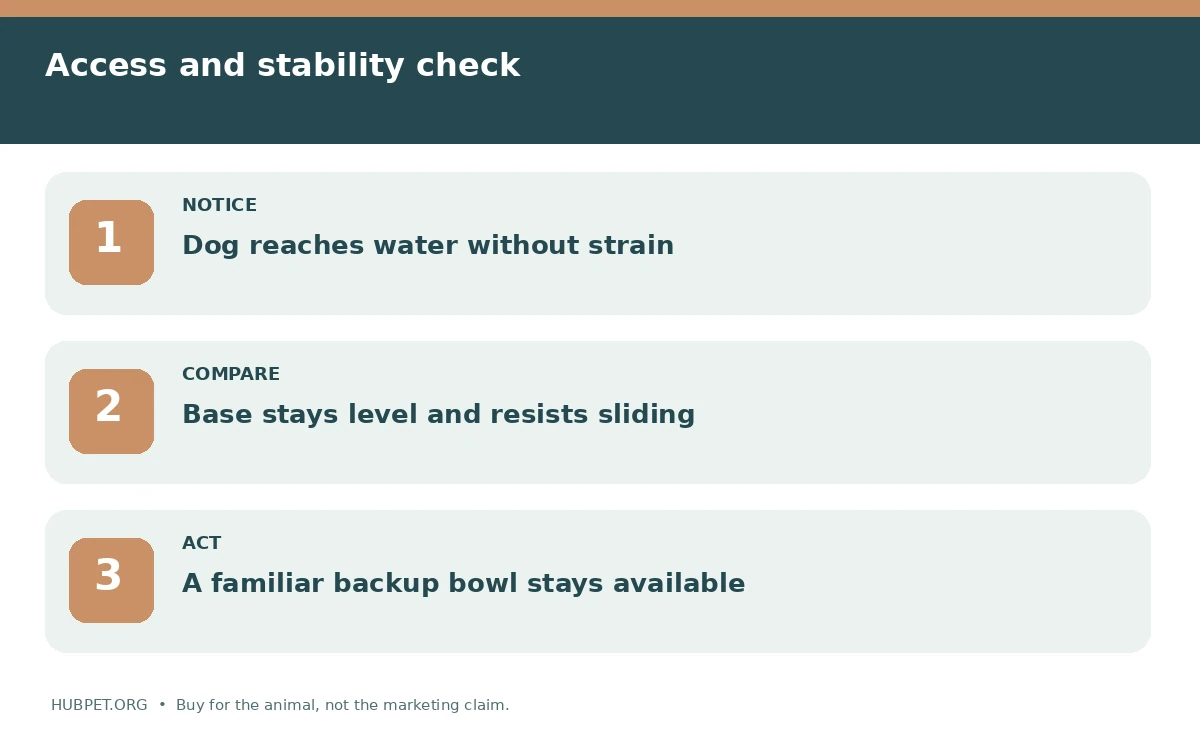
Your dog should reach water naturally without forcing its nose into a narrow channel or changing posture excessively. Some dogs dislike moving plates that touch the muzzle. Offer the new bowl alongside a familiar, open water dish during the trial so the dog retains a reliable drinking option.
Do not judge hydration by how full a hidden reservoir looks. Confirm that water is visible or measurable, and watch the dog drink voluntarily. Sudden increases or decreases in thirst can reflect health problems and deserve veterinary evaluation rather than a different bowl purchase.
Compare base weight and floor grip
A top-heavy or narrow water bowl can topple regardless of splash guards. Check the filled stability on level flooring, with the same type of mat you plan to use. Non-slip feet should remain secure and easy to inspect after washing.
For active dogs, consider a broad base that resists nudging. Do not anchor bowls with cords or loose straps. Place the station out of traffic and away from electrical equipment. An empty product photograph cannot demonstrate how a bowl behaves during actual drinking.
Measure real capacity and refill access
Read the usable water capacity, not only the total volume printed on a package. A floating mechanism may require a minimum fill level to operate. Mark that minimum and check how quickly the dog drinks through it during ordinary use, especially in warm weather.
Maintain additional clean drinking points in larger homes and for multiple pets. A no-spill bowl must never become the only water source until you know the dog accepts it. Check for easy pouring and refilling without lifting a slippery or heavy container.
Inspect every removable part
Before buying, count the clips, gaskets, disks, and channels you must remove for a full wash. The fewer inaccessible seams, the easier it is to remove biofilm and food residue. Loose pieces can also attract chewing dogs, so verify that drinking does not loosen any components.
Avoid cups with hidden reservoirs you cannot reach with a brush or verify as clean. If the bowl has a filter, confirm the cleaning and replacement schedule; a filter does not replace routine cleaning. Scratched or cracked parts warrant replacement.
Clean and dry the full water path
FDA recommends washing water bowls daily. For a splash-control model, that means lifting the floating disk and scrubbing underneath, not merely topping up the reservoir. CDC recommends washing hard pet items with soap and warm water and following product labeling for any additional disinfection.
Rinse thoroughly and let all pieces dry before reassembling when practical. Replace stagnant water regularly during the day. Never mix cleaning chemicals; keep pets away from wet cleaning products. A bowl advertised as easy-clean should still pass a real disassembly test.
Be careful with car and travel claims
Travel bowls face braking, acceleration, and uneven surfaces that home models never experience. A home no-spill design does not automatically suit a moving vehicle. Read manufacturer instructions for transport use, and secure supplies without placing loose hard objects where they could injure occupants.
Offer water at safe stops and maintain a separate backup container. Do not assume a bowl that limits splashes also prevents leakage when overturned. For long trips, choose a setup you can refill, inspect, and wash without depending on a complex mechanism.

Use a controlled side-by-side trial
Set the new bowl beside the familiar water dish and watch several normal drinks. Record whether the dog chooses it, whether access seems effortless, and how much water appears outside the immediate area. Keep both sources clean so stale water does not influence the preference test.
If the dog drinks less, repeatedly paws at the disk, or seems distressed, remove the new model. A minor reduction in splashes is not worth reduced hydration. Choose the simplest cleanable design that supports normal drinking and fits the household.
How We Research
HubPet reviewed published veterinary, animal-welfare, and public-health guidance relevant to no spill dog water bowl. We separated established safety and hygiene recommendations from product features that have not been independently measured. These are desk-researched criteria, not hands-on product tests or professional endorsements. Sources were checked October 26, 2026. See About HubPet and our editorial approach. This information does not replace individualized veterinary care.
Sources
U.S. Food and Drug Administration: Proper Storage of Pet Food and Treats. Accessed October 26, 2026.
U.S. Food and Drug Administration: Tips for Safe Handling of Pet Food and Treats. Accessed October 26, 2026.
Centers for Disease Control and Prevention: Cleaning and Disinfecting Pet Supplies (2026). Accessed October 26, 2026.
Cornell University College of Veterinary Medicine: Feeding Your Cat. Accessed October 26, 2026.
No. Most reduce certain splashes but can still leak, tip, or drip outside the bowl.
Some dogs may dislike the mechanism. Always offer familiar accessible water during a trial and watch actual drinking.
FDA recommends cleaning water bowls daily; scrub under all disks, lids, and channels.
Only if the product is intended for that setting; secure supplies and offer water at safe stops.
Access to adequate clean drinking water comes first. Stop using a design that discourages drinking.