
This is general pet and household-safety information, not veterinary diagnosis or treatment. If your pet may have swallowed a dangerous object or product or suffered an injury, contact a veterinarian promptly. See HubPet’s veterinary disclaimer.
Pantry organization is a pet-safety task as well as a housekeeping task. A dog may tear an accessible bag, a cat may climb stacked boxes, and a small spill can scatter ingredients that are unsafe to eat. The right approach is to separate hazardous human foods, retain pet-food labeling, choose stable shelves, and check whether the pantry door actually stays closed when a curious animal presses it.
Walk through the pantry from a pet’s eye level
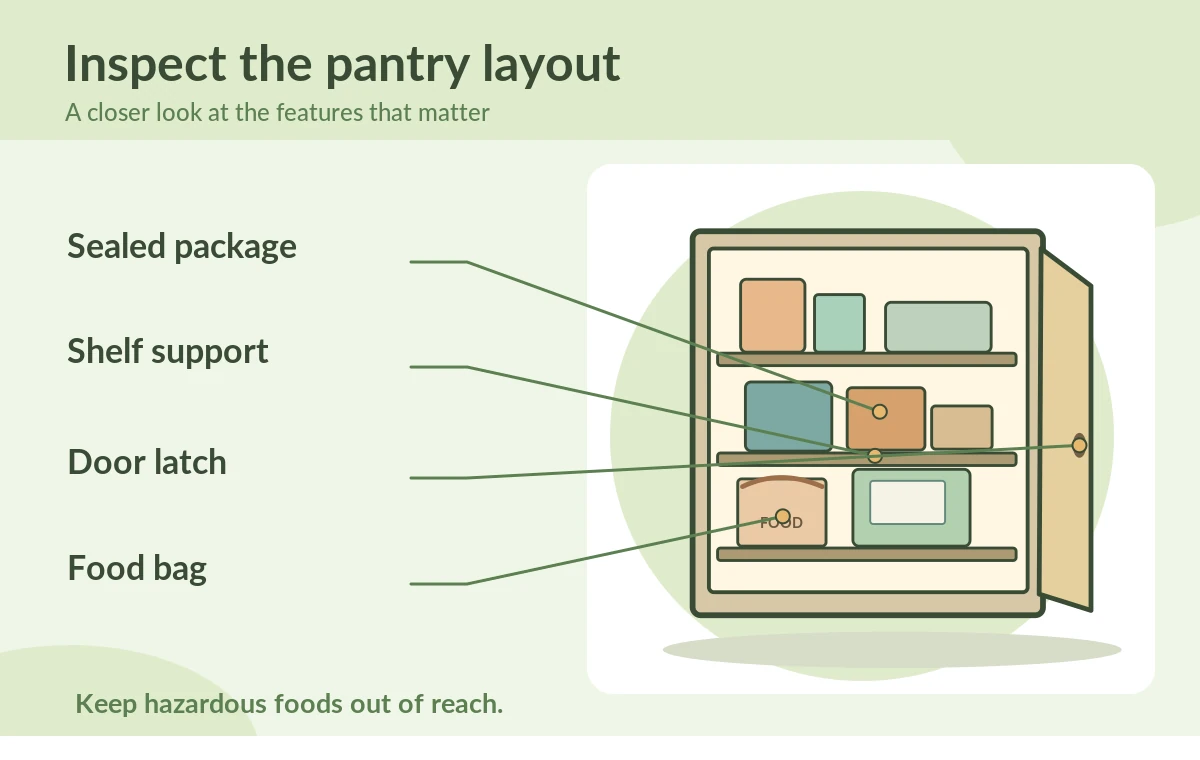
Stand near the door and look for items a dog or cat could reach by stepping, pulling or climbing. Loose grocery bags, hanging handles and open baskets at floor level create easy access. Note whether the pantry has open wire shelves, freestanding racks or a built-in cabinet. Test its door closure with the shelves normally loaded. The first improvement often costs nothing: move food from the floor to stable enclosed storage and make sure a pet can no longer nose the opening. Keep necessary pet water and feeding stations somewhere accessible outside the pantry.
Put hazardous human foods behind a reliable barrier
Chocolate, xylitol-sweetened products, raisins, onions, some nuts, medication and baking ingredients can present risks that vary by pet and exposure. Consult a veterinarian for suspected ingestion rather than calculating a safe amount at home. FDA and veterinary pet-proofing resources advise storing hazardous foods out of reach. Remember that chewing wrappers also presents a separate concern. High placement alone may fail if a cat climbs shelving, so choose an enclosed latching cupboard for risky items. Do not leave treat bags on a shelf edge where a dog can pull them down.
Keep dry pet food in its original labeled packaging
The FDA recommends retaining the product name, lot number, best-by date and other bag information because these details matter for complaints or recalls. Ideally keep the entire food bag inside a clean, lidded storage bin that fits without bending or tearing it. Avoid adding new food over old crumbs. If you must transfer dry food, thoroughly clean and dry the container and preserve the packaging information. Store food in a cool, dry location under the FDA’s recommended 80°F (27°C) threshold. A tight lid helps limit access but does not replace a secure pantry door.
Check shelf supports, spacing and climbable routes
A cat may use a nearby counter, low crate or tall bag as a step toward higher shelves. Keep heavy bulk goods low on stable shelves, not on top of light boxes that could topple. Inspect brackets, pins and wire-shelf clips for movement or missing pieces. Freestanding pantry furniture may need appropriate anti-tip anchoring according to its manufacturer; CPSC highlights the importance of anchoring tip-prone furniture. Do not stack glass jars above a route where a pet rests. Make the door easy for adults to open without leaving the unit permanently ajar.
Select latches that fit the actual door
A pantry might use a hinged door, double cabinet fronts or a sliding pocket door. Each needs a compatible method of keeping an investigative pet out. Test catches with shelves fully stocked; a bulging bag can keep the door from closing properly. Avoid detachable keys and small magnetic parts left on low surfaces. Follow hardware instructions and never drill where hidden wiring or plumbing may run. A stubborn dog may defeat a simple magnetic catch, making a closed room or a stronger approved latch more realistic than repeated quick fixes.
Compare sealed shelving with exposed low storage
In a secure configuration, food packages stand upright behind a latched door and high-risk ingredients remain in closed containers. In a risky configuration, an open bag sits on the floor, packets hang from wire shelving, and crumbs collect near the baseboard. The risky option invites chewing, overeating and swallowing packaging. FDA notes that access to large quantities of pet food can cause health problems, including gastrointestinal upset. The goal is not to make the pantry look perfectly staged; it is to remove practical access routes for your particular animal.

Control dust, humidity and pest attractions
Food residue can attract insects and rodents, and dampness may damage packages or accelerate spoilage. Wipe spills promptly, dry the shelf before replacing bags and look for condensation or water marks around outer walls. Avoid spraying pest-control products near open food or pet items; follow labeled directions and keep animals away from treated areas. Store cleaning chemicals in separate suitable storage so they cannot leak into food. Remove cracked containers and packages with teeth marks rather than assuming a clip will make them safe again.
Keep shelves organized enough for fast checks
Put treats used daily into a labeled, closed bin that adults can easily retrieve and resecure. Keep supplements or medications in their original containers and in a separate inaccessible place according to label directions. Use a stable scoop dedicated to pet food rather than an unwashed bowl; AVMA recommends hygienic food handling and regular cleaning. If you have multiple pets with different diets, label bins clearly to avoid feeding the wrong food. Check a new bag’s expiration and condition before storing it, and do not combine lots without preserving both labels.
Respond when something is missing or torn
If you find a shredded bag, spilled chocolate or a chewed container, keep the pet away and identify the product. Estimate what is missing without assuming that no symptoms means no problem. Contact your veterinarian or animal poison-control service promptly for a potentially hazardous ingestion and save the packaging. Do not induce vomiting or give a home remedy unless a veterinary professional directs it. For broken glass, isolate the animal and clean the area safely. Then improve storage rather than scolding the pet for an access failure.
Set a ten-minute monthly pantry reset
Empty crumbs from shelf corners, wipe and dry containers, check the latch and inspect fasteners while pets are elsewhere. Confirm that no bag touches an appliance vent or heat source and that high-risk foods remain inaccessible. Review pet-food packaging dates and keep recall-identifying details with the actual food being used. A new kitten may climb routes an older dog ignored, so repeat the access check after household changes. Finish by closing the door fully, checking the floor, and verifying that your pet can still reach its ordinary fresh water station.

How We Research
We based pet-food packaging and temperature guidance on FDA and AVMA recommendations and checked common pantry hazards against veterinary and consumer household-safety sources. Individual latch and shelf-load instructions remain manufacturer-specific. Read more about HubPet’s editorial approach.
Sources
FDA, Proper Storage of Pet Food and Treats — reviewed for the relevant household or pet-safety advice.
AVMA, Safe Handling of Pet Food and Pet Treats — reviewed for the relevant household or pet-safety advice.
FDA, Potentially Dangerous Items for Your Pet — reviewed for the relevant household or pet-safety advice.
AAHA, Essential Tips for Pet-Proofing Your Home — reviewed for the relevant household or pet-safety advice.
CPSC, Childproofing Your Home: Safety Latches and Anti-Tip Anchors — reviewed for the relevant household or pet-safety advice.
Not always. Cats may climb and dogs may pull containers down. Keep hazardous foods behind a securely closed door or compatible latch.
FDA generally recommends keeping the original bag, ideally inside a clean lidded bin. If transferring, preserve lot details and clean and dry the container between bags.
Keep clearly labeled original packaging inside separate closed containers in an inaccessible location. Use a dedicated clean scoop for each food when needed.
Not reliably in every household. Test the closure, use manufacturer-compatible hardware, and restrict access to the pantry if the pet repeatedly opens it.
Keep the cat away from the product, save packaging and contact a veterinarian or poison-control service promptly for a risk assessment.